HelloGrowthCRM software
Built for real small-business sales teams
HelloGrowthCRM helps reps qualify faster, follow up on time, and close more deals—with practical automation in one place.
- AI lead scoring and pipeline visibility
- Built-in dialer, WhatsApp, and email automation
- Sales forecasting and RevOps-ready reporting
A sales funnel CRM is software designed to manage your sales process by organising leads and opportunities through defined stages, from initial contact to closing the sale. It helps you track progress, schedule follow-ups, and automate communication, ensuring no lead is forgotten and your sales team stays focused.
Why this comes up / what goes wrong
Many small business owners in Singapore struggle with managing sales leads scattered across WhatsApp chats, emails, and spreadsheets. This causes slow follow-up, lost leads, and inconsistent sales processes. Without a clear view of where each prospect stands in the sales funnel, it’s difficult to prioritise efforts or forecast revenue. A sales funnel CRM centralises all sales activities, making it easier to track deals and improve conversion rates.
Step-by-step
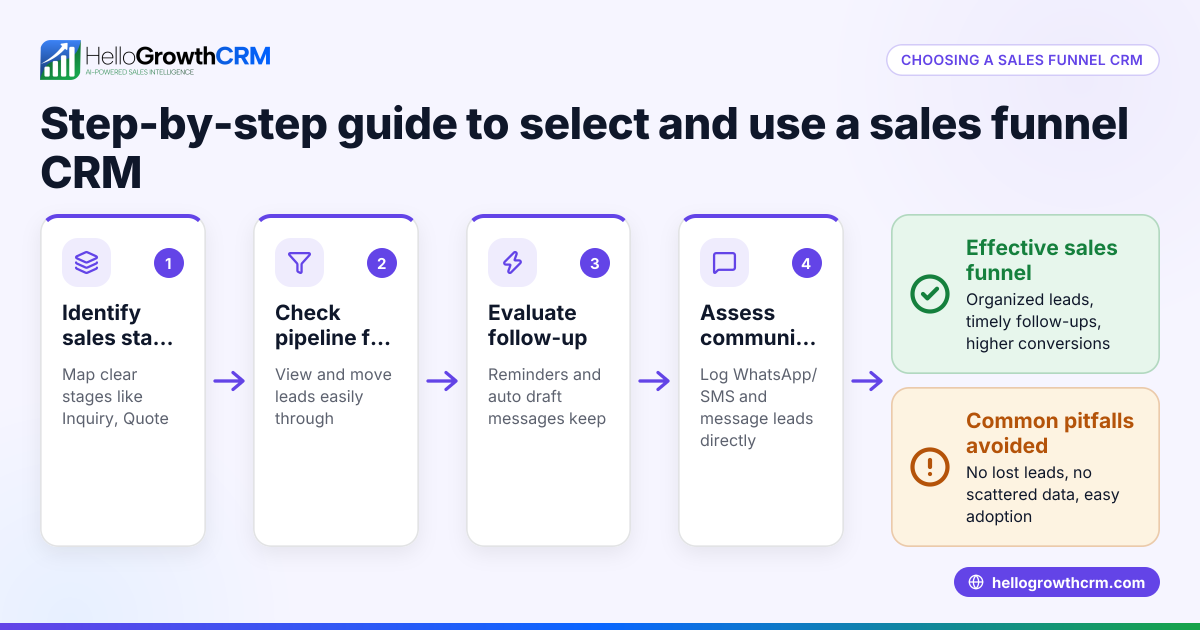
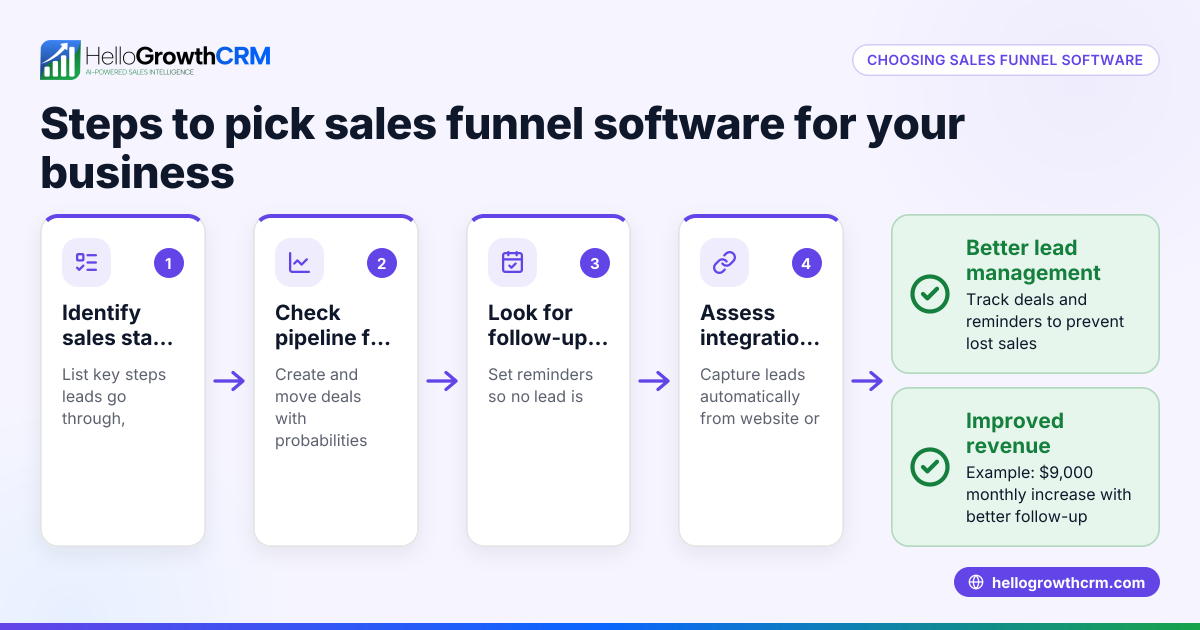
- Identify your sales stages and processes: Define the stages your leads go through, such as "New Lead", "Contacted", "Quote Sent", "Negotiation", and "Closed". Check if the CRM lets you customise these stages.
- Check lead capture options: Ensure the CRM can capture leads automatically from your website forms or integrate with tools you use. This reduces manual data entry.
- Evaluate communication channels: See if the CRM supports the channels your team uses, such as WhatsApp, SMS, or email, and logs conversations automatically.
- Look for pipeline visibility and task management: The CRM should provide a clear visual pipeline and task boards to track follow-ups and next actions.
- Assess automation and AI features: Consider if the CRM offers AI agents or automation to draft follow-ups or update records, saving your team time.
- Review sales forecasting and reporting: Check if the CRM provides reports on deal values, probabilities, and expected revenue to help plan your business.
- Test ease of use and team adoption: A CRM that your team finds intuitive is more likely to be used consistently, improving data accuracy.
For more on CRM capabilities that help with sales funnels, see CRM features.
Example (fictional figures)
An interior design studio in Tanjong Pagar receives a new lead on 01/03/2024. They use a sales funnel CRM with these stages: New Lead, Contacted, Quote Sent, Negotiation, Closed Won/Lost.
- 01/03/2024: Lead captured from website form, status "New Lead".
- 03/03/2024: Contacted lead via WhatsApp, status updated to "Contacted".
- 10/03/2024: Sent quotation worth S$48,000, status "Quote Sent" with follow-up date 17/03/2024.
- 17/03/2024: Follow-up message drafted by AI agent and sent, lead enters "Negotiation".
- 24/03/2024: Deal closed at S$48,000.
Tracking this in the CRM means:
- The quotation deal is visible at "Quote Sent" stage with a follow-up reminder, so it’s not forgotten.
- WhatsApp conversations are logged on the lead record.
- AI drafts follow-up messages, reducing rep workload.
Common mistakes
- Not defining sales stages clearly: Leads get stuck or lost without clear funnel stages. Prevent by mapping your sales process before choosing a CRM.
- Ignoring communication channels: Using a CRM that doesn’t support WhatsApp or SMS means manual logging and missed messages. Choose one with native support for your channels.
- Overlooking automation: Without follow-up reminders or AI drafting, reps may forget leads. Use CRMs with task boards and AI agents to automate.
- Choosing complex software: If the CRM is hard to use, the team won’t adopt it. Test usability with your team before committing.
- Relying on spreadsheets: Manual tracking is error-prone and inefficient. Move to a pipeline CRM for real-time visibility.
Learn how to avoid these issues with a CRM designed for small businesses at HelloGrowthCRM for Singapore.
Doing this in HelloGrowthCRM
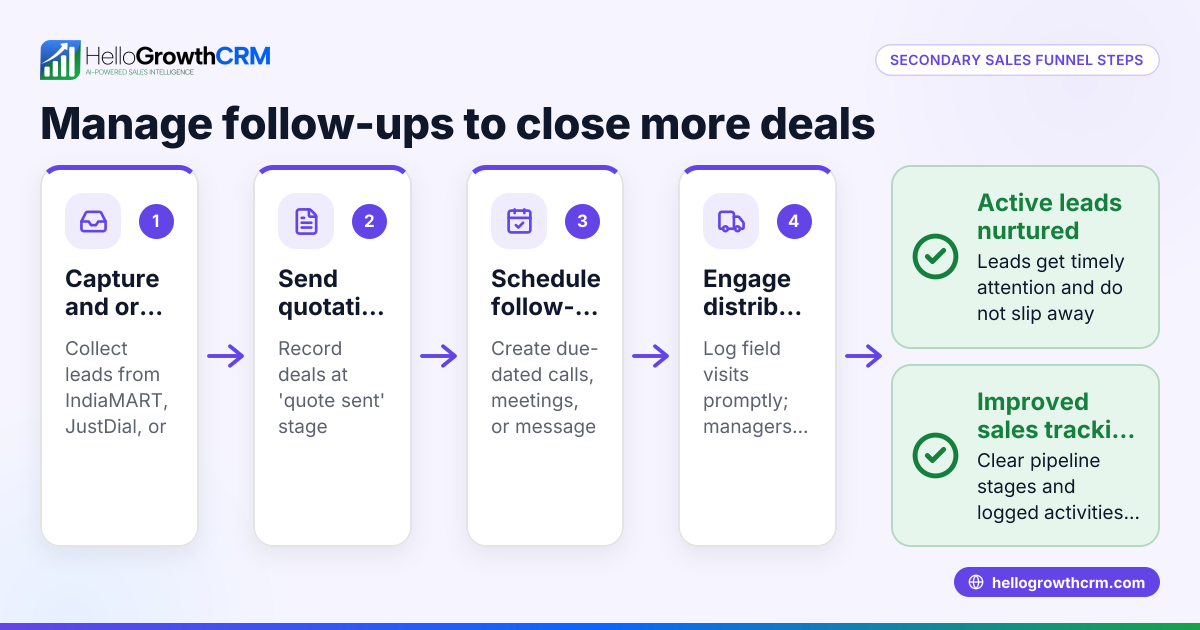
HelloGrowthCRM offers a Deals (pipeline) feature that tracks open opportunities from first contact through to close. For example, a quotation sent last week appears as a deal at the "quote sent" stage with a follow-up date, ensuring no leads slip through.
WhatsApp and SMS are integrated natively, so conversations with leads are automatically logged on their records, and follow-ups can be sent as messages directly.
AI agents assist by drafting follow-up messages after calls, allowing sales reps to review and send quickly, saving time and improving response rates.
Explore these capabilities in detail at AI CRM and WhatsApp and SMS CRM.
Frequently asked questions
What is the difference between a CRM and a sales funnel CRM? A sales funnel CRM focuses on managing leads through defined sales stages, providing pipeline visibility and automation for follow-ups. A general CRM may manage contacts and customer data but might lack detailed funnel management.
Can a sales funnel CRM automate communication on WhatsApp? Yes, some CRMs, including HelloGrowthCRM, support WhatsApp natively, logging conversations and enabling message sequences to automate follow-ups.
How does AI improve sales funnel management? AI can draft follow-up messages, update records, and execute workflow steps automatically, reducing manual work and speeding up lead engagement.
Is a sales funnel CRM suitable for small businesses? Yes, especially for small businesses that want to organise leads better, automate repetitive tasks, and improve sales team coordination without complex software.
What should I look for when choosing sales funnel CRM software? Key factors include pipeline customisation, communication channel support, automation features, ease of use, and reporting capabilities. Testing with your team is essential.
For more on choosing and using CRM features, see CRM features.
Key takeaways
- A sales funnel CRM organises leads through defined sales stages for better tracking.
- Integration with WhatsApp and SMS improves communication and follow-up.
- Automation and AI features save time by drafting messages and managing tasks.
- Clear pipeline visibility helps prioritise leads and forecast sales.
- Ease of use is critical for team adoption and consistent data entry.
Start improving your sales process with a CRM built for small businesses. Start on the Free Forever plan (200 leads, no credit card).
Ready to put this into practice?
Set up your pipeline, WhatsApp follow-ups, and AI lead scoring in minutes — free, no credit card.
Try HelloGrowthCRM freeGet CRM tips in your inbox
Join thousands of sales professionals who get weekly insights on CRM strategy, AI automation, and pipeline optimization.

The HelloGrowthCRM team publishes guides on CRM strategy, AI sales tools, and revenue operations for small business sales teams.