HelloGrowthCRM software
Built for real small-business sales teams
HelloGrowthCRM helps reps qualify faster, follow up on time, and close more deals—with practical automation in one place.
- AI lead scoring and pipeline visibility
- Built-in dialer, WhatsApp, and email automation
- Sales forecasting and RevOps-ready reporting
A sales goal tracker is a tool or system that helps you monitor progress toward your sales targets in real time. It lets you see if you are on track to meet your revenue goals, identify gaps early, and adjust your efforts accordingly. This article explains why sales goal tracking matters for small businesses, how to set one up step-by-step, a practical example, common pitfalls, and how HelloGrowthCRM can support your tracking efforts.
Why this comes up / what goes wrong
Small-business owners often struggle to keep sales goals visible and actionable. Without a clear tracker, it’s easy to lose sight of progress, miss follow-ups, or fail to spot when sales are falling behind. Many businesses rely on spreadsheets, texts, or email threads that don’t update in real time or integrate with daily workflows. This leads to slow follow-up, lost leads, and missed revenue opportunities. A sales goal tracker brings focus and accountability by showing pipeline status, deal stages, and forecasted revenue in one place.
Step-by-step
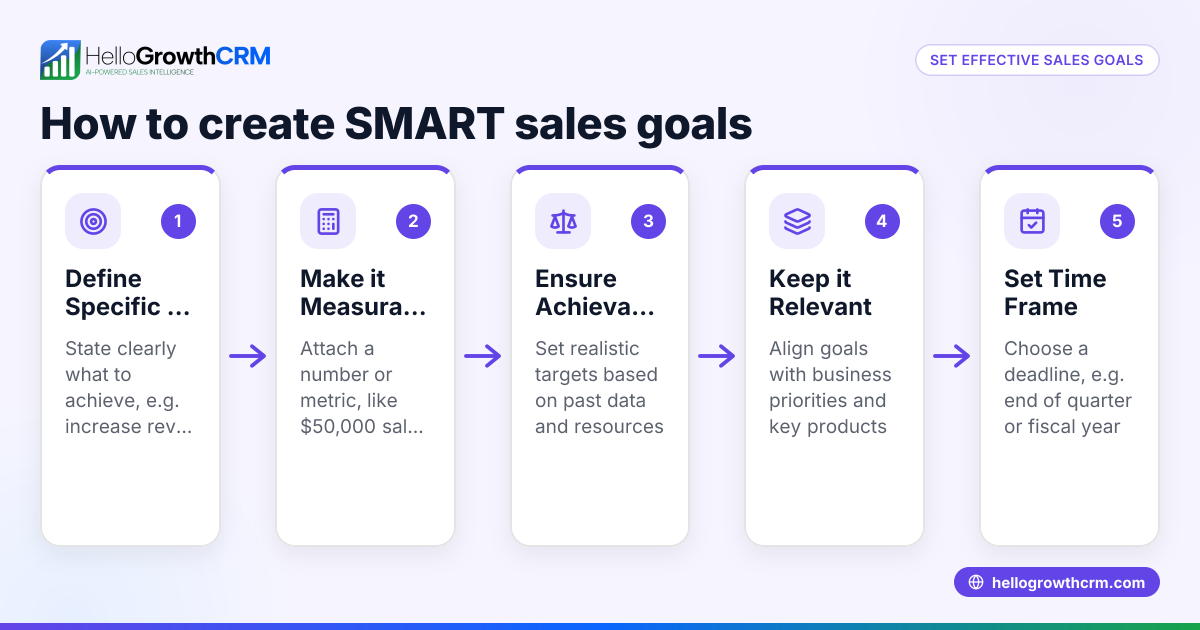
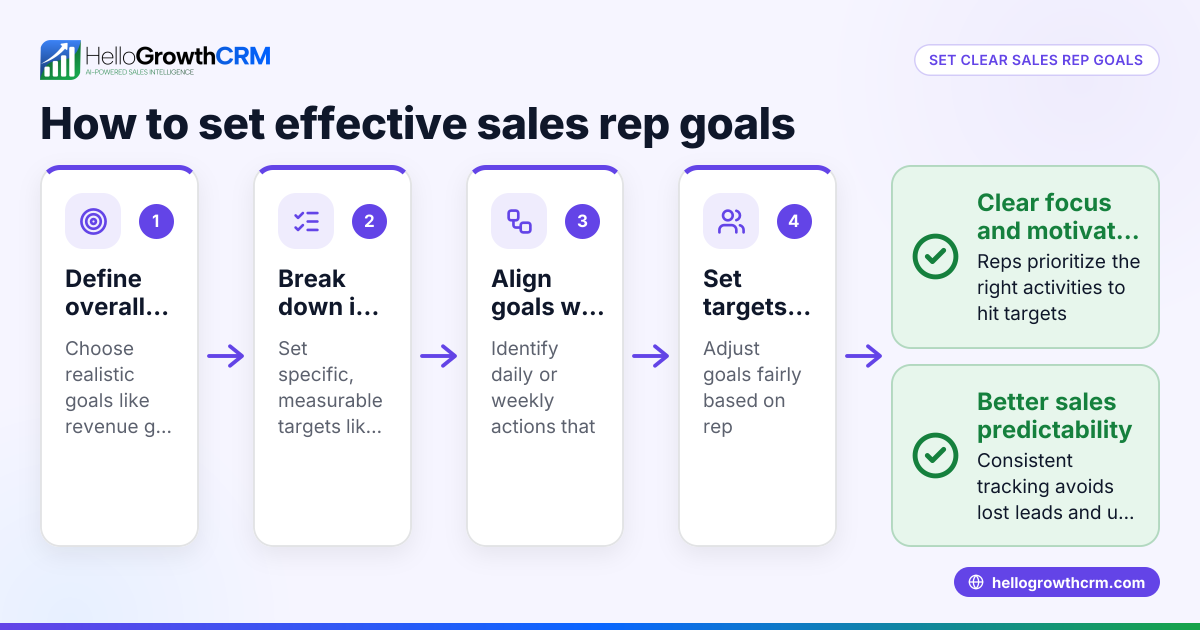
- Define your sales goals clearly. Decide the total revenue target for a specific period (monthly, quarterly, yearly). Break it down by product, service, or sales rep if needed.
- Set measurable milestones. Divide the goal into smaller checkpoints like weekly or monthly targets. This helps you track progress regularly.
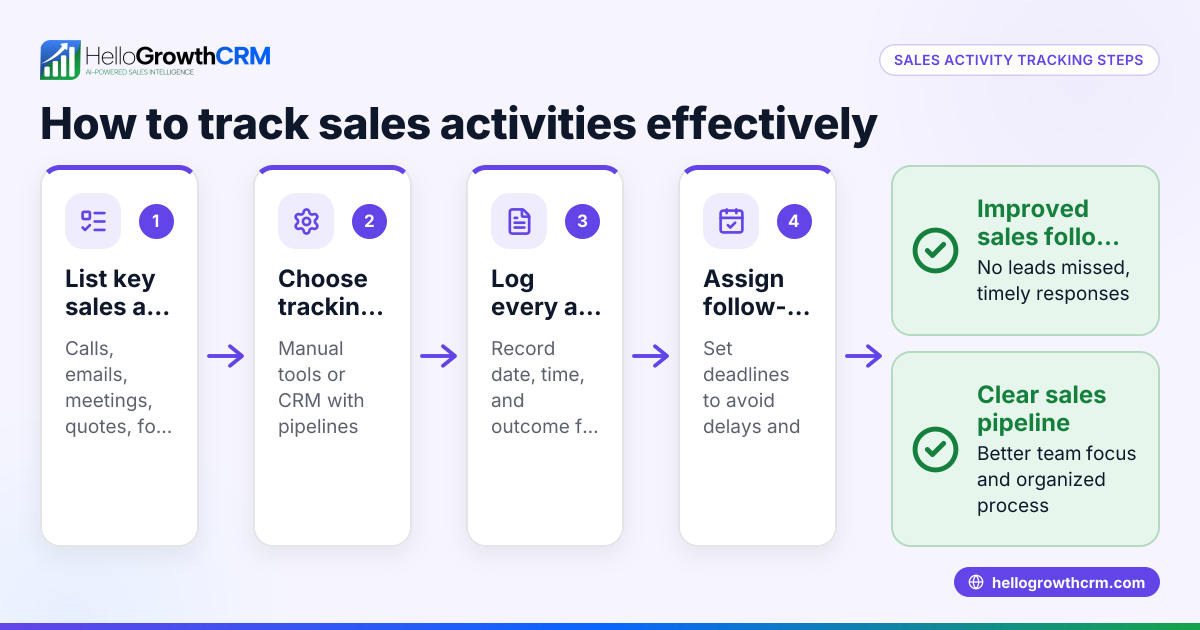
- Choose your tracking method. Use a spreadsheet, simple dashboard, or CRM tool that updates automatically. Ensure it shows deals in progress, expected close dates, and amounts.
- Track deal stages and values. Record each sales opportunity’s current stage (e.g., prospecting, quote sent, negotiation) and its expected value.
- Update regularly. Make it a routine to update the tracker daily or weekly with new deals, status changes, and closed sales.
- Analyze gaps and adjust. If you’re behind goal, identify where deals are stalling or which sales reps need support. Adjust your strategy accordingly.
- Share with your team. Keep your sales team informed and accountable by sharing the tracker and progress reports.
Check out how the Deals (pipeline) feature helps keep deals visible with follow-up dates so no opportunity is forgotten.
Example (fictional figures)
A plumbing company in Austin, Texas, sets a quarterly sales goal of $120,000 for new service contracts.
- Quarterly goal = $120,000
- Monthly milestone = $120,000 ÷ 3 = $40,000 per month
In Month 1, they close $35,000 in deals.
- Month 1 shortfall = $40,000 - $35,000 = $5,000
They have $20,000 worth of deals in the 'quote sent' stage expected to close next month.
- Expected Month 2 revenue needed = $40,000 + $5,000 (shortfall) = $45,000
- Current pipeline for Month 2 = $20,000
They need to increase efforts to generate an additional $25,000 in potential deals for Month 2 to stay on track.
This example shows how breaking down the goal and tracking pipeline stages helps spot gaps early and prioritize follow-up.
Common mistakes
- Not updating the tracker regularly. Prevent by setting a fixed schedule for updates, such as every morning or end of day.
- Tracking only closed sales, ignoring pipeline. Prevent by including deal stages and expected values so you can forecast.
- Using complicated spreadsheets that no one understands. Prevent by keeping the tracker simple and visual or using a CRM with pipeline views like the built-in CRM dialer offers.
- Failing to assign responsibility for follow-up. Prevent by designating sales reps or managers to own deals and follow-up tasks.
- Ignoring small deals that add up. Prevent by tracking all deals, not just large ones, to get the full picture.
- Not sharing progress with the team. Prevent by regularly communicating results and celebrating milestones.
Learn how features like Territories, field operations and commissions help keep sales follow-up on track.
Doing this in HelloGrowthCRM
HelloGrowthCRM helps you track sales goals through its Deals (pipeline) feature, which shows open opportunities from first contact to close with stage movement, probability, and expected value. For example, a quotation sent last week appears as a deal at the 'quote sent' stage with a follow-up date, so no opportunity is forgotten. For teams with field reps, the Territories, field operations and commissions tools let reps log visits from their phones while managers see daily activity. Founders without sales managers can also rely on Managed RevOps support, where a revenue specialist handles follow-up queues weekly and cleans up pipelines to keep sales moving. Learn more about these features and how they fit your US business needs in HelloGrowthCRM for the United States.
Frequently asked questions
What is the best way to track sales goals for a small business? The best way is to have a clear, simple system that shows your total sales target, milestones, and deals in progress. Many small businesses start with spreadsheets but benefit from a CRM that updates automatically and tracks deal stages.
How often should I update my sales goal tracker? Ideally, update your tracker daily or at least weekly. Regular updates help catch issues early and keep your team focused on next steps.
Can I track sales goals by individual sales reps? Yes. Breaking down goals by sales rep helps assign responsibility and measure performance. Tools with territory and commission tracking support this.
What should I do if I’m consistently missing my sales goals? Analyze your pipeline to find bottlenecks or stalled deals. Increase outreach, improve follow-up, or adjust your targets based on market conditions. Using a CRM to visualize your pipeline helps.
How does a CRM help with sales goal tracking? A CRM with deals and pipeline features tracks all open opportunities with stages and follow-up dates. It also supports field sales tracking and managed operations to keep your sales process clean and active.
Key takeaways
- A sales goal tracker shows progress toward revenue targets and highlights gaps early.
- Define clear goals, set milestones, and track deals by stage and expected value.
- Update the tracker regularly and share progress with your team.
- Avoid common mistakes like infrequent updates, ignoring pipeline, and poor follow-up.
- Pipeline, territory, and managed operations features help automate and improve tracking.
Start improving your sales tracking and follow-up by starting on the Free Forever plan (200 leads, no credit card).
Ready to put this into practice?
Set up your pipeline, WhatsApp follow-ups, and AI lead scoring in minutes — free, no credit card.
Try HelloGrowthCRM freeGet CRM tips in your inbox
Join thousands of sales professionals who get weekly insights on CRM strategy, AI automation, and pipeline optimization.

The HelloGrowthCRM team publishes guides on CRM strategy, AI sales tools, and revenue operations for small business sales teams.