HelloGrowthCRM software
Built for real small-business sales teams
HelloGrowthCRM helps reps qualify faster, follow up on time, and close more deals—with practical automation in one place.
- AI lead scoring and pipeline visibility
- Built-in dialer, WhatsApp, and email automation
- Sales forecasting and RevOps-ready reporting
Sales insight is the clear understanding of your sales data and activities that helps you spot which leads to follow up, prioritise deals, and forecast revenue accurately. It means having clear, actionable information about your sales pipeline, customer behaviour, and sales team activities. This article covers why sales insight matters for UK small businesses, the steps to gather and use it effectively, common mistakes to avoid, and how HelloGrowthCRM can support your sales process.
Why this comes up / what goes wrong
Many small business owners in the UK struggle with sales insight because their sales activities are often spread across WhatsApp, email, and spreadsheets. Without a single place to track leads and deals, it’s easy to lose track of who to contact next or which deals are progressing. This leads to slow follow-up, lost opportunities, and unpredictable sales results.
Often, businesses realise they lack sales insight when leads start slipping through the cracks or when forecasting revenue feels like guesswork. Without clear visibility, sales efforts become reactive rather than proactive, and it’s harder to manage the sales pipeline efficiently. This problem is especially common in teams without dedicated sales managers or centralised tools.
Step-by-step
- Gather all sales information in one system. Collect your leads, quotes, and customer contacts from emails, WhatsApp chats, and spreadsheets into a central place. Check that every new enquiry is logged to avoid missing any potential sales.
- Assign each lead or deal a stage. Use stages like ‘new lead’, ‘contacted’, ‘quote sent’, and ‘negotiation’ to track progress. Check regularly for deals stuck at any stage to keep the pipeline moving.
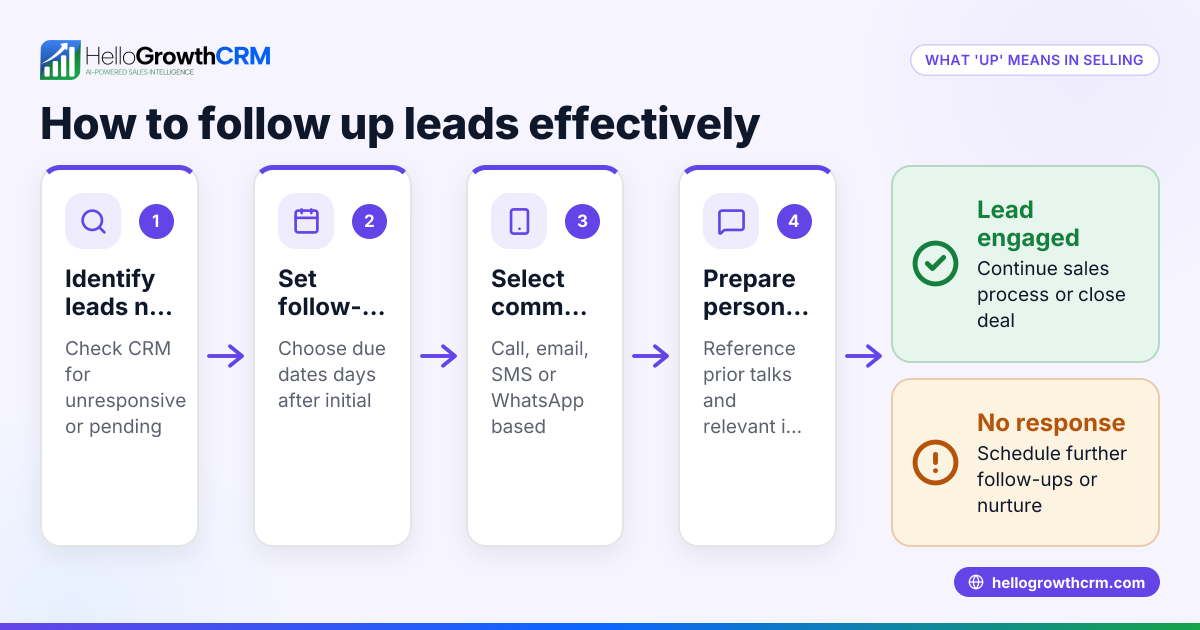
- Set clear follow-up dates and reminders. For every deal or lead, create a follow-up task with a specific date. Check daily that these tasks are completed to avoid missed contacts and lost sales.
- Analyse your sales pipeline regularly. Look at how many deals are in each stage, their value, and how long they stay there. Check for bottlenecks or slow-moving deals that need attention.
- Prioritise leads based on value and probability. Focus your sales team’s time on high-value or high-probability deals first. Use recent activity or lead scoring if available to guide prioritisation.
- Review sales performance weekly. Hold meetings to review pipeline progress, follow-up completion, and forecast accuracy. Adjust your sales strategy based on what the data shows to improve results.
Example (fictional figures)
An accountancy practice in Birmingham tracks its sales pipeline for April 2026.
- New leads received: 40
- Leads contacted: 35
- Quotes sent: 20
- Deals won: 10
The average quote value is £3,000.
Calculate expected revenue from quotes:
£3,000 × 20 = £60,000
Assuming a 50% close rate from quotes:
£60,000 × 50% = £30,000 expected revenue
If follow-ups are missed on 5 quotes, potential revenue lost is:
£3,000 × 5 = £15,000
This example shows how missing timely follow-up on just a few quotes can cost £15,000 in potential sales.
Common mistakes
- Not centralising sales data: Leads and deals scattered across WhatsApp and spreadsheets get lost. Prevent this by using a CRM to keep everything in one place.
- Failing to update deal stages: If deal progress isn’t recorded daily, you can’t spot delays. Prevent by reviewing and updating stages regularly.
- Ignoring follow-up tasks: Without reminders, follow-ups slip through. Prevent by setting clear follow-up dates and assigning responsibility.
- Relying on gut feeling instead of data: Guesswork leads to missed opportunities. Prevent by analysing pipeline reports and sales patterns.
- Overlooking low-value or old deals: These can still convert if managed. Prevent by reviewing all deals weekly and deciding whether to revive or drop them.
Doing this in HelloGrowthCRM
HelloGrowthCRM supports sales insight with its Deals (pipeline) feature, where a quotation sent last week appears as a deal at the 'quote sent' stage with a follow-up date, so it is not forgotten. For businesses with field sales, Territories, field operations and commissions let reps log visits from their phone, and managers see the day’s activity. If you do not have a sales manager, Managed RevOps provides weekly follow-up execution and pipeline hygiene support. Learn more about these features at HelloGrowthCRM for the United Kingdom. Also, explore how the built-in CRM dialer and WhatsApp and SMS CRM integrate to streamline your sales communication.
Frequently asked questions
What is sales insight in simple terms? Sales insight is the clear understanding of your sales activities and pipeline that helps you prioritise leads, manage follow-ups, and forecast revenue.
How can small businesses get better sales insight? By centralising sales data in a CRM, tracking deals through stages, setting follow-up reminders, and reviewing pipeline reports regularly.
Why do sales leads get lost without sales insight? Because leads are often scattered across different tools and without reminders, follow-ups are missed and opportunities slip away.
Can sales insight improve forecasting? Yes, by analysing deal stages, expected values, and close probabilities, you can predict revenue more accurately.
How does HelloGrowthCRM support sales insight? It tracks deals with follow-up dates, manages territories and field operations, and offers managed RevOps support for consistent pipeline management.
Key takeaways
- Sales insight means having clear, actionable information about your sales pipeline and activities.
- Centralising data and tracking deals by stage prevents leads from being forgotten.
- Setting follow-up tasks and reminders ensures timely contact with prospects.
- Regular pipeline review helps identify bottlenecks and improve forecasting.
- Using tools like HelloGrowthCRM can automate and organise sales insight tasks.
Start improving your sales insight today by trying HelloGrowthCRM. You can Start on the Free Forever plan (200 leads, no credit card) and see how it helps your team stay on top of leads and deals.
Ready to put this into practice?
Set up your pipeline, WhatsApp follow-ups, and AI lead scoring in minutes — free, no credit card.
Try HelloGrowthCRM freeGet CRM tips in your inbox
Join thousands of sales professionals who get weekly insights on CRM strategy, AI automation, and pipeline optimization.

The HelloGrowthCRM team publishes guides on CRM strategy, AI sales tools, and revenue operations for small business sales teams.