HelloGrowthCRM software
Built for real small-business sales teams
HelloGrowthCRM helps reps qualify faster, follow up on time, and close more deals—with practical automation in one place.
- AI lead scoring and pipeline visibility
- Built-in dialer, WhatsApp, and email automation
- Sales forecasting and RevOps-ready reporting
Sales training for startups is essential to equip founders and early sales teams with the skills to convert leads efficiently and grow revenue. Unlike established companies, startups face unique challenges like limited budgets, rapidly evolving products, and often no dedicated sales manager. This guide explains why tailored sales training matters, how to select and apply it, and what to watch out for.
Why this comes up / what goes wrong
Startups in the UK, often led by founders or small teams, struggle with sales because they lack formal processes and training. Founders may be experts in product development but inexperienced in sales techniques or pipeline management. Without training, leads get lost, follow-ups are slow, and inconsistent messaging harms conversion rates. Accountants or business advisors sometimes spot the problem when revenue forecasts fall short or cash flow tightens.
This situation is common in technology startups or service businesses in cities like London, Bristol, or Manchester, where competition is high and speed matters. Sales training tailored to startup realities helps build repeatable processes, improves team confidence, and accelerates growth.
Step-by-step
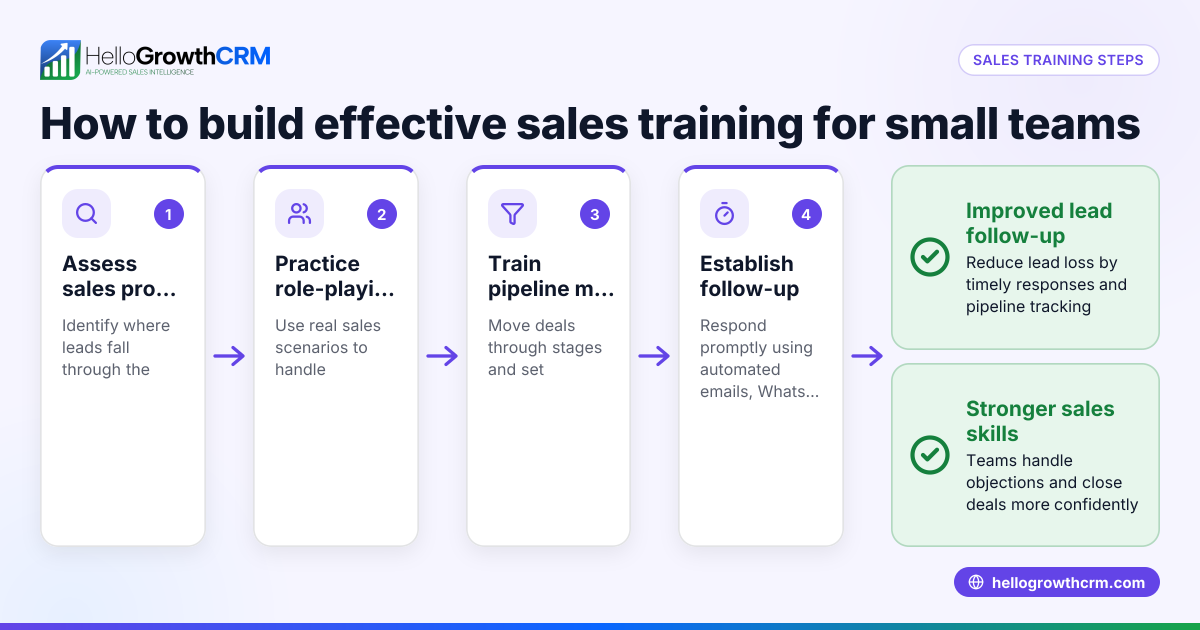
- Assess your current sales skills and gaps
- Review who is selling (founders, new hires).
- Identify weak points: lead follow-up, objection handling, closing.
- Check if you have a CRM or pipeline tool in use.
- Define your sales goals and customer profile
- Set clear targets (monthly revenue, number of deals).
- Clarify your ideal customer and buyer personas.
- Research sales training providers specialising in startups
- Look for programmes with practical exercises, role-plays.
- Check if they cover your industry or sales channels (e.g., WhatsApp, email).
- Ask about ongoing support or coaching.
- Evaluate training formats and costs
- Compare online courses, workshops, or one-to-one coaching.
- Consider your team size and time availability.
- Ask key questions before choosing a provider
- How does the training address startup-specific challenges?
- What sales methodologies are taught?
- Is there help with CRM adoption and pipeline management?
- Plan how to implement and measure training impact
- Schedule sessions around your sales cycle.
- Integrate training with your CRM and follow-up processes.
- Set KPIs like improved lead response time or increased conversion rates.
- Review and adapt regularly
- Collect feedback from participants.
- Adjust training content as your product and market evolve.
For ongoing learning, explore the CRM academy, which offers resources suited for startups.
Example (fictional figures)
BrightTech Solutions, a tech startup in Bristol, wants to improve sales. They currently have two founders sharing sales duties with limited experience. Their goal is to increase monthly revenue from £20,000 to £50,000 within six months.
- They assess skills and find poor follow-up and no formal pipeline.
- They define their ideal customer as UK-based SMEs needing cloud software.
- They select a startup-focused sales training costing £3,000, including coaching.
- They schedule weekly sessions over two months.
- They integrate training with HelloGrowthCRM's pipeline feature to track deals.
- After training, lead follow-up time reduces from 5 days to 1 day.
- Monthly revenue increases stepwise:
£20,000 + £5,000 = £25,000 (Month 1)
£25,000 + £7,500 = £32,500 (Month 2)
£32,500 + £10,000 = £42,500 (Month 3)
£42,500 + £7,500 = £50,000 (Month 4)
This shows how focused sales training combined with pipeline management helps meet growth targets.
Common mistakes
- Choosing generic sales training: Prevent by selecting providers with startup experience and relevant industry knowledge.
- Ignoring CRM integration: Prevent by ensuring training includes pipeline and follow-up tools like HelloGrowthCRM's Deals feature.
- Overloading the team: Prevent by scheduling training in manageable sessions respecting workload.
- Lack of follow-up or coaching: Prevent by opting for training that offers ongoing support.
- Not measuring impact: Prevent by setting clear KPIs before training starts.
- Failing to adapt training as the startup evolves: Prevent by reviewing training needs quarterly.
Explore how startups and technology companies can tailor sales processes effectively at Startups and technology companies.
Doing this in HelloGrowthCRM
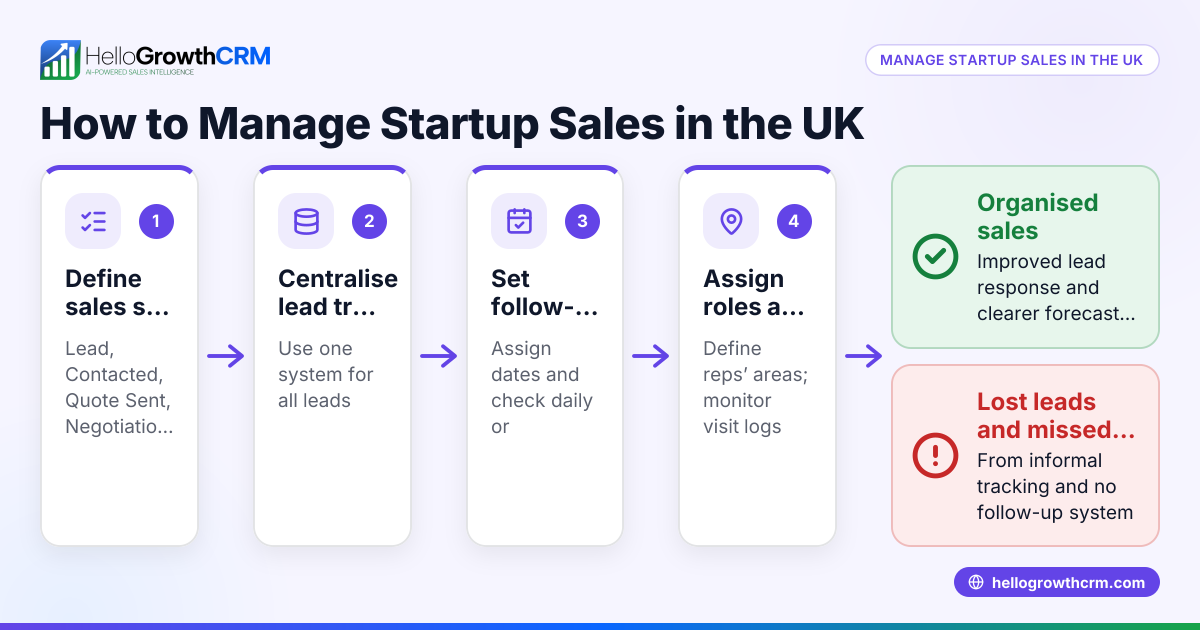
HelloGrowthCRM supports startups by providing a Deals (pipeline) feature that tracks open opportunities through stages like 'quote sent' with follow-up dates, ensuring no deal is forgotten. For founders without a sales manager, Managed RevOps delivers weekly follow-up execution and pipeline hygiene, helping maintain momentum. Field sales teams benefit from Territories, field operations and commissions tools, enabling visit logging and route planning from mobile devices.
Learn more about how HelloGrowthCRM fits UK startups at HelloGrowthCRM for the United Kingdom.
Frequently asked questions
What sales skills should startups focus on first? Startups should prioritise lead qualification, timely follow-up, clear communication of value, and closing techniques. These basics build a foundation for consistent sales performance.
How long does sales training for startups usually take? Training duration varies but typically ranges from a few weeks to a couple of months, depending on format and team size. Ongoing coaching is recommended for best results.
Can sales training help if the startup uses WhatsApp and email for sales? Yes, training that covers multi-channel selling, including WhatsApp and email, helps teams communicate effectively and manage leads without losing track.
How do I measure if sales training is working? Track metrics like lead response time, conversion rates, deal size, and overall revenue growth. Regular reviews help adjust training and sales processes.
Is it better to have internal sales training or hire external experts? External experts bring fresh perspectives and proven methods, especially valuable for startups without sales experience. Internal training works when experienced salespeople mentor others.
Key takeaways
- Sales training for startups must address unique challenges like limited resources and evolving products.
- Assess your sales gaps, define goals, and choose training tailored to startup needs.
- Integrate training with CRM tools like HelloGrowthCRM’s Deals pipeline feature.
- Avoid common mistakes by selecting relevant providers, scheduling effectively, and measuring impact.
- Ongoing support and adaptation are critical as your startup grows.
Start your sales training journey with practical tools and support by starting on the Free Forever plan (200 leads, no credit card).
Ready to put this into practice?
Set up your pipeline, WhatsApp follow-ups, and AI lead scoring in minutes — free, no credit card.
Try HelloGrowthCRM freeGet CRM tips in your inbox
Join thousands of sales professionals who get weekly insights on CRM strategy, AI automation, and pipeline optimization.

The HelloGrowthCRM team publishes guides on CRM strategy, AI sales tools, and revenue operations for small business sales teams.