HelloGrowthCRM software
Built for real small-business sales teams
HelloGrowthCRM helps reps qualify faster, follow up on time, and close more deals—with practical automation in one place.
- AI lead scoring and pipeline visibility
- Built-in dialer, WhatsApp, and email automation
- Sales forecasting and RevOps-ready reporting
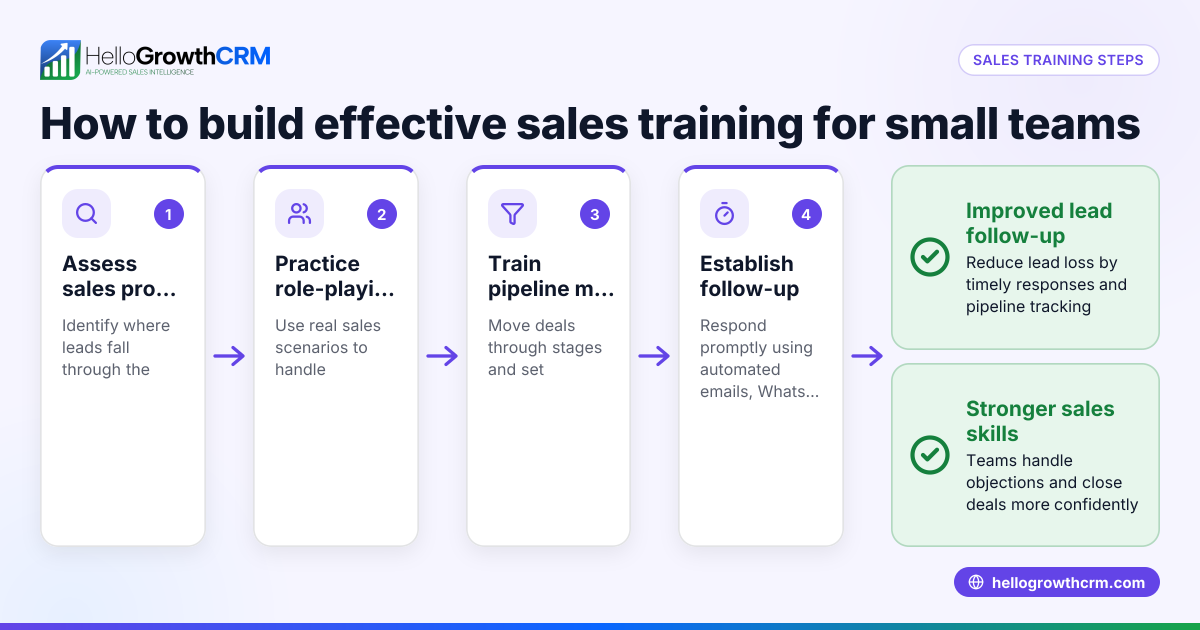
An LMS for sales training is a software platform that organizes and delivers training materials specifically aimed at improving the skills and knowledge of sales teams. It allows small and mid-sized businesses to train their salespeople consistently, track their progress, and ensure everyone follows best practices. This article covers why small businesses seek LMS solutions for sales training, step-by-step guidance on selecting and using one, a practical example with figures, common pitfalls, and how HelloGrowthCRM can support sales workflows.
Why this comes up / what goes wrong
Small business owners often struggle with inconsistent sales training. Without a central system, training is informal, scattered across emails, texts, or spreadsheets, and new sales hires take longer to ramp up. This leads to lost leads, missed follow-ups, and uneven sales performance. Owners or founders without dedicated sales managers find it hard to keep track of who has completed training or apply lessons effectively. As sales teams grow, managing training manually becomes impractical, prompting the search for an LMS for sales training.
Step-by-step
- Identify your sales training goals. Decide what skills and knowledge your sales team needs, such as product knowledge, objection handling, or CRM usage.
- Evaluate LMS features. Check for content delivery options (videos, quizzes), progress tracking, mobile access, and integration capabilities with your sales tools.
- Check ease of use. Ensure the LMS is user-friendly for your sales reps and managers to encourage adoption.
- Consider integration with your CRM. A CRM with sales training features or integrations can centralize sales activities and training progress.
- Plan your training content. Gather or create sales training materials aligned with your goals.
- Pilot with a small group. Test the LMS with a few users to gather feedback and adjust.
- Roll out to the full team. Provide clear instructions and support.
- Monitor progress and results. Use LMS reports to track completion rates and assess impact on sales performance.
- Iterate and update content regularly. Keep training materials current and relevant.
When evaluating LMS options, you might also explore sales-specific CRM features like pipeline tracking and follow-up management to complement training efforts. Learn more about sales process management in the CRM academy.
Example (fictional figures)
A two-location dental practice in Columbus, Ohio, wants to improve its inside sales team's product knowledge and follow-up skills. They invest in an LMS subscription costing $500/month.
- Monthly LMS cost = $500
- Sales team size = 5
- Average monthly sales per rep before training = $20,000
- Expected sales increase after training = 10%
Calculate the expected sales increase:
$20,000 × 5 = $100,000 (total monthly sales)
$100,000 × 10% = $10,000 (expected increase)
Compare the increase to LMS cost:
$10,000 - $500 = $9,500 (net gain)
The practice expects a $9,500 monthly net gain from improved sales skills, justifying the LMS investment.
Common mistakes
- Skipping a needs assessment. Prevent by clearly defining sales skill gaps before choosing an LMS.
- Choosing an LMS without mobile support. Sales reps often work remotely; ensure mobile access.
- Ignoring integration with sales tools. Prevent data silos by selecting LMS that connects with your CRM or sales apps.
- Overloading with content. Focus on relevant, concise training to keep reps engaged.
- No follow-up or reinforcement. Use scheduled refreshers and track progress to maintain skills.
- Neglecting user feedback. Regularly collect feedback to improve training effectiveness.
Explore how to avoid common CRM and sales management mistakes in the CRM academy.
Doing this in HelloGrowthCRM
HelloGrowthCRM helps small businesses manage sales operations alongside training efforts. Its Deals (pipeline) feature lets you track sales opportunities with follow-up dates to ensure no lead is forgotten. For founders without sales managers, Managed RevOps provides a revenue specialist who works the follow-up queue weekly, ensuring sales activities stay on track. Field teams benefit from Territories, field operations, and commissions tools that log visits and sales activities from mobile devices, giving managers real-time visibility. Learn more about HelloGrowthCRM's WhatsApp and SMS CRM and territory management features.
Frequently asked questions
What is the difference between an LMS and a CRM for sales training? An LMS focuses on delivering and tracking training content, while a CRM manages customer relationships and sales pipelines. Some CRMs integrate training features or connect with LMS platforms to streamline sales learning and execution.
Can small businesses afford LMS solutions? Yes, many LMS options offer scalable pricing suitable for small businesses. Consider free trials or basic plans to test before committing.
How do I measure the effectiveness of sales training through an LMS? Use LMS reports to track course completion and quiz scores. Combine this with sales performance data from your CRM to see real-world impact.
Is it better to have sales training in-person or via an LMS? Both have benefits. LMS allows flexible, consistent training accessible anytime, while in-person sessions can provide hands-on practice. A blended approach often works best.
How does HelloGrowthCRM support sales training efforts? While HelloGrowthCRM does not provide training content delivery, its sales pipeline, follow-up management, and Managed RevOps services help ensure sales activities align with training goals and improve execution.
Learn more about sales process management and CRM tools in the CRM academy and how HelloGrowthCRM supports US businesses at HelloGrowthCRM for the United States.
Key takeaways
- An LMS for sales training centralizes and standardizes sales learning for small businesses.
- Choose an LMS that fits your sales goals, is easy to use, mobile-friendly, and integrates with sales tools.
- Pilot training, monitor progress, and update content regularly for best results.
- Avoid common mistakes like ignoring integration and overloading content.
- HelloGrowthCRM complements training by managing sales pipelines, follow-ups, and field operations.
Start improving your sales training and sales management by trying HelloGrowthCRM. Start on the Free Forever plan (200 leads, no credit card).
Ready to put this into practice?
Set up your pipeline, WhatsApp follow-ups, and AI lead scoring in minutes — free, no credit card.
Try HelloGrowthCRM freeGet CRM tips in your inbox
Join thousands of sales professionals who get weekly insights on CRM strategy, AI automation, and pipeline optimization.

The HelloGrowthCRM team publishes guides on CRM strategy, AI sales tools, and revenue operations for small business sales teams.