HelloGrowthCRM software
Built for real small-business sales teams
HelloGrowthCRM helps reps qualify faster, follow up on time, and close more deals—with practical automation in one place.
- AI lead scoring and pipeline visibility
- Built-in dialer, WhatsApp, and email automation
- Sales forecasting and RevOps-ready reporting
Second chance leads are potential customers who initially showed interest but did not convert due to factors like slow follow-up or lost communication. These leads represent a valuable opportunity to re-engage and convert them into sales. This article explains why second chance leads happen, how to identify and follow up with them effectively, common pitfalls to avoid, and how HelloGrowthCRM can help manage these leads efficiently.
Why this comes up / what goes wrong
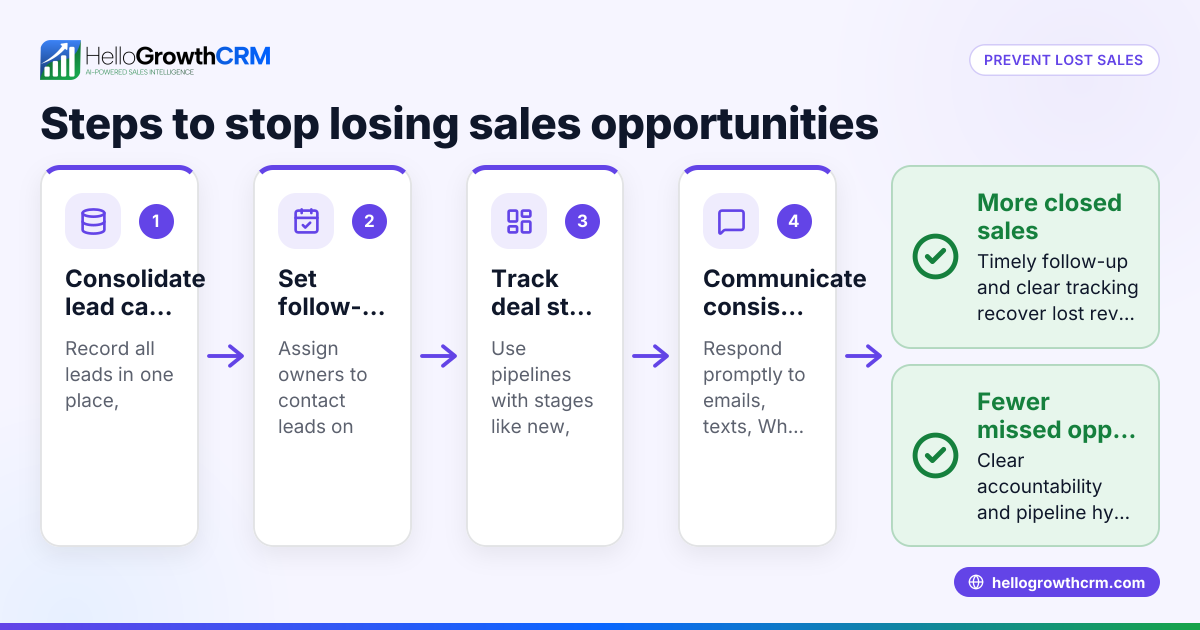
Small-business owners often face lost sales opportunities because initial leads go cold or are forgotten. This can happen when leads come in through various channels like web forms, calls, WhatsApp, or text messages but are not followed up promptly or systematically. Without a centralized system, leads might be noted down in notebooks, spreadsheets, or scattered apps, making it easy to lose track. Additionally, sales teams might prioritize new leads and neglect those who showed interest earlier but did not respond or convert—these are your second chance leads.
Slow or inconsistent follow-up, lack of lead qualification, and absence of reminders cause many leads to slip away. Small and mid-sized businesses with limited sales resources especially struggle to manage timely callbacks or messages. However, these second chance leads often still have buying intent and can be converted with the right approach.
Step-by-step
- Identify your second chance leads
- Review your CRM, spreadsheets, or communication logs for leads that did not convert but showed initial interest.
- Check for leads who responded partially, opened emails or messages, or requested information but never completed a purchase.
- Prioritize leads based on potential
- Use lead scoring if available to rank leads by likelihood to convert.
- Focus first on leads with the highest engagement or recent activity.
- Prepare a tailored follow-up plan
- Craft personalized messages referencing their previous inquiry or interest.
- Use multiple channels like WhatsApp, SMS, email, or calls based on their preferred contact method.
- Schedule timely follow-ups
- Set reminders or tasks to reach out within a specific timeframe (e.g., within 2-3 days of identifying the lead).
- Avoid long gaps that could cause the lead to lose interest.
- Track responses and update lead status
- Record all communications and outcomes.
- Move leads through your sales pipeline stages accordingly.
- Analyze reasons for initial loss
- Understand why the lead did not convert initially (price, timing, product fit).
- Adjust your messaging or offer if needed.
- Repeat follow-ups strategically
- If no response after the first attempt, plan a second or third follow-up with varied content or offers.
- Review and refine your process regularly
- Track conversion rates from second chance leads.
- Adjust prioritization or follow-up timing based on results.
Using tools like AI lead scoring can help prioritize which second chance leads to contact first, improving efficiency.
Example (fictional figures)
Phoenix Residential Realty, a small real estate team in Phoenix, Arizona, identified 50 second chance leads from their last quarter. They estimated each lead could result in an average commission of $6,000.
- Total potential commission = 50 leads × $6,000 = $300,000
They planned follow-ups:
- First follow-up conversion rate: 20% (10 leads)
- Second follow-up conversion rate: 10% (5 leads)
Total converted leads = 10 + 5 = 15
Total commission earned = 15 leads × $6,000 = $90,000
This example shows that by systematically following up on second chance leads, the team can recover significant revenue that might have been lost.
Common mistakes
- Ignoring leads that didn’t convert immediately: Prevent by regularly reviewing and segmenting old leads for follow-up.
- Using generic follow-up messages: Prevent by personalizing communication based on previous interactions.
- Failing to track follow-up attempts: Prevent by logging every contact and outcome in a CRM or organized system.
- Delaying follow-ups too long: Prevent by setting reminders and acting quickly after identifying second chance leads.
- Overloading sales reps with new leads only: Prevent by balancing new lead acquisition with nurturing existing ones using workflows and lead routing.
Using a CRM with workflows, lead routing and validation rules can automate task creation and assignment to ensure timely follow-ups.
Doing this in HelloGrowthCRM
HelloGrowthCRM helps small and mid-sized businesses manage second chance leads efficiently. Every inquiry from forms, calls, or WhatsApp lands as a lead with an assigned owner and a next step, preventing leads from being lost in notebooks or spreadsheets. Its AI lead scoring enables reps to prioritize leads most likely to convert first, including second chance leads. Automated workflows, lead routing and validation rules assign new enquiries round-robin and create first-call tasks automatically, ensuring no lead is forgotten. This helps your team follow up consistently and close more deals.
Frequently asked questions
What exactly are second chance leads? Second chance leads are prospects who initially showed interest but did not convert due to missed follow-ups, lost communication, or other reasons. They represent an opportunity to re-engage and convert with timely and personalized outreach.
How can I find second chance leads in my system? Review your CRM or records for leads that have not moved forward in the sales pipeline but had some engagement like inquiries, opened emails, or partial conversations. Filter by last contact date or status to identify these leads.
Why do second chance leads matter for small businesses? Because small businesses often have limited sales resources, maximizing conversion from existing leads is critical. Second chance leads are warm prospects who require less effort to convert than cold leads, improving sales efficiency.
How often should I follow up with second chance leads? Start with a follow-up within a few days of identifying the lead, then plan one or two additional follow-ups spaced a few days apart. Avoid excessive contact that may annoy prospects.
Can automation help with managing second chance leads? Yes. Automation through workflows, lead routing, and AI lead scoring helps ensure timely, prioritized follow-ups without manual tracking, reducing missed opportunities.
Key takeaways
- Second chance leads are missed or forgotten prospects worth re-engaging.
- Identify and prioritize these leads using lead scoring or engagement data.
- Follow up promptly with personalized messages across preferred channels.
- Track every interaction and adjust your approach based on feedback.
- Avoid common mistakes like ignoring old leads or delayed follow-ups.
- Use CRM tools like HelloGrowthCRM to automate lead capture, scoring, and follow-up tasks.
Recovering second chance leads can significantly increase your small business sales without acquiring new leads. Start organizing and prioritizing these leads today.
Start on the Free Forever plan (200 leads, no credit card) to manage and convert your second chance leads efficiently.
Ready to put this into practice?
Set up your pipeline, WhatsApp follow-ups, and AI lead scoring in minutes — free, no credit card.
Try HelloGrowthCRM freeGet CRM tips in your inbox
Join thousands of sales professionals who get weekly insights on CRM strategy, AI automation, and pipeline optimization.

The HelloGrowthCRM team publishes guides on CRM strategy, AI sales tools, and revenue operations for small business sales teams.