HelloGrowthCRM software
Built for real small-business sales teams
HelloGrowthCRM helps reps qualify faster, follow up on time, and close more deals—with practical automation in one place.
- AI lead scoring and pipeline visibility
- Built-in dialer, WhatsApp, and email automation
- Sales forecasting and RevOps-ready reporting
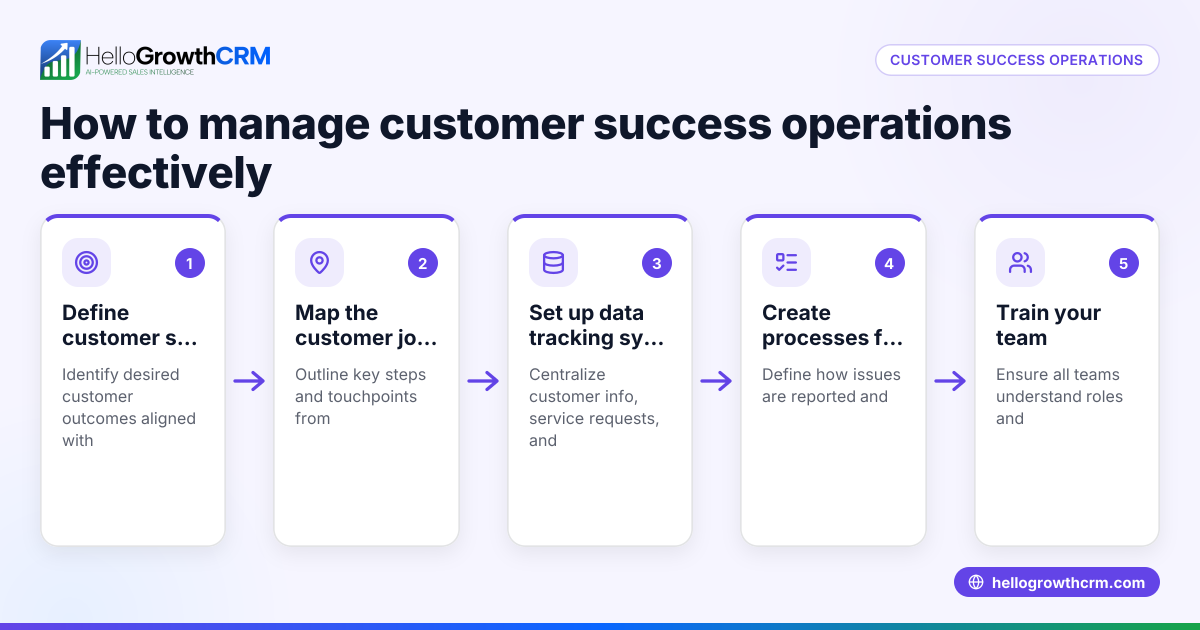
Servicing customers means providing ongoing support and assistance after a sale to ensure customers are satisfied, their issues are resolved quickly, and they continue to see value in your product or service. This helps build loyalty, encourages repeat business, and generates referrals. This article covers why servicing customers is critical for small businesses, a step-by-step guide to effective customer service, a practical example with numbers, common mistakes, and how HelloGrowthCRM supports this process.
Why this comes up / what goes wrong
Small-business owners often face challenges in servicing customers because they juggle sales, operations, and support with limited resources. Without a clear system, customer requests can get lost, follow-ups delayed, and issues unresolved. This leads to unhappy customers, lost repeat sales, and damaged reputation. Many small businesses start with informal methods like text messages, emails, or spreadsheets, which don’t scale or track service history well. When service requests are scattered, it’s hard to know customer health or spot referral opportunities. This can cause stress and inefficiency for the owner and the team.
Step-by-step
- Capture customer details and service requests in one place: Record every customer’s contact info, purchase history, and any service requests or issues on a single system. Check that all team members use it consistently.
- Acknowledge service requests promptly: When a customer reaches out, send a quick confirmation that you received their request. Check that this response is timely and clear.
- Assign and track service tickets: Create tickets for each issue or request and assign them to the right team member. Check ticket status regularly to ensure progress.
- Use a knowledge base for common questions: Have a reference library of FAQs and solutions to speed up responses. Check that it is updated and accessible to your team and customers.
- Communicate clearly and regularly: Keep customers informed about the status of their requests via their preferred channels like WhatsApp, SMS, or email. Check that messages are clear and timely.
- Resolve issues and confirm customer satisfaction: Once the service request is completed, confirm with the customer that they are satisfied. Check for any follow-up needs.
- Track referrals and repeat business: Encourage happy customers to refer others and keep track of these referrals. Check referral program results periodically.
- Review customer health and service metrics: Regularly assess customer satisfaction, ticket resolution times, and repeat sales to identify improvement areas. Check dashboards or reports for insights.
Example (fictional figures)
Linda runs a landscaping business in Charlotte, North Carolina. On 04/15/2026, she received a service request from a customer for lawn maintenance issues.
- Customer called with a problem: brown patches on lawn.
- Linda logged the request as a ticket in her system.
- She assigned the ticket to her technician.
- Technician fixed the problem within 2 days.
- Linda followed up with the customer on 04/17/2026 by WhatsApp to confirm satisfaction.
- Customer was happy and referred a neighbor.
Financial impact:
- Average job value: $350
- Referral job value: $400
Linda’s revenue from this service cycle:
$350 + $400 = $750
This example shows how prompt, tracked service and follow-up can lead to repeat business and referrals, increasing revenue.
Common mistakes
- Not logging service requests centrally: Prevent by using a CRM or ticket system to capture all customer interactions.
- Slow or no acknowledgment of requests: Prevent by setting a policy to respond within a reasonable time frame to ensure timely acknowledgment of requests.
- Poor communication during resolution: Prevent by updating customers regularly via their preferred channel like WhatsApp or SMS; see WhatsApp and SMS CRM.
- Ignoring customer feedback after service: Prevent by always confirming satisfaction and asking for referrals.
- No knowledge base for common issues: Prevent by building and maintaining a reference library; this helps your team respond faster.
- Failing to track referrals or repeat sales: Prevent by using referral tracking features and reviewing customer health regularly; see customer health score.
Doing this in HelloGrowthCRM
HelloGrowthCRM helps you keep service requests on the same customer record as the deal, so all information stays organized. Its customer portal lets your clients submit and track support tickets themselves. The system supports referrals and includes a knowledge base to speed up issue resolution. Using HelloGrowthCRM, your team can handle customer service efficiently without losing track of requests or customer history. Learn more about HelloGrowthCRM for the United States.
Frequently asked questions
What does servicing customers include beyond the initial sale? Servicing customers includes support, answering questions, fixing problems, providing updates, and managing ongoing needs after the sale. It ensures customers remain satisfied and loyal.
How can I keep track of multiple service requests from different customers? Using a CRM with ticketing features helps you log, assign, and track all service requests in one place. This prevents requests from being forgotten or delayed.
Why is communication important in servicing customers? Clear, regular communication reassures customers their issues are being handled and builds trust. Using channels like WhatsApp or SMS can make communication more immediate and convenient.
How do referrals relate to servicing customers? Satisfied customers are more likely to refer others. Tracking referrals as part of your service process helps you measure success and reward loyal customers.
Can I automate some parts of servicing customers? Yes, you can automate acknowledgments, follow-ups, and reminders using sequences in a CRM. This saves time and ensures consistent communication.
Key takeaways
- Servicing customers means supporting them after the sale to keep them satisfied and loyal.
- Use a system to capture and track all service requests centrally.
- Communicate promptly and clearly via channels customers prefer, like WhatsApp or SMS.
- Confirm issue resolution and encourage referrals to grow your business.
- Avoid common mistakes like slow responses and scattered information by using CRM tools.
- HelloGrowthCRM offers customer portals, tickets, referrals, and knowledge base features to streamline service.
Start servicing your customers better today. Start on the Free Forever plan (200 leads, no credit card).
Ready to put this into practice?
Set up your pipeline, WhatsApp follow-ups, and AI lead scoring in minutes — free, no credit card.
Try HelloGrowthCRM freeGet CRM tips in your inbox
Join thousands of sales professionals who get weekly insights on CRM strategy, AI automation, and pipeline optimization.

The HelloGrowthCRM team publishes guides on CRM strategy, AI sales tools, and revenue operations for small business sales teams.