HelloGrowthCRM software
Built for real small-business sales teams
HelloGrowthCRM helps reps qualify faster, follow up on time, and close more deals—with practical automation in one place.
- AI lead scoring and pipeline visibility
- Built-in dialer, WhatsApp, and email automation
- Sales forecasting and RevOps-ready reporting
An SMS strategy is a planned approach to using text messaging to engage leads and customers effectively. It involves deciding when, how often, and what to send via SMS to maximize responses and sales without annoying recipients. This article covers why SMS strategy matters, step-by-step instructions to create one, a practical example with detailed calculations, common pitfalls, and how HelloGrowthCRM supports SMS and WhatsApp messaging.
Why this comes up / what goes wrong
Many small-business owners rely on SMS because it is direct and immediate. They often use a mix of texting, email, and spreadsheets to track leads and follow-ups. Without a clear SMS strategy, messages may be sent too late, too often, or with unclear purpose. This can frustrate customers, cause lost leads, and miss sales opportunities. Managing multiple tools separately often leads to inconsistent follow-up and disorganized communication. A clear SMS strategy helps organize messaging, improve lead engagement, and increase sales efficiency.
Step-by-step
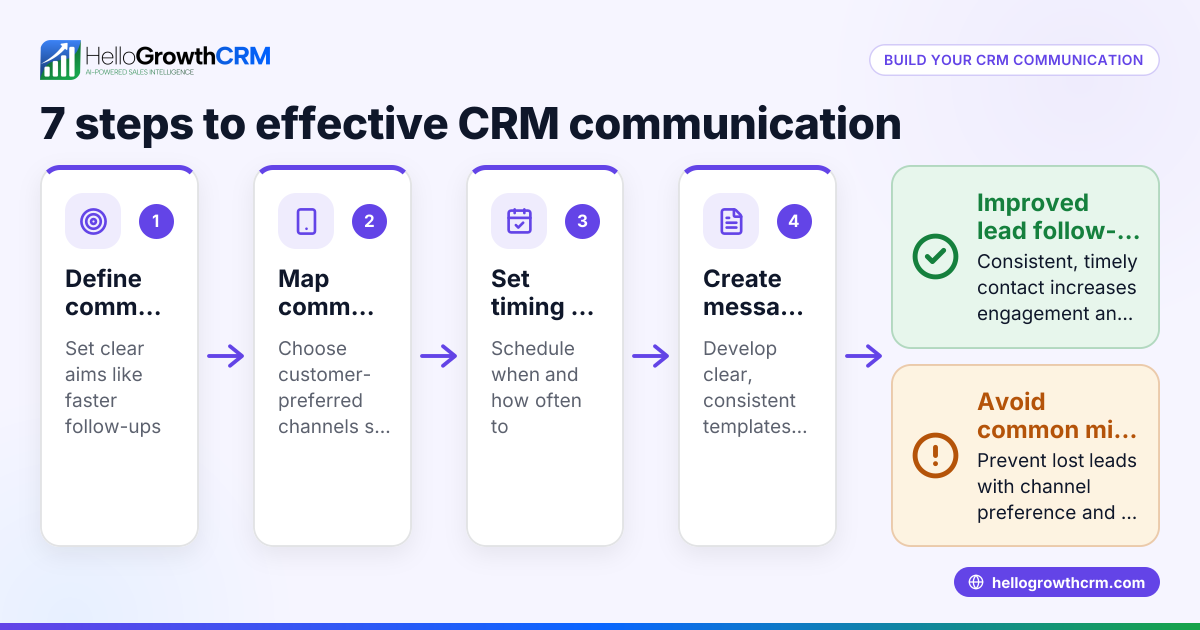
- Define your SMS goals: Decide what you want to achieve with SMS—such as lead follow-up, appointment reminders, promotions, or customer support. Clear goals help tailor your message content and timing.
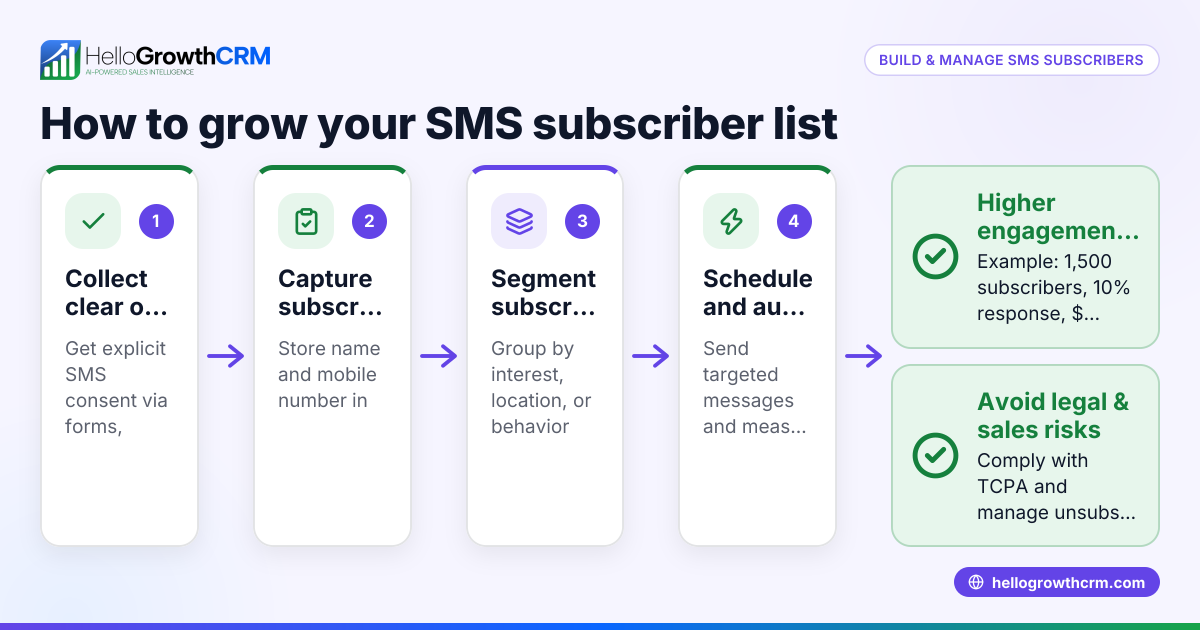
- Segment your contacts: Group leads and customers by factors like interest, sales funnel stage, or past interactions. Sending relevant messages increases engagement.
- Create message templates: Write concise, clear, and personalized SMS templates for different situations (welcome messages, follow-ups, offers).
- Set a sending schedule: Plan the timing and frequency of your messages, considering time zones and avoiding spamming recipients.
- Automate messaging where possible: Use scheduling tools and triggers to send messages automatically based on customer actions or key dates.
- Monitor responses and adjust: Track reply rates and conversions to refine your messaging and timing.
- Ensure compliance: Follow US legal requirements for SMS marketing, including obtaining explicit opt-in consent and providing opt-out options.
Example (fictional figures)
GreenLeaf Landscaping, a small landscaping contractor in Charlotte, North Carolina, wants to increase appointment bookings using SMS.
- They have 500 leads in their CRM.
- They plan to send an SMS offering a 10% discount on spring clean-up services.
- The cost per SMS message is $0.05.
Calculations: 500 leads × $0.05 = $25 total SMS cost Estimated 20% positive response rate: 500 leads × 20% = 100 responses Of those, 60% book appointments: 100 responses × 60% = 60 bookings Average revenue per booking is $300: 60 bookings × $300 = $18,000 total revenue Return on SMS spend: $18,000 revenue - $25 SMS cost = $17,975 profit
Breaking down the math step-by-step:
500 × $0.05 = $25 500 × 0.20 = 100 100 × 0.60 = 60 60 × $300 = $18,000 $18,000 - $25 = $17,975
This example shows how a focused SMS strategy can generate significant returns with minimal investment.
Common mistakes
- Sending too many messages: Avoid by setting a clear schedule and respecting opt-out requests.
- Generic messaging: Prevent by segmenting contacts and personalizing SMS content.
- Ignoring responses: Track and promptly follow up on replies.
- Not complying with regulations: Ensure opt-in consent and provide opt-out instructions to meet US legal requirements.
- Using multiple disconnected tools: Consolidate communication in one CRM to avoid lost leads and confusion.
How to Know If Your SMS Strategy Is Working
To make sure your SMS efforts pay off, keep an eye on key signs of success. Ask yourself:
- Are more customers responding to your messages?
- Is the number of opt-outs staying low or decreasing?
- Are you seeing an increase in appointments, sales, or other goals tied to your SMS?
- Do customers reply with questions or positive feedback?
- Are your messages being delivered on time without technical issues?
Track these indicators regularly. If responses drop or opt-outs rise, it’s time to revisit your message content, timing, or frequency. Consistent monitoring helps you fine-tune your approach, ensuring you stay relevant and respectful to your audience while meeting your business objectives.
Doing this in HelloGrowthCRM
HelloGrowthCRM supports SMS and WhatsApp messaging by logging all conversations on each lead’s record. Your team can view message history and send follow-ups as SMS or WhatsApp messages directly from the CRM. This keeps your SMS strategy organized and consistent. Learn more about these features in WhatsApp and SMS CRM and how the built-in CRM dialer helps your sales team stay connected.
Frequently asked questions
What is the best time to send SMS messages? The best time varies by audience, but mid-morning or early evening on weekdays often works well. Avoid early mornings, late nights, and weekends unless your customers expect it.
How often should I send SMS messages? Frequency depends on your business and audience tolerance. Start with 1-2 messages per week and adjust based on response and opt-out rates.
Can SMS be used for promotions and reminders? Yes, SMS is effective for time-sensitive promotions and appointment reminders since it reaches customers directly on their phones.
Is SMS marketing legal without consent? No, you must have explicit opt-in consent before sending marketing SMS. Always provide clear opt-out options.
How does HelloGrowthCRM help with SMS follow-up? This CRM logs WhatsApp and SMS conversations on lead records and enables sending follow-up messages from the same platform, reducing missed leads and improving team coordination. See more on WhatsApp and SMS CRM.
Can I manage all my messaging channels in one place? Yes, this CRM integrates SMS and WhatsApp messaging with your sales pipeline, helping you manage all conversations efficiently in one CRM. Learn about HelloGrowthCRM for the United States here.
Key takeaways
- An SMS strategy plans what, when, and how to text leads and customers.
- Segment contacts and personalize messages to increase engagement.
- Schedule and automate messages to maintain consistent follow-up.
- Track responses and adjust your approach based on results.
- Use a CRM that logs SMS and WhatsApp conversations to keep communication organized.
Start building your SMS strategy and manage messages effectively with HelloGrowthCRM. You can Start on the Free Forever plan (200 leads, no credit card) today.
Ready to put this into practice?
Set up your pipeline, WhatsApp follow-ups, and AI lead scoring in minutes — free, no credit card.
Try HelloGrowthCRM freeGet CRM tips in your inbox
Join thousands of sales professionals who get weekly insights on CRM strategy, AI automation, and pipeline optimization.

The HelloGrowthCRM team publishes guides on CRM strategy, AI sales tools, and revenue operations for small business sales teams.