HelloGrowthCRM software
Built for real small-business sales teams
HelloGrowthCRM helps reps qualify faster, follow up on time, and close more deals—with practical automation in one place.
- AI lead scoring and pipeline visibility
- Built-in dialer, WhatsApp, and email automation
- Sales forecasting and RevOps-ready reporting
A social sales cadence is a structured schedule of social media and sales interactions aimed at engaging prospects consistently to increase conversions. It mixes posts, messages, calls, and emails over a timeline to nurture leads and keep your business top of mind. This guide covers why small-business owners need a social sales cadence, how to build one, common mistakes to avoid, an example with figures, and how HelloGrowthCRM can help manage your sales process.
Why this comes up / what goes wrong
Small business owners often rely on scattered social media posts, random messages, or occasional calls to generate leads. Without a planned social sales cadence, follow-ups get missed, prospects lose interest, and sales slow down. For example, a plumbing company might post on Facebook but fail to follow up on inquiries consistently, losing potential customers to competitors who engage more reliably. Owners and sales teams struggle to balance social outreach with calls and emails, leading to slow or no responses. They want a way to organize these touchpoints to build relationships without overwhelming prospects or letting leads slip through the cracks.
Step-by-step
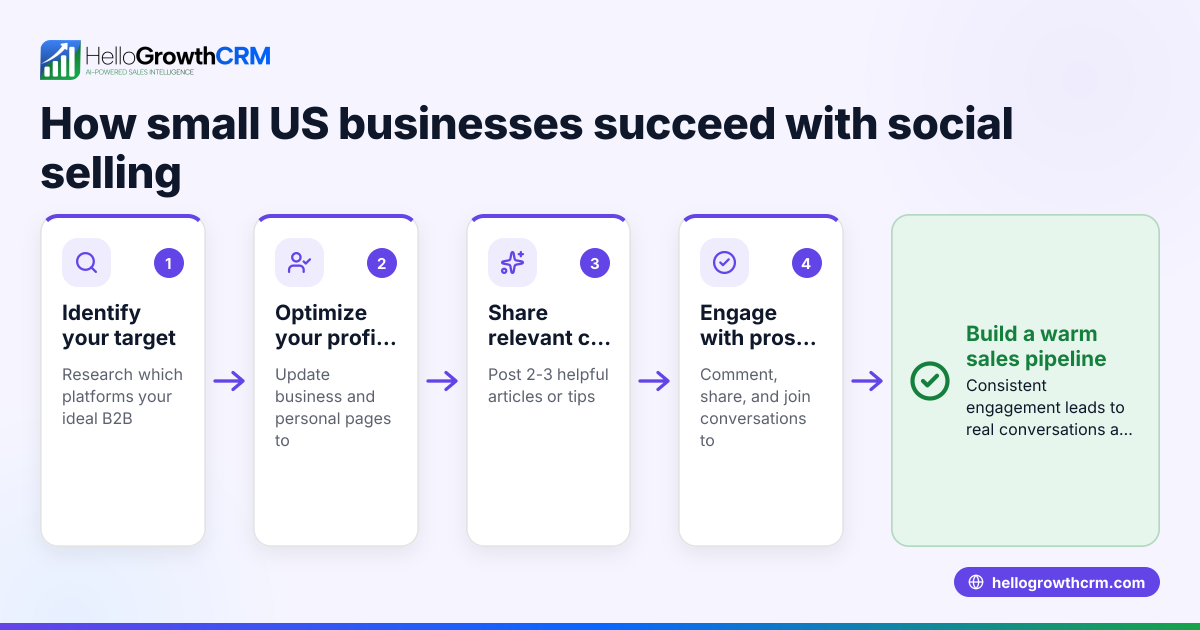
- Define your target audience and social platforms. Identify who your ideal customers are and the social channels they use most (e.g., LinkedIn, Facebook, Instagram).
- Check that your chosen platforms match your customers’ preferences.
- Map out your sales stages. Outline the typical journey from first contact to closing the sale.
- Verify you understand when to introduce social touches versus calls or emails.
- Create a multi-touch sequence. Plan a mix of social posts, direct messages, calls, and emails spaced over days or weeks.
- Ensure no step is too frequent or too sparse to keep prospects engaged without annoyance.
- Set reminders and follow-up dates. Use a CRM or calendar to schedule each contact and follow-up.
- Check that every lead has a next action date to avoid forgotten prospects.
- Personalize your messages. Tailor content to each prospect’s interests and stage in the pipeline.
- Confirm your messages are relevant and avoid generic outreach.
- Track responses and adjust cadence. Monitor which touchpoints get replies and tweak timing or content accordingly.
- Review engagement data weekly to optimize your approach.
- Integrate with your sales pipeline. Align social touches with deal stages to move leads forward systematically.
- Make sure social sales cadence supports pipeline progress, not just social activity.
- Train your team. Ensure everyone understands the cadence steps and tools used.
- Check that roles and responsibilities for follow-up are clear.
- Use technology to automate and log activities. Employ tools like HelloGrowthCRM to capture leads from web forms and schedule follow-ups.
- Verify automation reduces manual work but keeps personal touches intact.
Example (fictional figures)
A plumbing company in Austin, Texas, wants to implement a social sales cadence to follow up on leads generated from Facebook and their website.
- They identify their target audience as homeowners aged 30-55.
- Their sales stages: New lead, Contacted, Quote sent, Follow-up, Closed.
- They plan a 14-day cadence:
- Day 1: Facebook message
- Day 3: Follow-up call
- Day 5: Email with a discount offer
- Day 10: WhatsApp message
- Day 14: Final call
They track 50 new leads in a month.
Assuming 30% respond to the Facebook message:
50 × 30% = 15 leads respond
Of those, 60% answer the follow-up call:
15 × 60% = 9 leads engaged
They send quotes to 9 leads, with a 50% quote acceptance rate:
9 × 50% = 4.5 ≈ 5 deals closed
Average deal value is $1,200.
Total revenue from these deals:
5 × $1,200 = $6,000
This cadence helps the company systematically engage leads and close sales rather than relying on random outreach.
Common mistakes
- Ignoring follow-up scheduling. Leads get forgotten without clear next steps. Prevent this by setting reminders in your CRM.
- Overloading prospects with too many messages. This causes annoyance and opt-outs. Space out your contacts thoughtfully.
- Using generic, impersonal messages. Leads disengage if they feel like just another number. Personalize based on interests and previous interactions.
- Not aligning social touches with sales stages. Social activity without pipeline context wastes time. Integrate your cadence with your deal stages.
- Failing to track results. Without data, you can’t improve your cadence. Review engagement and adjust regularly.
- Training gaps in the team. Inconsistent execution happens if roles aren’t clear. Provide clear instructions and monitor compliance.
Doing this in HelloGrowthCRM
HelloGrowthCRM supports your social sales cadence by managing your deals pipeline where every quotation sent appears as a deal at the 'quote sent' stage with a follow-up date, ensuring no lead is forgotten. For businesses with field teams, territories and field operations tools let reps log visits directly from their phone, and managers can see daily activity. If you lack a dedicated sales manager, Managed RevOps provides weekly follow-up execution and pipeline hygiene support, helping keep your cadence active and effective. Learn more about HelloGrowthCRM for the United States, its WhatsApp and SMS CRM, and the built-in CRM dialer.
Frequently asked questions
What is a social sales cadence? A social sales cadence is a planned series of social media interactions combined with calls and emails designed to engage prospects over time and move them through your sales pipeline.
How often should I contact prospects in a social sales cadence? Frequency depends on your industry and prospect preferences, but spacing contacts every few days over 1-2 weeks is common to stay top of mind without overwhelming.
Can I automate social sales cadences? Yes, many CRMs allow scheduling and automating messages and reminders, but personalization and timely follow-up remain essential for success.
How do I measure if my social sales cadence works? Track response rates, conversion from lead to deal, and overall sales growth. Adjust your cadence based on which touchpoints generate engagement.
Should social sales cadence replace phone calls or emails? No, it complements them. Social interactions support relationship building, but calls and emails are crucial for detailed conversations and closing deals.
How does HelloGrowthCRM help with social sales cadence? HelloGrowthCRM tracks deals with follow-up dates, supports field operations, and offers Managed RevOps to keep your pipeline active and your sales cadence on schedule.
Key takeaways
- A social sales cadence schedules social media and sales touches to engage prospects consistently.
- Define your audience, map sales stages, and create a balanced multi-touch sequence.
- Use reminders and personalization to avoid lost leads and disengagement.
- Track results and adjust timing and content based on prospect responses.
- Avoid common mistakes like ignoring follow-up or over-contacting.
- HelloGrowthCRM helps manage your pipeline and follow-ups to keep your cadence effective.
Start your social sales cadence today and keep leads moving with a clear plan. To get started managing your sales pipeline and follow-ups easily, Start on the Free Forever plan (200 leads, no credit card).
Ready to put this into practice?
Set up your pipeline, WhatsApp follow-ups, and AI lead scoring in minutes — free, no credit card.
Try HelloGrowthCRM freeGet CRM tips in your inbox
Join thousands of sales professionals who get weekly insights on CRM strategy, AI automation, and pipeline optimization.

The HelloGrowthCRM team publishes guides on CRM strategy, AI sales tools, and revenue operations for small business sales teams.