HelloGrowthCRM software
Built for real small-business sales teams
HelloGrowthCRM helps reps qualify faster, follow up on time, and close more deals—with practical automation in one place.
- AI lead scoring and pipeline visibility
- Built-in dialer, WhatsApp, and email automation
- Sales forecasting and RevOps-ready reporting
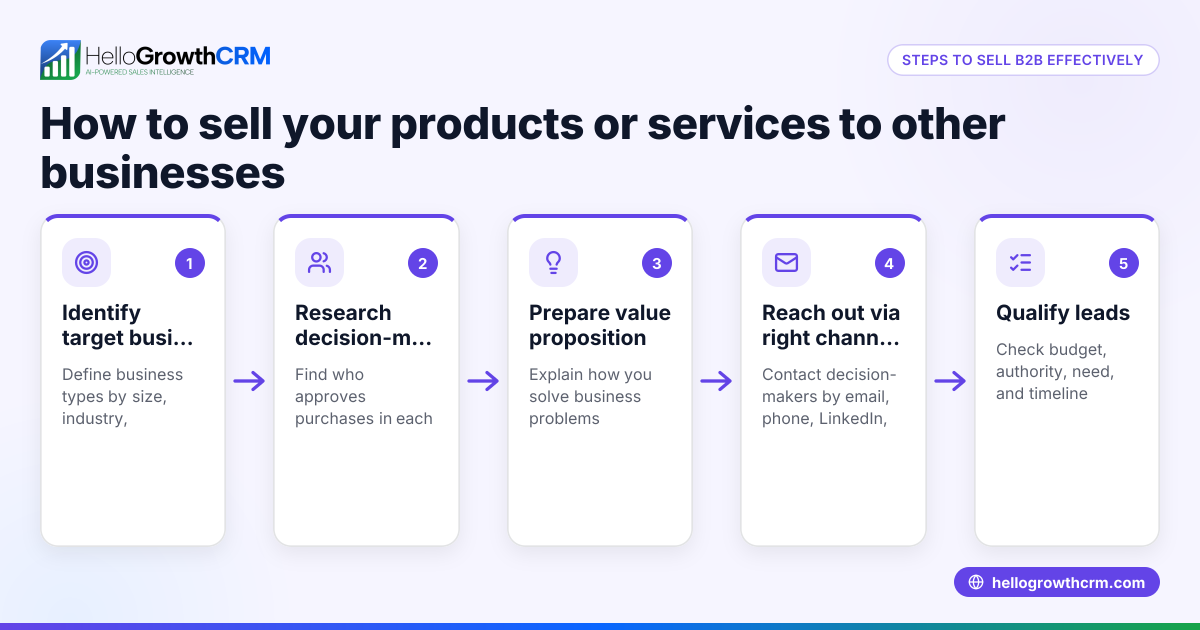
Social selling B2B means using social media platforms and online networks to build relationships and engage with other businesses to drive sales. It focuses on connecting personally, sharing useful content, and nurturing leads rather than cold outreach. This article covers why social selling is important for small US businesses, offers a step-by-step guide to get started, a realistic example with detailed calculations, common mistakes to avoid, and answers frequently asked questions.
Why this comes up / what goes wrong
Many small business owners in the US struggle with traditional sales methods such as cold calling, emailing, or managing leads through text messages and spreadsheets. These approaches often lead to slow follow-up and lost leads. Without a structured way to engage prospects on social platforms where business buyers spend their time—like LinkedIn or industry-specific forums—small businesses miss opportunities to build credibility and warm relationships before pitching. This results in lower conversion rates and stalled sales pipelines.
Social selling addresses these issues by enabling businesses to connect with prospects in a more natural, trust-building way. However, many small business owners don’t know how to start or manage social selling effectively, leading to inconsistent efforts and missed chances.
Step-by-step
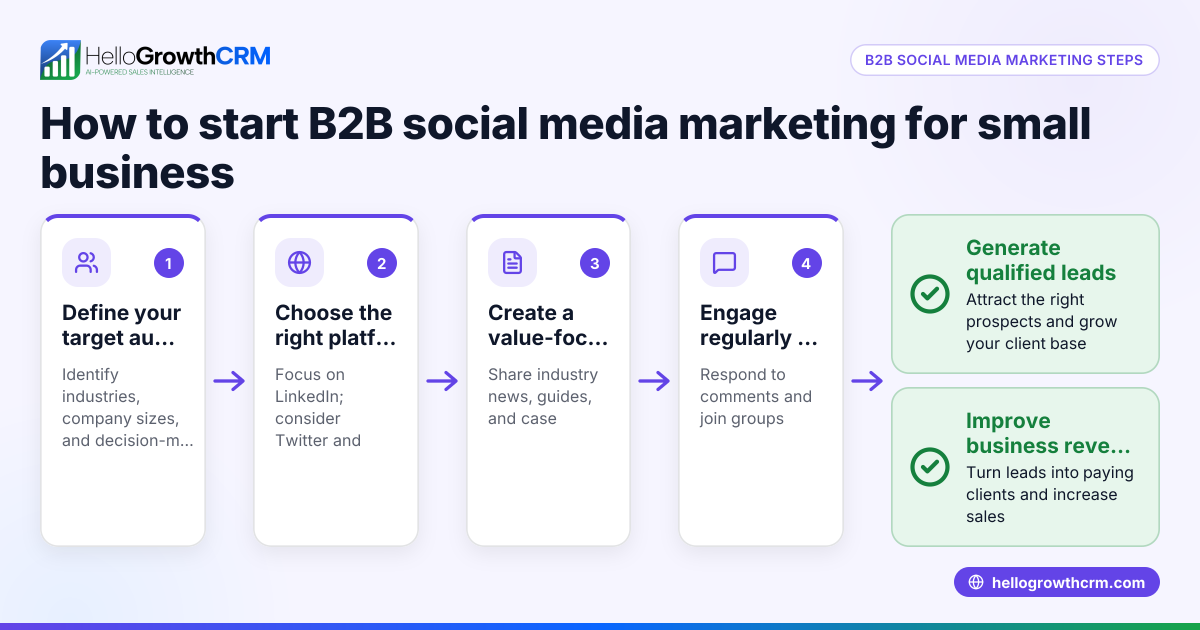
- Identify your target audience on social platforms. Research which social media platforms your ideal B2B clients use most often. LinkedIn is typically the top choice, but Twitter and niche forums may also be relevant. Focus your efforts where your prospects are active.
- Optimize your social profiles. Ensure your business pages and personal profiles clearly state who you serve, your expertise, and include professional images. This builds immediate trust and makes it easier for prospects to understand your value.
- Share relevant content regularly. Post articles, tips, case studies, or news that your target audience finds useful. Aim for at least 2-3 posts per week to maintain visibility without overwhelming your audience. Monitor which posts get engagement and adjust your content accordingly.
- Engage with prospects’ content. Comment thoughtfully, share their posts, and join conversations to show genuine interest. Avoid hard selling at this stage; focus on building rapport and credibility.
- Connect and start conversations. Send personalized connection requests or messages referencing shared interests or posts. Track responses carefully and follow up promptly to keep the momentum going.
- Use social selling tools cautiously. Track leads and interactions using a CRM system suited for social channels. Timely follow-ups are essential to avoid losing leads. A CRM with a built-in CRM dialer can help manage calls and follow-ups efficiently.
- Move conversations offline or to direct sales channels. Once trust is established, invite prospects to calls, demos, or meetings to advance the sale.
This process helps you consistently build relationships and keep your sales pipeline active. For managing sales teams with WhatsApp, SMS, and email sequences plus pipeline boards, see HelloGrowthCRM for the United States.
Example (fictional figures)
A residential real-estate team in Phoenix, Arizona wants to grow commercial property sales to small businesses using LinkedIn social selling.
- They identify 150 local small businesses as their target audience.
- They post 3 relevant articles weekly about commercial real estate trends and financing.
- Over 3 months, 20 businesses engage with their posts.
- The team sends personalized connection requests to these 20 businesses.
- They receive 15 acceptances.
- They start conversations with 10 of these new connections.
- From these, 5 agree to meetings.
- The team closes deals with 3 businesses, each deal worth $150,000.
Calculations: $150,000 × 3 deals = $450,000 total revenue
This example shows how steady social engagement can convert into meaningful sales opportunities.
Common mistakes
- Not targeting the right audience: Prevent this by researching where your ideal clients spend time online before investing effort.
- Overly promotional posts: Prevent by focusing on helpful, valuable content instead of constant selling.
- Ignoring engagement: Prevent by responding quickly to comments and messages to keep conversations alive.
- Not tracking interactions: Prevent by using a CRM or tracking tool to follow leads and schedule follow-ups, such as a CRM with a built-in CRM dialer.
- Giving up too soon: Prevent by committing to consistent posting and engagement over weeks or months.
Frequently asked questions
What social platforms work best for B2B social selling? LinkedIn is the most popular platform for B2B social selling due to its professional focus. Twitter and industry-specific forums can also be effective depending on your niche.
How often should I post content for social selling? Aim for a consistent posting schedule to maintain visibility and engagement without overwhelming your audience.
Can social selling replace traditional sales calls? Social selling complements traditional methods by warming up leads and building trust, but direct calls or meetings are often needed to close deals.
How do I measure success in social selling? Track metrics like connection growth, engagement rates, conversations started, meetings booked, and deals closed. Using a CRM that supports WhatsApp and SMS CRM can help manage these interactions.
Is social selling suitable for very small businesses? Yes, social selling can be especially valuable for small businesses with limited cold outreach resources because it builds relationships organically.
Key takeaways
- Social selling B2B uses online platforms to build relationships and trust with business prospects.
- Focus on the right social channels, share helpful content, and engage genuinely.
- Track interactions and follow up promptly to move leads through your sales pipeline.
- Avoid common mistakes like poor targeting, over-promotion, and neglecting engagement.
- Use tools and CRMs tailored for social and messaging channels to stay organized.
Start applying social selling today by focusing on consistent, value-driven engagement. To manage your leads and sales pipeline efficiently, consider starting with the Free Forever plan (200 leads, no credit card) available at HelloGrowthCRM.
Ready to put this into practice?
Set up your pipeline, WhatsApp follow-ups, and AI lead scoring in minutes — free, no credit card.
Try HelloGrowthCRM freeGet CRM tips in your inbox
Join thousands of sales professionals who get weekly insights on CRM strategy, AI automation, and pipeline optimization.

The HelloGrowthCRM team publishes guides on CRM strategy, AI sales tools, and revenue operations for small business sales teams.