HelloGrowthCRM software
Built for real small-business sales teams
HelloGrowthCRM helps reps qualify faster, follow up on time, and close more deals—with practical automation in one place.
- AI lead scoring and pipeline visibility
- Built-in dialer, WhatsApp, and email automation
- Sales forecasting and RevOps-ready reporting
B2B social media marketing means using social media platforms to promote your business products or services to other businesses. It focuses on building relationships, sharing industry insights, and generating qualified leads rather than direct consumer sales. This article explains why B2B social media marketing matters, provides a step-by-step guide to get started, shares a practical example, and highlights common mistakes to avoid.
Why this comes up / what goes wrong
Many small-business owners in the US find themselves needing to reach other businesses but struggle with how to do it effectively on social media. Unlike consumer marketing, B2B marketing requires a more strategic approach focused on trust and expertise rather than quick sales. Owners often rely on word of mouth or offline networking, missing out on social media’s potential to generate leads consistently. Without a clear plan, social media efforts can be scattered, inconsistent, or fail to connect with decision-makers at target companies.
Small businesses often have limited time and resources, so they need a focused approach that delivers measurable results. They may also run sales through text messages, email, and spreadsheets, making it harder to track leads generated from social media. Understanding B2B social media marketing helps these businesses create a system that attracts the right prospects and turns them into clients.
Step-by-step
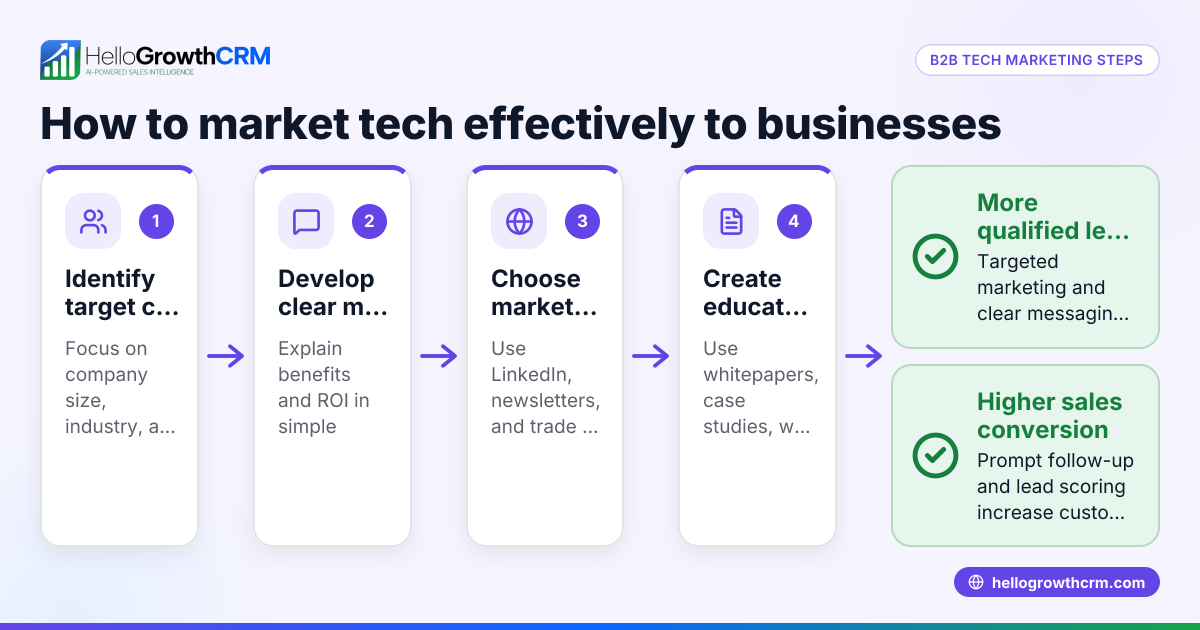
- Define your target audience clearly. Identify the industries, company sizes, and roles (e.g., purchasing managers, CEOs) you want to reach. Check your buyer personas for specifics and update them based on your current best customers.
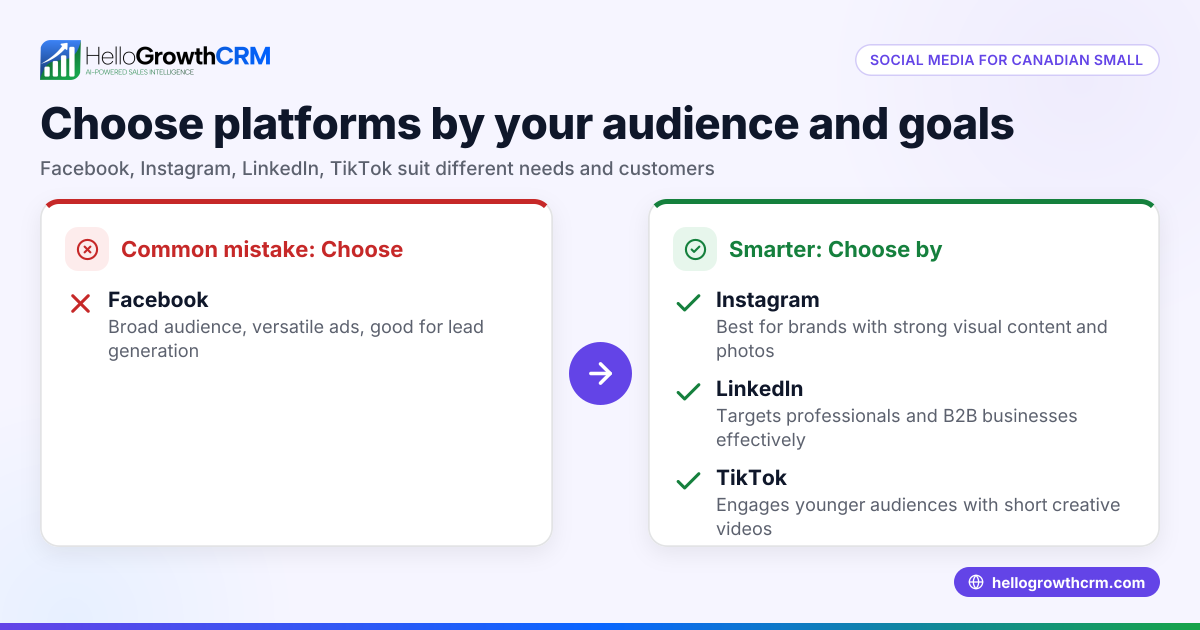
- Choose the right platforms. LinkedIn is the primary B2B channel, but Twitter and Facebook can also be useful depending on your industry. Check where your audience is most active by researching competitors and industry groups.
- Create a content plan focused on value. Share industry news, how-to guides, case studies, and company updates. Avoid hard selling; instead, educate and build trust. Plan your posts weekly or monthly using a calendar.
- Engage regularly and authentically. Respond to comments, join relevant groups or discussions, and connect personally with prospects. Check your engagement metrics weekly to see what content resonates.
- Use targeted ads and sponsored content. Platforms like LinkedIn allow you to target by job title, company size, and more. Set a budget, monitor ad performance, and adjust your campaigns monthly.
- Capture leads with clear calls to action. Direct prospects to landing pages, webinars, or free resources. Use forms to collect contact information. Check conversion rates and tweak messaging accordingly.
- Measure and optimize your results. Track metrics like follower growth, engagement rate, website traffic from social, and leads generated. Review monthly and refine your strategy based on data.
For small businesses looking for a CRM to manage leads from social media and other channels, consider a free CRM for small business that integrates communication and lead tracking. Using a CRM helps organize contacts and follow up promptly, reducing lost leads.
Example (fictional figures)
A two-location dental practice in Columbus, Ohio, wants to generate new business clients for its corporate dental plans. They start a LinkedIn campaign on 01/15/2026.
- Initial monthly budget: $1,000
- Cost per lead (CPL) estimated: $50
- Expected leads per month = $1,000 ÷ $50 = 20 leads
- Conversion rate from lead to client: 25%
- New clients per month = 20 × 25% = 5 clients
- Average revenue per client per year: $2,400
- Revenue from new clients per month = 5 × $2,400 = $12,000
This example shows how a modest social media budget can bring measurable new clients and revenue, making B2B social media marketing a practical investment.
Common mistakes
- Not targeting the right audience. Prevent by researching your ideal customer profile before posting or advertising. Use platform tools to refine your audience.
- Posting inconsistent or irrelevant content. Prevent by creating a content calendar and sticking to topics your audience cares about. Plan posts ahead to maintain regularity.
- Ignoring engagement and communication. Prevent by scheduling regular time to respond and participate in conversations. Engagement builds trust and visibility.
- Focusing only on follower counts, not leads. Prevent by tracking lead generation and conversions, not vanity metrics like likes or followers.
- Using social media without a CRM to capture and follow up leads. Prevent by adopting a CRM that suits small businesses, like a WhatsApp and SMS CRM, to organize contacts and automate follow-ups.
- Neglecting to measure and optimize. Prevent by regularly reviewing analytics to understand what works and adjusting your strategy accordingly.
Frequently asked questions
What is B2B social media marketing? B2B social media marketing is promoting your business’s products or services to other businesses using social platforms. It emphasizes building relationships and trust over direct selling.
Which social media platforms work best for B2B? LinkedIn is the most effective platform for B2B marketing because it’s designed for professional networking. Twitter and Facebook can also work depending on your industry and audience.
How often should I post on social media for B2B? Consistency is key. Aim for 3-5 posts per week, mixing educational content, company news, and engagement posts. Regular activity keeps your brand visible.
How can I measure success in B2B social media marketing? Track metrics like engagement rate, website traffic from social posts, number of leads generated, and conversion rates to paying clients.
Can small businesses do B2B social media marketing without a big budget? Yes. Organic content and targeted ads with modest budgets can generate leads. Using a free CRM for small business can help manage those leads effectively.
How do I keep track of leads from social media? Use a CRM to capture and organize leads from social media campaigns. This helps ensure timely follow-up and better conversion rates.
Key takeaways
- B2B social media marketing targets other businesses by sharing valuable content and building trust.
- LinkedIn is the primary platform, but others may fit depending on your audience.
- Define your target audience and create a consistent content plan.
- Engage actively and use targeted ads to generate qualified leads.
- Track leads and conversions, not just followers or likes.
- Avoid common mistakes by planning, engaging, measuring, and using a CRM to manage leads.
Start your B2B social media marketing journey today and organize your leads easily with a free CRM for small business.
Ready to put this into practice?
Set up your pipeline, WhatsApp follow-ups, and AI lead scoring in minutes — free, no credit card.
Try HelloGrowthCRM freeGet CRM tips in your inbox
Join thousands of sales professionals who get weekly insights on CRM strategy, AI automation, and pipeline optimization.

The HelloGrowthCRM team publishes guides on CRM strategy, AI sales tools, and revenue operations for small business sales teams.