HelloGrowthCRM software
Built for real small-business sales teams
HelloGrowthCRM helps reps qualify faster, follow up on time, and close more deals—with practical automation in one place.
- AI lead scoring and pipeline visibility
- Built-in dialer, WhatsApp, and email automation
- Sales forecasting and RevOps-ready reporting
A solar sales pitch is a focused presentation that explains the value of solar energy solutions to potential customers. It highlights benefits like cost savings, environmental impact, and energy independence, aiming to persuade the prospect to take the next step toward purchase or consultation. This article explains why mastering this pitch is important for small businesses, details the steps to build and deliver it, provides a realistic example, outlines common pitfalls, and shows how HelloGrowthCRM can support your sales process.
Why this comes up / what goes wrong
Small-business owners in solar sales often struggle to convert leads because their pitch is unclear, too technical, or not tailored to the customer's needs. Without a structured approach, they lose prospects to competitors or fail to follow up effectively. Many solar salespeople rely on informal conversations or scattered notes, which leads to missed opportunities and slow responses. This is especially common when sales happen over text, email, or spreadsheets without a proper CRM to track progress. Understanding how to craft and use a solar sales pitch helps close deals faster and build trust with customers.
Step-by-step
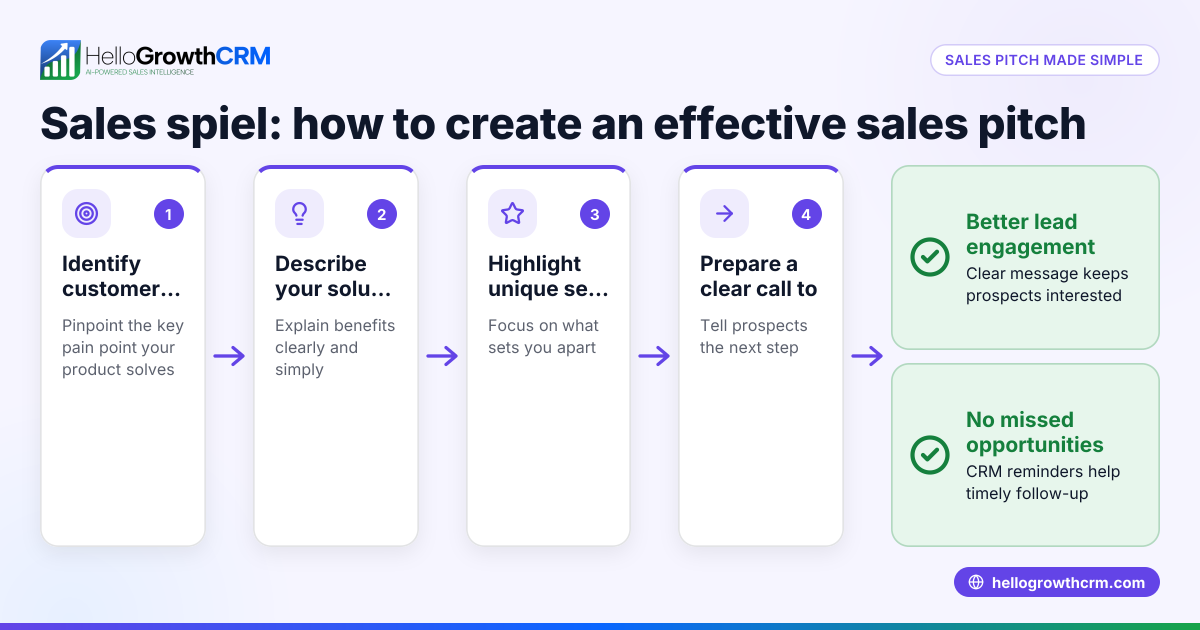
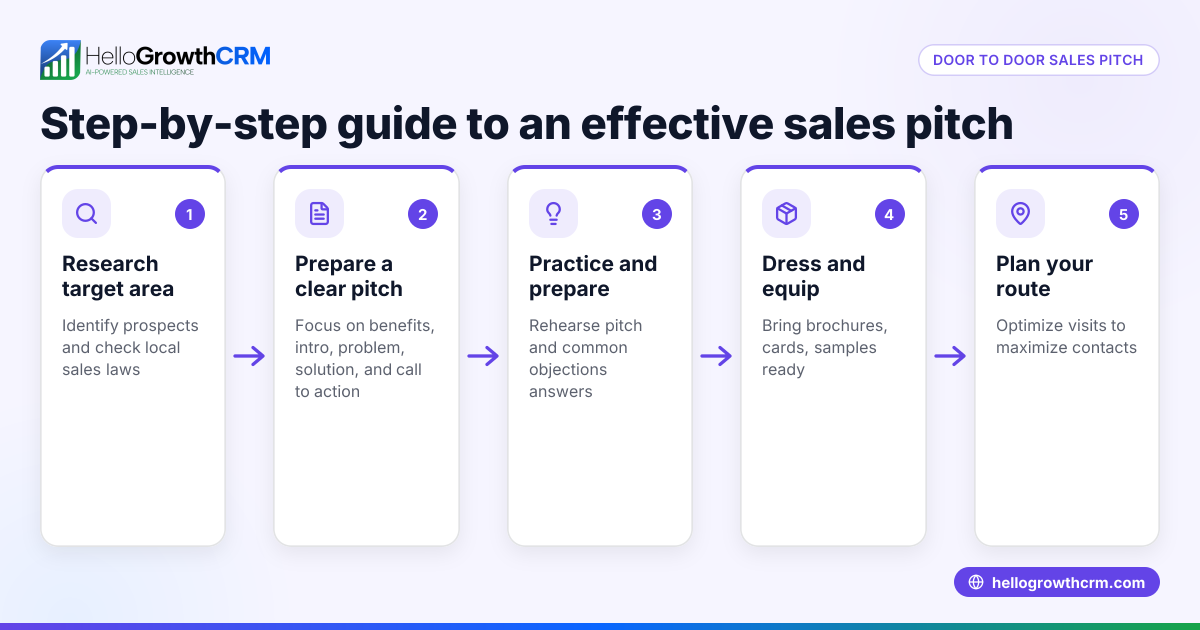
- Research your prospect: Understand their energy needs, location, and potential savings. Check for local solar incentives or financing options that apply.
- Introduce yourself and your company clearly: State your role and the company’s experience in solar solutions.
- Highlight key benefits: Focus on cost savings, environmental impact, energy independence, and any local incentives.
- Explain the product or service: Describe the solar panels, installation process, warranties, and maintenance in simple terms.
- Address common objections: Prepare answers for concerns about cost, installation disruption, or reliability.
- Provide a personalized estimate or quote: Use data from your research to show potential savings and return on investment.
- Ask for the next step: Schedule a site visit, send detailed proposals, or set up a follow-up call.
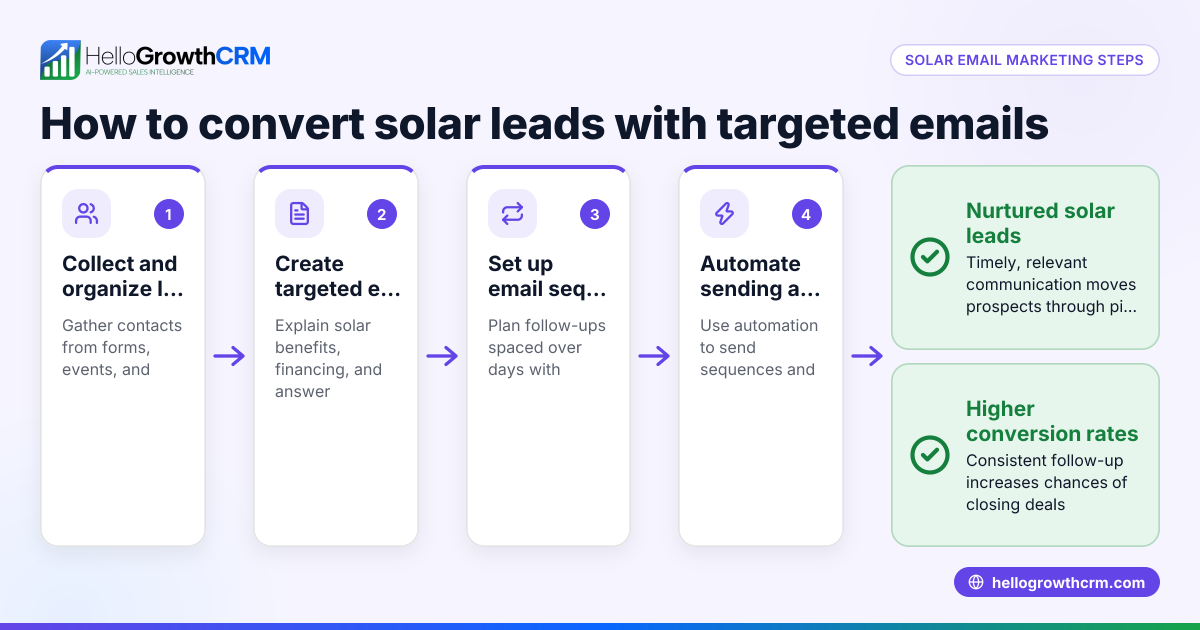
- Follow up consistently: Track your leads and follow-up dates using a CRM to avoid losing momentum.
Check that your pitch is clear, concise, and focused on the customer's benefits. Use simple language and avoid jargon. Confirm the prospect’s questions are answered at each stage.
Example (fictional figures)
Consider a plumbing company in Austin, Texas, exploring solar to reduce energy costs.
- Annual electricity bill: $24,000
- Estimated solar system cost: $72,000
- Expected annual savings: assume 50% of electricity bill = $24,000 × 50% = $12,000
- Payback period: $72,000 ÷ $12,000 = 6 years
Pitch summary: "By installing a solar system costing $72,000, you can reduce your annual electricity expenses from $24,000 to about $12,000, saving $12,000 each year. This means your investment will pay for itself in 6 years, after which your electricity costs will be minimal. We also handle permits and installation with minimal disruption to your plumbing operations."
This example shows how to use concrete numbers to make the pitch relatable and actionable.
Common mistakes
- Ignoring the prospect’s needs: Prevent by researching their energy use and customizing the pitch.
- Overloading with technical details: Prevent by focusing on benefits and simple explanations.
- Failing to address objections: Prevent by preparing answers to common concerns.
- No clear call to action: Prevent by always asking for the next step.
- Poor follow-up: Prevent by using a CRM to track quotes sent and follow-up dates.
- Not using a structured sales process: Prevent by managing deals in a pipeline to avoid lost leads.
Using tools like HelloGrowthCRM can help prevent follow-up mistakes by showing quotations as deals at the 'quote sent' stage with scheduled follow-up dates.
Doing this in HelloGrowthCRM
HelloGrowthCRM supports solar sales teams by managing deals in a pipeline, ensuring no quotation or lead is forgotten. When you send a quote, it appears as a deal at the 'quote sent' stage with a follow-up date, prompting timely action. For teams with field reps, territories and field operations tools let reps log visits from their phones, while managers monitor daily activity. Founders without sales managers can use Managed RevOps services to keep follow-ups active and pipelines clean. Learn more about WhatsApp and SMS CRM, the built-in CRM dialer, and HelloGrowthCRM for the United States.
Frequently asked questions
What is the best way to start a solar sales pitch? Begin by understanding the prospect’s current energy costs and needs. Introduce your company briefly, then quickly highlight how solar can save money and reduce environmental impact.
How do I handle price objections in a solar sales pitch? Explain the long-term savings and payback period clearly. Offer financing options or incentives if available. Emphasize the increase in property value and protection against rising energy costs.
How often should I follow up after sending a solar quote? Follow up within a week of sending the quote to answer questions and encourage the next step. Use a CRM to schedule reminders and keep track of communications.
Can HelloGrowthCRM help me manage solar sales leads? Yes, it tracks deals from first contact to close, shows quotations as deals with follow-up dates, and supports field operations and commissions. Managed RevOps can assist with pipeline hygiene and follow-up execution.
What should I avoid when delivering a solar sales pitch? Avoid technical jargon, rushing through objections, and failing to personalize the pitch. Also, don’t neglect consistent follow-up or lose track of leads.
Key takeaways
- A solar sales pitch clearly explains benefits and addresses customer needs.
- Research and personalize your pitch for each prospect.
- Use simple language and focus on cost savings, incentives, and reliability.
- Always include a clear call to action and follow up promptly.
- Avoid common mistakes like ignoring objections and poor follow-up.
- HelloGrowthCRM helps track deals, manage follow-ups, and organize field sales activities.
Start improving your solar sales process today by managing your leads and deals with HelloGrowthCRM. Start on the Free Forever plan (200 leads, no credit card).
This article is general information, not tax or legal advice. Rules change; confirm the current position with the IRS or your state's department of revenue, or with your CPA, before acting.
Ready to put this into practice?
Set up your pipeline, WhatsApp follow-ups, and AI lead scoring in minutes — free, no credit card.
Try HelloGrowthCRM freeGet CRM tips in your inbox
Join thousands of sales professionals who get weekly insights on CRM strategy, AI automation, and pipeline optimization.

The HelloGrowthCRM team publishes guides on CRM strategy, AI sales tools, and revenue operations for small business sales teams.