HelloGrowthCRM software
Built for real small-business sales teams
HelloGrowthCRM helps reps qualify faster, follow up on time, and close more deals—with practical automation in one place.
- AI lead scoring and pipeline visibility
- Built-in dialer, WhatsApp, and email automation
- Sales forecasting and RevOps-ready reporting
Startups often face unique sales challenges: limited resources, unclear customer profiles, and unpredictable workflows. Many lose leads due to slow or inconsistent follow-up and rely on scattered tools like text messages, emails, and spreadsheets. A clear sales strategy helps founders and small sales teams organize their efforts, prioritize leads, and close deals faster.
Why this comes up / what goes wrong
Startup founders and their small sales teams typically juggle multiple roles. They may not have dedicated sales managers or structured processes. Leads come from different channels, and without a pipeline, it's easy to forget follow-ups or misjudge lead quality. This leads to lost opportunities and slow revenue growth. In the US startup scene, speed and clarity are critical to outpace competitors and build momentum.
Step-by-step
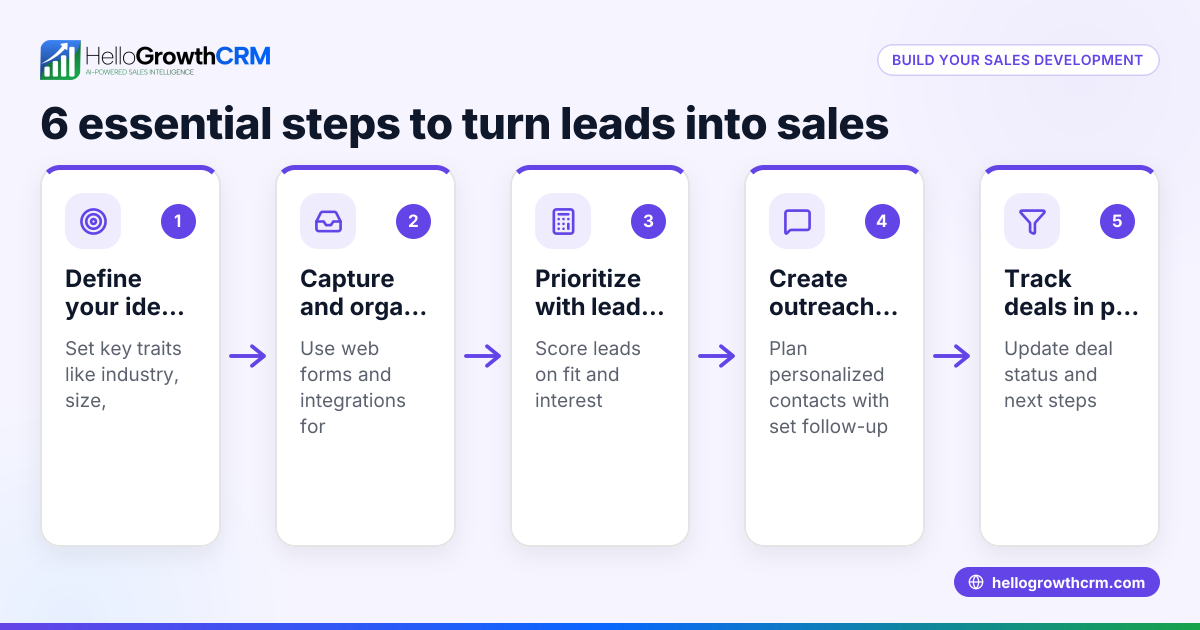
- Define your ideal customer profile (ICP)
- Identify key traits of your best customers (industry, size, pain points).
- Check this against actual leads to focus your outreach.
- Map your sales stages
- Create clear steps from lead capture to closing (e.g., new lead, contacted, qualified, demo scheduled, quote sent, closed).
- Assign criteria for moving leads between stages.
- Set up lead capture and qualification
- Use web forms or integrations to capture leads automatically.
- Qualify leads based on budget, authority, need, and timeline (BANT) or your own criteria.
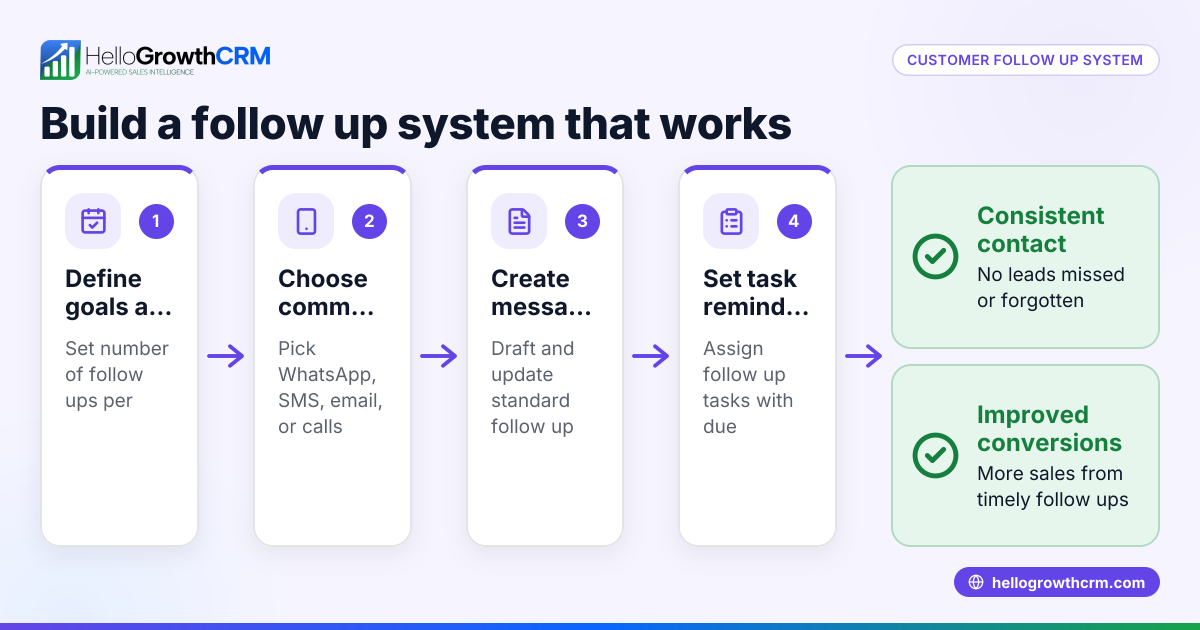
- Establish follow-up routines
- Schedule follow-ups immediately after key actions (e.g., after sending a quote).
- Use reminders or task boards to avoid missed contacts.
- Track deals and forecast sales
- Assign probabilities to each stage to estimate expected revenue.
- Review your pipeline weekly to adjust priorities.
- Analyze and optimize
- Track conversion rates at each stage.
- Identify bottlenecks and refine your process.
- Train your team and assign territories if applicable
- Define who handles which leads or regions.
- Use mobile tools for field reps to log visits and activities.
- Leverage automation and reporting
- Automate sequences for emails, WhatsApp, and SMS.
- Generate weekly KPI reports to stay on track.
For startups and technology companies, these steps help build a scalable sales process. Learn more about Startups and technology companies.
Example (fictional figures)
Consider a two-location dental software startup in Columbus, Ohio, launching a new patient management app. They set a sales target for Q3 2026.
- Target: $500,000 in new contracts
- Average deal size: $25,000
- Sales stages: Lead → Demo → Quote sent → Closed
Step 1: They capture 50 leads from their website and events.
Step 2: Qualify leads, identifying 30 as prospects.
Step 3: Schedule demos with 20 prospects.
Step 4: Send quotes to 15 after demos.
Step 5: Close 10 deals by 09/30/2026.
Calculation:
- 10 deals × $25,000 = $250,000 (actual closed revenue)
- Pipeline value (quotes sent stage): 5 deals × $25,000 = $125,000
- Expected revenue from quotes stage (assumed 60% probability): $125,000 × 60% = $75,000
- Total forecasted revenue = $250,000 + $75,000 = $325,000
This shows the gap to the $500,000 target and where to focus efforts.
Common mistakes
- No defined sales stages: Leads fall through cracks. Prevent by mapping stages clearly.
- Ignoring follow-ups: Leads go cold. Use reminders and task boards.
- Scattered data: Using email, texts, and spreadsheets separately causes lost info. Centralize data.
- No lead prioritization: Treating all leads equally wastes time. Score leads by fit and interest.
- Lack of sales forecasting: No visibility on revenue. Assign probabilities and review pipeline weekly.
- Not leveraging mobile tools: Field reps miss logging visits. Use mobile CRM features.
Avoid these to keep your startup sales process efficient and predictable. Learn more about WhatsApp and SMS CRM.
Doing this in HelloGrowthCRM
HelloGrowthCRM helps startups manage their sales pipeline with Deals (pipeline), where a quotation sent last week appears at the 'quote sent' stage with a follow-up date, ensuring no opportunity is forgotten. For startups with field sales, Territories, field operations and commissions let reps log visits from their phone, while managers monitor daily activity. Founders without sales managers can use Managed RevOps to have a revenue specialist handle follow-ups weekly, keeping the pipeline clean and active. Explore how HelloGrowthCRM supports US startups at HelloGrowthCRM for the United States.
Frequently asked questions
What is the best sales strategy for a startup? The best strategy focuses on identifying your ideal customers, creating a clear sales process with defined stages, and following up consistently. Prioritize leads and use tools to track and forecast sales for better decision-making.
How can startups prioritize leads effectively? Startups should score leads based on factors like budget, authority, need, and timing. Focusing on high-potential leads saves time and increases conversion rates.
Why is follow-up important in startup sales? Consistent follow-up prevents leads from going cold and shows professionalism. Scheduling follow-ups immediately after key actions and using reminders ensures no lead is forgotten.
How do I track sales progress without a dedicated sales manager? Use pipeline management tools to visualize deals and stages. If possible, assign Managed RevOps support to handle weekly follow-ups and pipeline hygiene.
Can field sales reps use mobile CRM tools? Yes, mobile CRM features allow field reps to log visits, capture on-site activity, and sync data with managers in real time, improving accountability and efficiency.
Key takeaways
- Define your ideal customer and map clear sales stages.
- Capture and qualify leads with a consistent process.
- Schedule and track follow-ups to avoid missed opportunities.
- Use pipeline management to forecast and prioritize deals.
- Avoid scattered data by centralizing sales activities.
- Leverage mobile and automation tools for field sales and reporting.
Start building your startup sales strategy today. Start on the Free Forever plan (200 leads, no credit card) with HelloGrowthCRM to organize your sales pipeline and follow-ups effectively.
Ready to put this into practice?
Set up your pipeline, WhatsApp follow-ups, and AI lead scoring in minutes — free, no credit card.
Try HelloGrowthCRM freeGet CRM tips in your inbox
Join thousands of sales professionals who get weekly insights on CRM strategy, AI automation, and pipeline optimization.

The HelloGrowthCRM team publishes guides on CRM strategy, AI sales tools, and revenue operations for small business sales teams.