HelloGrowthCRM software
Built for real small-business sales teams
HelloGrowthCRM helps reps qualify faster, follow up on time, and close more deals—with practical automation in one place.
- AI lead scoring and pipeline visibility
- Built-in dialer, WhatsApp, and email automation
- Sales forecasting and RevOps-ready reporting
Status reporting is the practice of providing regular updates on the progress of projects, tasks, or business goals. It involves sharing key information such as what has been accomplished, what issues have arisen, and what actions are planned next. For small business owners, status reporting ensures transparency, helps identify bottlenecks early, and improves coordination among team members and stakeholders.
Why this comes up / what goes wrong
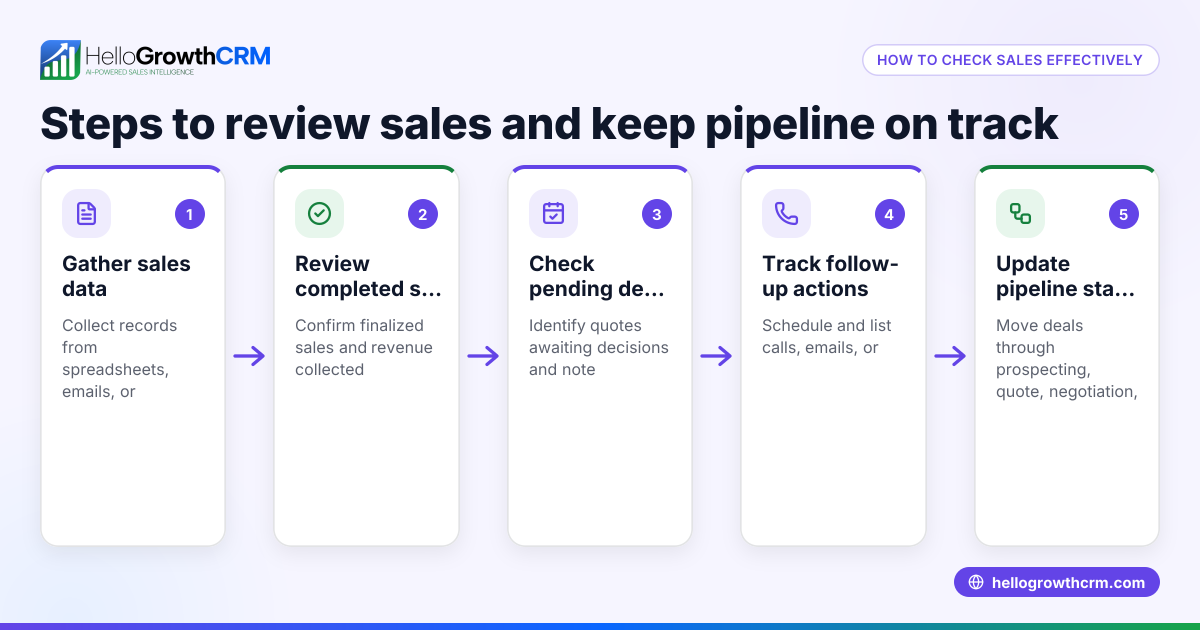
Small business owners often face challenges managing multiple projects or sales activities simultaneously. Without clear status reports, teams can lose track of priorities, deadlines can slip, and communication gaps may cause delays or missed opportunities. For example, a sales team might not know if a lead has been contacted or what stage a deal is in, leading to slow follow-up and lost sales. Status reporting helps prevent these issues by providing a structured way to share timely updates.
Step-by-step
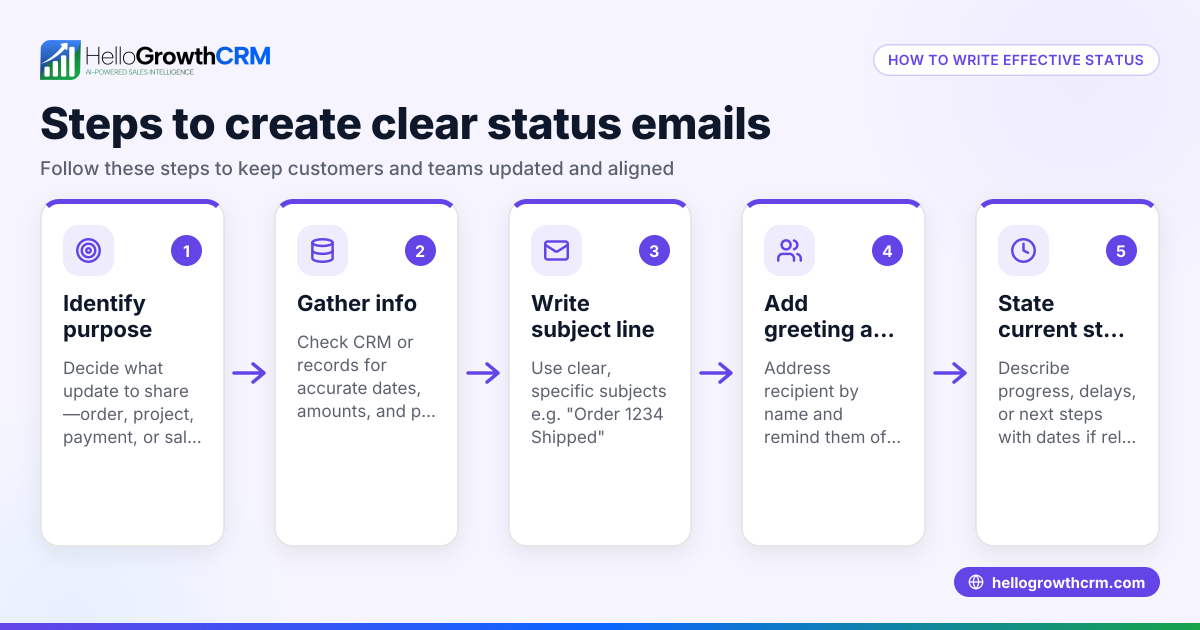
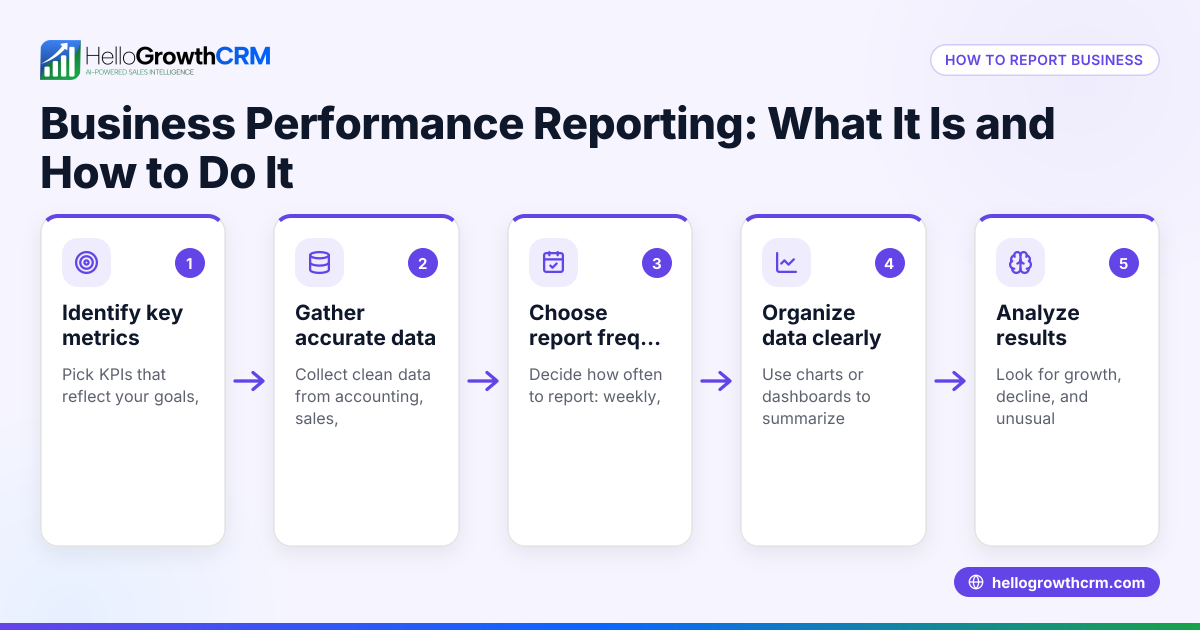
- Define the purpose and audience: Decide what the status report should cover (e.g., project progress, sales pipeline) and who will read it (team members, managers, clients). Check that the information matches their needs.
- Choose a format and frequency: Select a clear format such as a short written report, dashboard, or presentation. Set how often reports will be shared—daily, weekly, or monthly—based on project complexity and stakeholder needs.
- Gather relevant data: Collect up-to-date information on completed tasks, ongoing work, issues encountered, and upcoming milestones. Verify accuracy before including it.
- Summarize progress clearly: Highlight what has been achieved since the last report, including key metrics or milestones. Use simple language and bullet points for readability.
- Identify challenges and risks: Report any problems or delays, their impact, and proposed solutions. This transparency helps stakeholders understand obstacles and support problem-solving.
- Outline next steps: Specify what actions will be taken before the next report, who is responsible, and expected deadlines.
- Distribute the report: Share it with the intended audience through email, a shared folder, or a CRM system. Confirm receipt and invite questions or feedback.
- Review and improve: After each report cycle, ask for feedback to refine the process and content for better clarity and usefulness.
Example (fictional figures)
Phoenix Home Realty, a residential real estate team in Phoenix, Arizona, provides weekly status reports to track sales leads and deals.
- As of 06/07/2026, the team has 50 active leads.
- 10 leads were contacted this week.
- 3 deals are under contract, valued at $1,200,000 total.
- 2 deals closed last week, totaling $800,000 in sales.
Calculation of total sales pipeline value:
$1,200,000 (under contract) + $800,000 (closed last week) = $2,000,000 total pipeline value
Next steps:
- Contact remaining 40 leads by 06/14/2026.
- Follow up with under-contract clients to finalize sales.
Challenges:
- Delays in client responses have slowed follow-up on 5 leads.
- Plan to send WhatsApp reminders to improve engagement.
This report helps the team prioritize follow-ups and keeps management informed.
Common mistakes
- Reporting too late or irregularly: Prevent by setting a fixed schedule and sticking to it.
- Including too much irrelevant detail: Focus on key facts and actionable information.
- Using unclear or technical language: Use plain English to ensure all readers understand.
- Ignoring challenges or risks: Always report problems honestly to enable timely solutions.
- Not tailoring reports to the audience: Customize content for who will read it; executives may want summaries, while team members need detailed steps.
- Failing to follow up on reports: Encourage feedback and discussion to make reports a tool for improvement.
For better communication, small businesses using a WhatsApp and SMS CRM or a built-in CRM dialer can integrate status reporting into their daily sales workflows. For US businesses looking for tailored solutions, see HelloGrowthCRM for the United States.
Frequently asked questions
What is the main purpose of status reporting? Status reporting keeps stakeholders informed about progress, issues, and next steps. It helps align teams, supports decision-making, and prevents surprises.
How often should I send status reports? The frequency depends on your project or business needs. Weekly reports are common for active projects; monthly may suffice for longer-term goals. Choose what keeps everyone informed without creating unnecessary work.
What should I include in a status report? Include completed work, current progress, challenges or risks, and planned next steps. Use clear, concise language and relevant data.
Can status reporting improve sales follow-up? Yes. Regular updates on leads and deals help sales teams prioritize outreach and avoid losing leads due to slow follow-up. Integrating status reporting with tools like a WhatsApp and SMS CRM can streamline communication.
Should status reports be formal or informal? It depends on your audience. Internal team reports can be informal and brief, while reports for clients or executives may require more structure and formality.
Key takeaways
- Status reporting means regularly sharing updates on progress, challenges, and next steps.
- Clear, timely reports prevent miscommunication and keep teams aligned.
- Use a consistent format and schedule to make reporting effective.
- Tailor reports to your audience’s needs and focus on actionable information.
- Avoid common mistakes like vague language, irregular timing, and ignoring problems.
- Integrating status reporting with tools like a WhatsApp and SMS CRM can enhance follow-up and sales efficiency.
Start improving your team’s communication and project tracking today. Start on the Free Forever plan (200 leads, no credit card) and see how organized status reporting can help your small business.
Ready to put this into practice?
Set up your pipeline, WhatsApp follow-ups, and AI lead scoring in minutes — free, no credit card.
Try HelloGrowthCRM freeGet CRM tips in your inbox
Join thousands of sales professionals who get weekly insights on CRM strategy, AI automation, and pipeline optimization.

The HelloGrowthCRM team publishes guides on CRM strategy, AI sales tools, and revenue operations for small business sales teams.