HelloGrowthCRM software
Built for real small-business sales teams
HelloGrowthCRM helps reps qualify faster, follow up on time, and close more deals—with practical automation in one place.
- AI lead scoring and pipeline visibility
- Built-in dialer, WhatsApp, and email automation
- Sales forecasting and RevOps-ready reporting
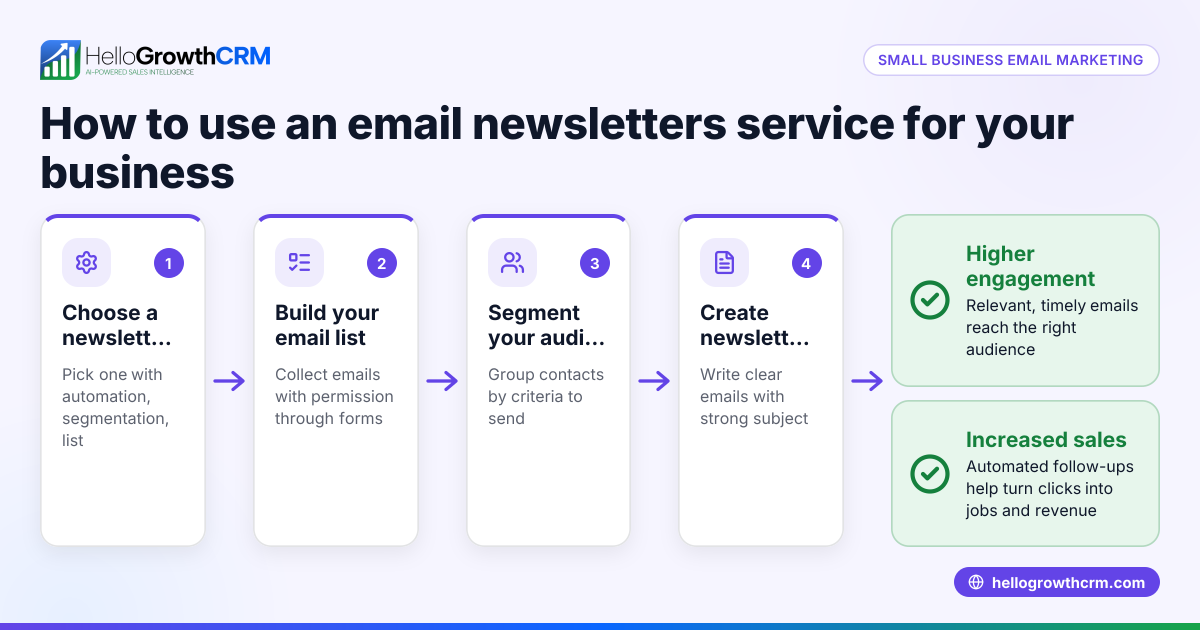
Successful newsletters grab attention, deliver value, and encourage readers to act. For small businesses in the US, newsletters can nurture leads, build trust, and boost sales when done right. This article covers why newsletters often fall short, practical steps to create effective newsletters, a realistic example, common pitfalls to avoid, and answers to frequent questions.
Why this comes up / what goes wrong
Many small-business owners struggle with newsletters because they send generic content that doesn’t connect with their audience. They may lack clear goals or fail to follow up on leads captured through email lists. Without a strategy, newsletters become ignored emails, wasting time and resources. Businesses that run sales on text messages, email, and spreadsheets often miss the chance to automate and personalize their newsletters, losing potential customers to faster competitors. This can result in poor engagement, low open rates, and missed sales opportunities.
Step-by-step
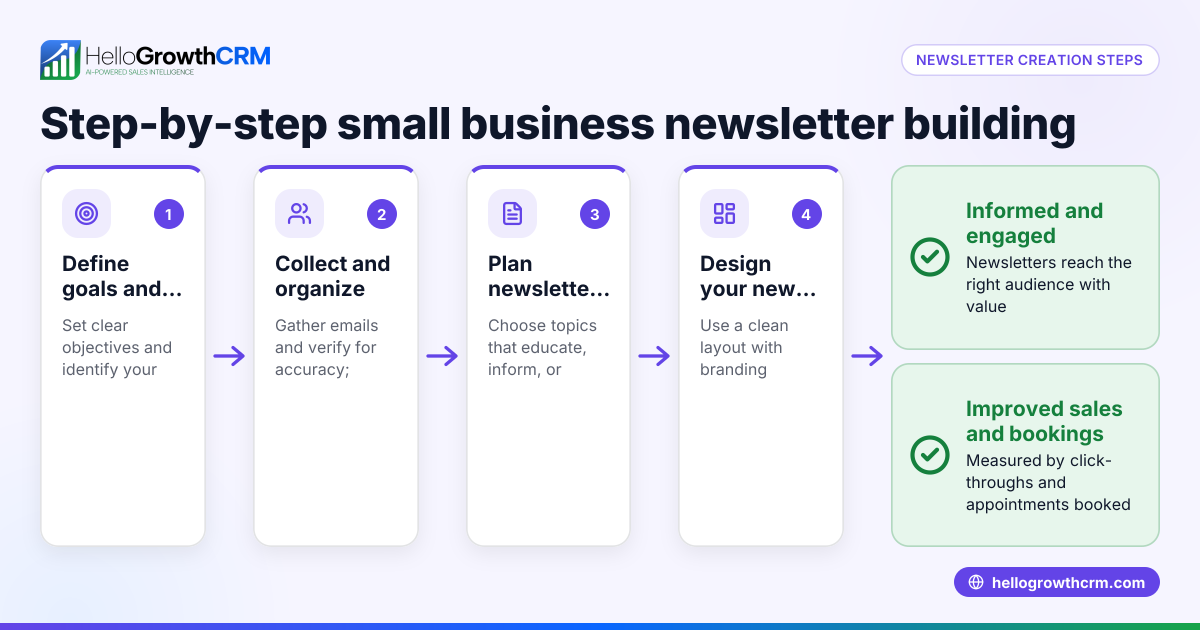
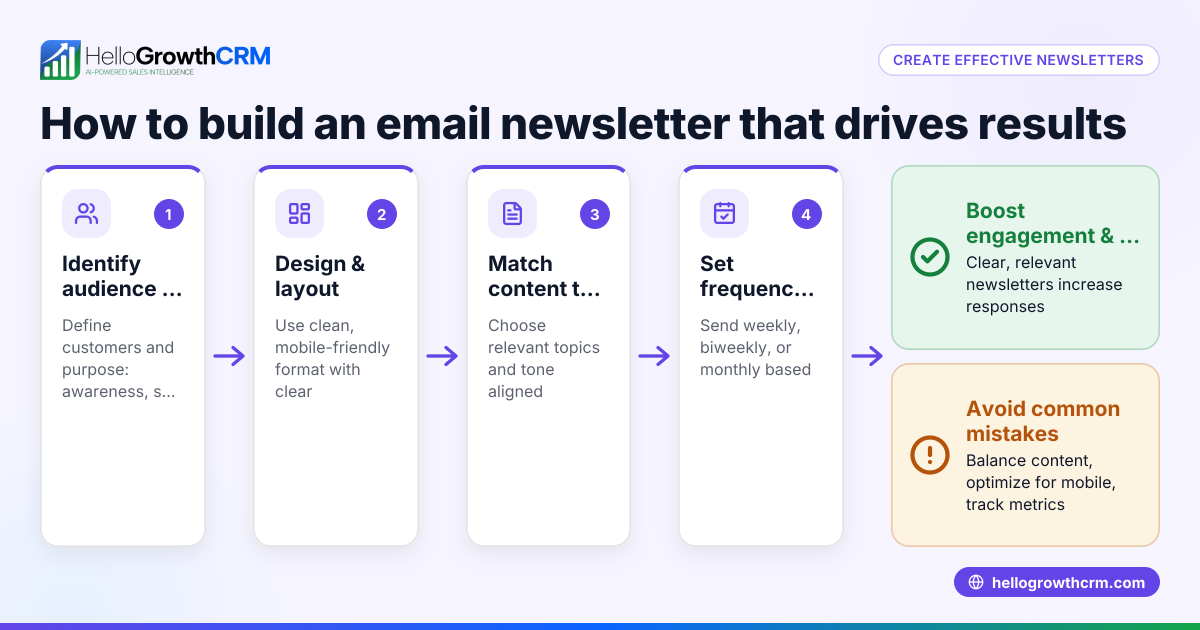
- Define your newsletter goal: Decide if you want to build brand awareness, educate your audience, promote products, or nurture leads. Check that your goal aligns with your sales process and overall business objectives.
- Segment your audience: Group your contacts by interests, purchase history, or engagement level. Check that each segment receives relevant, tailored content to increase engagement.
- Create concise, valuable content: Write clear messages focusing on benefits and solutions your audience cares about. Check for spelling, grammar, and tone consistency to maintain professionalism.
- Use strong calls to action (CTAs): Encourage readers to reply, visit your website, or book a call. Check that CTAs are clear, direct, and easy to follow.
- Design for readability: Use short paragraphs, bullet points, and mobile-friendly layouts. Check how your newsletter looks on phones and desktops to ensure accessibility.
- Schedule and send consistently: Pick a regular day and time for sending your newsletters. Check open rates and adjust timing if needed to optimize engagement.
- Track performance: Monitor open rates, click-through rates, and replies. Check which content your audience prefers and refine your approach accordingly.
Example (fictional figures)
A B2B software reseller in Denver, Colorado, wants to increase lead engagement through newsletters.
- They have 2,000 leads in their email list.
- They aim for a 25% open rate and a 10% click-through rate.
- They send monthly newsletters with product tips and special offers.
Calculations:
Open rate target: 2,000 × 25% = 500 opens Click-through target: 500 × 10% = 50 clicks
If 50 clicks lead to 10 sales, and the average sale value is $2,500:
Total sales revenue: 10 × $2,500 = $25,000
This example shows how clear goals and relevant content can generate measurable revenue.
Common mistakes
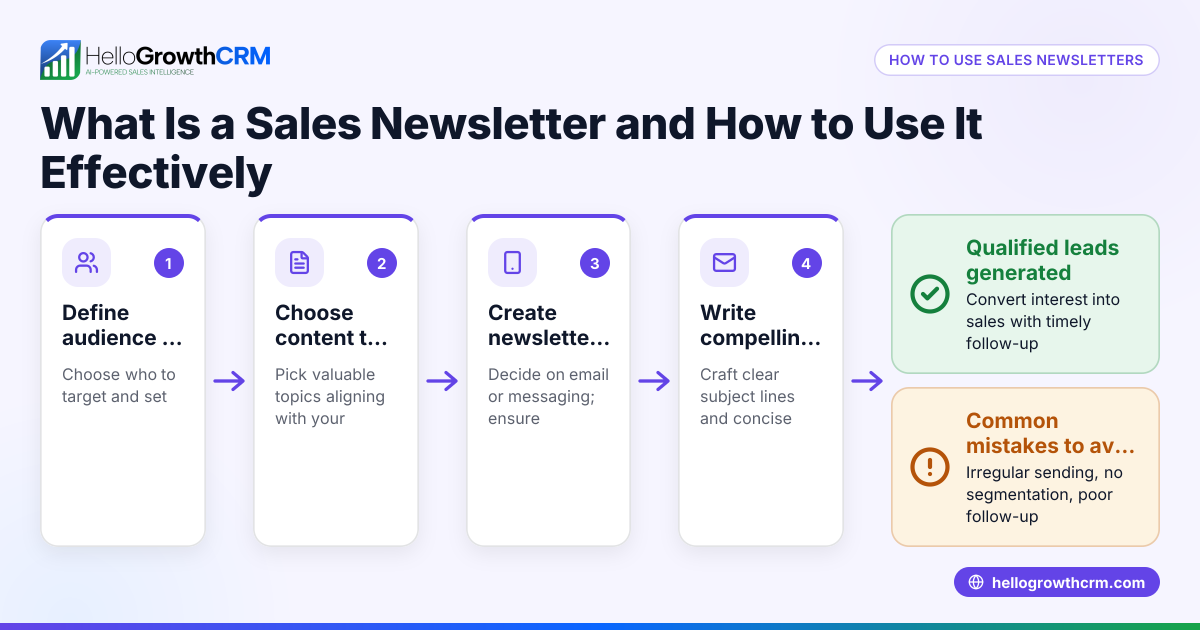
- Sending irrelevant content: Prevent by segmenting your list and tailoring messages to each group’s interests.
- No clear CTA: Prevent by including one main action per newsletter and making it easy to follow.
- Inconsistent sending schedule: Prevent by setting reminders and using scheduling tools to maintain regularity.
- Ignoring mobile users: Prevent by testing newsletter layouts on mobile devices to ensure readability.
- Not tracking results: Prevent by using email software that reports open and click rates to measure success.
- Relying only on email: Prevent by combining email newsletters with WhatsApp and SMS sequences to reach leads where they prefer communication. For managing these channels together, consider a WhatsApp and SMS CRM to automate and personalize messages efficiently.
Checklist to Know If Your Newsletter Strategy Is Working
To make sure your newsletter efforts pay off, ask yourself these questions regularly:
- Are your open rates improving or steady? This shows if your subject lines and timing grab attention.
- Do readers click on your calls to action? Clicks reveal if your content motivates engagement.
- Are you receiving replies or feedback? Interaction means your audience finds value.
- Is your subscriber list growing or shrinking? Growth indicates interest; loss signals issues.
- Are you seeing increased website visits or sales linked to your newsletters? This ties your efforts to real results.
Review these points monthly to spot trends early. If something isn’t working, tweak your content, timing, or segmentation. Staying attentive helps you build a newsletter that truly drives your business forward.
Frequently asked questions
What makes a newsletter successful? A newsletter succeeds when it delivers relevant, valuable content with a clear call to action, sent consistently to a segmented audience. Tracking engagement helps improve future issues.
How often should I send newsletters? Monthly or biweekly is typical for small businesses. Too frequent emails can annoy recipients; too infrequent can reduce engagement.
How do I grow my newsletter list? Use web forms, social media, and events to capture leads. Offering incentives like discounts or guides encourages sign-ups.
Can I use WhatsApp and SMS for newsletters? Yes, combining email with WhatsApp and SMS sequences can increase reach and engagement. For managing these channels together, consider a WhatsApp and SMS CRM to automate and personalize messages efficiently.
How can I improve newsletter follow-up? Use a CRM with a built-in CRM dialer to call engaged leads promptly. This helps convert interest into sales faster and keeps your sales process organized.
What tools help manage newsletters and sales leads? A CRM that integrates lead capture, email sequences, and calling features can streamline your workflow and improve conversion rates. Learn more about HelloGrowthCRM for the United States to see features that support these tasks.
Key takeaways
- Define clear goals and segment your audience for targeted newsletters.
- Write concise, valuable content with strong calls to action.
- Schedule newsletters consistently and design for mobile readability.
- Track engagement metrics to refine your approach.
- Avoid common mistakes like irrelevant content and lack of follow-up.
- Combine email newsletters with WhatsApp, SMS, and CRM tools for better results.
To start improving your newsletter strategy and lead follow-up, explore the free CRM options at Start on the Free Forever plan (200 leads, no credit card). This helps you capture leads, automate messages, and organize sales calls.
Ready to put this into practice?
Set up your pipeline, WhatsApp follow-ups, and AI lead scoring in minutes — free, no credit card.
Try HelloGrowthCRM freeGet CRM tips in your inbox
Join thousands of sales professionals who get weekly insights on CRM strategy, AI automation, and pipeline optimization.

The HelloGrowthCRM team publishes guides on CRM strategy, AI sales tools, and revenue operations for small business sales teams.