HelloGrowthCRM software
Built for real small-business sales teams
HelloGrowthCRM helps reps qualify faster, follow up on time, and close more deals—with practical automation in one place.
- AI lead scoring and pipeline visibility
- Built-in dialer, WhatsApp, and email automation
- Sales forecasting and RevOps-ready reporting
A B2B sales plan is a strategic document that outlines your target customers, sales goals, tactics, and timelines for selling your product or service to other businesses. It guides your sales team’s activities and helps track progress. This article explains why a B2B sales plan matters, walks you through creating one step-by-step, shares a realistic example, common mistakes to avoid, and how HelloGrowthCRM supports your plan execution.
Why this comes up / what goes wrong
Small-business owners often struggle with inconsistent sales results because they lack a clear B2B sales plan. Without a plan, sales efforts can be scattered, follow-ups missed, and opportunities lost. Many businesses run sales processes informally using texts, emails, or spreadsheets that don’t scale or provide visibility. This leads to slow responses, forgotten leads, and unclear sales forecasts. A structured B2B sales plan helps organize your team’s work, prioritize leads, and measure progress toward revenue goals.
Step-by-step
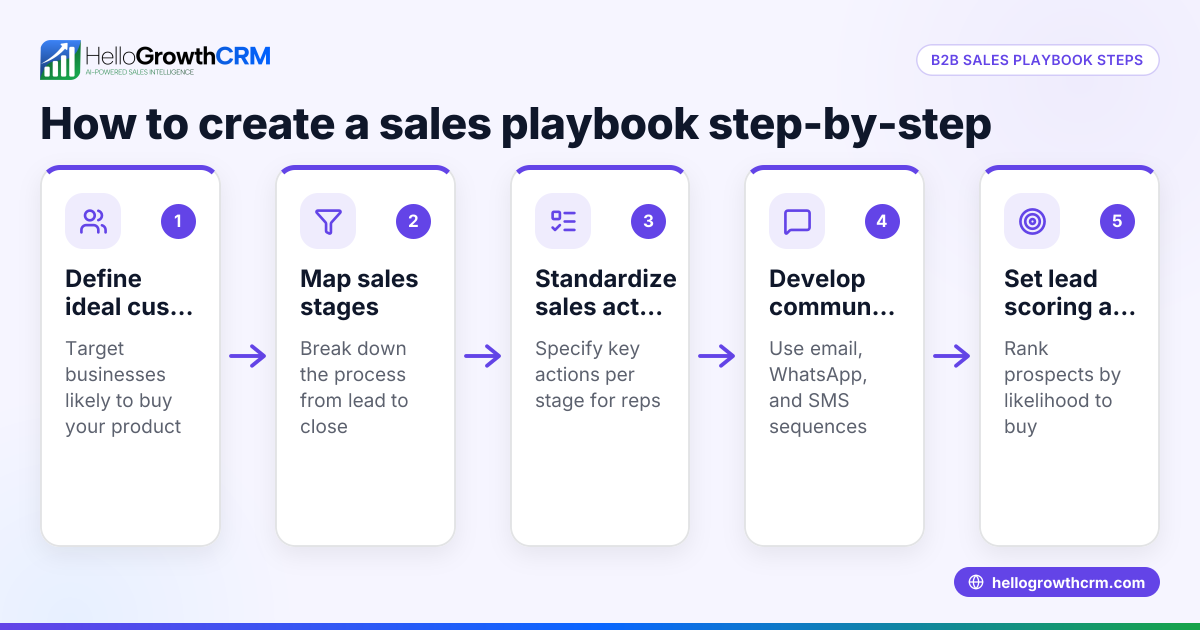
- Define your target market and ideal customer profile
- Identify the industries, company sizes, and roles you want to sell to.
- Check that your product fits their needs and pain points.
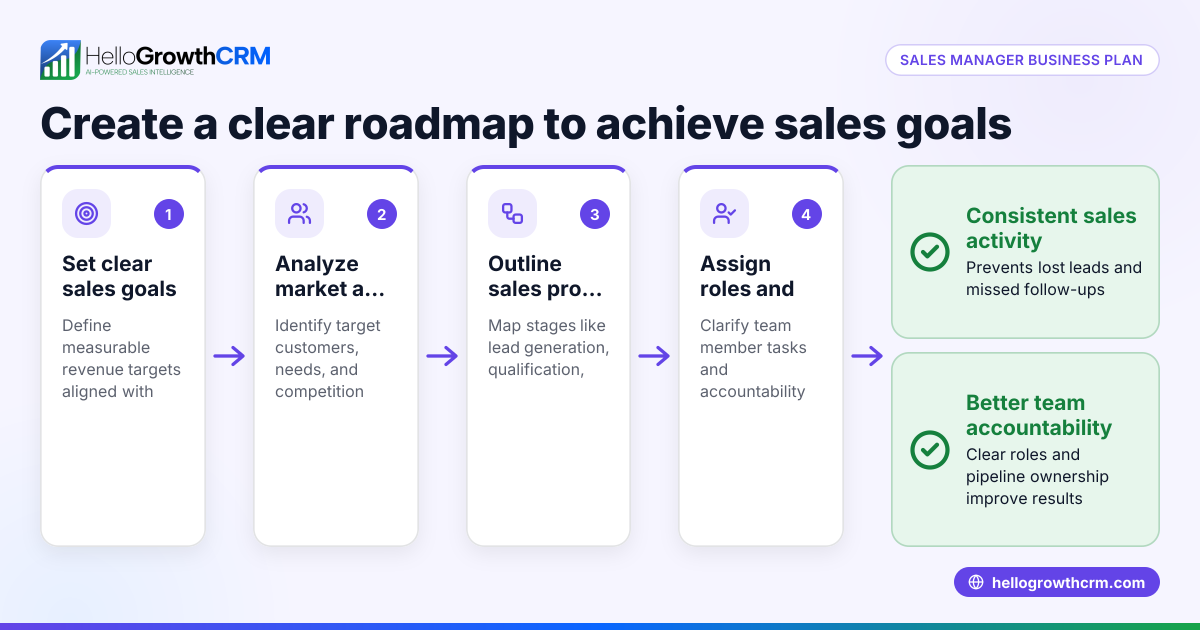
- Set clear sales goals
- Determine monthly or quarterly revenue targets.
- Break down goals by product line or territory if relevant.
- Map out your sales process stages
- Define stages like lead generation, qualification, quote sent, negotiation, and close.
- Specify what actions move a deal from one stage to the next.
- Develop lead generation tactics
- Plan outreach methods: email campaigns, phone calls, networking, referrals.
- Allocate responsibilities among team members.
- Create follow-up and nurturing plans
- Schedule follow-ups after quotes or meetings to keep deals moving.
- Use reminders or task boards to track next steps.
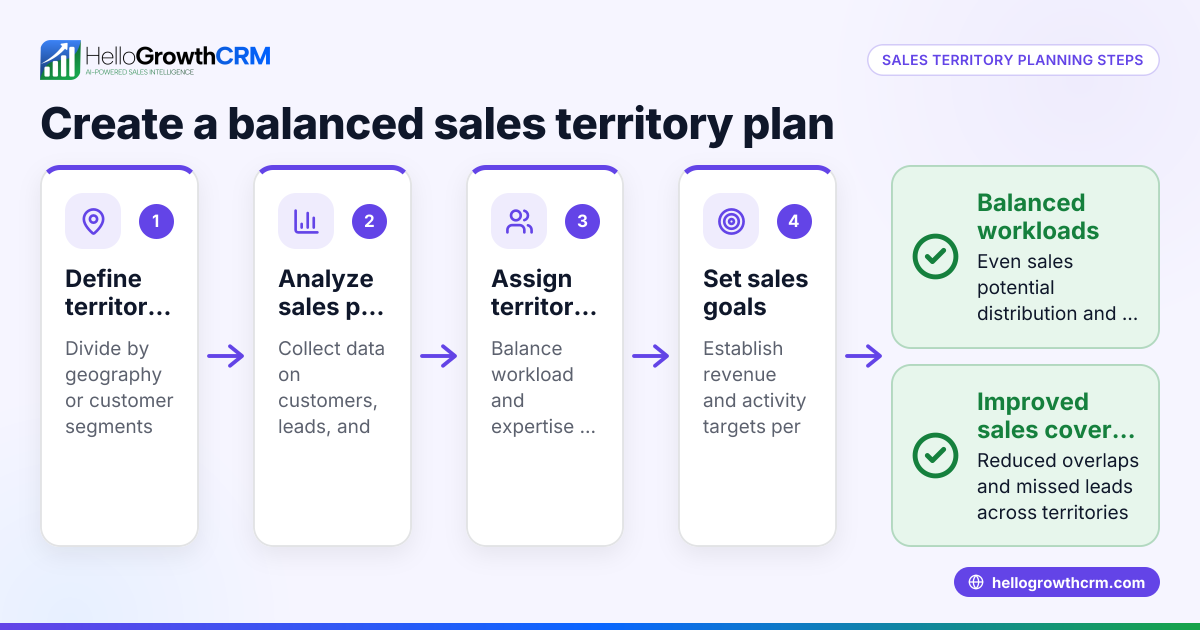
- Assign territories or customer segments
- Divide prospects among sales reps by geography or industry.
- Check coverage to avoid overlap or gaps.
- Establish performance metrics and reporting
- Track pipeline size, conversion rates, average deal size, and sales cycle length.
- Review reports weekly or monthly to adjust tactics.
- Review and update your plan regularly
- Meet with your team to discuss progress and obstacles.
- Refine goals and strategies based on results.
Example (fictional figures)
Phoenix Residential Real Estate Team’s B2B Sales Plan for Q3 2026:
- Target market: Property management companies with 50+ units
- Sales goal: $1,000,000 in new contracts
- Sales stages: Lead > Qualified > Quote Sent > Negotiation > Closed Won
Step 1: Define sales goal $1,000,000 target for Q3
Step 2: Average deal size assumed $100,000
Step 3: Number of deals needed $1,000,000 ÷ $100,000 = 10 deals
Step 4: Assume 25% conversion rate from qualified leads to closed deals
Step 5: Number of qualified leads needed 10 deals ÷ 25% = 40 qualified leads
Step 6: Lead generation target (assume 50% qualification rate) 40 qualified leads ÷ 50% = 80 leads to generate
Step 7: Follow-up plan Quote sent stage has a follow-up scheduled 3 days after sending
This plan guides the team to generate 80 leads, qualify 40, and close 10 deals to meet $1,000,000 revenue in Q3.
Common mistakes
- No clear sales goals: Without specific targets, it’s hard to measure success. Prevent this by setting measurable revenue or deal count goals.
- Ignoring follow-up: Deals stall when follow-ups are missed. Use reminders and task boards to stay on track.
- Overlapping territories: Sales reps competing for the same leads cause confusion. Define clear territories or customer segments.
- Relying on manual tracking: Spreadsheets or texts lead to lost info. Use a CRM pipeline to track deals and stages.
- Not reviewing the plan regularly: Without updates, the plan becomes outdated. Schedule regular reviews to adjust strategies.
Doing this in HelloGrowthCRM
HelloGrowthCRM helps you manage your B2B sales plan with practical features:
- Deals (pipeline): Track every opportunity from first contact through close. For example, a quotation sent last week appears as a deal at the "quote sent" stage with a follow-up date, so it’s not forgotten. Learn more about the Deals pipeline.
- Territories, field operations and commissions: Define sales territories and track field visits. A distributor’s field reps can log visits from their phones, and managers see the day’s activity. See details on territory management.
- Managed RevOps: If you don’t have a sales manager, a revenue specialist can work your follow-up queue weekly to keep deals moving. Explore Managed RevOps.
Frequently asked questions
What is the difference between a B2B sales plan and a marketing plan? A B2B sales plan focuses on the direct activities and processes to sell to other businesses, including sales goals, pipeline stages, and follow-up tactics. A marketing plan targets awareness and lead generation strategies. Both work together but have different purposes.
How often should I update my B2B sales plan? Review your sales plan at least quarterly to adjust goals, tactics, and territory assignments based on performance and market changes. Regular reviews keep your plan relevant and actionable.
Can a small business create a B2B sales plan without a sales manager? Yes. Small businesses can create and execute a sales plan by assigning roles clearly and using tools like HelloGrowthCRM’s Managed RevOps service to handle follow-up and pipeline hygiene until a sales manager is hired.
What metrics should I track in a B2B sales plan? Key metrics include pipeline size, conversion rates, average deal size, sales cycle length, and revenue generated. Tracking these helps identify bottlenecks and opportunities.
How can I keep track of follow-ups effectively? Use a CRM with pipeline management and task boards to schedule and remind your team about follow-ups. HelloGrowthCRM’s Deals feature ensures no quote or lead is forgotten with automatic follow-up dates.
Key takeaways
- A B2B sales plan sets clear targets, defines your sales process, and assigns responsibilities.
- Follow-up and pipeline tracking are critical to avoid lost deals.
- Define territories and customer segments to improve coverage and reduce conflicts.
- Regularly review and update your plan based on performance data.
- Use tools like HelloGrowthCRM to manage deals, territories, and follow-ups efficiently.
Start organizing your sales efforts with a clear B2B sales plan today. To help you get started, try HelloGrowthCRM’s Free Forever plan, which supports up to 200 leads and requires no credit card at Start on the Free Forever plan (200 leads, no credit card).
Ready to put this into practice?
Set up your pipeline, WhatsApp follow-ups, and AI lead scoring in minutes — free, no credit card.
Try HelloGrowthCRM freeGet CRM tips in your inbox
Join thousands of sales professionals who get weekly insights on CRM strategy, AI automation, and pipeline optimization.

The HelloGrowthCRM team publishes guides on CRM strategy, AI sales tools, and revenue operations for small business sales teams.