HelloGrowthCRM software
Built for real small-business sales teams
HelloGrowthCRM helps reps qualify faster, follow up on time, and close more deals—with practical automation in one place.
- AI lead scoring and pipeline visibility
- Built-in dialer, WhatsApp, and email automation
- Sales forecasting and RevOps-ready reporting
Several key factors affect sales, including product quality, pricing, customer relationships, market demand, competition, and sales process efficiency. Understanding and managing these factors can help your business increase revenue and close more deals. This article covers why these factors matter, step-by-step actions to optimize sales, a practical example, common mistakes to avoid, and how HelloGrowthCRM can support your sales efforts.
Why this comes up / what goes wrong
Small-business owners often find their sales stagnating or declining without clear reasons. They may lose leads due to slow follow-up, have scattered customer data across texts, emails, and spreadsheets, or struggle to track opportunities effectively. This confusion can result in missed deals, wasted time, and unpredictable revenue. Understanding the factors that affect sales helps owners focus on what to improve, from product positioning to customer communication and sales management.
Step-by-step
- Evaluate Product and Pricing: Check if your product or service meets customer needs and is priced competitively. Survey customers or analyze competitor offerings to ensure your value proposition stands out.
- Understand Your Market Demand: Research your target market size and trends. Use sales data and customer feedback to identify demand shifts or new opportunities.
- Analyze Competition: Identify your direct competitors and their strengths. Note where you can differentiate, such as better service, unique features, or pricing.
- Improve Customer Relationships: Maintain regular, personalized contact with leads and customers. Use follow-up reminders and keep communication organized to build trust.
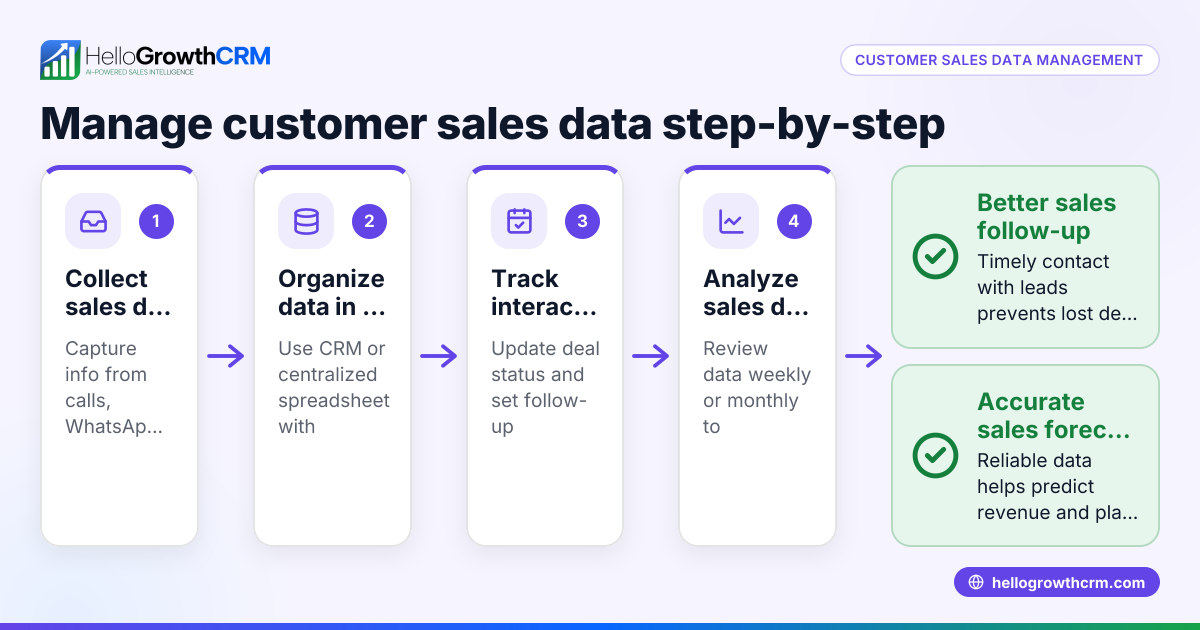
- Streamline Sales Process: Track every lead and deal stage clearly. Avoid losing prospects by setting follow-up dates and updating deal progress regularly.
- Train and Motivate Your Sales Team: Ensure your salespeople understand the product, market, and sales goals. Motivate them with clear targets and feedback.
- Leverage Technology for Sales Management: Use tools that capture leads automatically, score them by interest, and manage pipelines efficiently.
- Monitor Sales Metrics: Regularly review sales volume, conversion rates, average deal size, and sales cycle length. Use these insights to adjust your approach.
Example (fictional figures)
A two-location dental practice in Columbus, Ohio, wants to understand what affects its sales. They track monthly new patient appointments and revenue.
- January new patients: 120
- Average revenue per patient: $300
- Total January revenue = 120 × $300 = $36,000
They notice in February new patients drop to 90 due to fewer follow-ups.
- February new patients: 90
- Average revenue per patient: $300
- Total February revenue = 90 × $300 = $27,000
They decide to improve follow-up by setting reminders and tracking leads in a pipeline.
- March new patients after improvement: 110
- Average revenue per patient: $300
- Total March revenue = 110 × $300 = $33,000
This shows how follow-up speed and sales process management directly impact sales.
Common mistakes
- Ignoring follow-up timing: Leads cool off quickly if not contacted promptly. Prevent by setting follow-up dates and reminders.
- Scattered customer data: Using texts, emails, and spreadsheets separately leads to lost leads. Centralize data to avoid this.
- Overlooking market changes: Not tracking demand or competition changes can cause missed opportunities. Regularly research your market.
- Poor sales tracking: Without clear deal stages, opportunities slip through. Use a pipeline to track progress and next actions.
- Undertraining sales staff: Salespeople unsure of product or goals perform poorly. Provide regular training and clear targets.
- Ignoring sales metrics: Not reviewing conversion rates or sales cycles hides problems. Monitor metrics monthly.
For better sales tracking and follow-up, consider tools like HelloGrowthCRM that offer pipeline management and deal tracking with follow-up dates, helping avoid lost leads. Learn more about HelloGrowthCRM for the United States and its built-in CRM dialer.
Doing this in HelloGrowthCRM
HelloGrowthCRM helps by managing your sales deals in a clear pipeline. For example, a quotation sent last week automatically appears as a deal at the 'quote sent' stage with a follow-up date, so it is not forgotten. If you have field sales reps, they can log visits from their phones, and managers see the day's activities. For founders without a sales manager, HelloGrowthCRM offers Managed RevOps support, where a specialist handles follow-ups weekly. These features help keep your sales process organized and active. See more on WhatsApp and SMS CRM.
Frequently asked questions
What is the biggest factor affecting sales? The biggest factor often depends on your business, but common top factors include product quality, pricing, and how quickly and effectively you follow up with leads. Improving follow-up and sales process management usually delivers quick sales gains.
How does customer relationship affect sales? Strong customer relationships build trust and loyalty, making customers more likely to buy and refer others. Regular, personalized communication helps maintain these relationships and keeps your business top of mind.
Why is sales process efficiency important? An efficient sales process ensures no lead is forgotten and every opportunity is pursued timely. This reduces lost sales and improves conversion rates by moving deals smoothly through stages.
Can technology improve sales? Yes, technology like CRM software can automate lead capture, track deals, schedule follow-ups, and provide sales insights. This reduces manual work and helps your team focus on selling.
How do I track sales performance? Track metrics such as the number of leads, conversion rates, average deal size, and sales cycle length. Regular reviews help identify what’s working and what needs adjustment.
Key takeaways
- Multiple factors affect sales including product, pricing, customer relationships, market demand, competition, and sales process.
- Timely follow-up and organized sales tracking prevent lost leads.
- Regularly review sales metrics and market conditions to adjust strategies.
- Avoid scattered data by centralizing sales information in one system.
- Training and motivating your sales team improves performance.
- CRM tools like HelloGrowthCRM support pipeline management, field operations, and follow-up.
Start improving your sales process today. Start on the Free Forever plan (200 leads, no credit card) with HelloGrowthCRM to manage your leads and deals efficiently.
Ready to put this into practice?
Set up your pipeline, WhatsApp follow-ups, and AI lead scoring in minutes — free, no credit card.
Try HelloGrowthCRM freeGet CRM tips in your inbox
Join thousands of sales professionals who get weekly insights on CRM strategy, AI automation, and pipeline optimization.

The HelloGrowthCRM team publishes guides on CRM strategy, AI sales tools, and revenue operations for small business sales teams.