HelloGrowthCRM software
Built for real small-business sales teams
HelloGrowthCRM helps reps qualify faster, follow up on time, and close more deals—with practical automation in one place.
- AI lead scoring and pipeline visibility
- Built-in dialer, WhatsApp, and email automation
- Sales forecasting and RevOps-ready reporting
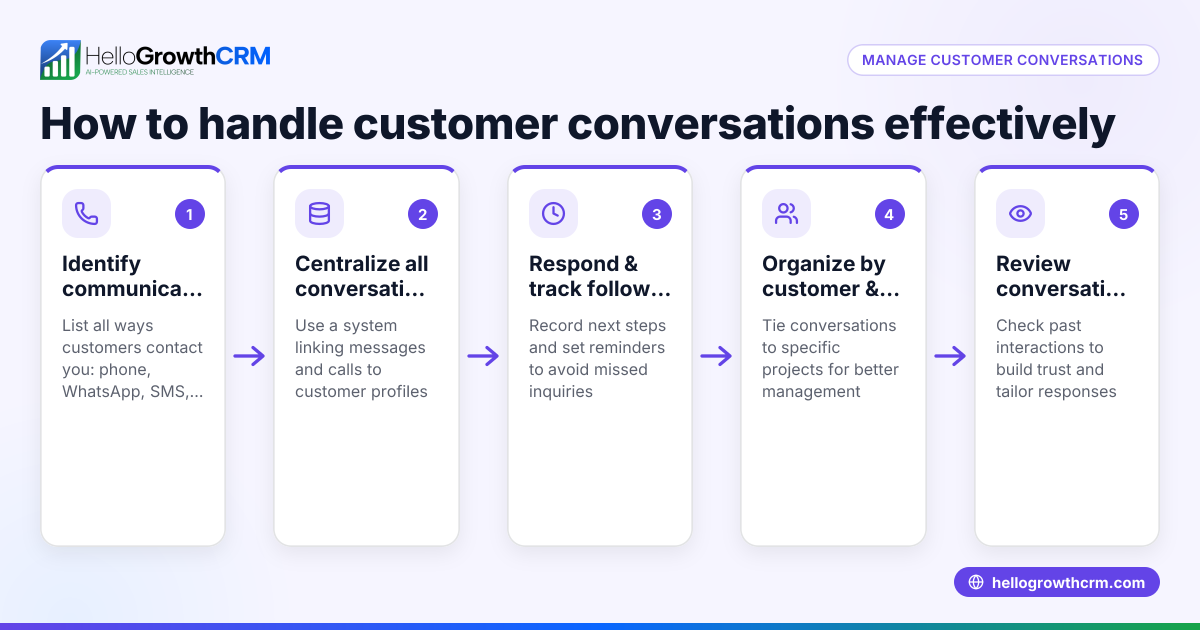
When speaking to a disgruntled customer, your first priority is to listen carefully and acknowledge their concerns without interrupting. Stay calm, empathize sincerely, and clarify the issue before proposing a solution. This article covers why customers get upset, a step-by-step approach to handle the conversation, common mistakes to avoid, and how HelloGrowthCRM can help manage customer service efficiently.
Why this comes up / what goes wrong
Small-business owners often face disgruntled customers because of unmet expectations, delayed responses, or product or service issues. When communication is slow or disorganized—often relying on text messages, emails, or spreadsheets—issues escalate quickly. Customers feel ignored or misunderstood, which can damage your reputation and sales. For example, a customer might call upset because their order arrived late, but if your team doesn’t respond promptly or lacks full information, the frustration grows. Knowing how and when to respond can prevent losing customers and improve satisfaction.
Many small businesses struggle because they use multiple unlinked tools for communication and tracking. This fragmentation leads to missed follow-ups, inconsistent messages, and repeated mistakes. Without a clear process, disgruntled customers feel neglected, which can turn a fixable problem into a lost client.
Step-by-step
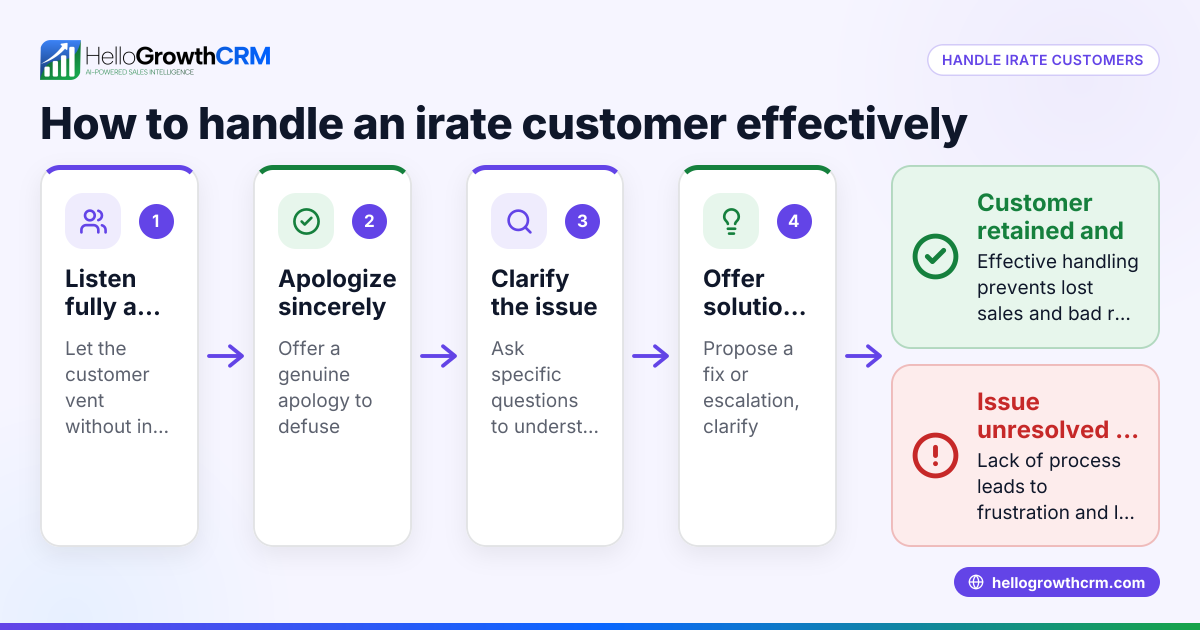
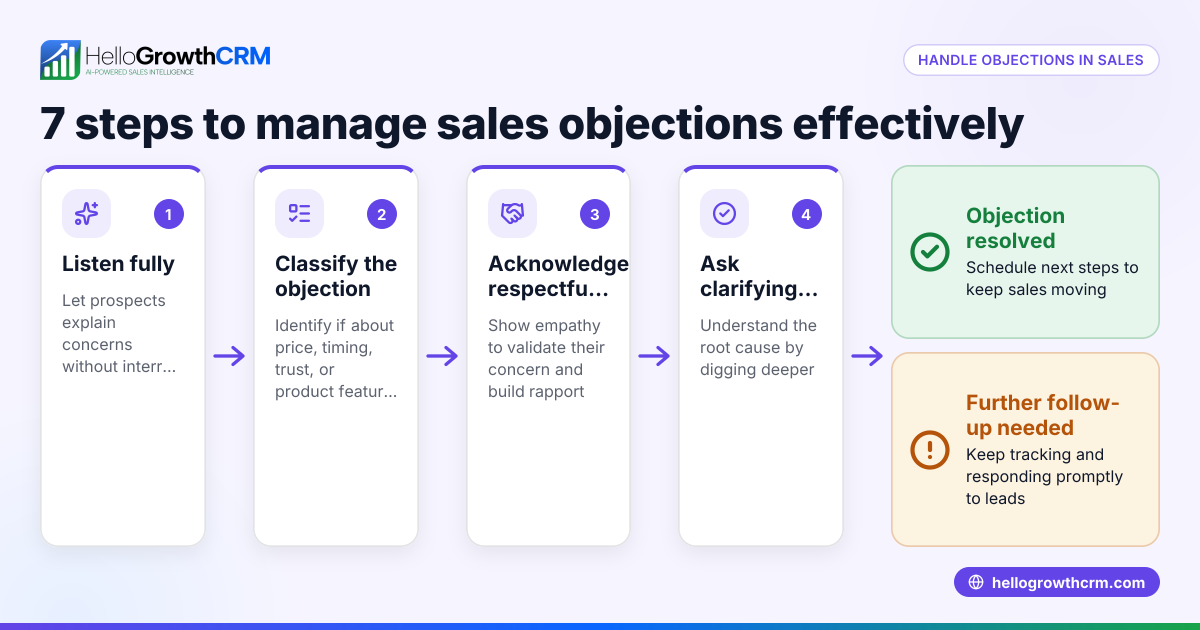
- Listen fully without interrupting. Let the customer explain their issue completely to feel heard. Check your tone to keep calm and neutral. Avoid jumping to conclusions or defending yourself right away.
- Acknowledge their feelings. Use phrases like “I understand why you’re upset” or “That must be frustrating.” This shows empathy and builds trust, helping to calm the situation.
- Clarify the problem. Summarize what you heard and ask if you understood correctly. For example, “So you’re saying the delivery was late by three days and the product was damaged?” This avoids misunderstandings.
- Apologize sincerely if appropriate. Even if the issue isn’t your fault, a genuine apology for their experience goes a long way toward repairing the relationship.
- Offer a solution or next steps. Explain clearly what you can do and by when. If you need time to investigate, commit to a specific follow-up date. Be realistic to avoid further disappointment.
- Document the conversation. Record details in your CRM or notes system to track progress and avoid repeated issues. This is crucial if multiple team members handle the case.
- Follow up as promised. Reach out to confirm the resolution and check the customer’s satisfaction. This shows you value their business and are committed to quality.
- Learn and improve. Use customer feedback and support tickets to identify trends and prevent similar problems. Regularly review your processes and train your team.
Using a CRM with a customer portal and ticket system helps keep all communication and service requests linked to the same customer record, making follow-up and resolution easier. This centralization reduces errors and speeds response times.
Example (fictional figures)
A landscaping contractor in Charlotte, North Carolina, receives a complaint on 04/15/2026 from a client about a delayed lawn installation costing $3,200.
- Client expected installation by 04/10/2026.
- Contractor acknowledges delay due to weather.
- Apologizes and offers a 10% discount.
Calculation: $3,200 × 10% = $320 (discount amount) $3,200 - $320 = $2,880 (adjusted charge)
Contractor schedules installation for 04/18/2026 and confirms with client.
This clear communication and compensation prevent escalation and preserve the client relationship.
Common mistakes
- Interrupting the customer: This makes them feel unheard. Prevent by practicing active listening and patience.
- Getting defensive or argumentative: This escalates conflict. Prevent by staying calm and focusing on solutions.
- Failing to document the issue: Leads to repeated problems and lost information. Prevent by using a CRM or notes system to log complaints and actions.
- Not following up: Customers feel ignored and may leave. Prevent by setting reminders and confirming resolution.
- Ignoring customer emotions: This breaks trust. Prevent by acknowledging feelings and showing empathy.
- Using multiple unlinked tools (texts, emails, spreadsheets): Causes confusion and lost messages. Prevent by centralizing communication in a CRM with a customer portal and tickets to track all interactions easily.
Doing this in HelloGrowthCRM
HelloGrowthCRM offers a branded self-service customer portal where customers can submit service requests and track their status. After the sale, all service tickets stay linked on the same customer record as the deal, so your team has full context for each customer interaction. This helps small and mid-sized businesses respond faster and keep customers satisfied. Learn more about HelloGrowthCRM for the United States.
Frequently asked questions
How do I keep calm when the customer is angry? Take deep breaths and remind yourself the customer is upset with the situation, not you personally. Listening fully without interrupting helps defuse anger and shows you care.
What if I don’t have an immediate solution? Be honest about needing time to investigate. Promise a clear follow-up date and keep that commitment to build trust and credibility.
How can I prevent customers from getting disgruntled? Communicate proactively about delays or issues. Use a CRM to track customer health scores and spot risks early. See customer health score for how this helps.
Why use a CRM for customer service? A CRM centralizes all communication, tickets, and referrals in one place. This avoids lost messages and speeds resolution. HelloGrowthCRM supports WhatsApp and SMS CRM channels to meet customers where they prefer to communicate. See WhatsApp and SMS CRM.
What’s the best way to follow up after resolving a complaint? Reach out with a brief message to confirm the customer is satisfied and invite any further feedback. This can turn a negative experience into a positive one and build loyalty.
Key takeaways
- Listen fully and acknowledge customer concerns without interrupting.
- Empathize sincerely and clarify the problem before offering solutions.
- Document all interactions and follow up as promised to build trust.
- Avoid common mistakes like defensiveness, poor documentation, and ignoring emotions.
- Use tools like HelloGrowthCRM’s customer portal and ticket system to manage service requests efficiently.
- Proactive communication and follow-up can prevent complaints from escalating.
Start managing your customer conversations better today. Start on the Free Forever plan (200 leads, no credit card).
Ready to put this into practice?
Set up your pipeline, WhatsApp follow-ups, and AI lead scoring in minutes — free, no credit card.
Try HelloGrowthCRM freeGet CRM tips in your inbox
Join thousands of sales professionals who get weekly insights on CRM strategy, AI automation, and pipeline optimization.

The HelloGrowthCRM team publishes guides on CRM strategy, AI sales tools, and revenue operations for small business sales teams.