HelloGrowthCRM software
Built for real small-business sales teams
HelloGrowthCRM helps reps qualify faster, follow up on time, and close more deals—with practical automation in one place.
- AI lead scoring and pipeline visibility
- Built-in dialer, WhatsApp, and email automation
- Sales forecasting and RevOps-ready reporting
To write a business proposal, you need to present your product or service as the best solution to a prospect’s problem or need. A good proposal is clear, focused, and professional. It includes an introduction, problem statement, your proposed solution, pricing, timeline, and terms. This article covers why business owners seek to write proposals, a step-by-step guide, a practical example, common pitfalls, and how HelloGrowthCRM’s quoting and proposal features can help you manage this process efficiently.
Why this comes up / what goes wrong
Small-business owners often need to write business proposals when pitching to potential clients or partners. They want to win new deals but may struggle with organizing information, pricing clearly, or following up effectively. Without a well-structured proposal, businesses risk losing leads due to unclear communication or slow responses. Many also rely on email and spreadsheets, which can cause confusion, missed details, and errors. This makes it harder to keep track of which proposals were sent, viewed, or accepted.
Step-by-step
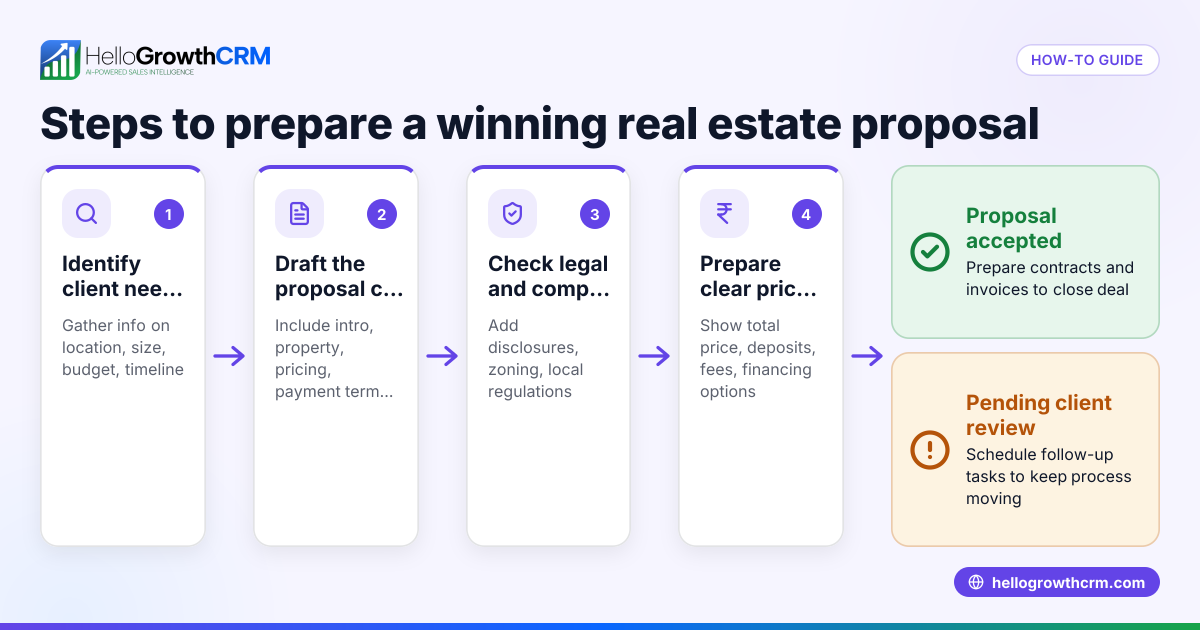
- Understand the client’s needs: Gather detailed information about the client’s problem or project requirements. Confirm you have all necessary details before drafting.
- Write an introduction: Briefly introduce your company and state the purpose of the proposal. Tailor this to the client to make it relevant.
- Define the problem: Clearly describe the client’s challenge or goal as you understand it. Double-check accuracy with the client if possible.
- Present your solution: Explain how your product or service addresses the problem. Highlight unique benefits or features.
- Outline the scope and deliverables: Specify exactly what you will provide, including quantities, features, milestones, or phases.
- Provide pricing and payment terms: List costs clearly, including any options or packages. State payment methods, schedules, and any deposits.
- Include timeline and deadlines: Provide realistic start and completion dates for deliverables.
- Add terms and conditions: Cover cancellation policies, warranties, confidentiality, or other legal points relevant to your offer.
- Close with a call to action: Encourage the client to accept the proposal or contact you with questions.
- Review and format: Check spelling, grammar, clarity, and professionalism. Use headings, bullet points, and white space for readability.
- Send and track the proposal: Follow up after sending to answer questions or encourage acceptance. Keep track of the proposal status.
Example (fictional figures)
A B2B software reseller in Denver, Colorado, writes a proposal on 03/15/2026 to provide a CRM system to a client.
- Introduction: “We are XYZ Software Resellers, offering tailored CRM solutions.”
- Problem: Client struggles with managing leads across email and text.
- Solution: Provide HelloGrowthCRM with WhatsApp and SMS integration.
- Scope: Setup, training, and 6 months support.
- Pricing:
- Setup fee: $2,000
- Monthly subscription: $500 × 6 months = $3,000
- Total: $2,000 + $3,000 = $5,000
- Timeline: Start 04/01/2026, complete setup by 04/15/2026.
- Terms: 50% upfront, 50% after setup.
This clear breakdown helps the client understand costs and expectations.
Common mistakes
- Being vague about the client’s problem: Prevent this by confirming the client’s needs before writing.
- Overloading with technical jargon: Use plain language to ensure the client understands your offer.
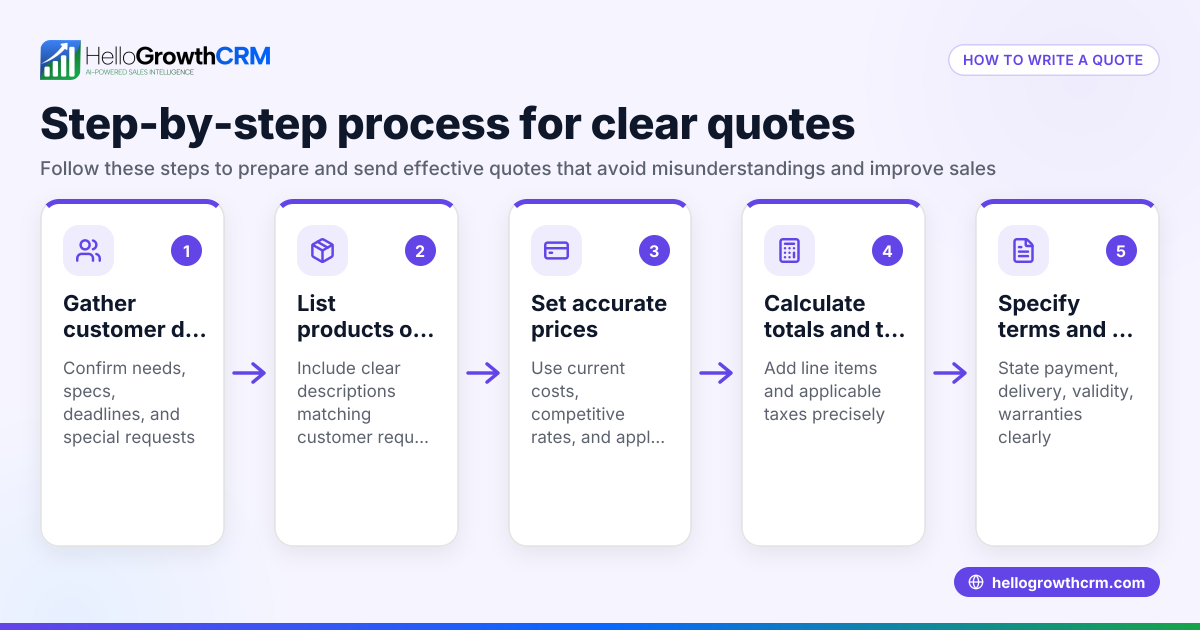
- Not specifying pricing details: Always itemize costs and payment terms clearly.
- Ignoring follow-up: Schedule follow-up tasks to check proposal status and keep communication open.
- Sending proposals without review: Proofread carefully to avoid errors that reduce credibility.
- Using separate tools for quotes and follow-up: This can cause lost information; using an integrated tool helps maintain organization.
Doing this in HelloGrowthCRM
HelloGrowthCRM offers a built-in quoting and proposal tool that lets you build, send, and track commercial documents directly from a deal record. You can see the status of your quotation—sent, viewed, or accepted—on the same screen as your follow-up tasks. This keeps your sales process organized and speeds up response times. Learn more about the built-in CRM dialer and WhatsApp and SMS CRM features that support your sales communication.
Frequently asked questions
What is the difference between a business proposal and a quote? A business proposal is a detailed document outlining the problem, solution, pricing, and terms, aiming to persuade the client. A quote usually focuses mainly on pricing details. Proposals often include quotes as a part.
How long should a business proposal be? Keep it concise but complete. Usually, 3-5 pages cover all key points without overwhelming the reader.
Can I write a business proposal without specialized software? Yes, you can write proposals using word processors or templates. However, tools like HelloGrowthCRM can streamline sending, tracking, and managing proposals and follow-ups.
How soon should I follow up after sending a proposal? A good rule is to follow up within 3-5 business days to answer questions or encourage a decision.
Should I customize each business proposal? Yes, tailoring your proposal to the client’s specific needs and language increases your chances of success.
Key takeaways
- Start by understanding and clearly stating the client’s problem.
- Structure your proposal with introduction, solution, pricing, timeline, and terms.
- Use clear, concise language and review before sending.
- Follow up promptly to keep the sales process moving.
- Avoid common mistakes like vagueness, jargon, and lack of follow-up.
- HelloGrowthCRM’s quoting and proposal tools help you send and track proposals efficiently.
Start your next proposal with confidence. Start on the Free Forever plan (200 leads, no credit card) and see how HelloGrowthCRM can organize your sales process.
Ready to put this into practice?
Set up your pipeline, WhatsApp follow-ups, and AI lead scoring in minutes — free, no credit card.
Try HelloGrowthCRM freeGet CRM tips in your inbox
Join thousands of sales professionals who get weekly insights on CRM strategy, AI automation, and pipeline optimization.

The HelloGrowthCRM team publishes guides on CRM strategy, AI sales tools, and revenue operations for small business sales teams.