CRM for Restaurants: How to Win and Keep Corporate Catering Clients

Co-Founder, HelloGrowthCRM · March 17, 2026 · 11 min read
HelloGrowthCRM software
Built for real small-business sales teams
HelloGrowthCRM helps reps qualify faster, follow up on time, and close more deals—with practical automation in one place.
- AI lead scoring and pipeline visibility
- Built-in dialer, WhatsApp, and email automation
- Sales forecasting and RevOps-ready reporting
The Corporate Catering Gap Most Restaurants Miss
Walk-in diners are the lifeblood of a restaurant, but corporate catering clients are the compounding asset most restaurateurs never properly cultivate. A single corporate account — a 50-person team ordering weekly lunches, a company with 8 annual offsites, or a business that books your private dining room for client entertainment — can be worth 10 to 30 times more revenue per year than even your most loyal walk-in regular.
The problem is structural. Restaurant operators are built for speed and service in the moment. The skills that make a great FOH manager — reading a room, turning tables, keeping tonight's service smooth — are entirely different from the relationship management skills needed to win and retain a corporate account over 12 months.
Most restaurants handle corporate enquiries reactively: someone calls or emails, the manager jots down details on paper or in their phone, quotes a price, and hopes the client comes back. There is no pipeline, no follow-up cadence, no system to track which events came from which client, and certainly no automation to re-engage the client 6 weeks after their last event.
This is the gap a CRM fills. Not reservation software, not an events management system, not a POS — a sales CRM designed to track relationships, move enquiries through a structured pipeline, and automate the follow-up that operators never have time to do manually.
The financial case is straightforward. If your restaurant does Rs.40 lakh per month in walk-in revenue, a single corporate client spending Rs.4 lakh per event twice per month adds 20% revenue at near-zero acquisition cost — no Zomato commissions, no aggregator fees, no paid ads.
Five corporate clients at that volume doubles your revenue. The unit economics of corporate catering are the best in the hospitality business — if you can win and keep the accounts.
The corporate catering market in India is also growing rapidly. As more companies move to hybrid and remote work models, they invest more in team events, offsites, and client entertainment. The demand for reliable, quality corporate catering is increasing precisely as most restaurants remain completely unequipped to manage it as a pipeline business.
Why Reservation Software Is Not a CRM
The most common objection from restaurant operators when the topic of CRM comes up is: we already have reservation software. We use Dineout, or EazyDiner, or a simple booking form on our website. Why do we need anything else?
Reservation software solves a logistics problem: who is sitting where, at what time, and for how many covers. It is table management software. It is not a sales system. The distinction matters enormously when you are trying to build a corporate catering business.
Here is what reservation software cannot do: it cannot tell you that the HR Manager from Infosys enquired about your Christmas party in October but never confirmed. It cannot automatically follow up with that HR Manager in November when they are probably under budget pressure to book.
It cannot track that the same company booked three events in 2024 and remind you in January 2025 to call them before they find a competing venue. It cannot score which corporate leads are most likely to convert based on company size and past booking behaviour.
It cannot send a WhatsApp message the morning of a corporate event to confirm dietary requirements. And it absolutely cannot calculate that your top 10 corporate clients are responsible for Rs.18 lakh of the Rs.22 lakh in event revenue you booked last year.
Reservation software is backward-looking. A CRM is forward-looking. It tracks every active relationship, every open enquiry, every upcoming renewal opportunity, and every client who has gone quiet and needs re-engagement.
The same distinction applies to your POS system. Your POS tells you what was sold and to which table. A CRM tells you which corporate client is overdue for a re-engagement call and which event planner sent you your three most valuable bookings last year.
Both systems are necessary; neither replaces the other. A restaurant trying to build a serious corporate catering business without a CRM is like a sales team trying to manage a pipeline in their email inbox — technically possible, systematically unreliable, and expensive in terms of opportunities lost.
The 5-Stage Corporate Catering Pipeline
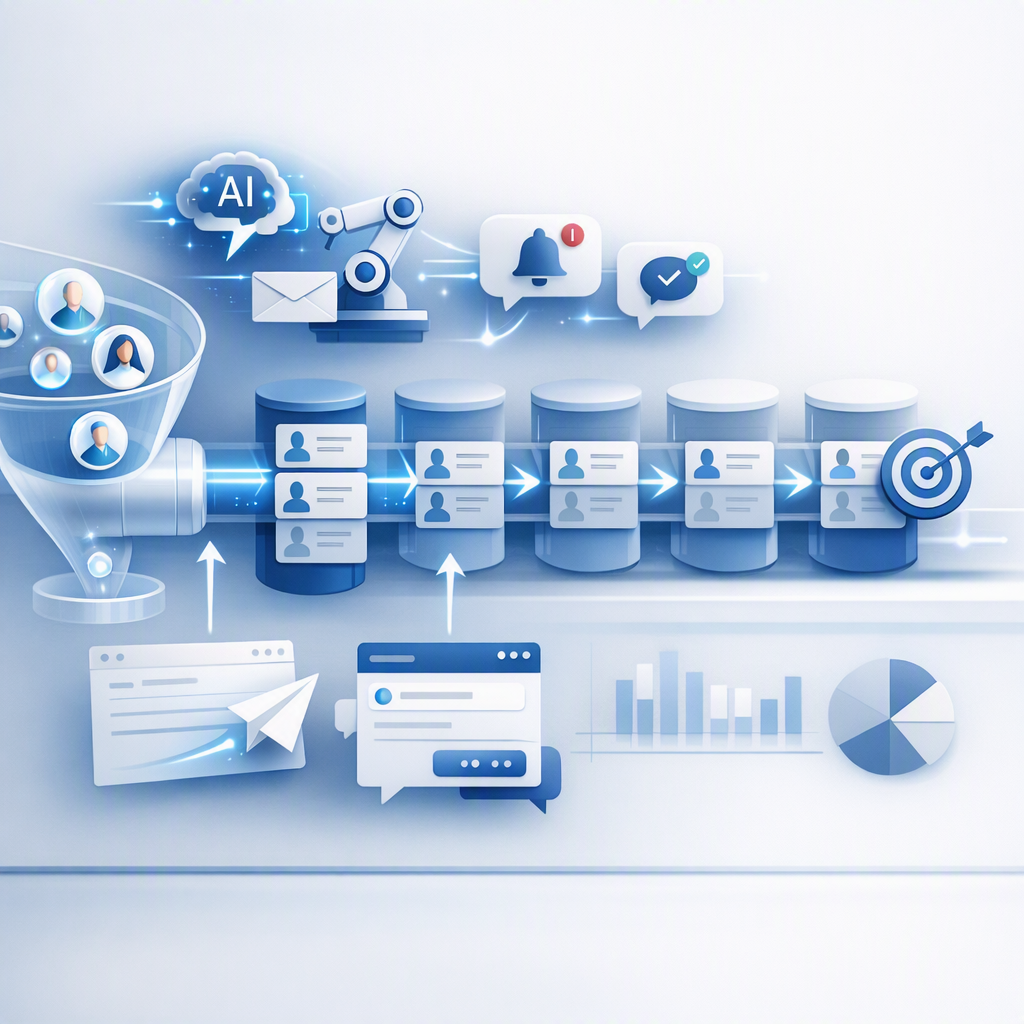
Before setting up any CRM, you need to define your pipeline — the stages an enquiry moves through from first contact to confirmed booking. For restaurant corporate catering, five stages cover the vast majority of scenarios.
Stage 1 is Enquiry. A lead comes in through a referral, the website contact form, a cold call, or a LinkedIn message. At this stage you capture the client name, company, contact details, the type of event they are considering, approximate guest count, preferred date range, and budget indication.
In the CRM, this enquiry becomes a record with an owner, a follow-up task due within 24 hours, and a tag for the event type.
Stage 2 is Tasting. For high-value events, a tasting is often the conversion moment. The prospect comes in, samples the menu, meets the event coordinator, and decides whether your venue and food match their expectations. Track which enquiries convert to tastings, and if a prospect declines a tasting, understand why so you can qualify better next time.
Stage 3 is Proposal. After the tasting, send a formal proposal with menu options, pricing per head, included services, and optional add-ons. In the CRM, record when the proposal was sent and set a follow-up task for 3 days later if no response. Proposals that sit unacknowledged for 5 days need a phone call, not another email.
Stage 4 is Deposit. The moment a deposit is received, the event is confirmed. Track deposit amount, remaining balance, and payment due date. Send automated payment reminders 7 days before the balance is due. Also trigger a pre-event checklist: confirm guest count, dietary requirements, seating arrangement, and any special setup needs.
Stage 5 is Confirmed. The event is booked, deposit paid, details confirmed. Post-event, trigger an automated feedback request and a re-engagement task 30 days later. The transition from Confirmed back to Enquiry for the next booking is where most restaurants drop the ball — and where a CRM makes the biggest difference.
For each stage, define a clear owner and a maximum number of days before the deal requires escalation. A proposal that has been sitting for 7 days without a response should escalate to the owner's manager. An enquiry without a follow-up within 48 hours should be flagged. These escalation rules transform your pipeline from a passive tracking tool into an active management system.
WhatsApp for Corporate Event Logistics and Follow-Up
In India and across Southeast Asia, corporate event coordinators live on WhatsApp. Email response rates from busy HR managers and procurement teams are typically 20-30% for restaurant enquiries. WhatsApp response rates for the same message routinely exceed 80%.
A CRM with native WhatsApp integration lets you handle corporate catering communication entirely through the channel your clients prefer, while keeping a complete conversation history tied to the client record.
For pre-event logistics, send a WhatsApp message 3 days before a corporate event confirming guest count, dietary requirements, arrival time, and any last-minute changes. This reduces the number of issues on event day and signals to the client that you are organised and professional.
A message like: Hi Priya, looking forward to hosting the Infosys product launch on Saturday. Can you confirm final guest count and any dietary restrictions? We currently have 47 confirmed. A one-tap reply from the client updates your kitchen prep numbers.
For day-of coordination, an automated WhatsApp message on the morning of the event with the key coordinator's mobile number, parking details, and arrival instructions reduces anxiety and last-minute calls to your front desk. This single message, sent automatically from the CRM at 8am on the day of every confirmed event, is one of the highest-value automations a restaurant can implement.
For post-event follow-up, within 48 hours of the event, send a WhatsApp message thanking the client and asking for feedback. A simple message from the owner or event coordinator — Hi Priya, thank you for choosing us for the Infosys launch. We hope the evening exceeded expectations.
Would love your honest feedback on what went well and what we could improve — converts at dramatically higher rates than a survey link and creates a personal connection that drives repeat booking.
In India, a restaurant that communicates via WhatsApp for event logistics is immediately perceived as more professional and easier to work with than one that relies exclusively on email chains. This perception advantage translates directly into repeat bookings and referrals to other corporate clients.
Automated Re-Engagement at 30 and 90 Days Post-Event
The single most valuable automation a restaurant can set up in a CRM is post-event re-engagement. The math is simple: if a corporate client books twice a year and you have no system to remind them you exist between bookings, you are betting your repeat business on them remembering to call you when they start planning their next event. That is a bad bet.
Set up two automated re-engagement sequences triggered by the date of a client's most recent confirmed event.
The 30-day re-engagement: one month after an event, send a WhatsApp message or email from the account owner — Hi Priya, hope the Infosys product launch was a success! We are already planning for our summer menu, which will be perfect for corporate gatherings.
Would love to have you back — are there any upcoming occasions where we could help? This message is warm, personal, and low-pressure. Its purpose is to stay top of mind before the client starts looking at alternatives for their next event.
The 90-day re-engagement: for clients who did not respond to the 30-day message or who have not booked a second event, send a more structured outreach 90 days post-event — Hi Priya, we have added three new menu options for corporate events this quarter, including a live chaat station and a curated cocktail menu.
We are taking bookings for Q3 events now — early bookings get priority on our outdoor terrace, which books out quickly. Shall I send you details? This message provides new information, creates urgency through early booking priority, and offers a clear next step.
In the CRM, configure these as automated tasks assigned to the account owner, triggered by the event date. This turns re-engagement from something that depends on the manager's memory into a reliable operating rhythm that runs even during the busiest service periods.
Restaurants that implement this two-sequence re-engagement system give dormant corporate accounts a reason to rebook before the client forgets them.
Referral Tracking, Revenue Forecasting, and Getting Started
Corporate catering referrals come from two non-obvious sources that most restaurants track poorly: venues and event planners.
Venues — hotels, conference centres, banquet halls — frequently get asked by their clients for catering recommendations when in-house catering does not match the brief. A hotel might recommend your restaurant for an intimate corporate dinner for 20 people in a private dining room.
These referrals are gold — the lead comes pre-qualified with context and budget — but most restaurants have no system to track which venue sent how many bookings or to nurture the relationship with the venue coordinator who keeps recommending them.
Event planners are even more valuable. A single corporate event planner who manages 40 events per year and recommends your restaurant for 10 of them is worth more than 10 individual corporate clients. In the CRM, create a separate pipeline view for referral partner management.
Track every referral partner — their name, company, contact details, which events they referred, and what revenue resulted. Set quarterly re-engagement tasks for your top 10 referral partners. After each event they referred, send a thank-you message and a referral incentive: a meal for two, a discount on their own private dining booking, or a gift card.
For revenue forecasting, walk-in restaurant revenue is inherently unpredictable, but corporate catering revenue is largely forecastable 60-90 days in advance. Apply probability weights to each pipeline stage: Enquiry at 15%, Tasting at 35%, Proposal at 55%, Deposit at 90%, Confirmed at 100%.
Sum across all pipeline deals to get expected event revenue for the next 90 days. This forecast changes how you manage kitchen capacity, staffing, and food purchasing. A documented pipeline of Rs.12 lakh in events expected in the next 90 days is also a fundamentally more credible story for investors and banks than historical revenue averages.
To get started, visit our CRM for restaurants page and sign up for the free plan. The free plan supports up to 200 leads, which covers most restaurant corporate catering pipelines comfortably. Import your existing contacts, create your 5-stage catering pipeline, and set up your first post-event re-engagement automation.
Most restaurant operators have their core CRM running in under 30 minutes.
Ready to put this into practice?
Set up your pipeline, WhatsApp follow-ups, and AI lead scoring in minutes — free, no credit card.
Try HelloGrowthCRM freeGet CRM tips in your inbox
Join thousands of sales professionals who get weekly insights on CRM strategy, AI automation, and pipeline optimization.
Rushabh Shah is co-founder of Soor LLC and leads product strategy at HelloGrowthCRM. He has worked with hundreds of small business sales teams to design CRM workflows that improve pipeline predictability and reduce operational overhead.