Smart Lead Routing — Right Lead to the Right Rep, Instantly
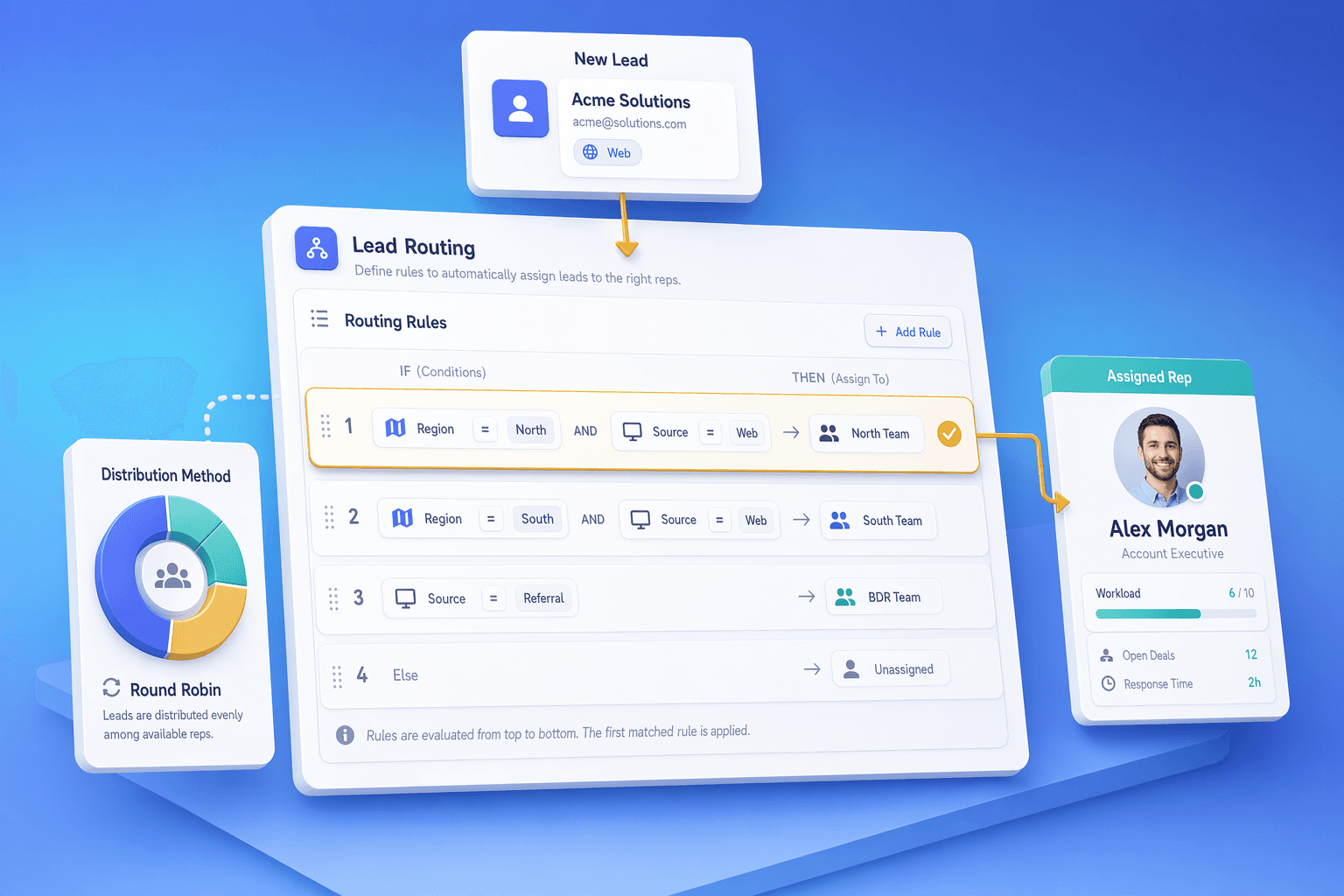
Stop assigning leads manually. HelloGrowthCRM routes every new lead to the correct rep or team automatically — based on territory, industry, deal size, or round-robin — the moment they enter the CRM.
Why teams evaluate lead routing
Lead Routing usually becomes important when a repeated part of the revenue workflow is creating too much manual work, too little visibility, or too much tool-switching. Teams are rarely shopping for a feature in isolation. They are usually trying to make one meaningful workflow cleaner, faster, and easier to inspect.
That is why buyers usually look beyond the headline capability and inspect the surrounding details: Territory-based lead routing by geography or account, Round-robin assignment with capacity awareness, Skill-based routing — match lead type to rep specialization, Lead score threshold routing — only route qualified leads. Those details determine whether the feature actually improves day-to-day execution or simply adds another surface area to manage.
Where lead routing fits in the workflow
Most teams adopt this capability as part of practical motions such as territory sales teams, inside sales sdr routing, agency account distribution. The value tends to show up fastest when the workflow is tied to a clear owner, a clear next action, and a visible outcome that managers can review later.
It also matters how this page connects to the rest of the stack. For many teams, tools such as Salesforce, HubSpot Forms, Typeform, Zapier are what make the feature operational instead of theoretical because they keep data, communication, and handoffs in sync.
What a strong rollout looks like for lead routing
The best rollout usually starts small: one high-value workflow, one clear ownership model, and one review rhythm for adoption. Once the team is consistently using the feature, managers can expand into deeper automation, reporting, or cross-functional handoffs without rebuilding the foundation.
In practice, that means evaluating not only what the feature can do, but also whether the team can maintain the process around it. Ease of use, reporting trust, and manager visibility matter just as much as the feature checklist itself.
- Use it first for territory sales teams if that is the workflow creating the most friction today.
- Use it first for inside sales sdr routing if that is the workflow creating the most friction today.
- Use it first for agency account distribution if that is the workflow creating the most friction today.
- Use it first for enterprise deal escalation if that is the workflow creating the most friction today.
Key Features
Use Cases
Territory Sales Teams
Route inbound leads automatically to the rep owning that region or account.
What teams care about
- Fast adoption with less manual cleanup for managers and reps.
- Clear visibility into workflow execution, outcomes, and accountability.
- Reliable handoffs into the CRM record so downstream teams keep full context.
Deep dive
Open the sections that matter most instead of scrolling through a long uninterrupted text block.
What Is Lead Routing and Why Does It Matter?
Lead routing is the process of automatically assigning new leads to the right sales rep or team the moment they enter your CRM. Manual routing is slow, inconsistent, and loses deals because hot leads cool down while waiting for manual assignment. Smart lead routing uses territory, industry, deal size, and capacity rules to ensure every lead reaches the right rep instantly.
The best lead routing systems are fast, fair, and capable. Fast means sub-second assignment so reps can call within minutes. Fair means capacity-aware distribution so no single rep gets overloaded. Capable means the rules can express how your team actually works — territory, skill, deal size, and capacity — without code.
How Lead Routing Impacts Sales Velocity and Conversion
Speed-to-lead is one of the strongest predictors of conversion. Research shows that leads called within 5 minutes are 9x more likely to convert than leads called after 30 minutes. Smart lead routing eliminates delays caused by manual assignment, message-forwarding, and rep confusion — so leads get to the right person instantly.
Beyond speed, smart routing improves conversion because leads go to the rep most likely to win them. Territory-based routing ensures the rep knows the account. Industry-based routing ensures the rep knows the solution. Skill-based routing ensures the rep has the right specialization for that type of deal. The result is higher conversion rates and shorter sales cycles.
Lead routing is the process of automatically assigning new leads to the right sales rep or team the moment they enter your CRM. Manual routing is slow, inconsistent, and loses deals because hot leads cool down while waiting for manual assignment. Smart lead routing uses territory, industry, deal size, and capacity rules to ensure every lead reaches the right rep instantly.
The best lead routing systems are fast, fair, and capable. Fast means sub-second assignment so reps can call within minutes. Fair means capacity-aware distribution so no single rep gets overloaded. Capable means the rules can express how your team actually works — territory, skill, deal size, and capacity — without code.
Buyer playbook
Compare, launch, and govern the workflow with an interactive overview instead of four long generic essays.
How teams evaluate lead routing
The best pages help buyers understand fit quickly instead of forcing them through long walls of copy.
Check whether the product covers the capabilities you actually care about, such as Territory-based lead routing by geography or account, Round-robin assignment with capacity awareness, Skill-based routing — match lead type to rep specialization, Lead score threshold routing — only route qualified leads.
Test if it supports real execution scenarios like Territory Sales Teams, Inside Sales SDR Routing, Agency Account Distribution.
Confirm the workflow stays connected to Salesforce, HubSpot Forms, Typeform, Zapier so reporting and handoffs remain reliable.
Frequently Asked Questions
Explore More
Use Cases
What is Intelligent Lead Routing?
HelloGrowthCRM's lead routing engine automatically assigns every new inbound lead to the right rep the moment it enters the CRM — no manager intervention, no manual assignment queue. Rules define how routing works: round-robin for fair distribution, territory-based for geographic alignment, score-based for prioritising high-intent leads to your best reps, or custom logic combining any number of criteria.
Speed to lead is one of the highest-leverage levers in Indian B2B sales. Research consistently shows that contacting a lead within 5 minutes of enquiry increases qualification rates by up to 21x compared to a 30-minute response time. HelloGrowthCRM's instant routing + rep notification workflow makes 5-minute response achievable at scale — without a manager manually reading every form submission and deciding who to assign it to.
Key Capabilities
- Round-Robin Distribution: Distribute leads evenly across your team with optional weighting for senior reps or capacity adjustments. Temporarily exclude reps without changing routing rules.
- Territory-Based Routing: Route by state, city, pin code, or company revenue segment. A Maharashtra lead goes to the Maharashtra rep; an enterprise-size company goes to the enterprise team.
- Score-Based Priority Routing: Route high lead score contacts to your best closers and low-score leads to junior reps for nurturing. Score thresholds can be combined with territory or industry rules.
- Instant Rep Notification: Assigned reps receive a push notification, email, and optionally a WhatsApp message with the lead's details and AI-suggested first action — enabling a sub-5-minute response.
- Availability-Aware Routing: Route only to reps marked as Available. Out-of-office, on a call, or over capacity — the system skips unavailable reps and routes to the next eligible one.
- Fallback and Escalation Rules: If no rep matches the routing criteria or all eligible reps are unavailable, fallback rules escalate to a manager or default rep — ensuring no lead goes unassigned.
- Routing Analytics: Track assignment distribution per rep, routing rule match rates, and response time per source. Identify routing imbalances and adjust rules accordingly.
How Indian Teams Use It
- Real Estate Enquiry Distribution: A Mumbai developer with 10 sales reps uses round-robin routing for website enquiries. Reps take turns receiving leads during business hours; after-hours leads route to the weekend duty manager. Average first-contact time dropped from 45 minutes to 4 minutes after implementing automatic routing.
- Regional Banking Sales: A private bank's retail banking team routes home loan leads by pin code to the branch manager covering that geography. Branch managers call leads with local knowledge — mentioning the nearest branch and relevant property registrations in the area — improving conversion from enquiry to appointment.
- SaaS Enterprise vs SME Split: A Bengaluru SaaS company routes leads from enterprise-domain email addresses (companies with 500+ employees by enriched data) to the enterprise team and smaller companies to the SMB team — ensuring the right rep handles each customer segment from day one.
Lead routing is available from HelloGrowthCRM's Starter plan. Compare plans. Pair with lead management or lead enrichment for a complete inbound lead workflow.