Overview
Freshdesk is a popular support desk for small and mid-sized teams — often adopted long before a CRM. The HelloGrowthCRM integration ties Freshdesk tickets to CRM contacts and deals so the sales side of the house stops being surprised by support history, and support stops working revenue-critical tickets without knowing it.
For Indian SMBs and service businesses this pairing is common: Freshdesk handles the inbound "it's broken" traffic while the CRM runs quotes, follow-ups, and renewals. The integration keeps them honest with each other — a ticket spike on an account shows up before the renewal call, and a deal in negotiation flags the account so support treats its tickets with care.
What data is involved
- Freshdesk tickets linked to CRM contacts and companies by email and domain.
- Ticket status and priority shown on the CRM timeline for the contact and account.
- Tickets creatable from CRM records with contact details pre-filled.
- CRM context (deal stage, owner, value) visible to agents for prioritisation.
- Ticket-resolution events usable as CRM automation triggers.
- Per-account ticket volume available for account-health views.
Step-by-step setup
Setup at a glance (3-5 bullets)
- Settings → Integrations → Freshdesk → domain and API key.
Sign in or sign up at HelloGrowthCRM. Open the login page, enter your credentials (or use Google), or choose Sign up if you need a new account. You must be signed in before you can open Settings and connect this integration.
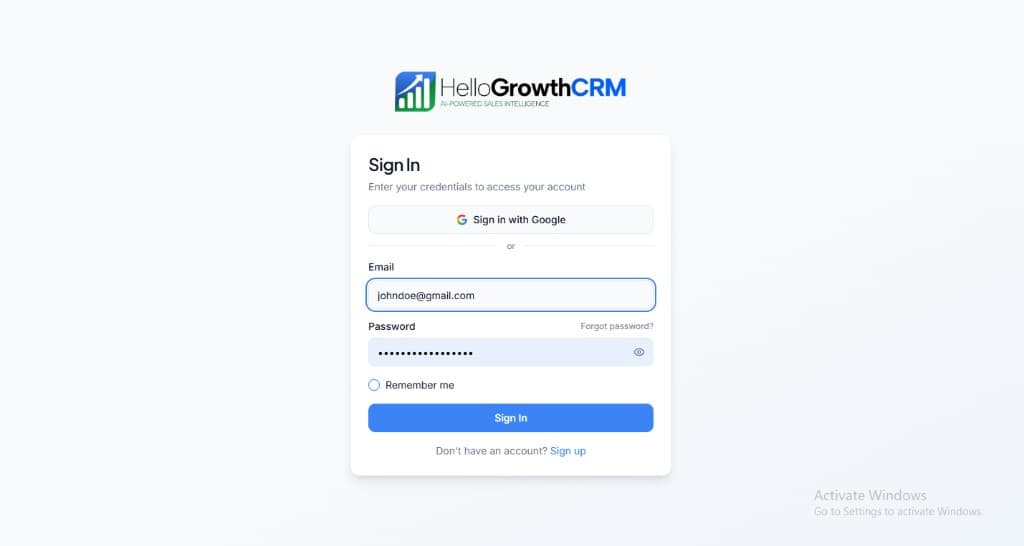
Open login page(opens in a new tab)app.hellogrowthcrm.com/login
Open Settings. In the left sidebar, under Admin, click Settings (you will land on the Settings area; the URL is app.hellogrowthcrm.com/settings).
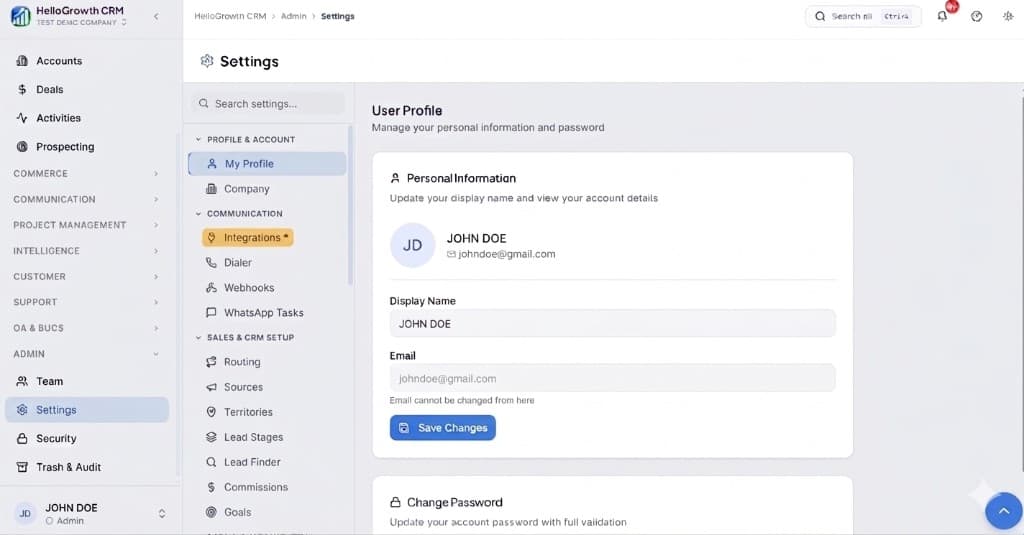
Open Settings(opens in a new tab)app.hellogrowthcrm.com/settings
Go to Integrations. On the Settings screen, use the middle settings menu. Under COMMUNICATION, click Integrations (star icon). Then find and configure this connector—the connector-specific steps below pick up from here.
Open Settings (Integrations)(opens in a new tab)app.hellogrowthcrm.com/settings
- Settings → Integrations → Freshdesk → domain and API key.
Best practices
- Standardise on company email domains in the CRM first — domain matching is what links tickets to accounts reliably.
- Pull open-ticket count into your renewal-preparation checklist; a renewal call that ignores last week's escalation goes badly.
- Notify deal owners automatically when urgent tickets open on accounts with active deals.
- Keep the sync scoped: status, priority, and subject line are enough for revenue teams — full conversation threads belong in Freshdesk.
- Review unmatched tickets weekly at first; they reveal contacts missing from the CRM that should be added.
Best for & common use cases
Teams standardized on Freshdesk for support.
- SMB support queues fed from CRM escalations.
Expected outcomes
- Faster lead handoff between tools and CRM owners
- Cleaner activity history for follow-up and reporting
- Lower manual copy-paste errors in the pipeline
Troubleshooting
- Tickets unlinked: requester email uses a personal domain — link the contact manually once and future tickets follow.
- API rate-limit errors: Freshdesk free-tier limits are low; batch syncs run slower there — upgrade the Freshdesk plan or reduce sync frequency.
- Wrong account linked: two CRM companies share a domain (parent/subsidiary) — set the preferred company on the contact record.
FAQ
Governance
Treat API keys and webhooks as production secrets. Align field mapping with your privacy policy and regional regulations (GDPR, marketing consent, telemarketing rules). Your admin controls which roles can install or edit integrations.
Related integrations in this category
Pushes CRM data to Notion databases with custom field mapping.
Creates and updates Asana tasks and projects from CRM deals and tasks; syncs status and due dates so implementation and sales stay aligned.
Push CRM data to Airtable bases and tables for stakeholder views, partner reporting, and lightweight apps.
Creates Jira issues from CRM tasks for engineering and bug tracking.
Creates Linear issues from CRM tasks via the GraphQL API.
Creates support tickets from CRM records.
Send documents for e-signature and track status (sent, viewed, signed, declined).
E-signature workflows with status tracking, similar to DocuSign.