Overview
Linear is the issue tracker of choice for fast-moving product teams — opinionated, keyboard-driven, and built on a clean GraphQL API. The HelloGrowthCRM integration uses that API to create Linear issues from CRM tasks and deals, so customer-driven work enters the same triage flow as everything else, with the deal linked and revenue context visible.
For SaaS startups this closes a familiar gap: sales hears the same feature request from five prospects, but by the time it reaches the product team it is a vague Slack message with no accounts attached. Filed through the CRM, each request lands in Linear with the deals and combined value linked — turning "sales wants this" into a prioritisation signal the product team can actually weigh.
What data is involved
- Linear issues created from CRM tasks and deals via the GraphQL API, with team and project targeting.
- Deal link and account context embedded in the issue description.
- Issue state changes reflected back on the CRM record timeline.
- Completed issues able to trigger follow-up tasks for the deal owner.
- Labels mappable from CRM fields (deal stage, plan tier, request type).
- Multiple CRM records linkable to one Linear issue for demand aggregation.
Step-by-step setup
Setup at a glance (3-5 bullets)
- Settings → Integrations → Linear → API key → map projects.
Sign in or sign up at HelloGrowthCRM. Open the login page, enter your credentials (or use Google), or choose Sign up if you need a new account. You must be signed in before you can open Settings and connect this integration.
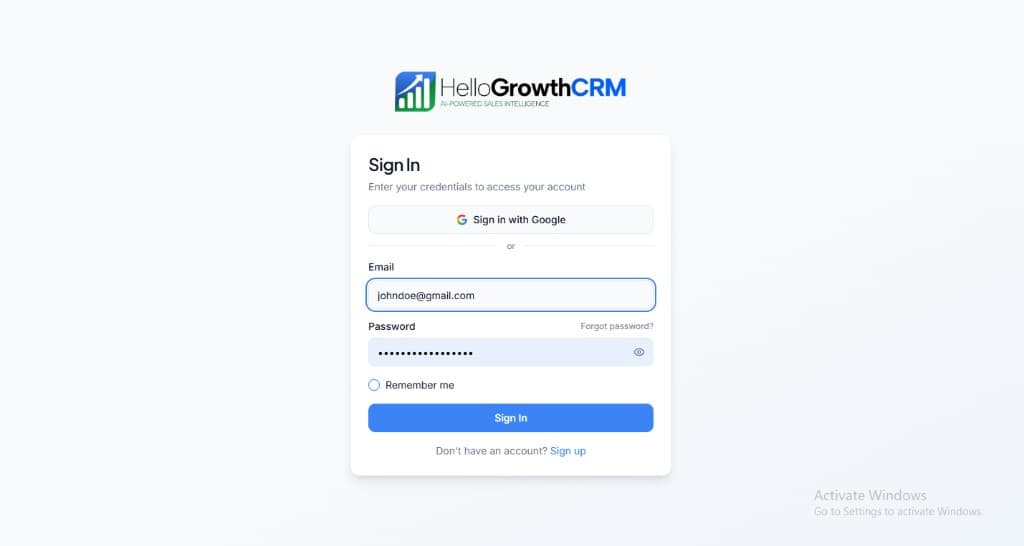
Open login page(opens in a new tab)app.hellogrowthcrm.com/login
Open Settings. In the left sidebar, under Admin, click Settings (you will land on the Settings area; the URL is app.hellogrowthcrm.com/settings).
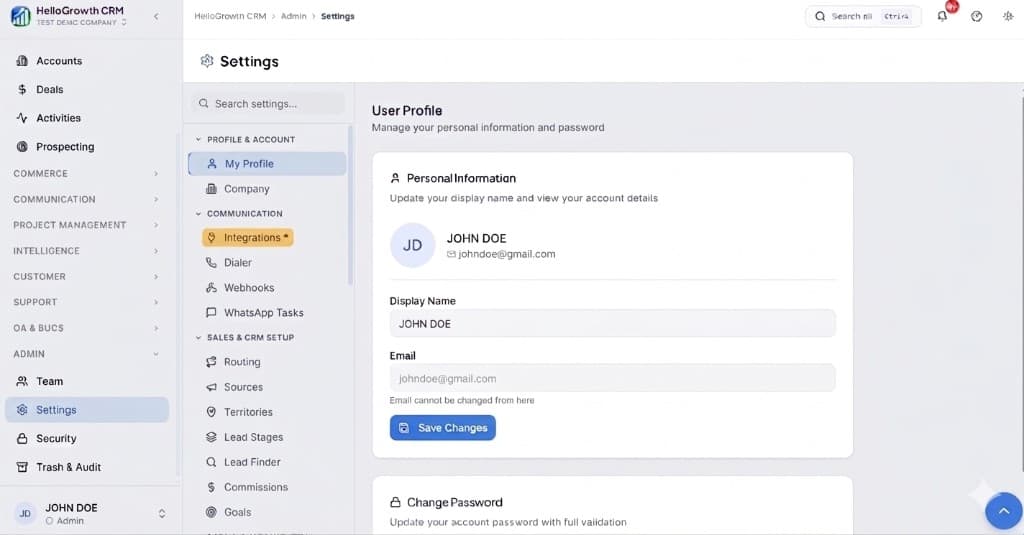
Open Settings(opens in a new tab)app.hellogrowthcrm.com/settings
Go to Integrations. On the Settings screen, use the middle settings menu. Under COMMUNICATION, click Integrations (star icon). Then find and configure this connector—the connector-specific steps below pick up from here.
Open Settings (Integrations)(opens in a new tab)app.hellogrowthcrm.com/settings
- Settings → Integrations → Linear → API key → map projects.
Best practices
- Aggregate demand: link every deal requesting a feature to the same Linear issue — the linked-revenue total is the strongest prioritisation argument sales can make.
- Use a dedicated intake team or label in Linear so customer-driven issues get triaged deliberately, not dumped into a sprint.
- Keep issue titles in the customer's words in the description but let product own the canonical title after triage.
- Trigger the deal-owner follow-up on issue completion — telling a prospect their blocker shipped is the easiest re-engagement touch there is.
- Do not promise Linear ship dates to customers from the CRM; sync status, not commitments.
Best for & common use cases
Modern product teams using Linear for delivery.
- Feature requests from enterprise AEs tracked in Linear.
Expected outcomes
- Faster lead handoff between tools and CRM owners
- Cleaner activity history for follow-up and reporting
- Lower manual copy-paste errors in the pipeline
Troubleshooting
- Issue creation fails: the API key's team scope doesn't include the target team — regenerate the key with the right team access.
- Status not syncing: the Linear webhook subscription lapsed — re-enable it from the CRM integration settings.
- Duplicate issues for one request: reps filing separately instead of linking — search existing linked issues first, or nominate one owner for intake triage.
FAQ
Governance
Treat API keys and webhooks as production secrets. Align field mapping with your privacy policy and regional regulations (GDPR, marketing consent, telemarketing rules). Your admin controls which roles can install or edit integrations.
Related integrations in this category
Creates support tickets from CRM records.
Creates Freshdesk tickets from CRM records.
Pushes CRM data to Notion databases with custom field mapping.
Creates and updates Asana tasks and projects from CRM deals and tasks; syncs status and due dates so implementation and sales stay aligned.
Push CRM data to Airtable bases and tables for stakeholder views, partner reporting, and lightweight apps.
Creates Jira issues from CRM tasks for engineering and bug tracking.
Send documents for e-signature and track status (sent, viewed, signed, declined).
E-signature workflows with status tracking, similar to DocuSign.