What lead scoring tuning does
Lead Scoring Tuning is the periodic, human-led recalibration of your lead scoring model, delivered on the RevOps Partner plan. Your specialist compares what the model predicted against what actually happened — which high-scored leads went nowhere, which low-scored ones closed — and adjusts the weights, signals, and thresholds so the score keeps reflecting real buying likelihood rather than last year's assumptions.
Scoring models decay quietly. The market shifts, a new lead source arrives with different behaviour, campaign changes alter which form fields mean intent — and a model tuned at setup starts ranking the wrong leads first. Reps notice before anyone else: they learn the score lies, ignore it, and prioritisation reverts to gut feel. Tuning exists to keep the score worth trusting, which is the only thing that makes scoring useful at all.
How it works in HelloGrowthCRM
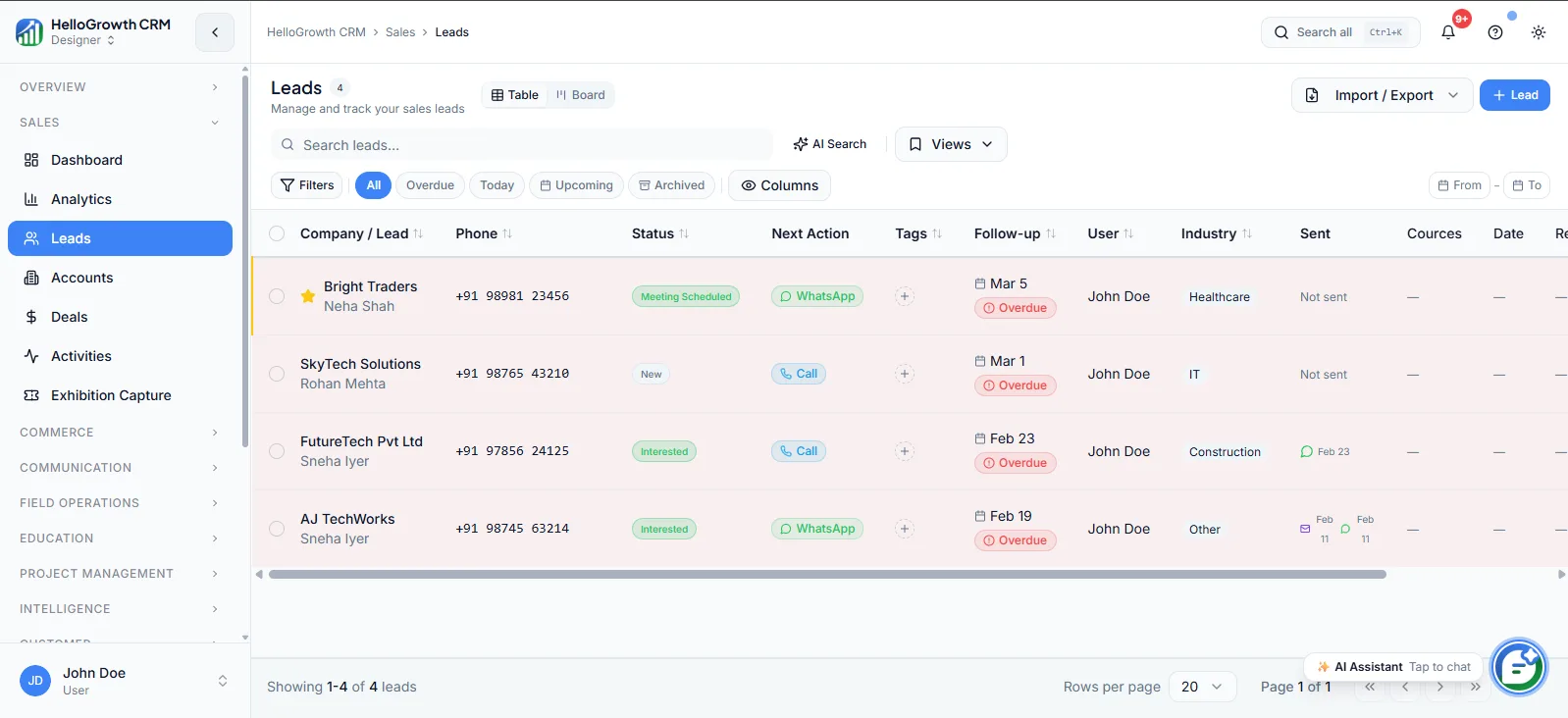
Inside HelloGrowthCRM, scores draw on lead attributes, source, and engagement signals — messages answered, calls connected, meetings booked. During a tuning cycle, your specialist pulls cohorts of scored leads and their eventual outcomes from the CRM, identifies where predictions diverged from results, and adjusts scoring criteria accordingly, documenting each change and its rationale.
Tuning connects tightly to Lead Routing, since score thresholds often gate assignment, and to the Quarterly Funnel Review, which frequently surfaces the conversion evidence that triggers a recalibration.
See it in action
How this capability is packaged by plan
| Plan | Availability |
|---|---|
| Free Forever | |
| Software Only | |
| Growth Engine | |
| RevOps Partner |
Setting it up — step by step
- 1
Review the current model
Your specialist documents how leads are scored today — signals, weights, thresholds — and what each score band is meant to trigger.
- 2
Define what qualified means
Agree the outcome the score should predict, such as opportunity created or first meeting held, so tuning has a target.
- 3
Confirm outcome tracking
Check that disqualification reasons and conversion events are logged consistently, since tuning is only as good as outcome data.
- 4
Set the tuning cadence
Agree how often recalibration runs and what events — new source, campaign shift, conversion drop — trigger an off-cycle review.
- 5
Brief the sales team
Walk reps through what changed after each tuning pass so they understand why lead priorities shifted in their queues.
Who uses lead scoring tuning
SDR/telecaller
Works the queue in score order and feels the difference directly: after a tuning pass, the top of the list actually answers and converts, instead of being inflated by stale signals.
Sales manager
Uses score bands to set coverage rules — hot leads called within the hour, cold ones sequenced — and relies on tuning to keep those bands meaning what the playbook says they mean.
RevOps lead
Owns the definition of qualified, supplies the specialist with context on market and campaign changes, and reviews each tuning report to confirm score changes match how the business now sells.
Lead Scoring Tuning in practice — industry examples
Mortgage brokers
A mortgage brokerage scores inquiries on loan size and property status. After a rate change floods in refinance leads with different conversion behaviour, tuning reweights the model — recognising refinance urgency signals — so brokers call the applicants most likely to proceed, not just the largest loan values.
Immigration consultants
An immigration consultancy finds its model over-scores inquiries mentioning premium visa categories that rarely retain. Tuning shifts weight toward engagement signals — documents shared, consultation booked, WhatsApp replies — lifting genuine applicants above window-shoppers in every counsellor's daily queue.
Construction
A commercial contractor scores project inquiries by stated budget. Outcome analysis shows mid-size projects from repeat referral sources close at far higher rates than large cold inquiries, so tuning adds source and relationship weighting, and estimators stop burning weeks quoting long-shot tenders first.
Common mistakes to avoid
Tuning against opinions instead of outcomes, so weights reflect whoever argued loudest rather than which leads actually converted.
Changing the model silently, leaving reps confused about reshuffled queues and quicker to distrust the score entirely.
Recalibrating too often on thin data, chasing monthly noise instead of waiting for enough closed outcomes to justify changes.
Ignoring disqualification reasons in the CRM, discarding the clearest evidence of which signals mark a lead as poor fit.
What teams usually care about here
Useful when initial scoring works but needs adjustment as data quality and sales patterns evolve
Improves trust in prioritization by aligning scoring with real outcomes
Best handled as an ongoing optimization process, not a one-time setup task
How this fits the buying decision
Buyers usually do not evaluate lead scoring tuning in isolation. They want to know whether it improves execution, reporting, handoffs, and accountability inside the broader CRM workflow. That is why this capability matters most when it is connected to records, ownership, activity history, and manager review rather than living in a separate point tool.
The real decision is often less about whether a box is checked and more about how much depth the team needs. Lower tiers may be enough when the workflow is simple or the volume is small. Higher tiers become more valuable when teams need governance, faster response expectations, specialist execution, or a repeatable operating cadence around the process.
If this capability is important to your rollout, compare it in the context of the whole plan. That includes related workflows, support level, reporting expectations, and whether your team will manage the motion itself or rely on managed RevOps help to keep it consistent.
Frequently asked questions
Which plans include Lead Scoring Tuning?
RevOps Partner only. It is an ongoing optimisation service performed by your specialist. Lower tiers can use scoring and prioritisation features within the software, but the periodic outcome-based recalibration of the model is part of the full-service engagement.
How does tuning get set up with our team?
Onboarding covers a review of your current model, agreement on the outcome the score should predict, and a check that conversions and disqualification reasons are logged consistently. Then a tuning cadence is set, with off-cycle reviews triggered by events like a new lead source.
How often should scoring be re-tuned?
It depends on lead volume and how fast your market moves — enough closed outcomes need to accumulate for changes to be evidence-based rather than noise-chasing. Your specialist recommends a cadence during onboarding, with additional passes after campaign shifts or conversion drops.
Does the score use WhatsApp and call activity as signals?
Yes. Engagement logged in the CRM — WhatsApp replies, connected dialer calls, meetings booked — can feed scoring alongside attributes like source and firmographics. Tuning often increases the weight of these behavioural signals because they tend to predict conversion better than form data alone.
Will tuning disrupt our routing rules?
It is coordinated deliberately. Since routing thresholds often key off score bands, your specialist reviews routing impact before applying changes and adjusts assignment rules in the same pass where needed, then briefs the team — so queues shift by design, not by surprise.
Related Pricing Capabilities
Territories
Territory definition and ownership tools that assign accounts, leads, and deals to reps based on geography, industry, or custom rules.
Commissions
Commission tracking inside the CRM that links deal outcomes to rep incentive calculations without exporting to spreadsheets.
Field Operations
Tools for managing field sales teams — check-ins, visit logs, route planning, and on-site activity capture from mobile.
Named Revenue Specialist
A dedicated operator who manages follow-up, pipeline discipline, and day-to-day revenue workflow reliability inside your CRM.
Managed RevOps
Done-for-you revenue operations support that turns HelloGrowthCRM from software into an execution system run with specialist help.
Weekly Follow-up Execution
A managed operating cadence where follow-up tasks, outreach queues, and next steps are actively worked every week.