HelloGrowthCRM software
Built for real small-business sales teams
HelloGrowthCRM helps reps qualify faster, follow up on time, and close more deals—with practical automation in one place.
- AI lead scoring and pipeline visibility
- Built-in dialer, WhatsApp, and email automation
- Sales forecasting and RevOps-ready reporting
To address customer needs, start by identifying what your customers truly want and expect. Then, tailor your products, services, and communication to meet those needs consistently. This article covers why addressing customer needs matters, step-by-step actions, a practical example, common mistakes to avoid, and how HelloGrowthCRM helps manage customer service after the sale.
Why this comes up / what goes wrong
Small-business owners often face challenges in addressing customer needs because they juggle many roles with limited time and resources. Without a clear process, businesses may misinterpret what customers want, respond slowly, or fail to follow up on service requests. This can result in lost sales, poor customer satisfaction, and negative word-of-mouth. For example, a sales team relying on text messages and spreadsheets might miss or delay customer requests, leading to frustration.
Step-by-step
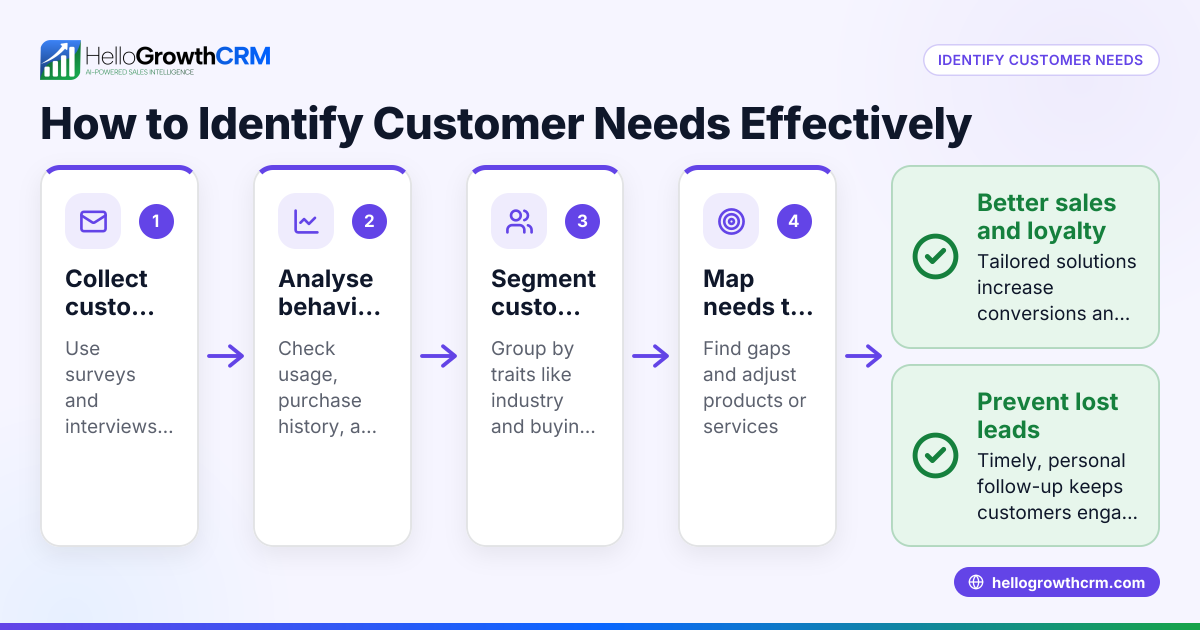
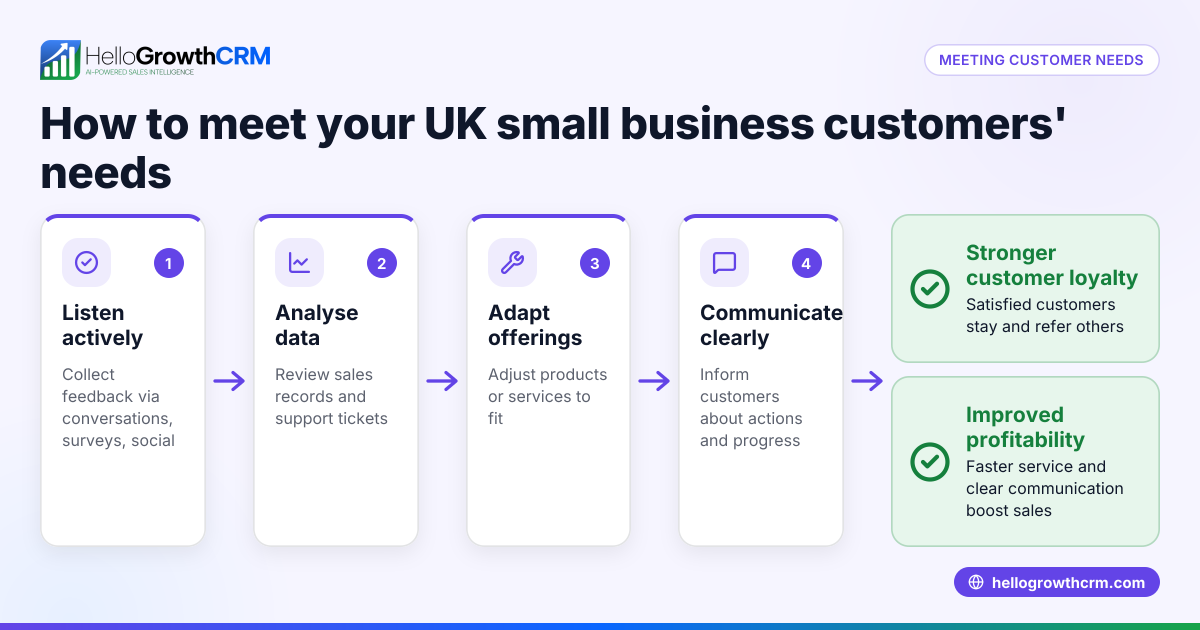
- Listen to your customers carefully. Use surveys, direct conversations, and feedback forms to gather clear information about their expectations and pain points. Check that you have documented this feedback accurately.
- Analyze the feedback for common themes. Identify what needs are most urgent or frequent. Check if these needs align with your current products or services.
- Prioritize customer needs based on impact and feasibility. Decide which needs you can address quickly and which require longer-term changes. Check your resource availability before committing.
- Develop tailored solutions or improvements. This might include product adjustments, better communication, or enhanced support. Check that your solutions directly resolve the identified needs.
- Communicate clearly with customers. Inform them about how you are addressing their needs and invite ongoing feedback. Check that your messaging is clear and consistent across channels.
- Track service requests and customer interactions in one place. This ensures no requests are lost or overlooked and helps measure customer satisfaction over time. Check that your system supports this tracking.
- Review and adjust regularly. Customer needs evolve, so revisit feedback and results periodically. Check for new issues or opportunities to improve.
Example (fictional figures)
A landscaping contractor in Charlotte, North Carolina, receives customer feedback indicating a need for faster project completion and better communication during the job.
- The contractor surveys 50 customers and finds 30 mention delays and unclear updates.
- Analyzing feedback, the contractor prioritizes faster completion and regular progress reports.
- They decide to hire one additional crew member to speed up work and implement weekly email updates.
- Hiring costs $3,500 per month.
- Weekly email updates require 2 hours per week of administrative time, valued at $25/hour.
- Monthly administrative cost = 2 hours/week × 4 weeks × $25/hour = $200
- Total monthly cost to address needs = $3,500 + $200 = $3,700
- The contractor estimates this will increase customer retention by 10%, adding $10,000 in monthly revenue.
- Net gain = $10,000 - $3,700 = $6,300 per month
This example shows how identifying and addressing customer needs can improve business outcomes.
Common mistakes
- Ignoring direct customer feedback. Prevent this by actively asking for and recording feedback regularly.
- Trying to solve every need at once. Prevent by prioritizing based on impact and feasibility.
- Poor communication about changes. Prevent by informing customers clearly about what you are doing to meet their needs.
- Using multiple unconnected tools for customer data. Prevent by consolidating customer interactions in one CRM system, such as HelloGrowthCRM, which supports tracking of service requests on the same customer record as the deal.
- Failing to review and update solutions. Prevent by scheduling regular reviews of customer feedback and business processes.
Doing this in HelloGrowthCRM
HelloGrowthCRM helps you address customer needs after the sale by keeping service requests on the same customer record as the deal. Its branded self-service customer portal allows customers to submit tickets and access a knowledge base, improving communication and support. You can also track referrals and manage support tickets efficiently, ensuring no request is missed. Learn more about these features and how they help maintain customer satisfaction in HelloGrowthCRM for the United States.
Frequently asked questions
How do I know what my customers really need? Start by collecting direct feedback through surveys, interviews, and monitoring customer behavior. Analyze this data for recurring themes and prioritize the most urgent needs.
What if I can’t afford to meet all customer needs immediately? Prioritize needs based on potential impact and feasibility. Address the most critical and achievable needs first, then plan for others over time.
How can I keep track of customer requests efficiently? Use a CRM system that consolidates customer interactions, service tickets, and communication history in one place. HelloGrowthCRM’s customer portal and ticketing features support this.
Why is communication important when addressing customer needs? Clear communication builds trust and shows customers you value their input. It also helps manage expectations and encourages ongoing feedback.
Can addressing customer needs improve sales? Yes. Meeting customer needs increases satisfaction, leading to repeat business, referrals, and better sales forecasting. Using tools like HelloGrowthCRM can help track these improvements.
Key takeaways
- Identify and document customer needs through direct feedback.
- Prioritize needs based on impact and resource availability.
- Develop clear solutions and communicate them effectively.
- Track all customer interactions and service requests in one system.
- Review and adjust your approach regularly to stay aligned with evolving needs.
- Use HelloGrowthCRM’s customer portal and ticketing features to manage post-sale service efficiently.
Addressing customer needs is essential for growing your business and keeping customers satisfied. Start by understanding what your customers want, then use clear steps and tools like HelloGrowthCRM to deliver on those needs effectively.
Start on the Free Forever plan (200 leads, no credit card) at HelloGrowthCRM to manage your customer relationships and service requests in one place.
Ready to put this into practice?
Set up your pipeline, WhatsApp follow-ups, and AI lead scoring in minutes — free, no credit card.
Try HelloGrowthCRM freeGet CRM tips in your inbox
Join thousands of sales professionals who get weekly insights on CRM strategy, AI automation, and pipeline optimization.

The HelloGrowthCRM team publishes guides on CRM strategy, AI sales tools, and revenue operations for small business sales teams.