HelloGrowthCRM software
Built for real small-business sales teams
HelloGrowthCRM helps reps qualify faster, follow up on time, and close more deals—with practical automation in one place.
- AI lead scoring and pipeline visibility
- Built-in dialer, WhatsApp, and email automation
- Sales forecasting and RevOps-ready reporting
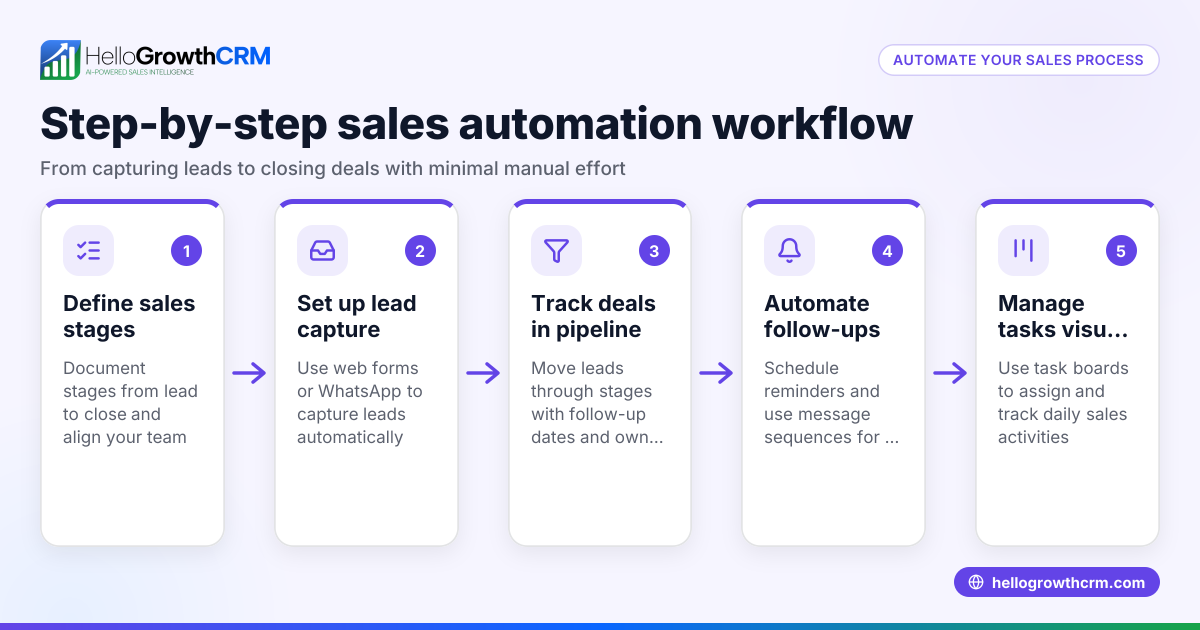
Automating your online business means using software and services to handle routine, repetitive tasks automatically. This saves time, reduces errors, and helps your sales team focus on closing deals instead of manual work. For small and mid-sized businesses in the US, automation can include lead capture from web forms, follow-up communication via email, WhatsApp, or SMS, sales pipeline tracking, and reporting.
This article explains why automation is important for your business, provides step-by-step instructions to implement it, highlights common mistakes to avoid, and offers a detailed example with realistic US figures.
Why this comes up / what goes wrong
Many small business owners struggle with manual processes like entering customer data, sending follow-up messages, and managing sales pipelines using spreadsheets and email. These tasks consume valuable time and often cause delays in responding to leads, resulting in lost sales opportunities. Without automation, your sales team spends too much time on low-value tasks, slowing down growth and making it hard to scale.
Owners searching for how to "automate online business" want to streamline operations, speed up lead follow-up, and organize sales activities so the team can focus on closing deals.
Step-by-step
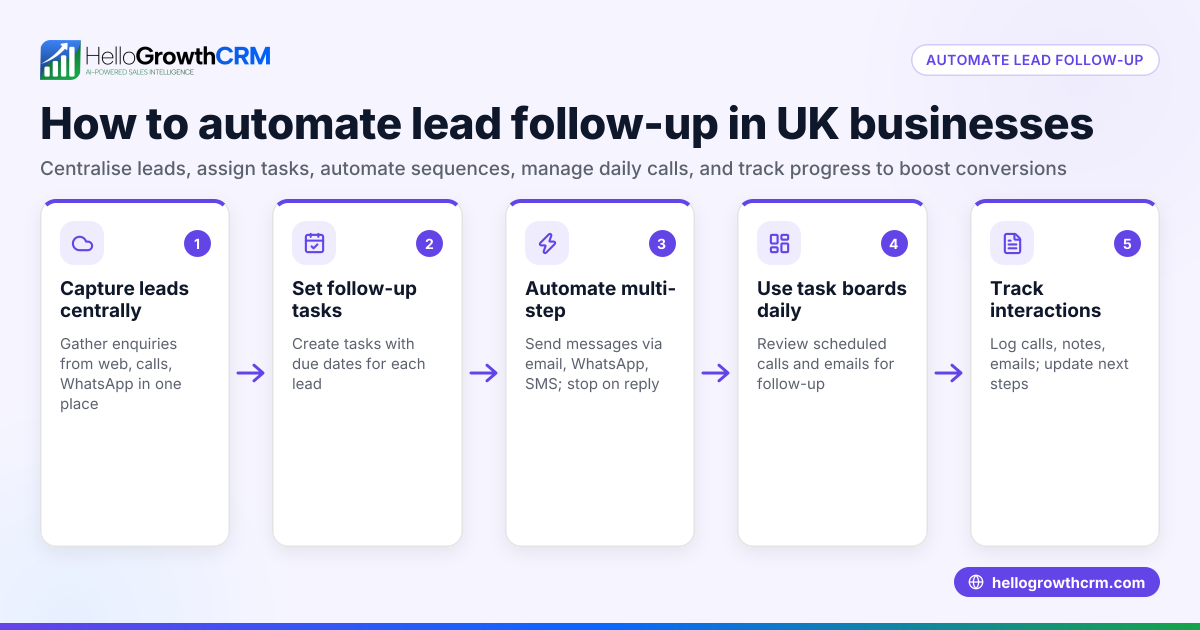
- Identify repetitive tasks to automate
- List daily or weekly tasks that take up time, such as data entry, sending follow-up emails or texts, updating sales records, or scheduling appointments.
- Check which tasks follow clear rules and predictable patterns, making them good candidates for automation.
- Define your automation goals
- Decide what you want to improve: faster lead response, consistent follow-up, accurate sales tracking, better forecasting, or all of these.
- Research automation tools suitable for your business size
- Look for CRM and communication software that integrates your sales channels like email, SMS, and WhatsApp.
- Check if the tools support lead capture from web forms, pipeline management, and task boards.
- Evaluate integration and ease of use
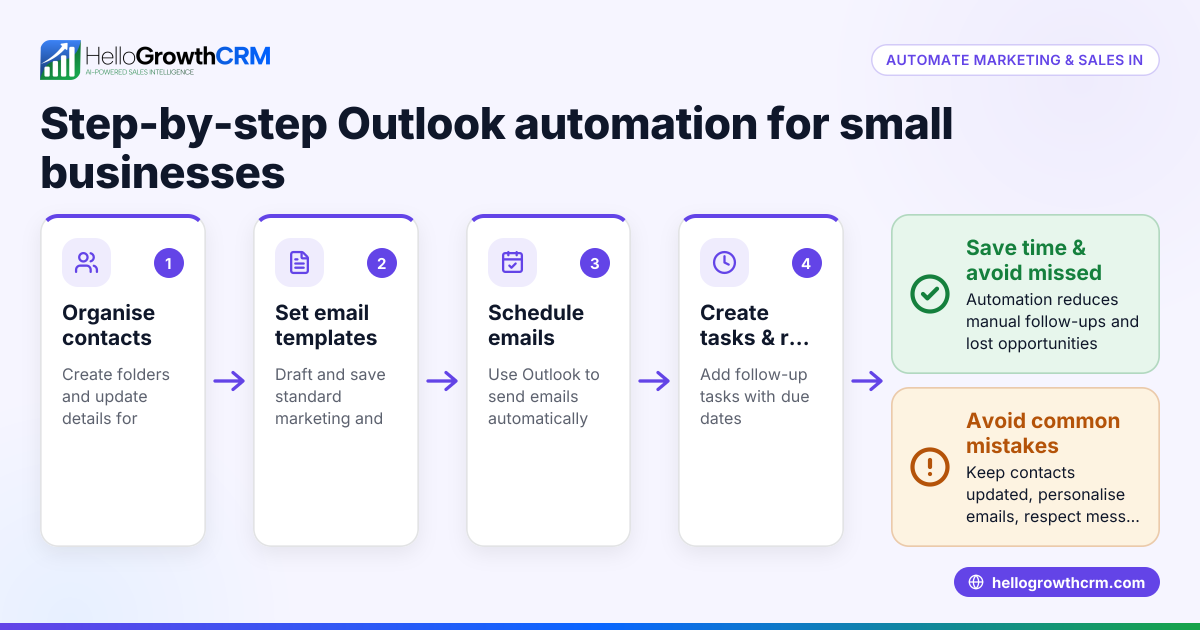
- Verify the software works well with your existing tools such as spreadsheets and email clients to avoid data silos.
- Ensure your team can easily adopt the new system to prevent low usage.
- Test automation workflows on a small scale
- Start by automating a single process like lead capture or follow-up sequences.
- Monitor results closely and gather feedback from your team.
- Measure impact and refine
- Track key metrics such as lead response time, conversion rates, and time saved.
- Adjust automation rules and expand to other tasks as you gain confidence.
- Train your team and document processes
- Provide clear instructions and training to ensure consistent use.
- Keep documentation updated for onboarding new employees.
Example (fictional figures)
A B2B software reseller in Denver, Colorado, decides to automate lead follow-up and sales tracking starting 04/01/2026.
- Current leads per month: 100
- Average time spent manually following up per lead: 30 minutes (0.5 hours)
- Employee hourly rate: $25
Calculate current monthly cost for follow-up:
100 leads × 0.5 hours = 50 hours 50 hours × $25 = $1,250
After automation, follow-up time per lead reduces to 10 minutes (0.167 hours):
100 leads × 0.167 hours = 16.7 hours 16.7 hours × $25 = $417.50
Monthly time saved:
50 hours - 16.7 hours = 33.3 hours
Monthly cost saved:
$1,250 - $417.50 = $832.50
This business can reinvest the saved time and money into closing deals and improving customer service, boosting revenue.
Common mistakes
- Automating without clear goals
- Prevent by defining what success looks like before choosing tools and processes.
- Choosing complex software that the team avoids
- Prevent by selecting user-friendly solutions and involving your team early in the decision.
- Ignoring integration needs
- Prevent by verifying compatibility with existing tools to avoid creating isolated data silos.
- Over-automating critical personal interactions
- Prevent by balancing automation with human touch where it matters most for customer relationships.
- Skipping measurement and adjustment
- Prevent by setting clear KPIs and regularly reviewing automation impact to refine workflows.
Frequently asked questions
What tasks can I automate in my online business? You can automate lead capture, follow-up emails or messages, sales pipeline updates, appointment scheduling, and reporting. Focus on repetitive, rule-based tasks that save time and reduce errors.
How do I choose the right automation software? Look for software that matches your business size and workflows, integrates well with your existing tools, and is easy for your team to use. Trial versions or demos can help you evaluate fit.
Will automation replace my sales team? Automation is designed to assist your team by handling routine tasks, freeing them to focus on closing deals and building customer relationships, not to replace them.
How can I ensure my team adopts the automation tools? Provide thorough training, involve team members in choosing tools, and document processes clearly. Monitor usage and offer ongoing support to encourage adoption.
Is it expensive to automate an online business? Costs vary depending on software and scale. Consider the time and money saved from automation against subscription or setup fees. Many tools offer free tiers or trials to start.
For more on managing sales communications efficiently, see WhatsApp and SMS CRM and how a built-in CRM dialer can help your team. Learn about our approach for US businesses at HelloGrowthCRM for the United States.
Key takeaways
- Start by identifying repetitive, rule-based tasks suitable for automation.
- Define clear goals to measure the success of automation.
- Choose user-friendly tools that integrate with your existing systems.
- Test automation on a small scale before expanding.
- Measure results and adjust workflows regularly.
- Balance automation with personal customer interactions to maintain relationships.
Automating your online business can save time and money while improving sales efficiency. To get started without risk, Start on the Free Forever plan (200 leads, no credit card).
Ready to put this into practice?
Set up your pipeline, WhatsApp follow-ups, and AI lead scoring in minutes — free, no credit card.
Try HelloGrowthCRM freeGet CRM tips in your inbox
Join thousands of sales professionals who get weekly insights on CRM strategy, AI automation, and pipeline optimization.

The HelloGrowthCRM team publishes guides on CRM strategy, AI sales tools, and revenue operations for small business sales teams.