HelloGrowthCRM software
Built for real small-business sales teams
HelloGrowthCRM helps reps qualify faster, follow up on time, and close more deals—with practical automation in one place.
- AI lead scoring and pipeline visibility
- Built-in dialer, WhatsApp, and email automation
- Sales forecasting and RevOps-ready reporting
A B2B account manager handles the ongoing relationship between a company and its business clients. Unlike consumer sales roles that focus on individual customers, B2B account managers work to build long-term partnerships, understand client needs, and coordinate sales efforts to maximize account value. This role is critical for small businesses that want to retain and grow business customers efficiently.
Why this comes up / what goes wrong
Small business owners often search for "B2B account manager" when they want someone to oversee their business client relationships but are unsure how to organize or manage this role. Many small and mid-sized businesses run their sales processes on text messages, email, and spreadsheets. This can lead to disorganization, slow follow-up, and lost leads. Without a clear account management strategy, you risk losing clients due to poor communication, missed upsell opportunities, or inconsistent service.
Assigning a dedicated B2B account manager helps centralize communication and ensures each client feels valued. However, without clear role definition and tracking, even this can fail. Understanding how to manage these accounts step-by-step is essential for improving retention and sales.
Step-by-step
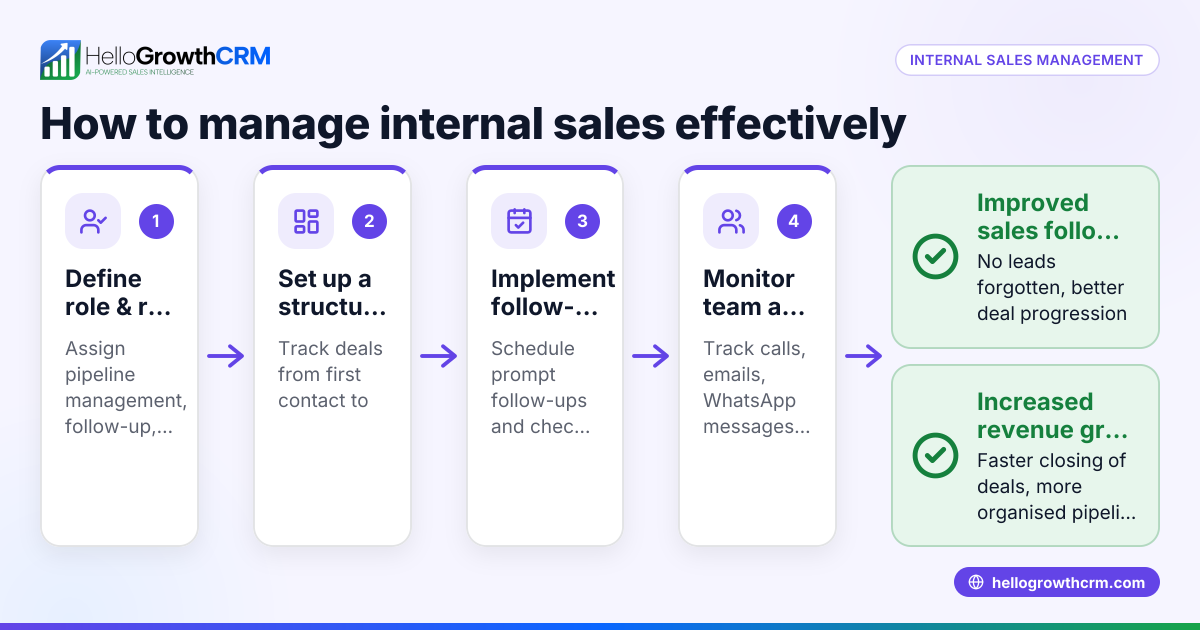
- Define the Account Manager Role Clearly
- Specify responsibilities such as client communication, sales follow-up, upselling, problem resolution, and reporting.
- Check that the role fits your business size and sales process needs.
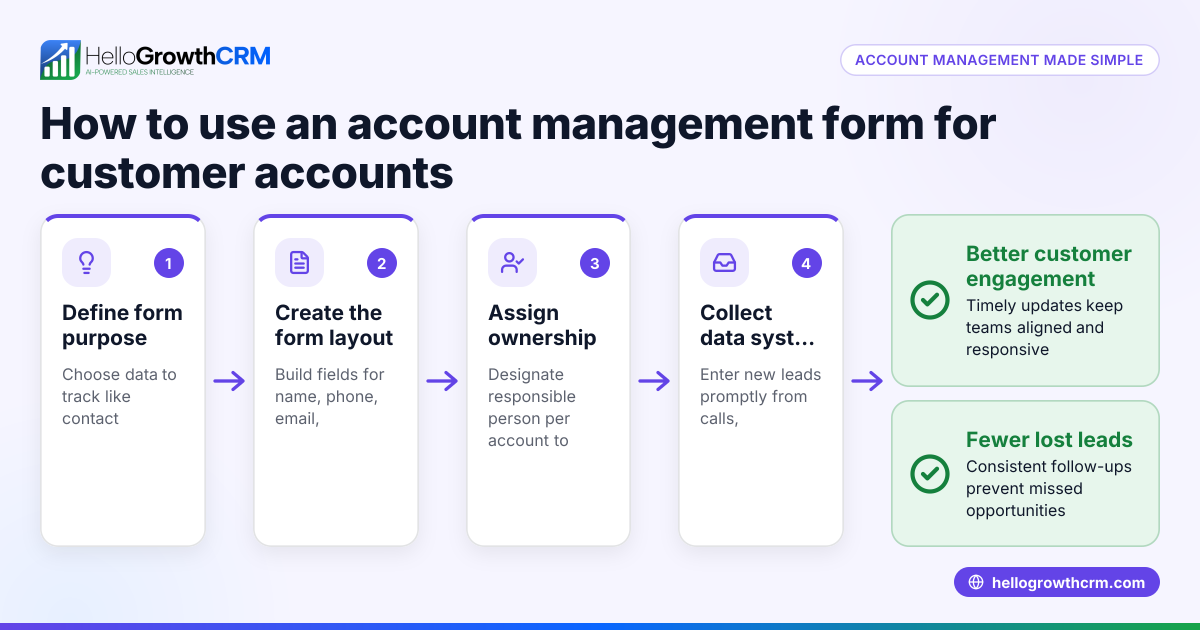
- Assign Account Managers to Specific Clients
- Ensure each business client has one dedicated manager to build trust and accountability.
- Verify that managers have access to client history, preferences, and past interactions.
- Set Up a System to Track Client Interactions
- Use a CRM or organized method to log calls, emails, WhatsApp, and SMS messages.
- Check regularly that follow-ups, tasks, and meetings are completed on schedule.
- Develop a Communication Plan
- Establish regular check-ins and updates with clients.
- Confirm that communication channels match client preferences, whether email, WhatsApp, or SMS.
- Monitor Account Growth and Client Satisfaction
- Track sales progress and collect client feedback.
- Review account health monthly and adjust strategies as needed.
- Train Account Managers Continuously
- Provide product knowledge and sales training.
- Check that managers stay informed about new offerings and market changes.
Using tools like a WhatsApp and SMS CRM and a built-in CRM dialer can help streamline client communication and follow-up.
Example (fictional figures)
Consider a plumbing company in Austin, Texas, with $1,200,000 in annual B2B sales. They assign an account manager to handle their top 10 business clients.
- Total annual B2B sales = $1,200,000
- Number of clients = 10
- Average sales per client = $1,200,000 ÷ 10 = $120,000
The account manager aims to grow each client's sales by 10% in the next year.
- Target increase per client = $120,000 × 10% = $12,000
- New target sales per client = $120,000 + $12,000 = $132,000
- Total new target sales = $132,000 × 10 = $1,320,000
This goal requires the account manager to identify upsell opportunities and maintain strong client relationships to secure the additional $120,000 in revenue.
Common mistakes
- Lack of Clear Ownership
- Prevent by assigning one account manager per client and avoiding overlaps.
- Poor Communication Tracking
- Prevent by using CRM tools or organized logs to record all interactions.
- Ignoring Client Preferences
- Prevent by asking clients how they prefer to be contacted and adapting accordingly.
- No Regular Follow-Up Schedule
- Prevent by setting reminders and task lists to ensure timely check-ins.
- Failing to Train Account Managers
- Prevent by scheduling ongoing training and sharing updates.
- Relying on Spreadsheets and Email Alone
- Prevent by adopting dedicated CRM systems like HelloGrowthCRM for the United States to centralize client data and communication.
Frequently asked questions
What skills does a B2B account manager need? A B2B account manager should have strong communication and negotiation skills, be organized, understand their product or service, and be able to build trust with business clients. Sales experience and problem-solving abilities are also important.
How is a B2B account manager different from a sales representative? While sales representatives often focus on acquiring new customers, B2B account managers concentrate on maintaining and growing existing client relationships for ongoing revenue.
Can small businesses benefit from having a B2B account manager? Yes, even small businesses with a few business clients can improve retention and sales by assigning someone to manage these accounts closely.
What tools help B2B account managers work efficiently? Tools like CRM systems that integrate email, WhatsApp, SMS, and calling features can help account managers track communications and tasks. For example, a built-in CRM dialer and WhatsApp and SMS CRM streamline outreach and follow-ups.
How do I measure the success of a B2B account manager? Success is measured by client retention rates, growth in account sales, client satisfaction, and timely communication. Regular reporting and forecasting help track these metrics.
Key takeaways
- A B2B account manager manages business client relationships to retain and grow accounts.
- Clear role definition and client assignment prevent confusion and lost leads.
- Tracking communications and scheduling follow-ups are essential for success.
- Using CRM tools tailored for business communication improves efficiency.
- Regular training and client feedback help maintain strong partnerships.
- Monitoring sales growth and client satisfaction guides account strategies.
To start managing your business accounts more effectively, consider adopting a CRM solution designed for small and mid-sized businesses. You can start on the Free Forever plan (200 leads, no credit card) today to organize your sales process and improve client follow-up.
Ready to put this into practice?
Set up your pipeline, WhatsApp follow-ups, and AI lead scoring in minutes — free, no credit card.
Try HelloGrowthCRM freeGet CRM tips in your inbox
Join thousands of sales professionals who get weekly insights on CRM strategy, AI automation, and pipeline optimization.

The HelloGrowthCRM team publishes guides on CRM strategy, AI sales tools, and revenue operations for small business sales teams.