HelloGrowthCRM software
Built for real small-business sales teams
HelloGrowthCRM helps reps qualify faster, follow up on time, and close more deals—with practical automation in one place.
- AI lead scoring and pipeline visibility
- Built-in dialer, WhatsApp, and email automation
- Sales forecasting and RevOps-ready reporting
A territory manager is a sales or field representative responsible for overseeing and growing business within a specific geographic area or market segment. This role involves managing customer relationships, tracking sales activities, and optimizing coverage to increase revenue. This article explains why territory management matters for small businesses, steps to set up territories effectively, common mistakes to avoid, and how HelloGrowthCRM supports territory management.
Why this comes up / what goes wrong
Small-business owners often struggle with managing sales or service coverage when their customer base or market area grows beyond what one person can handle. Without clear territory assignments, sales reps may overlap efforts, miss leads, or neglect some customers. This causes slow follow-up, lost sales, and poor customer experience. For businesses with field sales or distributors, tracking visits and managing commissions can become chaotic without defined territories. Small teams running sales on text messages, emails, and spreadsheets especially find it hard to keep organized and accountable.
Step-by-step
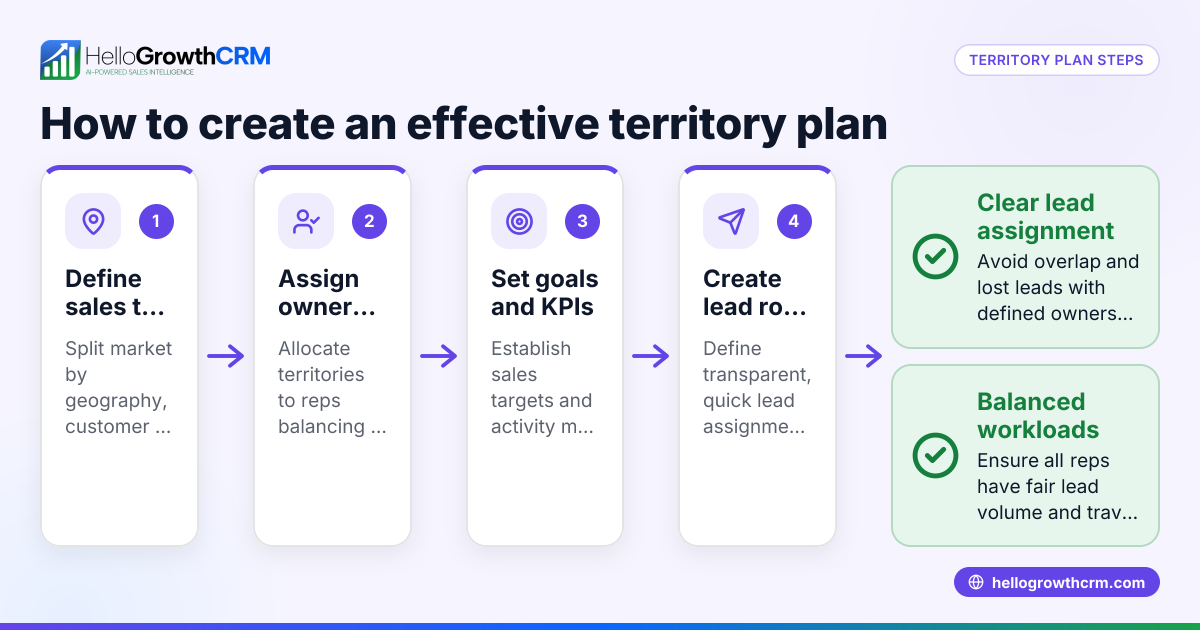
- Define your business territories clearly. Decide how to divide your market area—by geography (city, zip code), customer type, or product line. Check that each territory is manageable in size and potential revenue.
- Assign a territory manager to each area. Choose reps or staff with the right skills and local knowledge. Confirm they understand their responsibilities and goals.
- Set measurable targets for each territory. Establish sales quotas, visit frequency, or customer retention goals. Check regularly that targets are realistic.
- Provide tools for tracking activities. Equip managers with ways to log visits, calls, and deals. Confirm data is collected consistently for performance reviews.
- Monitor territory performance regularly. Review sales results, customer feedback, and visit reports. Check for gaps, overlaps, or underperforming areas.
- Adjust territories and assignments as needed. Based on performance data, re-balance territories or reassign managers to optimize coverage.
- Train managers on using technology for efficiency. Help them adopt CRM tools with WhatsApp and SMS messaging for faster follow-up.
- Ensure commission and incentive plans align with territory goals. Check that compensation motivates managers to meet targets without conflicts.
Following these steps helps small businesses avoid lost leads and disorganized sales efforts.
Example (fictional figures)
Phoenix Home Realty, a residential real-estate team in Phoenix, Arizona, divides the city into three territories: North Phoenix, Central Phoenix, and South Phoenix. Each territory is assigned one territory manager responsible for client visits and sales.
- North Phoenix target sales: $1,000,000
- Central Phoenix target sales: $1,500,000
- South Phoenix target sales: $800,000
On 06/15/2026, the Central Phoenix manager reports:
- Closed deals worth $450,000
- Scheduled 30 client visits
The manager's commission is 5% of closed sales.
Calculations:
$450,000 × 5% = $22,500 commission
The team reviews territory performance monthly to adjust targets and territories if needed.
Common mistakes
- Overlapping territories causing confusion. Prevent by mapping territories clearly and confirming boundaries with all managers.
- Unequal territory sizes leading to unfair workloads. Prevent by analyzing customer density and potential revenue before assigning territories.
- Lack of activity tracking. Prevent by implementing tools to log visits and communications consistently.
- Ignoring data when adjusting territories. Prevent by reviewing performance metrics regularly to make informed changes.
- Poor communication between managers and leadership. Prevent by scheduling regular check-ins and sharing reports.
- Not aligning commission plans with territory goals. Prevent by designing incentives that reward meeting or exceeding targets fairly.
Doing this in HelloGrowthCRM
HelloGrowthCRM supports territory management with tools for defining territories and assigning ownership. Field sales reps can log visits directly from their phones, and managers can see the day's beat to monitor field operations. Commission tracking is linked to deal outcomes, helping ensure fair compensation. These features help small and mid-sized businesses organize territories and improve sales efficiency. Learn more about territory management and how HelloGrowthCRM integrates with WhatsApp and SMS CRM for streamlined communication.
Frequently asked questions
What is the difference between a territory manager and a sales manager? A territory manager focuses on managing sales and customer relationships within a specific geographic or market area. A sales manager may oversee a broader team or multiple territories, focusing on strategy, coaching, and overall sales performance.
How do I assign territories fairly in a small business? Start by analyzing your customer locations and potential revenue in each area. Divide territories to balance workload and opportunity. Use sales data and input from your team to refine assignments.
Can a territory manager handle multiple territories? It depends on the size and complexity of the territories. For small or low-activity areas, one manager may cover multiple territories. For dense or high-potential markets, focusing on one territory improves effectiveness.
How does technology help territory managers? CRM tools like HelloGrowthCRM enable territory managers to log visits, track deals, communicate via WhatsApp and SMS, and monitor performance in real time. This reduces paperwork and speeds up follow-up.
What should I look for in commission plans for territory managers? Commission plans should align with your business goals, motivate managers to meet targets, and be transparent. Linking commissions to deal outcomes ensures fair rewards for performance.
How often should territories be reviewed? Regular reviews—at least quarterly—help adjust territories based on sales results, market changes, or staffing. Frequent reviews prevent overlap and ensure balanced workloads.
Key takeaways
- A territory manager oversees sales and customer relationships in a defined area.
- Clear territory definitions prevent overlap and missed opportunities.
- Use measurable targets and consistent activity tracking.
- Regularly review and adjust territories based on performance data.
- Align commission plans with territory goals to motivate managers.
- HelloGrowthCRM offers tools for territory management, field operations, and commission tracking.
To get started organizing your sales territories and improving follow-up, start on the Free Forever plan (200 leads, no credit card).
Ready to put this into practice?
Set up your pipeline, WhatsApp follow-ups, and AI lead scoring in minutes — free, no credit card.
Try HelloGrowthCRM freeGet CRM tips in your inbox
Join thousands of sales professionals who get weekly insights on CRM strategy, AI automation, and pipeline optimization.

The HelloGrowthCRM team publishes guides on CRM strategy, AI sales tools, and revenue operations for small business sales teams.