HelloGrowthCRM software
Built for real small-business sales teams
HelloGrowthCRM helps reps qualify faster, follow up on time, and close more deals—with practical automation in one place.
- AI lead scoring and pipeline visibility
- Built-in dialer, WhatsApp, and email automation
- Sales forecasting and RevOps-ready reporting
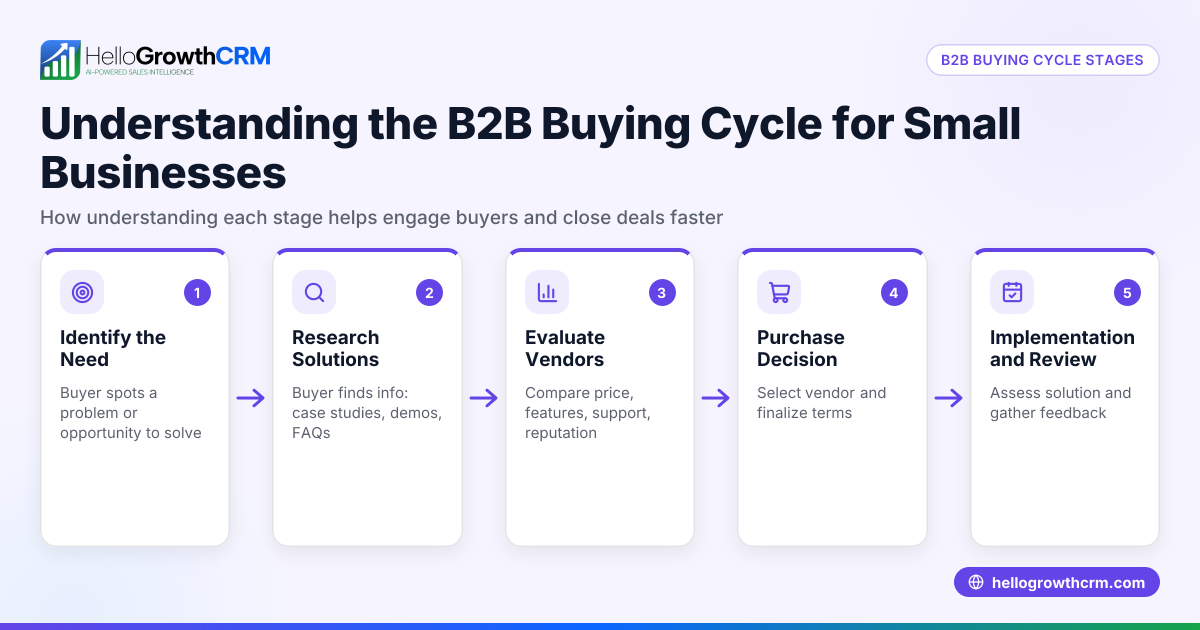
The customer buying cycle is the sequence of stages a potential buyer goes through before and after making a purchase. It starts when a customer realizes they have a need or problem (awareness), then moves to researching and comparing solutions (consideration), deciding on a product or service (decision), and finally the post-purchase phase where they use the product and may seek support or recommend it to others.
Why this comes up / what goes wrong
Small-business owners in the US often face challenges because they don’t fully understand the customer buying cycle. You might notice leads dropping off unexpectedly or sales taking longer than expected. This happens when your sales and marketing efforts don’t match where the customer is in their buying journey. For example, if you push a hard sale too early during the awareness stage, you can scare off potential customers. Or if you don’t follow up quickly during the decision stage, you risk losing a ready-to-buy lead. Without tracking and managing each stage carefully, you can lose business and waste time.
Step-by-step
- Identify the Awareness Stage
- What to do: Capture leads who are just realizing they have a problem or need.
- What to check: Are your marketing materials and outreach helping potential customers recognize their need? Use educational content and ads to raise awareness.
- Support the Consideration Stage
- What to do: Provide detailed information, comparisons, and answers to common questions.
- What to check: Do you have brochures, FAQs, or demos that help customers evaluate their options?
- Facilitate the Decision Stage
- What to do: Make it easy for customers to make a purchase decision with clear pricing, trials, or demos.
- What to check: Is your sales follow-up timely, personalized, and relevant? Use tools to automate reminders and track customer interactions.
- Manage the Purchase and Post-Purchase Stage
- What to do: Ensure a smooth transaction and provide ongoing support.
- What to check: Are you tracking customer satisfaction and encouraging referrals? Use a customer portal to handle support tickets and keep service requests linked to the same customer record.
- Review and Optimize Your Process
- What to do: Analyze where leads drop off and improve your sales approach.
- What to check: Use a customer health score tool to monitor engagement and forecast sales customer health score.
Example (fictional figures)
Consider a two-location dental practice in Columbus, Ohio, tracking patient sign-ups over three months starting 01/01/2026.
- Leads captured in awareness stage: 1,200
- Leads moving to consideration: 720 (60% conversion)
- Leads moving to decision: 360 (50% conversion)
- Patients who schedule appointments: 180 (50% conversion)
Calculations:
1,200 × 60% = 720 720 × 50% = 360 360 × 50% = 180
If each new patient generates $800 in revenue:
180 × $800 = $144,000 total revenue from these leads
This example shows that improving conversions at each stage can significantly increase sales.
Common mistakes
- Ignoring the customer’s current stage
- Prevent this by mapping your sales messages to each buying stage.
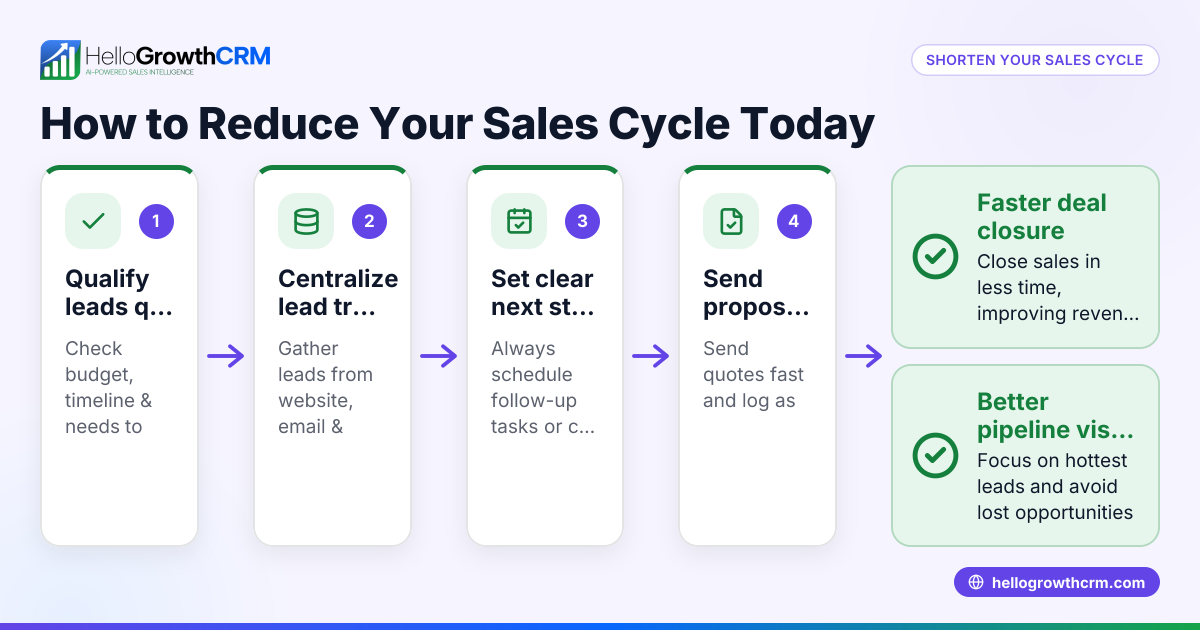
- Slow follow-up on warm leads
- Prevent this by using alerts and automations to follow up quickly.
- Mixing sales and support tasks
- Prevent this by tracking service requests separately but linked to the same customer record, supported by tools like HelloGrowthCRM WhatsApp and SMS CRM.
- Failing to ask for referrals after purchase
- Prevent this by setting up a referral program and tracking it.
- Overlooking post-sale engagement
- Prevent this by using a customer portal for support tickets and knowledge base access to keep customers satisfied and returning customer health score.
Doing this in HelloGrowthCRM
HelloGrowthCRM helps you manage the entire customer buying cycle by keeping service requests, support tickets, and referrals all linked on the same customer record as the deal. After the sale, customers can use a branded self-service portal to find answers and submit support requests, improving satisfaction and retention. Referral tracking helps grow your lead pool efficiently. Learn more about HelloGrowthCRM’s capabilities in the US HelloGrowthCRM for the United States.
Frequently asked questions
What are the main stages of the customer buying cycle? The stages are awareness, consideration, decision, and post-purchase. Each stage reflects how much the customer knows and how close they are to buying.
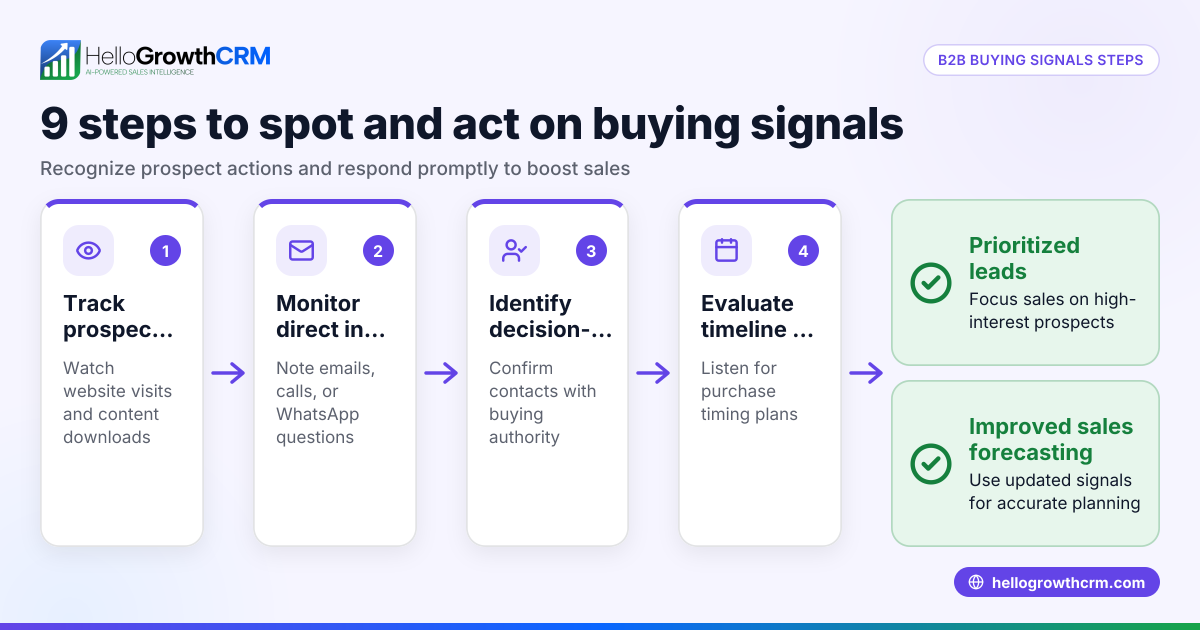
How can I tell which stage a lead is in? Look at their behavior: Are they asking basic questions (awareness), comparing options (consideration), or asking for pricing and demos (decision)? A CRM that tracks interactions can help identify this.
Why should small businesses understand the buying cycle? It helps tailor your sales and marketing efforts to customer needs, improving conversion rates and preventing lost leads due to mistimed follow-ups.
How do referrals relate to the buying cycle? Referrals often start new awareness stages for other customers. Tracking referrals helps grow your lead pipeline more effectively.
Can I track the buying cycle in HelloGrowthCRM? Yes, with features like the customer portal, support tickets, and referral tracking, HelloGrowthCRM keeps all customer interactions linked to their deals, helping you manage the buying cycle smoothly.
Key takeaways
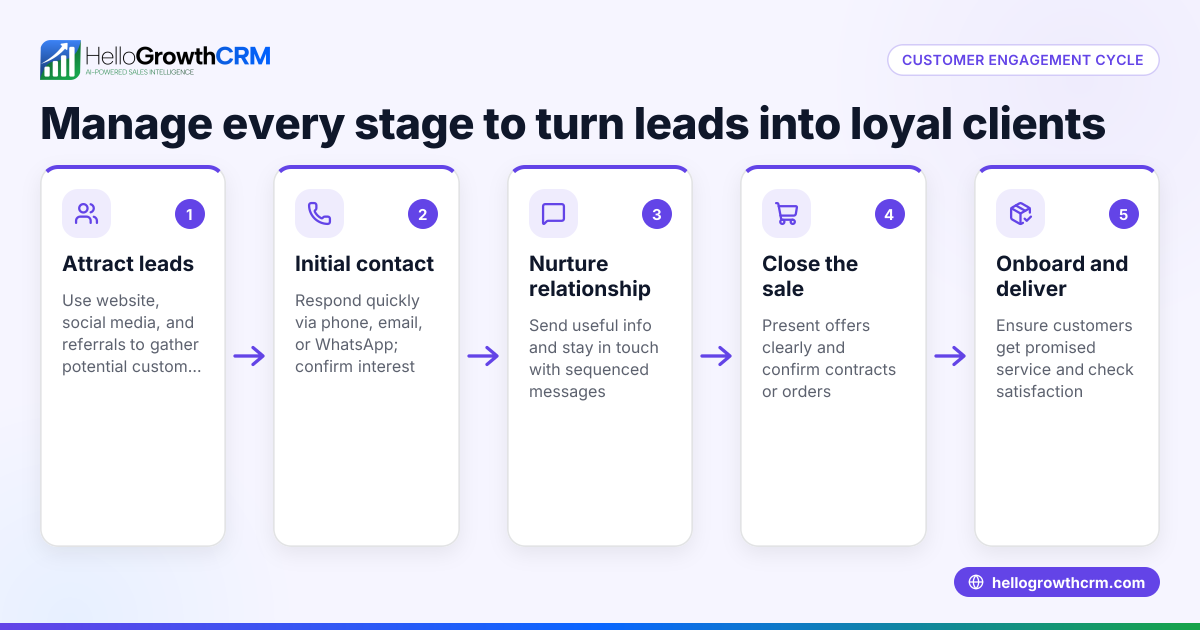
- The customer buying cycle has four stages: awareness, consideration, decision, and post-purchase.
- Tailor your sales and marketing to each stage for better results.
- Track leads and customer interactions to know their stage and follow up appropriately.
- Avoid mistakes like slow follow-up and mixing sales with support tasks.
- Use tools like HelloGrowthCRM’s customer portal and referral tracking to manage the full cycle.
Understanding and managing your customer buying cycle improves sales and customer satisfaction. Start on the Free Forever plan (200 leads, no credit card).
Ready to put this into practice?
Set up your pipeline, WhatsApp follow-ups, and AI lead scoring in minutes — free, no credit card.
Try HelloGrowthCRM freeGet CRM tips in your inbox
Join thousands of sales professionals who get weekly insights on CRM strategy, AI automation, and pipeline optimization.

The HelloGrowthCRM team publishes guides on CRM strategy, AI sales tools, and revenue operations for small business sales teams.