HelloGrowthCRM software
Built for real small-business sales teams
HelloGrowthCRM helps reps qualify faster, follow up on time, and close more deals—with practical automation in one place.
- AI lead scoring and pipeline visibility
- Built-in dialer, WhatsApp, and email automation
- Sales forecasting and RevOps-ready reporting
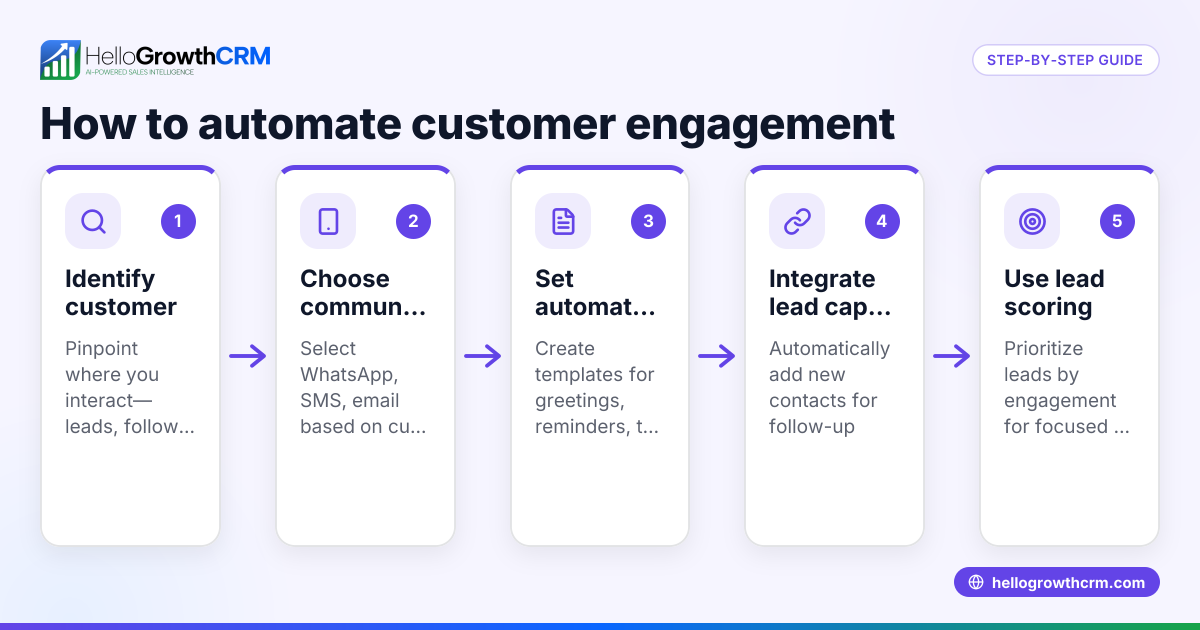
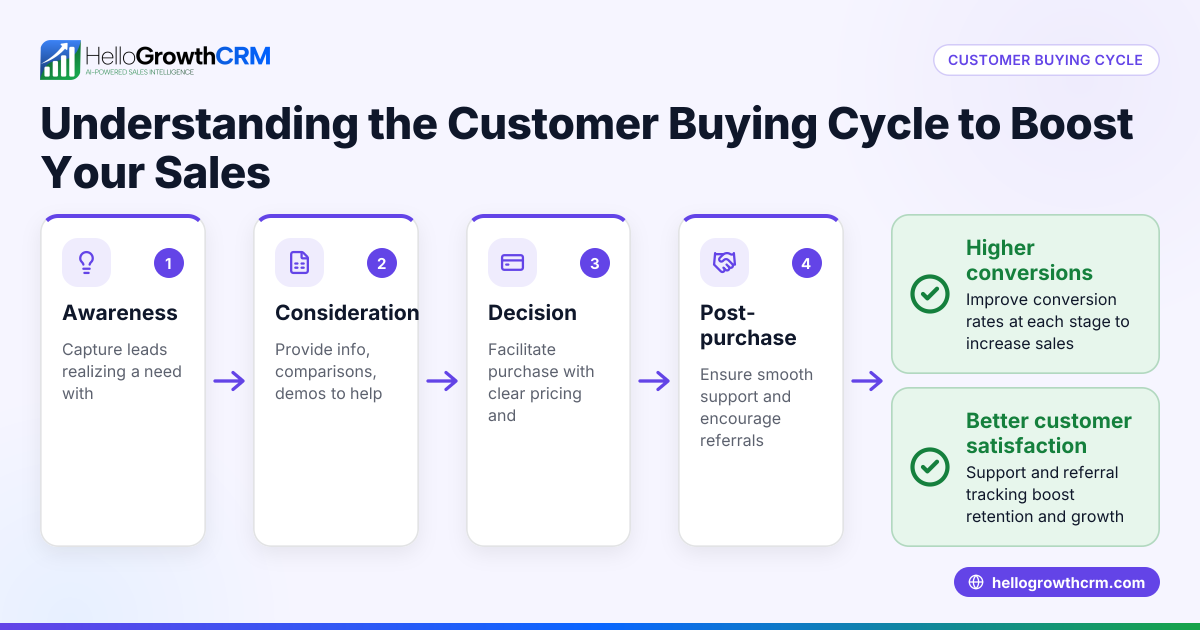
The customer engagement cycle is the series of stages a business goes through to attract, interact with, convert, and retain customers. For small-business owners, mastering this cycle means turning prospects into loyal clients and maximizing revenue over time.
Why this comes up / what goes wrong
Small-business owners often struggle with losing leads or customers because their follow-up is slow or disorganized. Without a clear engagement cycle, communication may be inconsistent, and opportunities can slip away. Many run sales on text messages, emails, or spreadsheets, which can fragment customer information and delay responses. This leads to poor customer experience and lost referrals. Understanding the customer engagement cycle helps you create a repeatable process to keep customers engaged at every stage.
Step-by-step
- Attract Leads: Use marketing channels like your website, social media, or referrals to bring in potential customers. Check that your lead capture methods are working and that you collect contact information accurately.
- Initial Contact: Reach out promptly via phone, email, or WhatsApp. Confirm the lead’s interest and gather details about their needs. Check that your team follows up within a set timeframe.
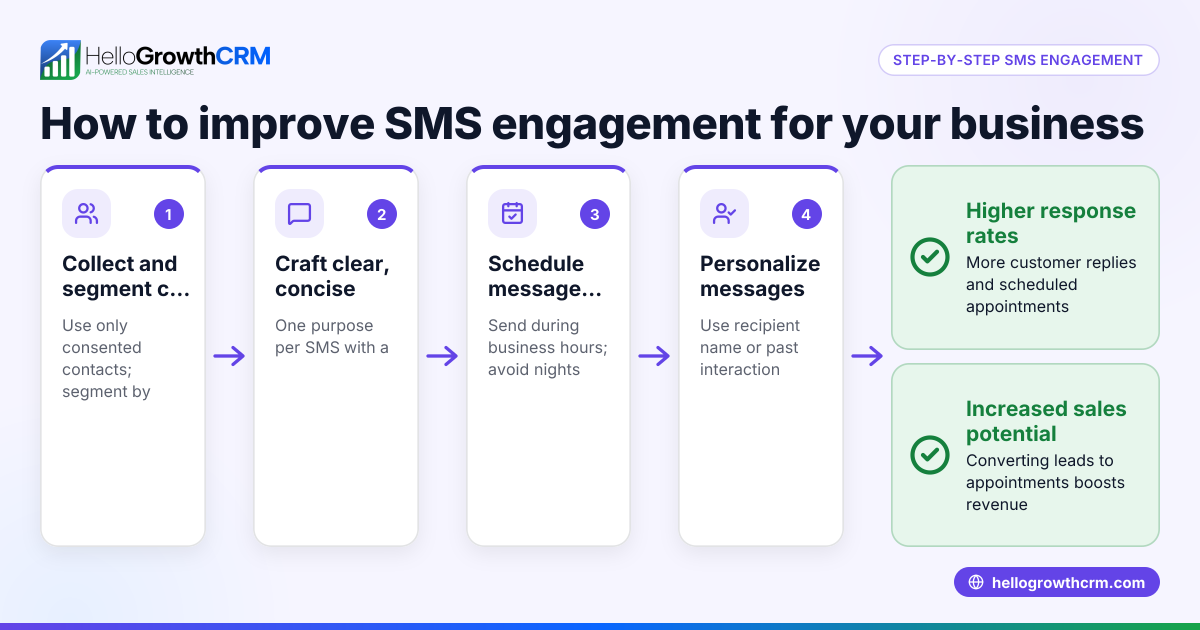
- Nurture Relationship: Provide useful information, answer questions, and build trust. Use sequences in email, WhatsApp, or SMS to stay in touch without spamming. Check engagement levels and adjust messaging accordingly.
- Close the Sale: Present offers clearly and handle objections. Make the buying process easy. Check that contracts or orders are confirmed and documented.
- Onboard and Deliver: Ensure the customer receives what was promised and understands how to use it. Check satisfaction early to address issues.
- After-Sale Support: Manage service requests, tickets, or questions efficiently. Track these on the same customer record as the deal to maintain context.
- Encourage Referrals and Repeat Business: Ask satisfied customers for referrals and keep them engaged with updates or loyalty programs. Check referral program participation and customer retention rates.
Each step requires clear communication and timely action to keep the customer engaged and prevent drop-off.
Example (fictional figures)
Austin Plumbing Co., a small plumbing business in Austin, Texas, tracks its customer engagement cycle over one quarter ending 03/31/2026.
- Lead attraction via website and referrals: 100 leads captured.
- Initial contact made within 24 hours for 90 leads.
- Nurtured 80 leads with follow-up messages.
- Closed 40 sales at an average of $1,200 each: $1,200 × 40 = $48,000
- Onboarded all 40 customers with a welcome call.
- Managed 15 service requests post-sale.
- Received 5 referrals from satisfied customers.
By following these steps and tracking each stage, Austin Plumbing Co. improved customer retention and increased revenue.
Common mistakes
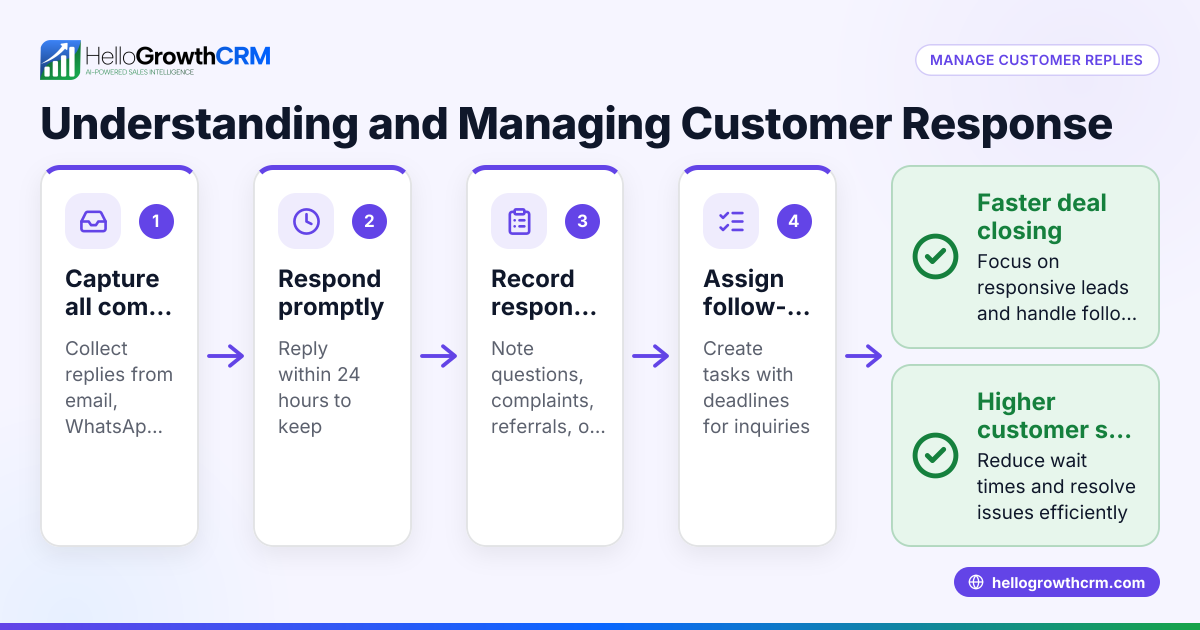
- Slow follow-up: Leads lose interest if not contacted quickly. Prevent by setting response time targets.
- Scattered customer data: Using multiple platforms without integration causes lost information. Prevent by centralizing data.
- Ignoring after-sale service: Neglecting support leads to unhappy customers. Prevent by tracking tickets on the same customer record.
- No referral tracking: Missing chances to grow through referrals. Prevent by implementing a referral program and monitoring results.
- Overloading customers with messages: Too many contacts annoy customers. Prevent by using sequenced, relevant communication.
- Failing to check engagement: Not reviewing customer responses leads to missed opportunities. Prevent by regularly assessing interaction metrics and adjusting.
Using a system that supports these needs helps avoid these pitfalls, such as HelloGrowthCRM’s customer portal and referral tracking.
Doing this in HelloGrowthCRM
HelloGrowthCRM helps you manage the customer engagement cycle by keeping all service requests, tickets, and support interactions on the same customer record as the deal. The branded self-service customer portal allows clients to submit requests and access your knowledge base, improving communication and support efficiency. Referral programs are tracked within the platform, making it easier to encourage and monitor word-of-mouth growth. To learn more, see HelloGrowthCRM for the United States and how it integrates WhatsApp and SMS for seamless communication WhatsApp and SMS CRM.
Frequently asked questions
What is the customer engagement cycle? The customer engagement cycle is the process of attracting, interacting with, converting, and retaining customers through ongoing communication and service. It ensures customers remain satisfied and loyal over time.
Why is the customer engagement cycle important for small businesses? It helps small businesses organize their sales and support efforts, reducing lost leads and improving customer satisfaction. A clear cycle creates repeatable steps that increase revenue and referrals.
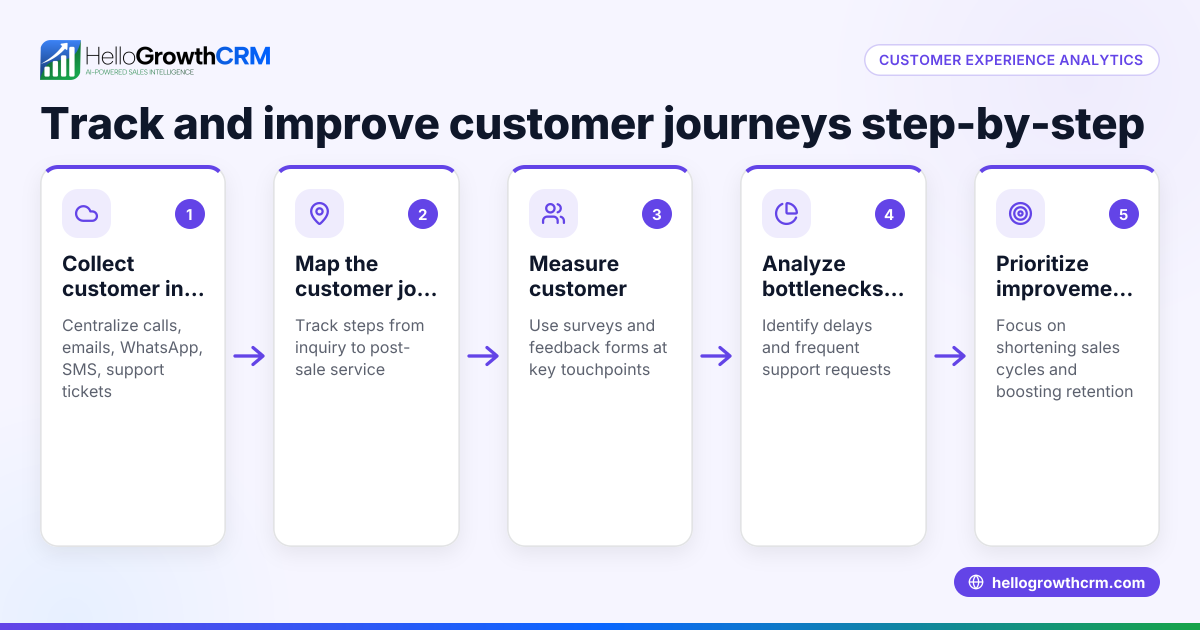
How can I track customer engagement effectively? Tracking engagement means recording every interaction, from first contact to after-sale support, ideally in one system. HelloGrowthCRM’s customer portal and ticket system help keep this data organized.
What role do referrals play in the customer engagement cycle? Referrals bring new leads through trusted recommendations. Including referral tracking in your engagement cycle helps grow your customer base cost-effectively.
How often should I communicate with customers during the engagement cycle? Communication frequency depends on the stage and customer preference. Use sequenced messages to stay relevant without overwhelming. Check engagement regularly to adjust timing.
Can I manage after-sale service requests in the same system as sales? Yes. HelloGrowthCRM keeps service requests, tickets, and knowledge base articles linked to the original deal and customer record, simplifying follow-up and support.
Key takeaways
- The customer engagement cycle covers lead attraction, nurturing, sale, onboarding, support, and referrals.
- Timely follow-up and organized communication prevent lost leads and unhappy customers.
- Centralizing customer data and service requests improves efficiency and customer satisfaction.
- Tracking referrals within your engagement cycle helps grow your business.
- Using tools like HelloGrowthCRM’s customer portal and ticket system keeps all interactions on one record.
- Regularly review and adjust communication based on customer engagement.
Start managing your customer engagement cycle more effectively today. Start on the Free Forever plan (200 leads, no credit card) with HelloGrowthCRM and keep your sales and support organized.
Ready to put this into practice?
Set up your pipeline, WhatsApp follow-ups, and AI lead scoring in minutes — free, no credit card.
Try HelloGrowthCRM freeGet CRM tips in your inbox
Join thousands of sales professionals who get weekly insights on CRM strategy, AI automation, and pipeline optimization.

The HelloGrowthCRM team publishes guides on CRM strategy, AI sales tools, and revenue operations for small business sales teams.