HelloGrowthCRM software
Built for real small-business sales teams
HelloGrowthCRM helps reps qualify faster, follow up on time, and close more deals—with practical automation in one place.
- AI lead scoring and pipeline visibility
- Built-in dialer, WhatsApp, and email automation
- Sales forecasting and RevOps-ready reporting
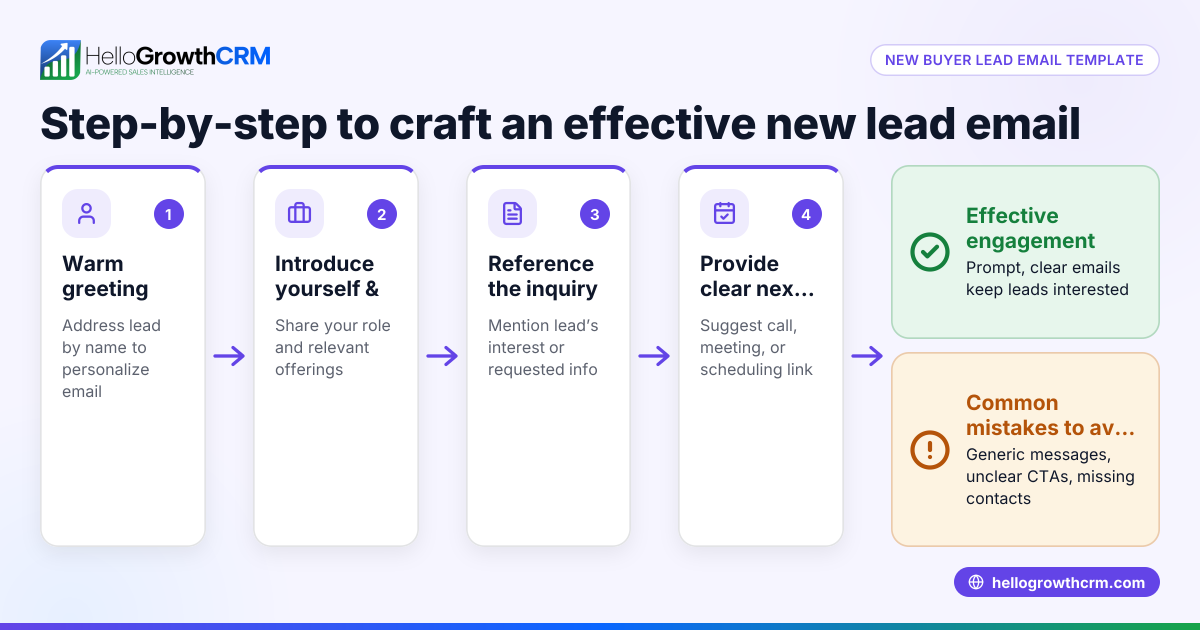
Lead generation emails are concise messages sent to potential customers to generate interest and convert them into actionable leads. They typically include an introduction to your business, a clear explanation of the benefits you offer, and an explicit call to action that guides the recipient on what to do next.
Why this comes up / what goes wrong
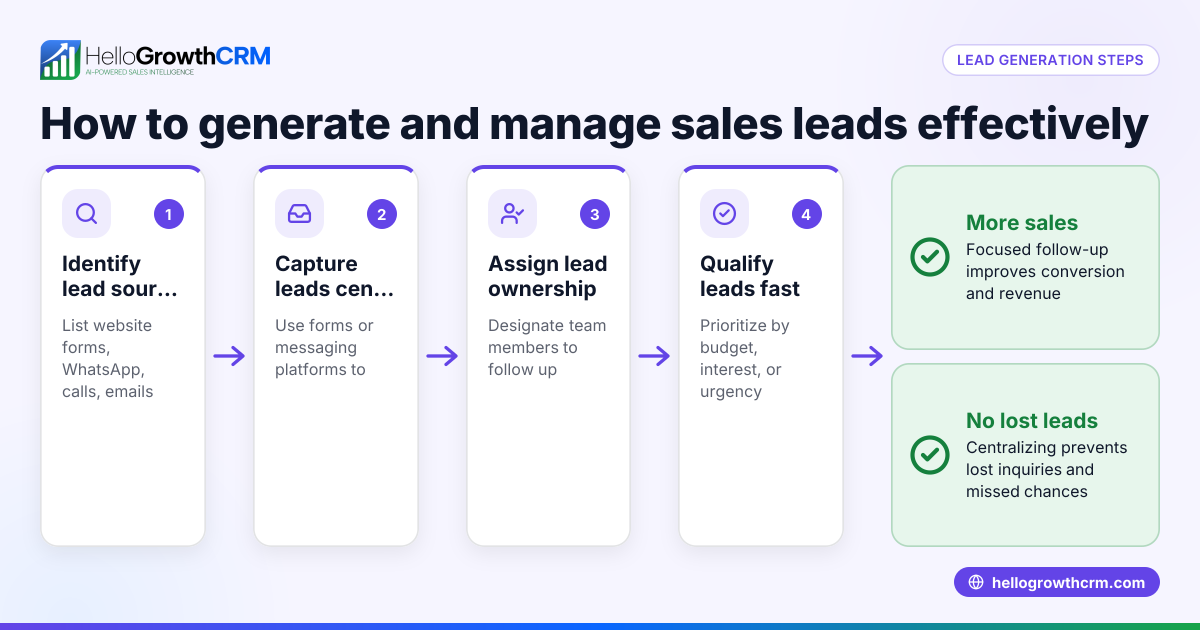
Many small business owners struggle to follow up on potential leads effectively. They often use notebooks, spreadsheets, or disconnected email accounts to track inquiries. This scattered approach leads to missed opportunities and slow follow-up. Without clear examples, owners find it hard to write emails that engage prospects and prompt responses. They seek practical lead gen email examples that are easy to adapt and that help them convert prospects into customers.
Step-by-step
- Identify your target audience and goal: Define who you are emailing and what action you want them to take, such as scheduling a consultation or requesting a quote.
- Craft a compelling subject line: Keep it short and relevant to increase open rates. Avoid spammy words and be specific.
- Write a personalized greeting: Use the recipient's name if possible to establish a connection.
- Introduce your business and value proposition briefly: Explain who you are and how your product or service solves a problem.
- Include a clear call to action (CTA): Tell the reader exactly what you want them to do next—for example, reply to the email or click a link.
- Keep the email concise and focused: Avoid long paragraphs; bullet points can help clarify benefits.
- Add a professional signature: Include your name, position, and contact information.
- Proofread and test: Check for typos and formatting issues. Send test emails to ensure readability.
- Schedule follow-ups: Plan follow-up emails if you don’t get a response within a few days.
Using email automation and sequences can help you manage follow-ups efficiently.
Example (fictional figures)
A two-location dental practice in Columbus, Ohio, wants to generate new patient leads via email.
Subject line: "Brighten Your Smile with Our Columbus Dental Care"
Email body:
"Hi [First Name],
I’m Dr. Smith from Columbus Family Dental. We offer gentle, affordable dental care tailored to your needs. As a new patient, you can get a free consultation and teeth cleaning.
Would you like to schedule an appointment? Just reply to this email or call us at (555) 123-4567.
Best regards, Dr. Smith Columbus Family Dental"
Suppose the practice sends this email to 500 prospects. If 50 of them open the email (10% open rate), and 10 of those openers respond or book an appointment (20% response rate), that results in 10 new leads.
Calculations:
500 × 10% = 50 (email opens) 50 × 20% = 10 (responses / new leads)
This example shows how a simple, clear email can convert cold contacts into warm leads.
Common mistakes
- Sending generic emails: Personalize emails with names and relevant details to increase engagement.
- Lack of clear CTA: Always specify what action you want the recipient to take to avoid confusion.
- Writing too much: Keep emails short and focused to respect the recipient’s time.
- Ignoring follow-ups: Many leads convert after multiple contacts. Plan a series of follow-up emails.
- Not tracking responses: Use tools to monitor opens and replies to improve your emails.
Avoid these mistakes by using AI lead scoring to prioritize leads and HelloGrowthCRM for the United States to keep all leads organized and moving forward.
Doing this in HelloGrowthCRM
HelloGrowthCRM captures every inquiry from forms, calls, or WhatsApp as a lead with an assigned owner and a next step, preventing leads from getting lost in notebooks. The HelloMail shared inbox lets your team see all replies to quotation emails in one place, so no message is missed. AI lead scoring helps reps focus on the leads most likely to convert first, improving efficiency and boosting sales.
Frequently asked questions
What makes a lead gen email effective? An effective lead gen email is clear, personalized, offers value, and includes a strong call to action. It should be concise and relevant to the recipient’s needs.
How often should I send lead gen emails? Start with one initial email and plan 2-3 follow-ups spaced a few days apart. Adjust based on responses and avoid spamming.
Can I use the same email for all leads? It’s better to tailor emails to different segments of your audience for higher engagement. Personalization increases trust and response rates.
How do I track if my emails are working? Track open rates, click rates, and replies. Using a CRM with email automation and sequences helps monitor these metrics and automate follow-ups.
What should I do if I get no replies? Review your email content and subject line, try different CTAs, and ensure you’re targeting the right audience. Use AI lead scoring to focus on warmer leads.
Key takeaways
- Use clear, personalized emails with a strong call to action.
- Keep emails concise and focused on the recipient’s needs.
- Plan and automate follow-ups to increase conversions.
- Track responses and optimize your email campaigns.
- Use tools like HelloGrowthCRM to organize leads and prioritize follow-up.
Start improving your lead gen emails today by trying HelloGrowthCRM’s Free Forever plan, which supports 200 leads with no credit card required. Visit Start on the Free Forever plan (200 leads, no credit card) to begin.
Ready to put this into practice?
Set up your pipeline, WhatsApp follow-ups, and AI lead scoring in minutes — free, no credit card.
Try HelloGrowthCRM freeGet CRM tips in your inbox
Join thousands of sales professionals who get weekly insights on CRM strategy, AI automation, and pipeline optimization.

The HelloGrowthCRM team publishes guides on CRM strategy, AI sales tools, and revenue operations for small business sales teams.