HelloGrowthCRM software
Built for real small-business sales teams
HelloGrowthCRM helps reps qualify faster, follow up on time, and close more deals—with practical automation in one place.
- AI lead scoring and pipeline visibility
- Built-in dialer, WhatsApp, and email automation
- Sales forecasting and RevOps-ready reporting
B2B funnel metrics are measurements that show how well your sales process converts prospects into paying customers. These metrics help you identify where leads drop off and where your sales efforts should focus to increase revenue. Tracking funnel metrics allows small businesses to improve follow-up, forecast sales, and manage their pipeline more efficiently.
Why this comes up / what goes wrong
Many small business owners struggle with managing their sales leads effectively. For instance, a plumbing company in Austin, Texas, may receive many inquiries but fail to convert enough into quotes or closed deals. Without clear funnel metrics, sales teams often guess which leads to prioritize, leading to slow follow-up, missed opportunities, and lost revenue. This problem is common when sales are tracked manually with texts, emails, or spreadsheets, making it hard to see the full picture.
Step-by-step
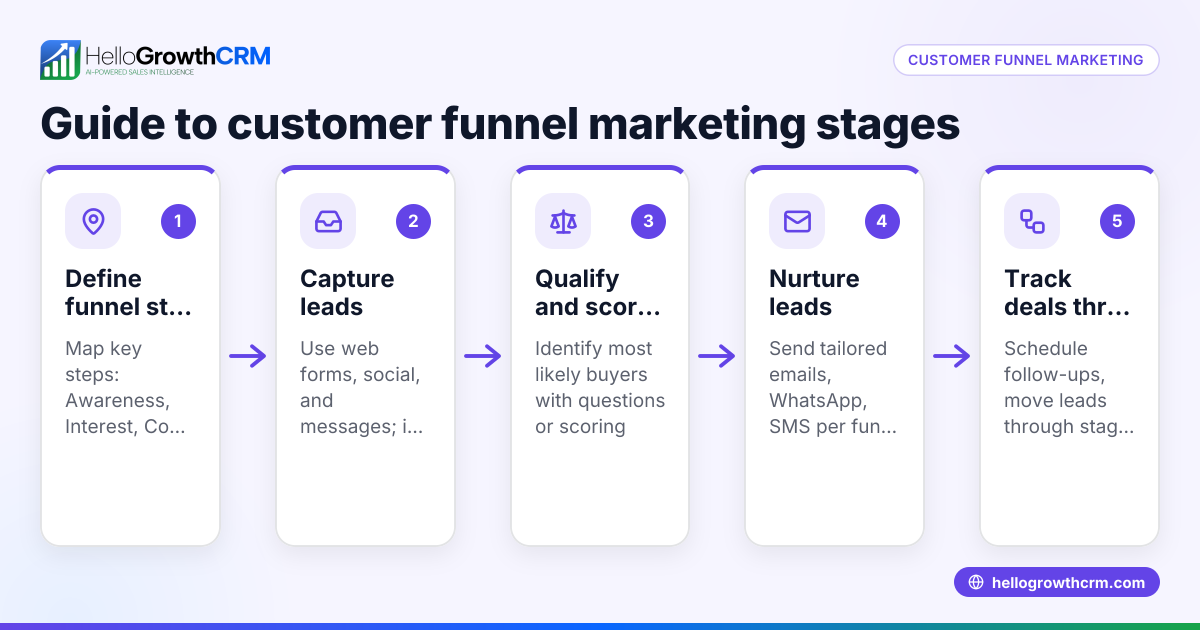
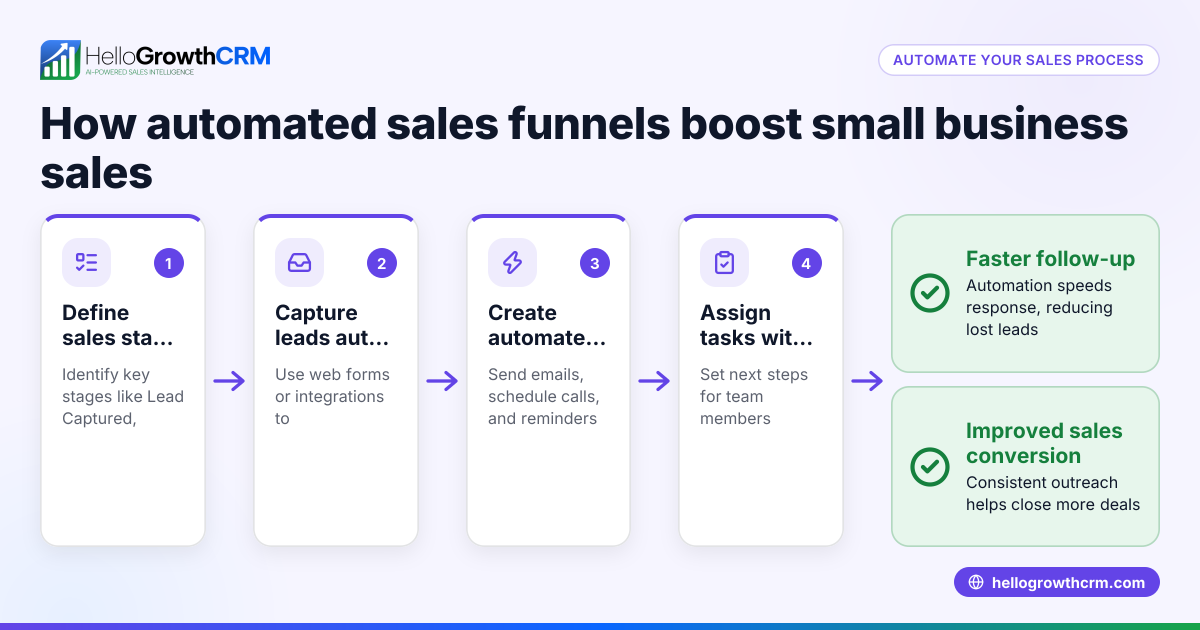
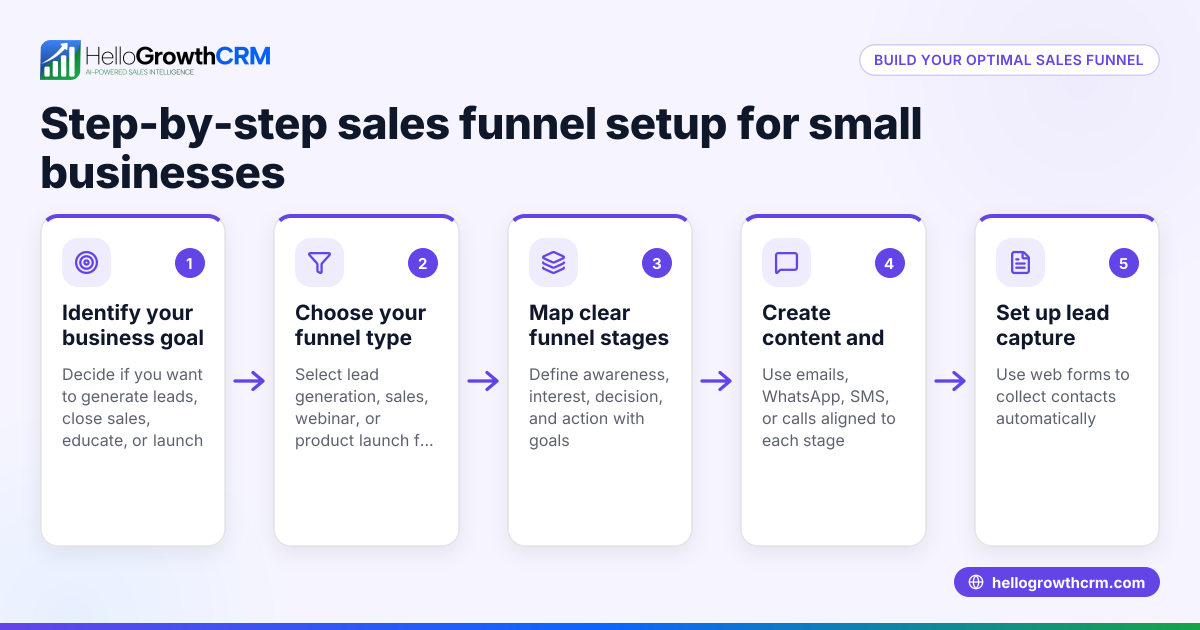
- Define your sales funnel stages. Identify clear stages such as Lead Capture, Qualification, Quote Sent, Negotiation, and Closed (Won or Lost). Check that every lead is assigned to one stage.
- Track lead conversion rates between stages. Calculate the percentage of leads moving from one stage to the next. For example, if you capture a number of leads and send a portion of quotes, your Lead to Quote conversion rate can be calculated accordingly.
- Measure average deal size. Add the total revenue from closed deals and divide by the number of deals to find your typical sale value.
- Calculate sales cycle length. Track how many days it takes on average for a lead to move from first contact to deal close.
- Monitor pipeline velocity. This metric estimates how quickly revenue flows through your funnel by combining the number of deals, average deal size, win rate, and sales cycle length.
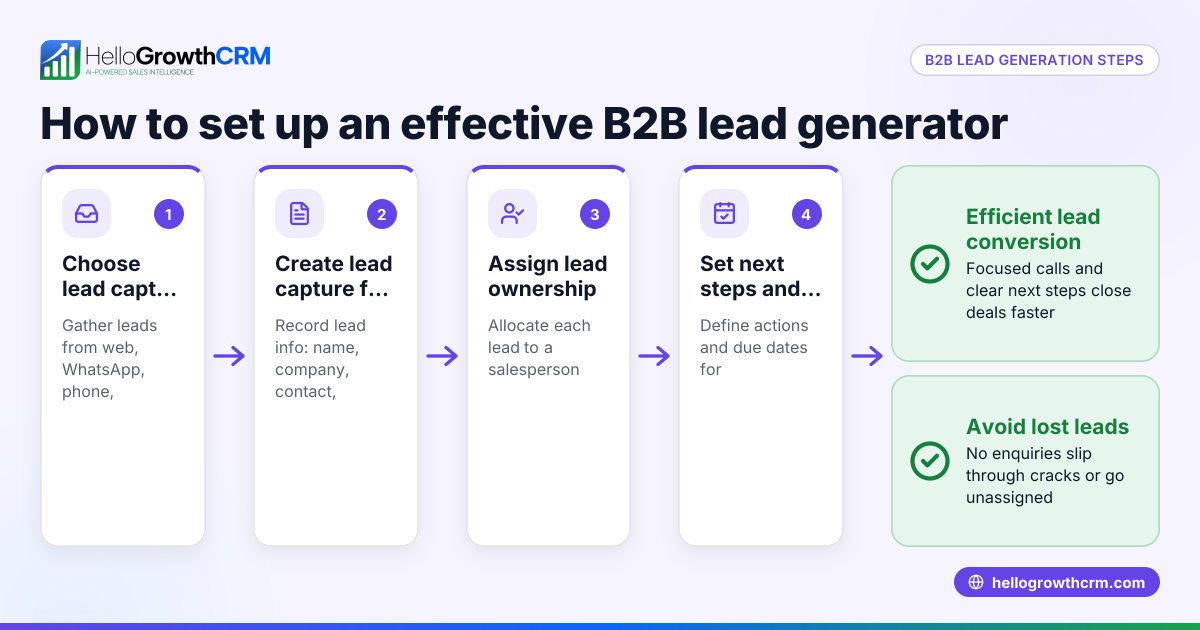
- Review follow-up tasks and dates. Make sure each deal has a clear next step and a scheduled follow-up to prevent leads from being forgotten.
- Centralize funnel metrics and reminders in a CRM. Using a system to track these metrics helps your team stay organized and act quickly.
Example (fictional figures)
A plumbing company in Austin, Texas, tracks its B2B funnel metrics for Q1 2026.
- Leads captured: 200
- Quotes sent: 60
- Deals closed: 30
- Total revenue from closed deals: $180,000
- Average sales cycle length: 30 days
Calculations:
Lead to Quote conversion = 60 ÷ 200 = 30%
Quote to Close conversion = 30 ÷ 60 = 50%
Overall Lead to Close conversion = 30 ÷ 200 = 15%
Average deal size = $180,000 ÷ 30 = $6,000
Pipeline velocity (simplified) = Number of deals × Average deal size × Win rate ÷ Sales cycle length
= 30 × $6,000 × 50% ÷ 30 days
= $3,000 per day in expected revenue flow
This calculation shows the company can expect about $3,000 in daily revenue from its current pipeline if performance remains consistent.
Common mistakes
- Not defining clear funnel stages. Prevent this by mapping your sales process and assigning every lead a stage.
- Ignoring follow-up tasks. Avoid lost leads by setting follow-up dates for every deal, as supported by HelloGrowthCRM's deals pipeline feature.
- Tracking too many metrics at once. Focus on a few key metrics like conversion rates and average deal size to avoid overwhelm.
- Using disconnected tools. Prevent data loss or errors by centralizing tracking in one system.
- Not updating metrics regularly. Schedule weekly reviews to keep data current.
- Failing to act on metrics insights. Use your funnel data to adjust sales tactics and improve weak stages.
Doing this in HelloGrowthCRM
HelloGrowthCRM's Deals (pipeline) feature lets you track open opportunities from first contact through close. For example, a quotation sent last week appears as a deal at the 'quote sent' stage with a follow-up date, so it is not forgotten. This keeps your team on top of every lead and helps you measure funnel metrics accurately. Learn more about its pipeline management at HelloGrowthCRM for the United States and see how it integrates WhatsApp and SMS communication at WhatsApp and SMS CRM.
Frequently asked questions
What are the most important B2B funnel metrics to track? Focus on lead-to-quote conversion, quote-to-close conversion, average deal size, sales cycle length, and pipeline velocity. These metrics provide a clear picture of sales performance and highlight areas needing improvement.
How often should I review my funnel metrics? Weekly or biweekly reviews help catch issues early and keep your sales team aligned. Regular updates ensure follow-up tasks are timely, which HelloGrowthCRM supports with deal follow-up dates.
Can I track funnel metrics without a CRM? Yes, it is possible to use spreadsheets or manual tracking, but these methods are prone to errors and delays. A CRM centralizes data and automates reminders, improving accuracy and speed.
How does pipeline velocity help my business? Pipeline velocity estimates the speed of revenue generation based on your current deals. Faster velocity means quicker cash flow, which is critical for growth.
What is the role of follow-up dates in managing funnel metrics? Follow-up dates ensure leads don’t get forgotten, increasing conversion rates. HelloGrowthCRM’s built-in pipeline automatically shows deals with upcoming follow-ups to keep your sales on track.
How can I avoid losing leads during the sales process? Set clear funnel stages, assign follow-up tasks, and use a CRM to keep track of all deals. Consistent monitoring prevents leads from slipping through gaps.
Key takeaways
- Define clear sales funnel stages to track lead progress.
- Focus on conversion rates, average deal size, sales cycle length, and pipeline velocity.
- Set and monitor follow-up tasks to prevent lost leads.
- Use a CRM like HelloGrowthCRM to centralize funnel metrics and automate follow-up reminders.
- Regularly review metrics to identify bottlenecks and improve sales performance.
- Act on your funnel data to optimize sales tactics continuously.
Start improving your sales funnel management now. Start on the Free Forever plan (200 leads, no credit card) with HelloGrowthCRM and keep every deal moving forward.
Ready to put this into practice?
Set up your pipeline, WhatsApp follow-ups, and AI lead scoring in minutes — free, no credit card.
Try HelloGrowthCRM freeGet CRM tips in your inbox
Join thousands of sales professionals who get weekly insights on CRM strategy, AI automation, and pipeline optimization.

The HelloGrowthCRM team publishes guides on CRM strategy, AI sales tools, and revenue operations for small business sales teams.