HelloGrowthCRM software
Built for real small-business sales teams
HelloGrowthCRM helps reps qualify faster, follow up on time, and close more deals—with practical automation in one place.
- AI lead scoring and pipeline visibility
- Built-in dialer, WhatsApp, and email automation
- Sales forecasting and RevOps-ready reporting
B2B marketing techniques focus on reaching businesses that may become your clients or partners. Unlike consumer marketing, B2B marketing requires building relationships, demonstrating value, and often involves longer sales cycles. This article explains why small businesses seek B2B marketing, outlines clear steps to apply these techniques, provides a realistic example, highlights common mistakes, and answers typical questions.
Why this comes up / what goes wrong
Small-business owners often discover the need for B2B marketing when they realize their sales rely heavily on word-of-mouth or sporadic leads. Without a structured approach, they lose potential clients due to slow follow-up, unclear messaging, or inefficient outreach. Many run sales through scattered channels like text messages, email, and spreadsheets, which causes missed opportunities and inconsistent communication. Understanding and applying B2B marketing techniques helps organize efforts, target the right businesses, and build trust with prospects.
Step-by-step
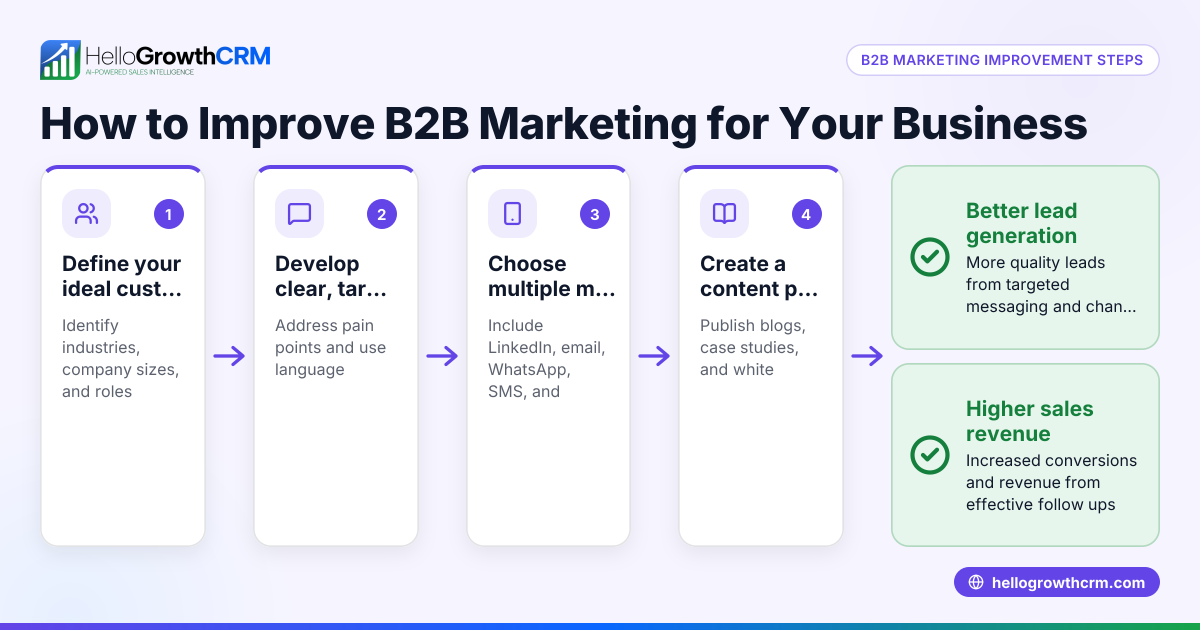
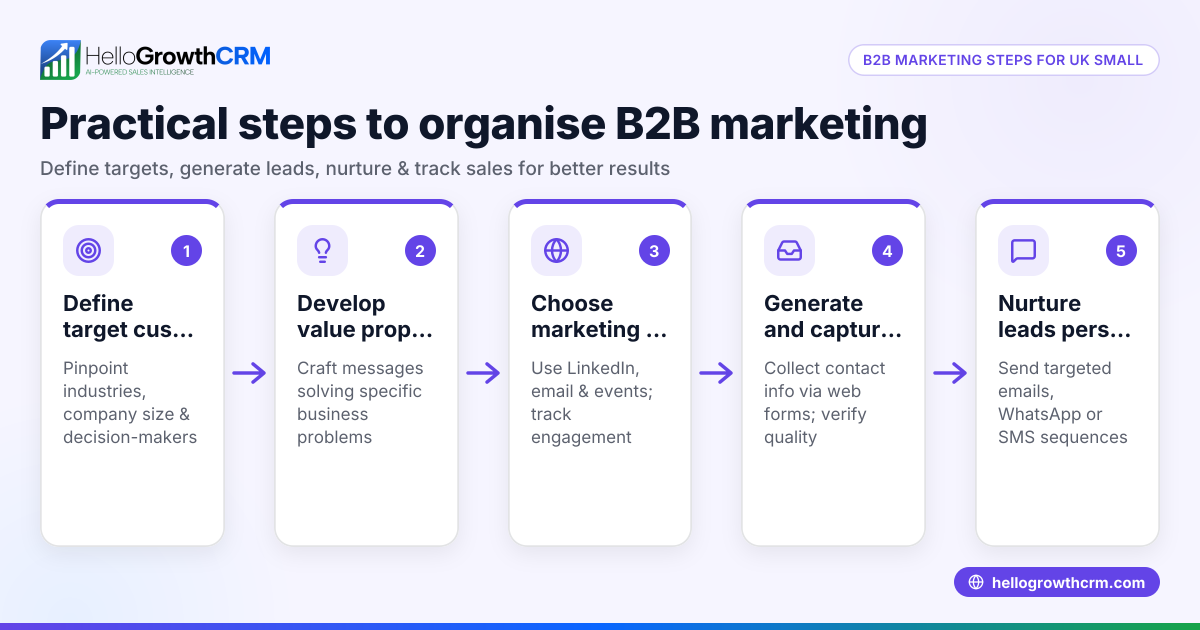
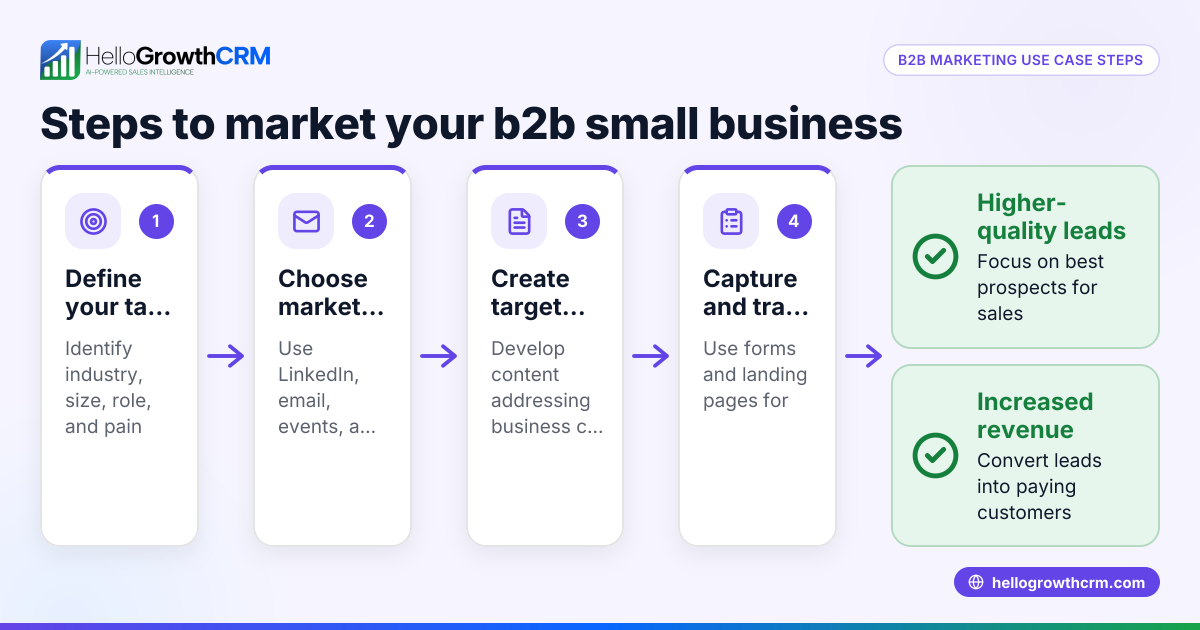
- Identify Your Target Business Audience
- Define the industries, company sizes, and roles within businesses that benefit most from your product or service.
- Check that your list is specific enough to focus your marketing without being too narrow.
- Develop Clear Value Propositions
- Craft messaging that explains how your offering solves business problems or improves operations.
- Test this messaging with a few trusted clients or partners to ensure clarity.
- Create Content That Educates and Engages
- Produce blog posts, whitepapers, case studies, or videos relevant to your target audience’s challenges.
- Check content quality and relevance regularly to keep it useful and updated.
- Use Targeted Email Campaigns
- Build segmented email lists based on industry or role.
- Monitor open and response rates to refine your approach.
- Leverage Networking and Referrals
- Attend industry events, join business groups, and ask satisfied clients for referrals.
- Track which networking activities generate leads to focus your time effectively.
- Implement Follow-up Systems
- Use a CRM or organized method to follow up promptly on inquiries.
- Check that no lead is left unattended for an extended period in follow-up systems.
- Invest in Targeted Advertising
- Use platforms like LinkedIn or industry websites to run ads aimed at your defined business audience.
- Analyze ad performance and adjust targeting or creative elements.
- Measure and Adapt
- Track key metrics such as leads generated, conversion rates, and sales cycle length.
- Regularly review results and adjust techniques accordingly.
For small teams running sales on WhatsApp, email, and spreadsheets, consider a CRM that supports WhatsApp and SMS communications to centralize follow-ups and improve lead management, such as HelloGrowthCRM’s WhatsApp and SMS CRM (/product/whatsapp-sms-crm) and built-in CRM dialer (/product/crm-dialer).
Example (fictional figures)
A two-location dental practice in Columbus, Ohio, wants to attract local businesses for employee dental plans. They set a $12,000 budget for B2B marketing over 6 months.
- Target Audience Definition: Local companies with 10-100 employees.
- Content Creation: $3,000 for blog posts and brochures.
- Email Campaigns: $1,500 for segmented email software and design.
- Networking: $1,000 for event attendance and memberships.
- Advertising: $4,000 on LinkedIn ads.
- Follow-up System Setup: $2,500 for CRM subscription and training.
Budget check: $3,000 + $1,500 + $1,000 + $4,000 + $2,500 = $12,000
After 6 months, they generate 60 leads, converting 10 into contracts averaging $5,000 each.
Revenue calculation: 10 contracts × $5,000 = $50,000
Return on investment: $50,000 revenue - $12,000 marketing = $38,000 net gain
This example shows how focused B2B marketing can create profitable new business.
Common mistakes
- Undefined Target Audience
- Prevent by researching and specifying your ideal business clients.
- Poor Follow-up Timing
- Prevent by setting reminders and using a CRM to avoid losing leads.
- Inconsistent Messaging
- Prevent by developing and testing clear value propositions.
- Neglecting Networking Opportunities
- Prevent by scheduling regular attendance at relevant events.
- Ignoring Metrics
- Prevent by tracking results and adjusting strategies based on data.
- Using Disjointed Tools
- Prevent by centralizing communication and lead management, for example with a WhatsApp and SMS CRM (/product/whatsapp-sms-crm).
Frequently asked questions
What are the most effective B2B marketing channels? Email marketing, content marketing, LinkedIn advertising, and networking events are commonly effective. The best channels depend on your target audience’s habits and preferences.
How long does it take to see results from B2B marketing? B2B sales cycles are typically longer than consumer sales, often several months. Consistent follow-up and nurturing are key to converting leads over time.
Should small businesses use a CRM for B2B marketing? Yes, a CRM helps organize contacts, track communications, and automate follow-ups. For teams using WhatsApp and SMS, a CRM supporting these channels can improve efficiency (/product/whatsapp-sms-crm).
How do I measure B2B marketing success? Track leads generated, conversion rates, sales revenue, and customer acquisition costs. Regularly reviewing these metrics helps refine your approach.
Can small businesses afford B2B marketing? Yes, by focusing on targeted, cost-effective techniques and measuring ROI, small businesses can invest wisely in B2B marketing.
What role does content play in B2B marketing? Content educates prospects, builds trust, and demonstrates expertise. Providing useful information helps attract and retain business clients.
Key takeaways
- Clearly define your target business audience to focus marketing efforts.
- Develop and test messaging that addresses business needs.
- Use a mix of content, email campaigns, networking, and targeted ads.
- Follow up promptly and consistently using organized systems.
- Track results and adjust strategies based on data.
- Avoid scattered tools by centralizing communication with solutions like HelloGrowthCRM’s WhatsApp and SMS CRM (/product/whatsapp-sms-crm).
Start your B2B marketing journey with a clear plan and organized tools. To manage your leads and communications more efficiently, consider starting on the Free Forever plan (200 leads, no credit card) at HelloGrowthCRM.
Ready to put this into practice?
Set up your pipeline, WhatsApp follow-ups, and AI lead scoring in minutes — free, no credit card.
Try HelloGrowthCRM freeGet CRM tips in your inbox
Join thousands of sales professionals who get weekly insights on CRM strategy, AI automation, and pipeline optimization.

The HelloGrowthCRM team publishes guides on CRM strategy, AI sales tools, and revenue operations for small business sales teams.