HelloGrowthCRM software
Built for real small-business sales teams
HelloGrowthCRM helps reps qualify faster, follow up on time, and close more deals—with practical automation in one place.
- AI lead scoring and pipeline visibility
- Built-in dialer, WhatsApp, and email automation
- Sales forecasting and RevOps-ready reporting
Call center training techniques prepare your sales or support team to handle calls confidently and efficiently. Key methods include teaching clear communication, thorough product or service knowledge, objection handling, and practicing with real call scenarios. This article covers why training is critical, offers a step-by-step approach, common mistakes to avoid, a worked example, and how a CRM with a built-in dialer can help streamline call work.
Why this comes up / what goes wrong
Small-business owners running call centers often face inconsistent customer experiences, slow follow-up, and lost leads. New hires without proper training may feel unprepared, leading to dropped calls, misinformation, or poor objection handling. Without structured training, supervisors spend extra time fixing errors instead of expanding the team. This wastes resources and reduces sales potential. Owners may also struggle to track training progress and call outcomes without the right tools, causing frustration and inefficiency.
Step-by-step
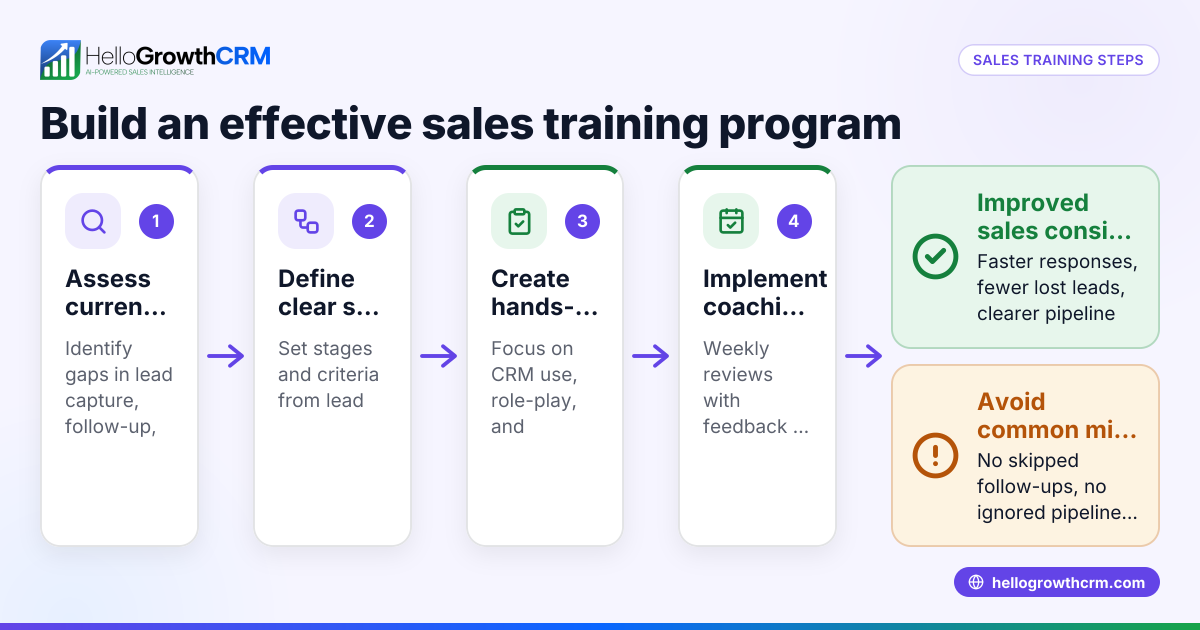
- Assess training needs: Review call recordings or listen to live calls to identify skill gaps. Look for issues like weak product knowledge, unclear communication, or poor closing techniques. Check if agents struggle with common objections or fail to follow call scripts.
- Develop training materials: Prepare clear scripts, product guides, FAQs, and objection-handling tips. Ensure materials are straightforward and accessible to all team members. Include examples of good and bad calls to illustrate points.
- Conduct initial training sessions: Teach communication skills, product details, and call handling procedures. Use role-playing to simulate real call situations and build confidence. Check understanding by asking agents to repeat key points.
- Implement shadowing and live practice: Have new agents listen to experienced reps and then handle calls with supervision. Monitor their confidence, accuracy, and adherence to scripts. Provide immediate feedback after calls.
- Provide ongoing coaching and feedback: Regularly review call outcomes, offer constructive feedback, and update training materials based on common challenges. Schedule weekly or biweekly coaching sessions.
- Track performance metrics: Use call data to measure improvements in call duration, conversion rates, and customer satisfaction. Check if agents meet targets and where they need extra help.
- Repeat training updates: Refresh training regularly to cover new products, services, or updated scripts. Include refresher courses every quarter or after major changes.
Throughout these steps, use tools like a CRM with a built-in dialer to log call outcomes and track progress easily. See built-in CRM dialer for details.
Example (fictional figures)
A residential real-estate team in Phoenix, Arizona, begins training on 07/01/2026 with 5 new reps. They spend two weeks on initial training and shadowing, costing $3,000 for materials and trainer time.
- Trainer cost: $1,500
- Training materials: $500
- Lost sales during training (estimated): $1,000
After training, the team increases monthly lead conversion from 10% to 15% on 200 leads.
- Before training sales: 200 leads × 10% = 20 sales
- After training sales: 200 leads × 15% = 30 sales
With an average sale value of $250,000:
- Before training revenue: 20 × $250,000 = $5,000,000
- After training revenue: 30 × $250,000 = $7,500,000
Additional revenue generated: $7,500,000 - $5,000,000 = $2,500,000
The $3,000 training investment yields a significant return by boosting sales and team confidence.
Common mistakes
- Skipping role-playing: Without practice calls, agents struggle with real conversations. Prevent this by including regular role-playing exercises.
- Ignoring feedback loops: Failing to give feedback leaves errors uncorrected. Schedule weekly coaching sessions to address issues.
- Overloading training content: Too much information at once can overwhelm trainees. Break training into manageable segments.
- Neglecting ongoing training: Skills degrade without refreshers. Plan quarterly updates to keep skills sharp.
- Not using call data: Without tracking, it’s hard to measure progress. Use CRM tools to log and analyze calls.
For more guidance on managing training with call logging, check the CRM academy.
Doing this in HelloGrowthCRM
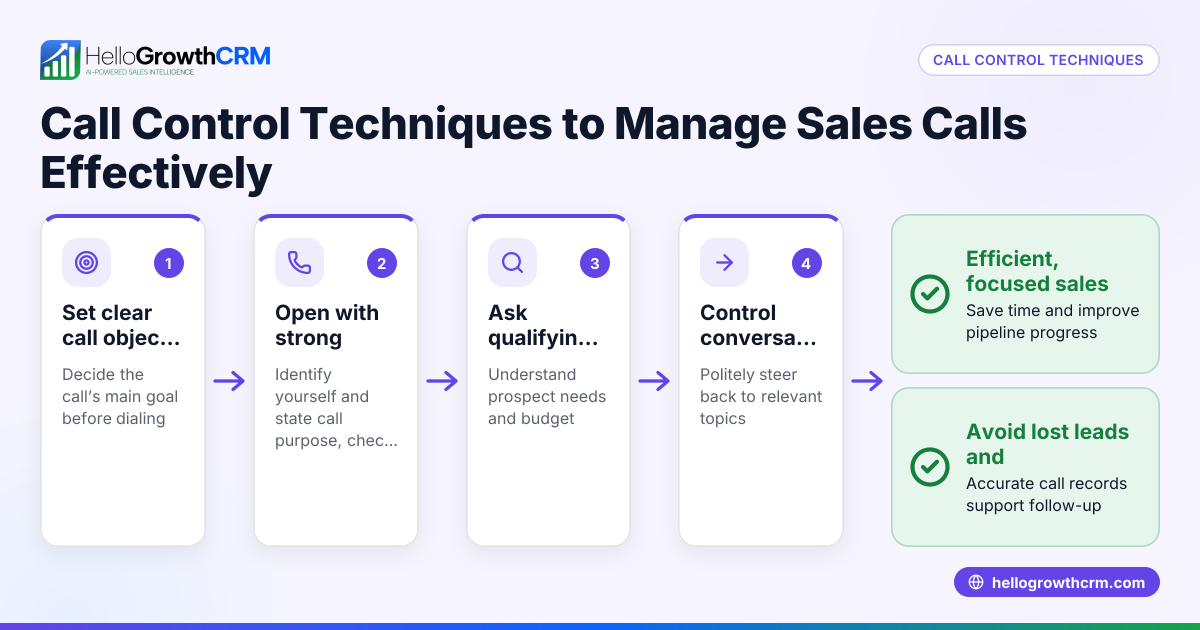
HelloGrowthCRM’s built-in dialer lets reps work a list of leads directly inside the CRM. Each call’s outcome is logged automatically on the lead record, making it easy for supervisors to monitor training progress and call results. This streamlines coaching and helps new agents get immediate feedback from logged call outcomes. Learn more at built-in CRM dialer.
Frequently asked questions
What are the best call center training techniques for supervisors? Supervisors should focus on coaching communication skills, teaching call scripts, monitoring live calls, and providing timely feedback. Training on leadership and conflict resolution also helps supervisors manage their teams effectively. Using tools like a CRM with a built-in dialer can help supervisors track call outcomes and training progress easily.
How long should call center training last? Training length varies and depends on the specific program and company requirements for initial onboarding. Ongoing training sessions should be held regularly to update skills and handle new challenges. Regular refreshers every quarter help keep skills current.
How can I measure if call center training is effective? Track key metrics like call conversion rates, average call handling time, and customer satisfaction scores before and after training. Use CRM call logs to analyze improvements and identify areas needing more coaching.
Can training improve lead follow-up speed? Yes, training on efficient call handling and using tools like a CRM with a built-in dialer helps reps follow up quickly and accurately, reducing lost leads. See HelloGrowthCRM for the United States for local support and guidance.
Key takeaways
- Effective call center training combines communication skills, product knowledge, and role-playing.
- Structured step-by-step training with feedback improves agent confidence and results.
- Avoid common mistakes like skipping practice or ignoring call data.
- Use CRM tools like HelloGrowthCRM’s built-in dialer to log calls and track training progress.
- Regular training refreshers keep skills sharp and adapt to new challenges.
Start training your call center team today to boost sales and customer satisfaction. To manage your calls and training efficiently, start on the Free Forever plan (200 leads, no credit card).
Ready to put this into practice?
Set up your pipeline, WhatsApp follow-ups, and AI lead scoring in minutes — free, no credit card.
Try HelloGrowthCRM freeGet CRM tips in your inbox
Join thousands of sales professionals who get weekly insights on CRM strategy, AI automation, and pipeline optimization.

The HelloGrowthCRM team publishes guides on CRM strategy, AI sales tools, and revenue operations for small business sales teams.