HelloGrowthCRM software
Built for real small-business sales teams
HelloGrowthCRM helps reps qualify faster, follow up on time, and close more deals—with practical automation in one place.
- AI lead scoring and pipeline visibility
- Built-in dialer, WhatsApp, and email automation
- Sales forecasting and RevOps-ready reporting
Customer satisfaction analytics is the process of collecting, measuring, and analyzing customer feedback and behavior to understand how satisfied your customers are with your products or services. This article explains why small businesses need it, how to measure it step-by-step, common pitfalls to avoid, and how HelloGrowthCRM can help you track customer satisfaction alongside your sales pipeline.
Why this comes up / what goes wrong
Small-business owners often struggle to keep track of how happy their customers are because they rely on informal feedback or scattered notes. Without clear analytics, they miss signs of dissatisfaction until customers leave or stop buying. This can happen when sales and support teams work separately, or when feedback from different channels like email, WhatsApp, or SMS isn’t collected in one place. As a result, businesses lose repeat sales and referrals, and they don’t know which parts of their service need improvement.
Step-by-step
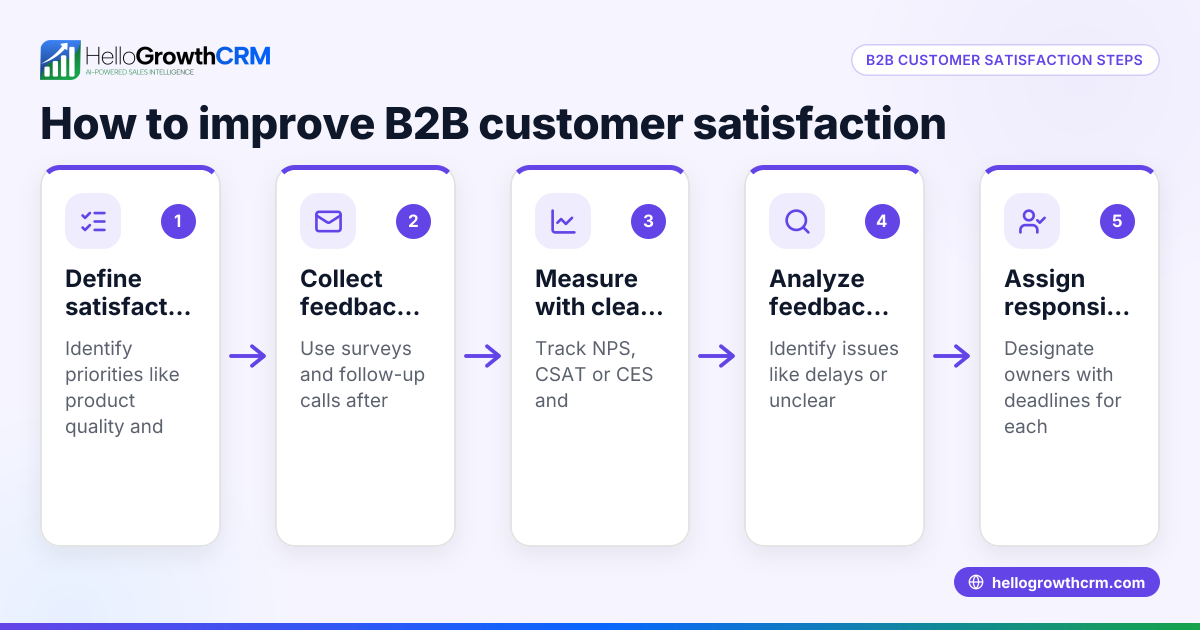
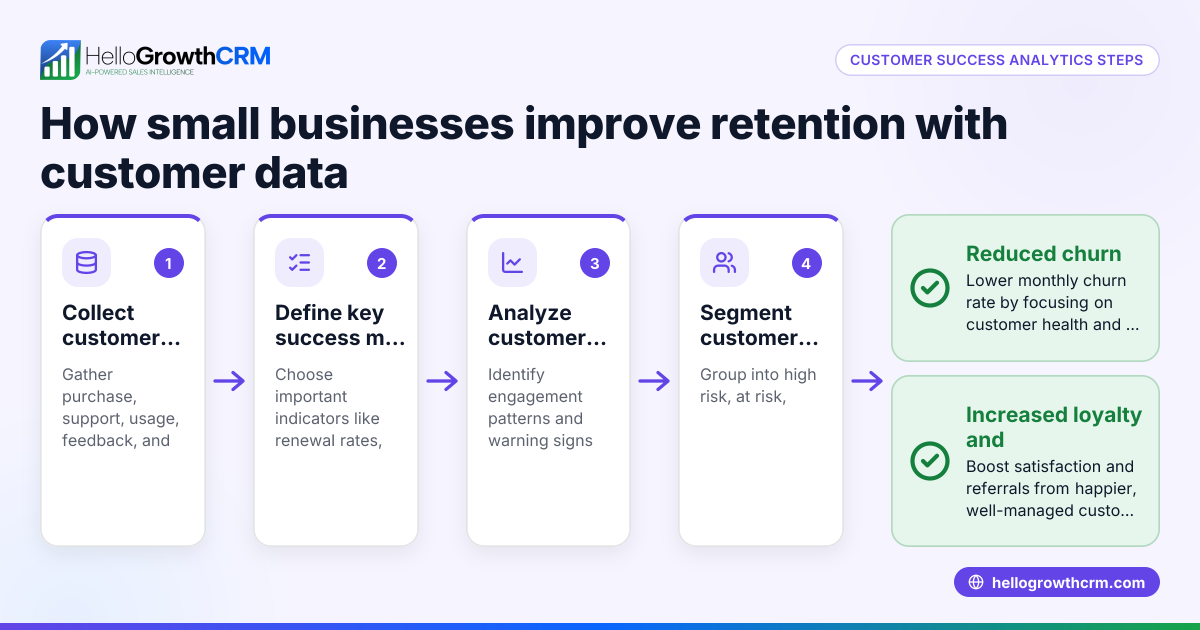
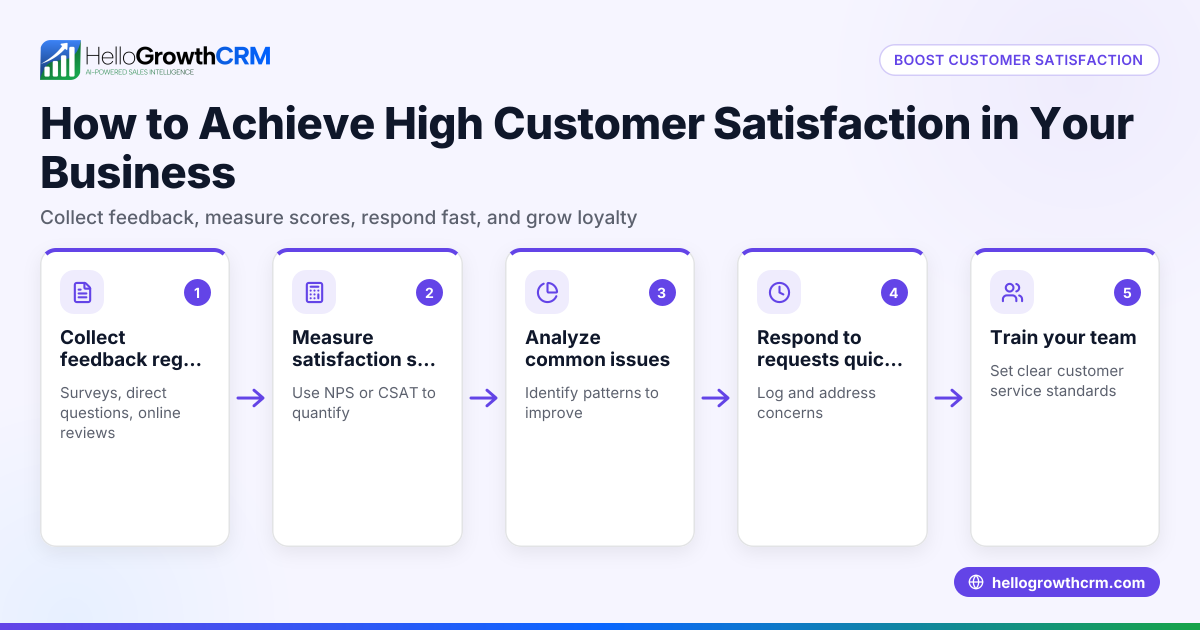
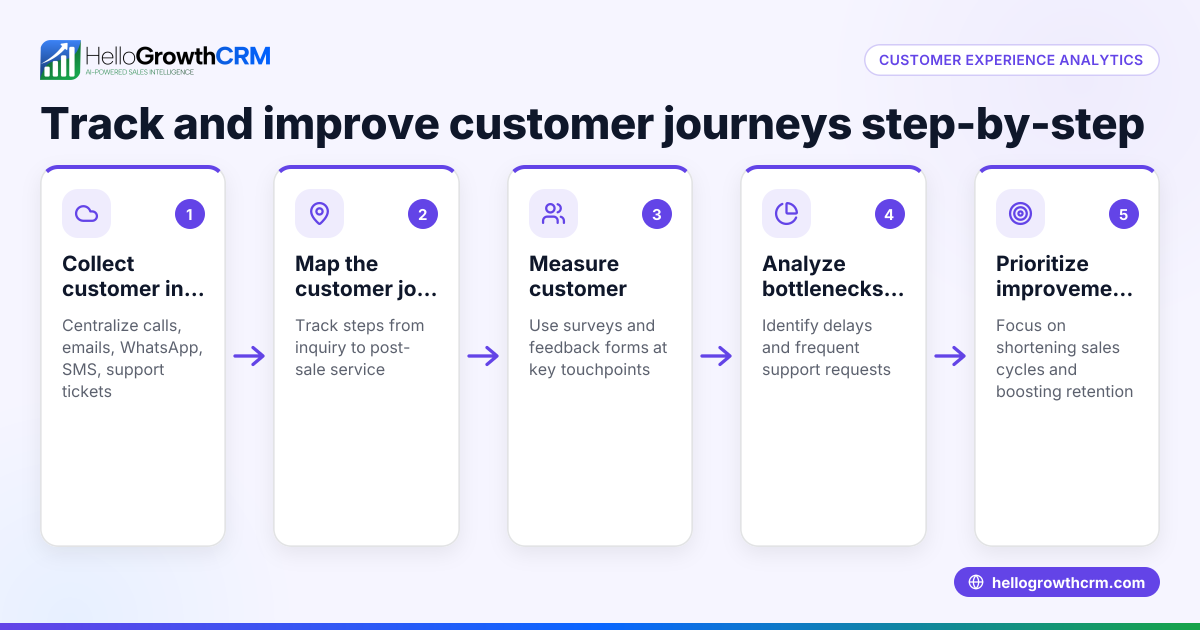
- Collect customer feedback systematically: Use surveys, support tickets, or direct messages on WhatsApp or SMS to gather opinions. Check that your questions cover product quality, service experience, and likelihood to recommend.
- Aggregate data in one place: Combine feedback from all channels into a CRM or a single database. Check for duplicates and ensure data is linked to individual customer records.
- Define key metrics: Common measures include Customer Satisfaction Score (CSAT), Net Promoter Score (NPS), and Customer Effort Score (CES). Check that you understand how each is calculated.
- Analyze trends and patterns: Look for recurring issues or areas with low scores. Check which customer segments or product lines show the most dissatisfaction.
- Correlate satisfaction with sales data: Compare satisfaction scores with sales pipeline stages and conversion rates. Check if deals stall or customers drop off after certain touchpoints.
- Act on insights: Prioritize improvements based on what matters most to customers. Check that your team follows up on tickets or complaints promptly.
Example (fictional figures)
A residential real-estate team in Phoenix, Arizona, wants to analyze customer satisfaction after closing deals. They collected survey responses from 100 clients in Q1 2026.
- 80 clients gave a satisfaction score of 8 or above out of 10.
- 20 clients gave a score below 8.
Calculate the CSAT:
CSAT = (Number of satisfied customers / Total respondents) × 100 CSAT = (80 / 100) × 100 CSAT = 80%
The team notices that deals in the "Closing" stage take longer than expected and that customers with lower satisfaction scores had more delays.
They decide to improve communication and response times during closing to increase satisfaction and reduce stalled deals.
Common mistakes
- Ignoring multi-channel feedback: Prevent by collecting data from all customer touchpoints including WhatsApp and SMS to get a full picture.
- Not linking feedback to customer records: Prevent by using a CRM that keeps all interactions and tickets on the same record.
- Confusing customer satisfaction with sales performance only: Prevent by analyzing satisfaction separately and correlating it with sales pipeline data.
- Delaying action on negative feedback: Prevent by setting up alerts or task boards to follow up quickly.
- Using too many or unclear metrics: Prevent by focusing on a few key scores like CSAT or NPS that your team understands.
Doing this in HelloGrowthCRM
HelloGrowthCRM helps small businesses track customer satisfaction by keeping service requests, support tickets, and referrals on the same customer record as the deal. This means after the sale, all customer interactions stay organized in one place. The built-in pipeline forecast and AI insights show you which deal stages are stalling, so you can correlate sales delays with customer satisfaction issues without building spreadsheets. Learn more about customer health score and how HelloGrowthCRM supports sales and service teams together.
Frequently asked questions
What is the difference between customer satisfaction analytics and customer health score? Customer satisfaction analytics focuses on measuring how happy customers are through surveys and feedback, while customer health score combines satisfaction with other signals like purchase frequency and support tickets to predict future behavior. HelloGrowthCRM offers tools for both to help you manage customer relationships better.
How often should I collect customer satisfaction data? Collect feedback regularly but not too often to avoid survey fatigue. After key interactions like a sale, support call, or product delivery is ideal. This timing ensures you get relevant and fresh insights.
Can I use WhatsApp and SMS for customer satisfaction surveys? Yes, using WhatsApp and SMS is effective for quick feedback collection. HelloGrowthCRM’s WhatsApp and SMS CRM features let you automate sequences and messages, making it easier to reach customers on their preferred channels.
How do I act on customer satisfaction data to improve sales? Use the data to identify where customers experience problems or delays. Then adjust your sales process or customer service accordingly. For example, if many customers report slow responses in a certain pipeline stage, focus your team’s efforts there.
Can customer satisfaction analytics predict revenue? Indirectly, yes. Satisfied customers are more likely to buy again and refer others. HelloGrowthCRM’s pipeline forecast and AI insights help you see where deals stall, which can be linked to satisfaction issues, aiding revenue prediction.
Key takeaways
- Customer satisfaction analytics measures how happy your customers are using feedback and scores.
- Collect feedback from all channels and link it to individual customer records.
- Analyze key metrics like CSAT and correlate them with sales pipeline data.
- Avoid common mistakes like ignoring multi-channel data or delaying follow-up.
- HelloGrowthCRM helps track customer service and sales together with pipeline forecasts and customer portals.
Start tracking your customer satisfaction today with HelloGrowthCRM. Start on the Free Forever plan (200 leads, no credit card).
Ready to put this into practice?
Set up your pipeline, WhatsApp follow-ups, and AI lead scoring in minutes — free, no credit card.
Try HelloGrowthCRM freeGet CRM tips in your inbox
Join thousands of sales professionals who get weekly insights on CRM strategy, AI automation, and pipeline optimization.

The HelloGrowthCRM team publishes guides on CRM strategy, AI sales tools, and revenue operations for small business sales teams.