HelloGrowthCRM software
Built for real small-business sales teams
HelloGrowthCRM helps reps qualify faster, follow up on time, and close more deals—with practical automation in one place.
- AI lead scoring and pipeline visibility
- Built-in dialer, WhatsApp, and email automation
- Sales forecasting and RevOps-ready reporting
B2B technology marketing is the practice of promoting technology products or services from one business to another. It targets business buyers such as IT managers, CTOs, or procurement teams who make purchasing decisions based on how technology can solve specific business challenges. Unlike consumer marketing, B2B technology marketing emphasizes clear value, return on investment (ROI), and long-term benefits. Small and mid-sized business owners often find this challenging because their buyers expect professional, relevant messaging and proof of effectiveness.
Why this comes up / what goes wrong
Many small-business owners offering technology products or services face difficulties in reaching the right business customers. They may use informal methods such as cold emails, text messages, or spreadsheets to track leads, which often results in slow follow-up and lost sales opportunities. Without a structured marketing approach, messaging can be unclear or too generic, failing to address what business buyers care about most: cost savings, efficiency, security, and compliance. This leads to wasted effort and low conversion rates. Understanding B2B technology marketing helps these owners create targeted campaigns that speak directly to business needs and decision-makers.
Step-by-step
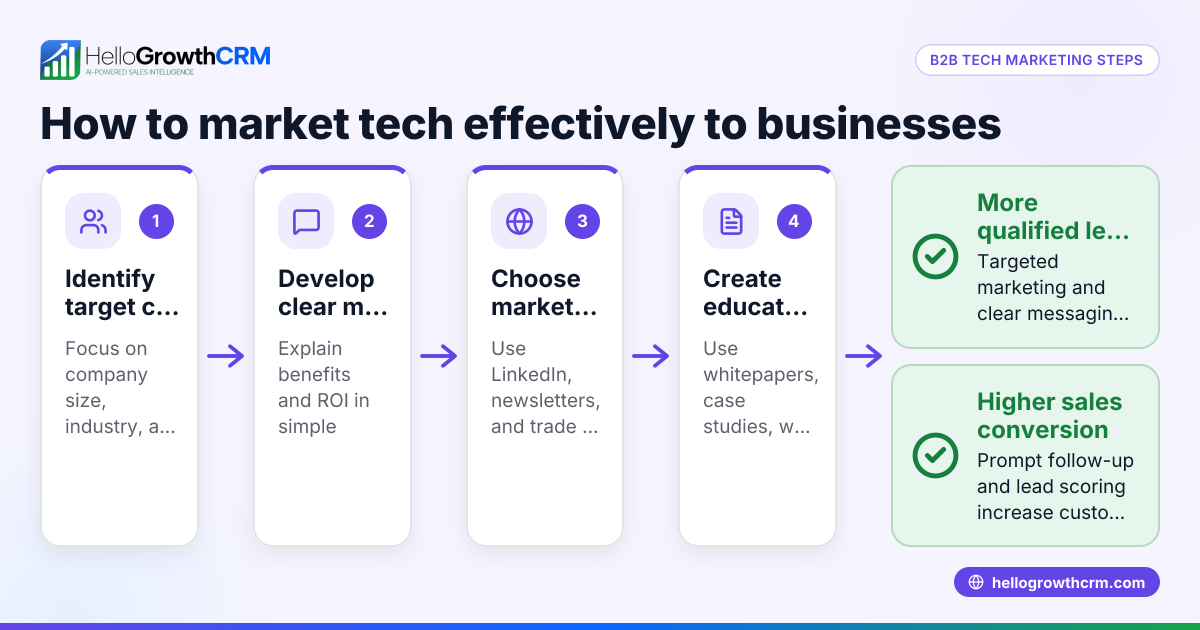
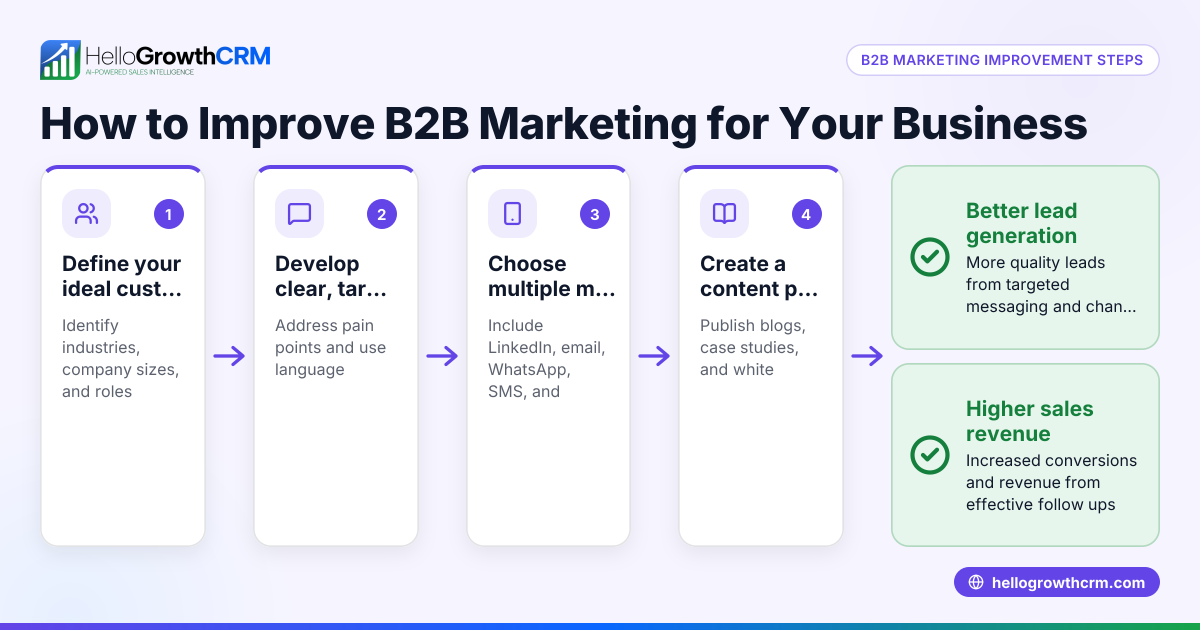
- Identify Your Target Business Audience
- Define the industries, company sizes, and job roles (e.g., IT managers, CTOs, procurement officers) you want to reach.
- Verify that your messaging aligns with their specific challenges and priorities.
- Develop Clear Value Propositions
- Explain how your technology solves particular business problems.
- Focus on benefits such as cost reduction, improved efficiency, enhanced security, or regulatory compliance.
- Choose Effective Marketing Channels
- Use LinkedIn and industry-specific forums for professional outreach.
- Employ email marketing sequences tailored to business buyers.
- Consider WhatsApp and SMS CRM tools for personalized follow-up and quicker responses (WhatsApp and SMS CRM).
- Create Educational Content
- Produce whitepapers, case studies, webinars, and blog posts that demonstrate your expertise.
- Ensure content addresses business concerns and supports decision-making.
- Implement Lead Capture and Scoring
- Use web forms and CRM integrations to collect leads automatically.
- Score leads based on engagement and fit to prioritize follow-up effectively.
- Follow Up with Sales Outreach
- Use a built-in CRM dialer to call leads efficiently and keep communications organized (built-in CRM dialer).
- Schedule tasks and reminders to maintain momentum and avoid delays.
- Measure and Adjust Your Campaigns
- Monitor sales pipeline and forecasting to identify bottlenecks.
- Use performance data to refine messaging, channels, and targeting.
Example (fictional figures)
A residential real-estate technology company based in Phoenix, Arizona, launches a B2B marketing campaign on 06/01/2026 targeting property management firms that need tenant screening software.
- Target list: 1,000 property managers
- Email open rate: 30% → 1,000 × 30% = 300 opens
- Click-through rate: 10% → 300 × 10% = 30 clicks
- Conversion rate (demo requests): 20% → 30 × 20% = 6 demos
- Sales close rate: 50% → 6 × 50% = 3 new customers
- Average sale value: $15,000
Revenue calculation: $15,000 × 3 = $45,000
This example shows how a focused B2B technology marketing campaign can generate measurable leads and sales by targeting the right audience with clear messaging and follow-up.
Common mistakes
- Ignoring the specific needs of business buyers: Prevent this by researching your target audience thoroughly and tailoring your messaging to their pain points.
- Using generic consumer marketing tactics: Avoid this by focusing on business benefits, ROI, and professional communication.
- Failing to follow up promptly: Prevent lost leads by automating lead capture and using CRM tools to schedule timely follow-up tasks.
- Not measuring campaign performance: Track metrics like email open rates, conversion rates, and sales pipeline regularly to identify what works.
- Overlooking multi-channel communication: Combine emails, calls, and messaging apps like WhatsApp to reach leads where they respond best (HelloGrowthCRM for the United States).
Frequently asked questions
What is the difference between B2B and B2C technology marketing? B2B technology marketing targets businesses and focuses on how technology solves business problems, emphasizing ROI and long-term value. B2C technology marketing targets individual consumers and often highlights product features and emotional appeal.
How can small businesses find the right decision-makers in other companies? Use LinkedIn, industry directories, and networking events to identify roles like IT managers or CTOs. Tools that integrate lead capture and scoring can help prioritize contacts for effective follow-up.
Why is content important in B2B technology marketing? Content such as case studies, whitepapers, and webinars builds trust by demonstrating expertise and real-world results. This helps decision-makers justify their purchases.
How does follow-up speed affect B2B sales? Fast follow-up increases the chance of converting leads before competitors do. Using a CRM with automated reminders and dialers can improve response times and sales outcomes (built-in CRM dialer).
Can WhatsApp and SMS be used for B2B marketing? Yes, personalized messaging through WhatsApp and SMS can engage business leads effectively when combined with email and phone calls (WhatsApp and SMS CRM).
Key takeaways
- B2B technology marketing targets business buyers with clear, tailored value propositions.
- Define your audience carefully and align messaging with their specific needs.
- Use multiple channels including email, calls, and messaging apps to reach leads effectively.
- Capture and score leads to prioritize follow-up and improve conversion rates.
- Measure campaign results regularly and adjust strategies based on data.
Start your B2B technology marketing journey with tools that support lead capture, follow-up, and multi-channel communication. Start on the Free Forever plan (200 leads, no credit card).
Ready to put this into practice?
Set up your pipeline, WhatsApp follow-ups, and AI lead scoring in minutes — free, no credit card.
Try HelloGrowthCRM freeGet CRM tips in your inbox
Join thousands of sales professionals who get weekly insights on CRM strategy, AI automation, and pipeline optimization.

The HelloGrowthCRM team publishes guides on CRM strategy, AI sales tools, and revenue operations for small business sales teams.