HelloGrowthCRM software
Built for real small-business sales teams
HelloGrowthCRM helps reps qualify faster, follow up on time, and close more deals—with practical automation in one place.
- AI lead scoring and pipeline visibility
- Built-in dialer, WhatsApp, and email automation
- Sales forecasting and RevOps-ready reporting
Call center call back technology allows customers who call a business to choose a callback option instead of waiting on hold. When they request a callback, the system records their number and places them in a queue for a return call when an agent is free. This reduces customer frustration, lowers call abandonment rates, and helps small businesses manage call volumes more efficiently.
Why this comes up / what goes wrong
Small business owners often face challenges with managing incoming customer calls, especially during busy periods. Customers calling in may experience long hold times, leading to frustration or hang-ups, which results in lost sales or missed service opportunities. Without a structured callback system, staff may struggle to prioritize return calls or track customer requests, causing delays and poor customer experience.
Call back technology addresses these issues by offering customers the choice to receive a call back instead of waiting on hold. This helps small businesses keep customers engaged and reduces the risk of losing leads due to slow or missed follow-up.
Step-by-step
- Evaluate your call volume and wait times. Check your current call handling metrics to understand peak times and average hold durations. This helps identify if call back technology is needed.
- Choose a call back system or software. Look for solutions that integrate with your existing phone system or CRM, allowing easy management of callback requests.
- Set up the call back option in your IVR or phone menu. Configure your phone system to offer callers the option to request a callback instead of waiting on hold.
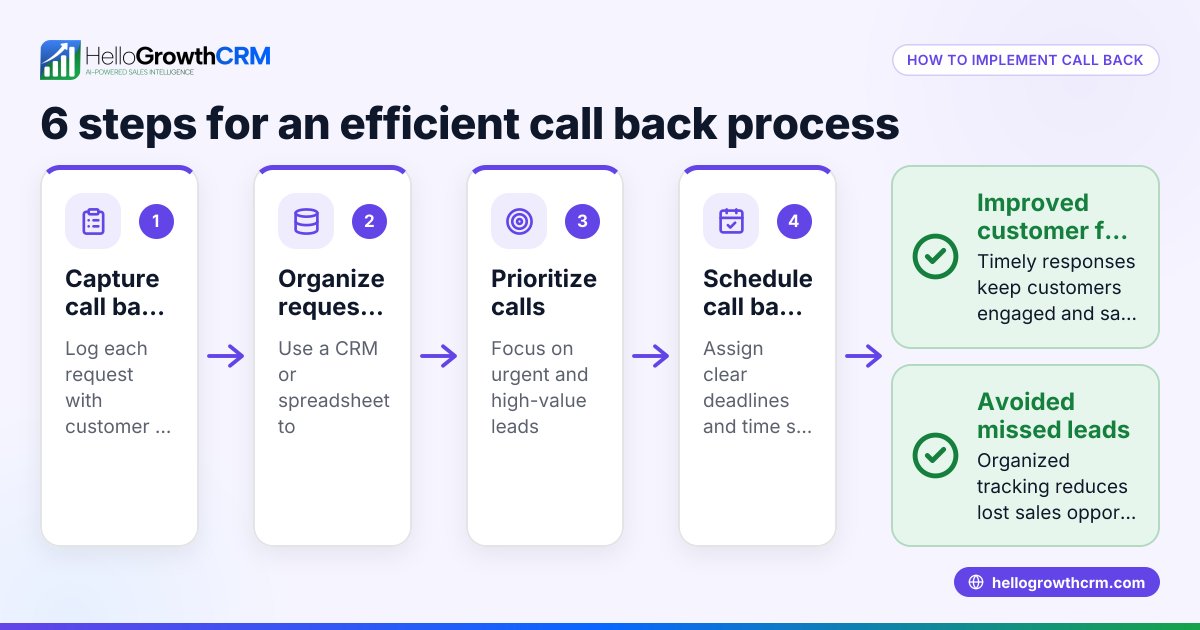
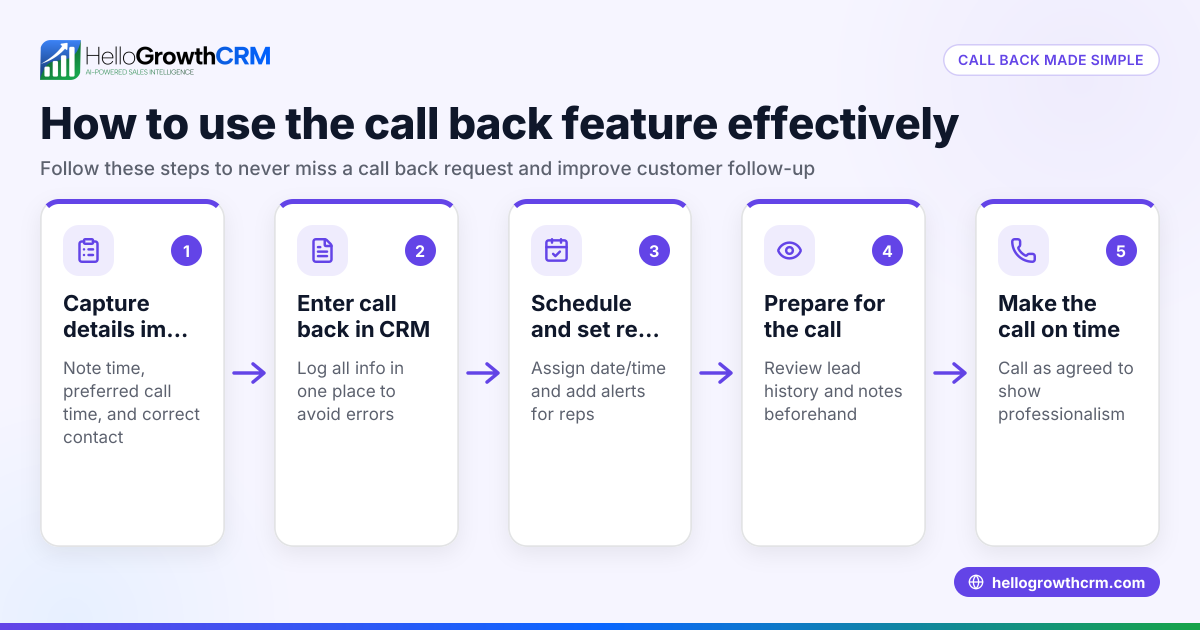
- Capture caller details automatically. Ensure the system records the caller’s phone number and preferred callback time if possible.
- Prioritize and schedule callbacks. Organize the callback queue so agents can return calls efficiently, ideally integrating with your CRM to log outcomes.
- Train your team to handle callbacks promptly. Make sure agents understand the importance of timely return calls and how to update call records.
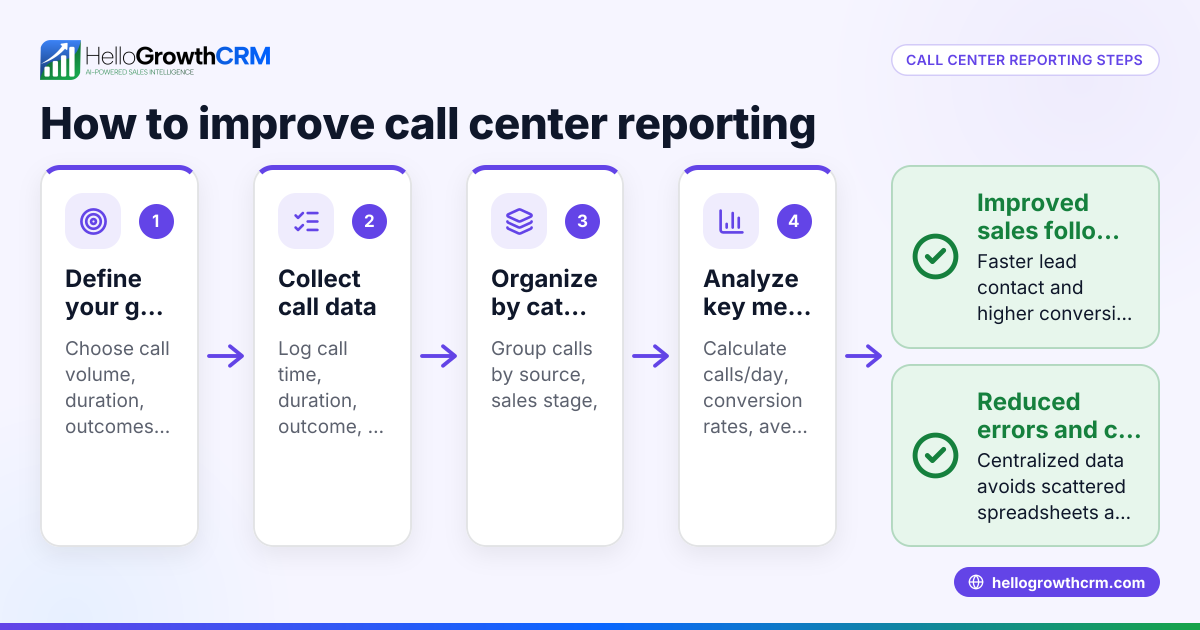
- Monitor call back performance. Use reports to track callback success rates, customer satisfaction, and any missed callbacks.
For managing callbacks and outbound calls, consider a built-in CRM dialer that helps reps work lists directly inside the CRM and log each call outcome.
Example (fictional figures)
GreenLeaf Landscaping, a small landscaping contractor in Charlotte, North Carolina, receives about 150 customer calls weekly. During peak season, average hold times reach 6 minutes, causing many callers to hang up.
They implement call center call back technology on 06/01/2025 to reduce hold times and lost leads.
- Average calls per week: 150
- Calls abandoned due to hold time: 20% × 150 = 30 calls
- Estimated lost revenue per abandoned call: $500
- Potential revenue lost weekly: 30 × $500 = $15,000
After adding call back technology:
- Calls abandoned drop to 5% × 150 = 7.5 calls (round to 8)
- Lost revenue drops to 8 × $500 = $4,000
Weekly revenue saved by call back technology:
$15,000 − $4,000 = $11,000
This shows how call back technology can help recover thousands of dollars weekly by reducing lost leads.
Common mistakes
- Not integrating callbacks with CRM: Without CRM integration, callbacks can be missed or untracked. Use a CRM dialer to log call outcomes and keep history.
- Ignoring callback scheduling: Calling back at inconvenient times frustrates customers. Always ask for preferred callback times.
- Lack of team training: Agents unaware of callback procedures delay returns. Provide clear instructions and emphasize prompt follow-up.
- Offering callback without clear instructions: Customers may not understand how to request a callback. Make the option clear and simple in your phone menu.
- Failing to monitor callback metrics: Without tracking, you can’t improve. Regularly review callback success and customer feedback.
For better callback management, explore HelloGrowthCRM’s built-in dialer that helps reps handle calls and log outcomes efficiently.
Doing this in HelloGrowthCRM
HelloGrowthCRM includes a built-in dialer that lets your reps work a call list directly inside the CRM. Each call’s outcome is automatically logged on the lead record, keeping full call history organized. This helps your team manage callbacks and follow-ups without switching tools. Learn more about the built-in CRM dialer and how HelloGrowthCRM supports US businesses in managing calls and customer engagement at HelloGrowthCRM for the United States.
Frequently asked questions
What is call center call back technology? Call back technology allows customers to request a return call instead of waiting on hold. The system queues these requests and notifies agents to call back when available.
How does call back technology improve customer experience? It reduces wait times and frustration by letting customers avoid long holds. They receive a timely return call, improving satisfaction and reducing abandoned calls.
Can small businesses implement call back technology without complex systems? Yes, many modern CRMs and phone systems offer built-in callback features or integrations that simplify setup and management.
How does a CRM dialer help with callbacks? A CRM dialer lets agents call customers directly from the CRM, log call outcomes, and keep full call history tied to leads. This streamlines callback management and follow-up.
Is call back technology suitable for all industries? It is especially useful for businesses with high call volumes or service requests, such as contractors, healthcare providers, and customer support centers.
For more on managing customer communications, see our guide on WhatsApp and SMS CRM.
Key takeaways
- Call center call back technology lets customers avoid hold times by requesting return calls.
- It reduces call abandonment, improves customer satisfaction, and helps small businesses retain leads.
- Set up involves evaluating calls, choosing software, configuring phone menus, and training staff.
- Integrating callbacks with a CRM dialer improves tracking and follow-up efficiency.
- Monitor callback metrics regularly to optimize performance.
Start improving your customer call handling with HelloGrowthCRM’s tools. Start on the Free Forever plan (200 leads, no credit card).
Ready to put this into practice?
Set up your pipeline, WhatsApp follow-ups, and AI lead scoring in minutes — free, no credit card.
Try HelloGrowthCRM freeGet CRM tips in your inbox
Join thousands of sales professionals who get weekly insights on CRM strategy, AI automation, and pipeline optimization.

The HelloGrowthCRM team publishes guides on CRM strategy, AI sales tools, and revenue operations for small business sales teams.