HelloGrowthCRM software
Built for real small-business sales teams
HelloGrowthCRM helps reps qualify faster, follow up on time, and close more deals—with practical automation in one place.
- AI lead scoring and pipeline visibility
- Built-in dialer, WhatsApp, and email automation
- Sales forecasting and RevOps-ready reporting
B2C, or business-to-consumer, describes companies that sell goods or services directly to individual customers rather than other businesses. Examples include shops, cafes, and online retailers targeting everyday buyers. Understanding B2C examples helps small business owners focus their sales and marketing efforts effectively.
Why this comes up / what goes wrong
Small business owners often confuse B2C with B2B (business-to-business) sales. This confusion can lead to misdirected marketing, inappropriate sales channels, or ineffective customer engagement. For example, a local café serving walk-in customers operates B2C, while a supplier selling wholesale ingredients to other cafes is B2B. Knowing your business type clarifies how to manage leads, sales processes, and customer relationships.
Many small businesses start without a clear understanding of their customer base, mixing B2C and B2B approaches. This can cause delays in lead follow-up, lost sales, or wasted marketing budgets. For instance, a retailer using a CRM designed for B2B sales might miss opportunities for quick consumer engagement. Recognising your business as B2C helps you choose the right sales tools and communication methods.
Step-by-step
- Identify your customer type: Check if your customers are individual consumers or other businesses. If you sell directly to people for personal use, you are B2C.
- Review your sales channels: Consider various options such as retail shops, ecommerce websites, or social media platforms to reach customers. Confirm if your sales happen through these channels.
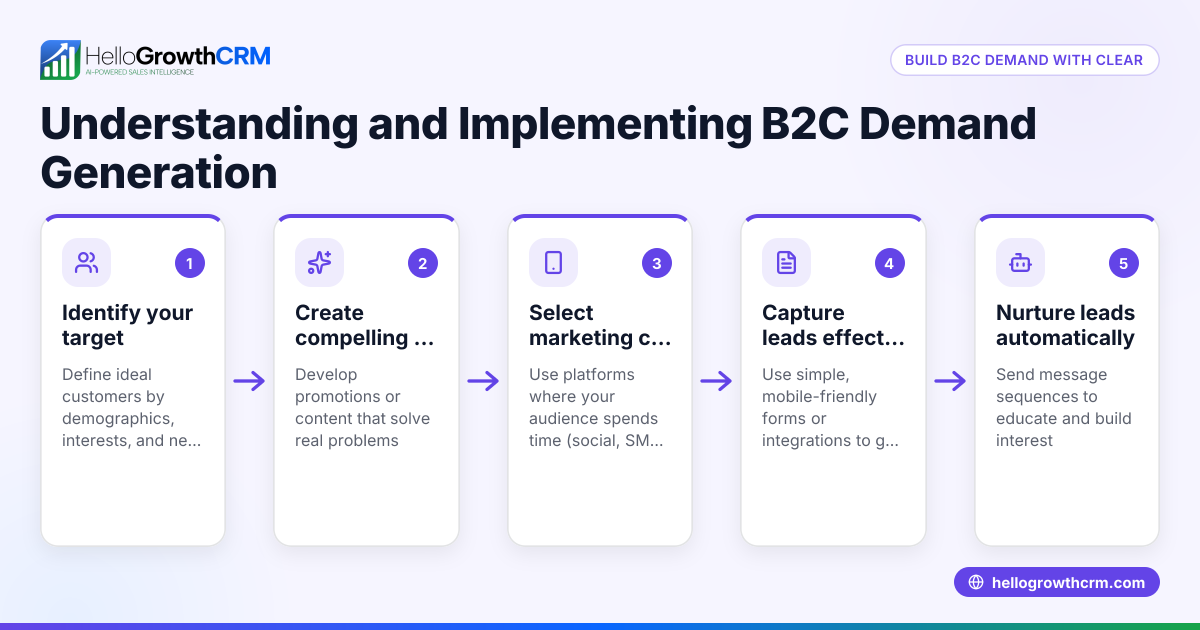
- Check your marketing approach: B2C marketing focuses on appealing to individual preferences and emotions. Look for direct advertising, promotions, or loyalty schemes aimed at consumers.
- Analyse transaction size and frequency: B2C transactions tend to be smaller and more frequent than B2B deals. Review your sales records for typical order sizes.
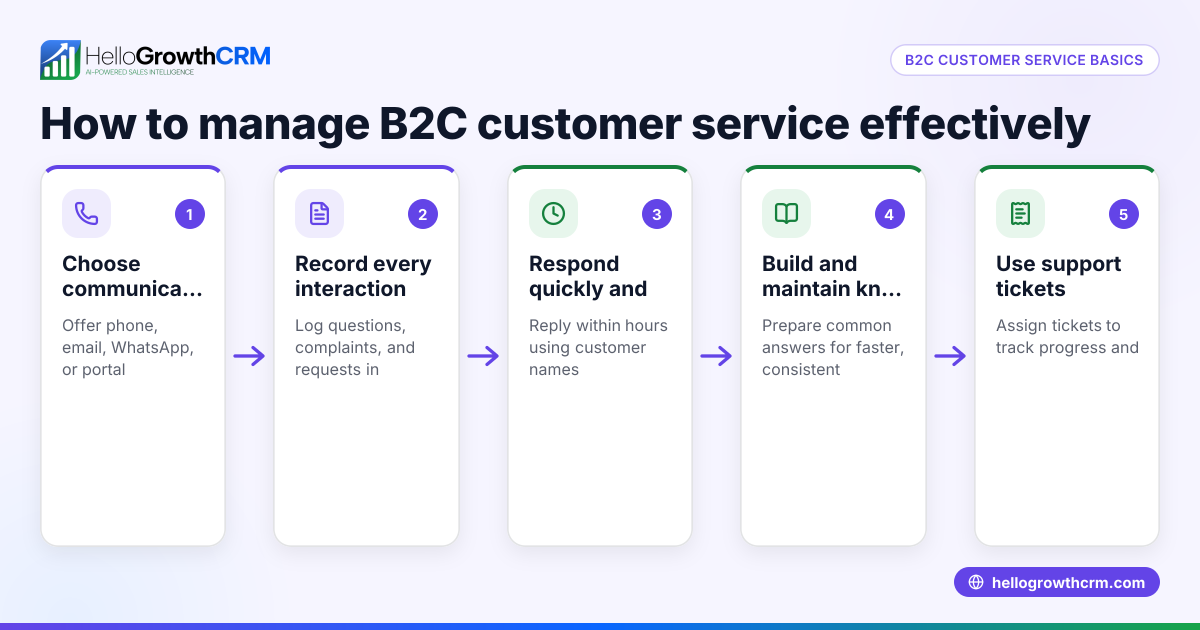
- Verify customer support style: B2C often requires quick, personalised support for individual buyers. Ensure your customer service is set up accordingly.
- Adjust your CRM and sales tools: Use software that supports direct consumer engagement, such as WhatsApp and SMS CRM features, to manage leads and follow-ups efficiently. See how a WhatsApp and SMS CRM can help.
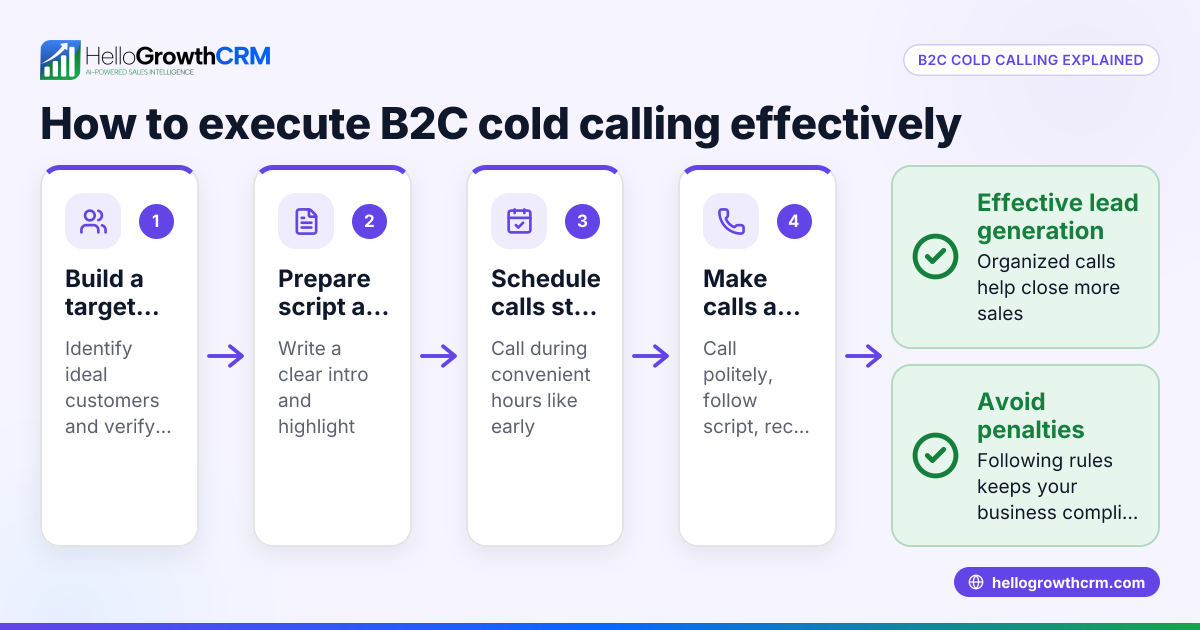
- Plan for sales outreach: B2C teams benefit from features like a built-in CRM dialer to contact leads quickly and keep the sales pipeline moving.
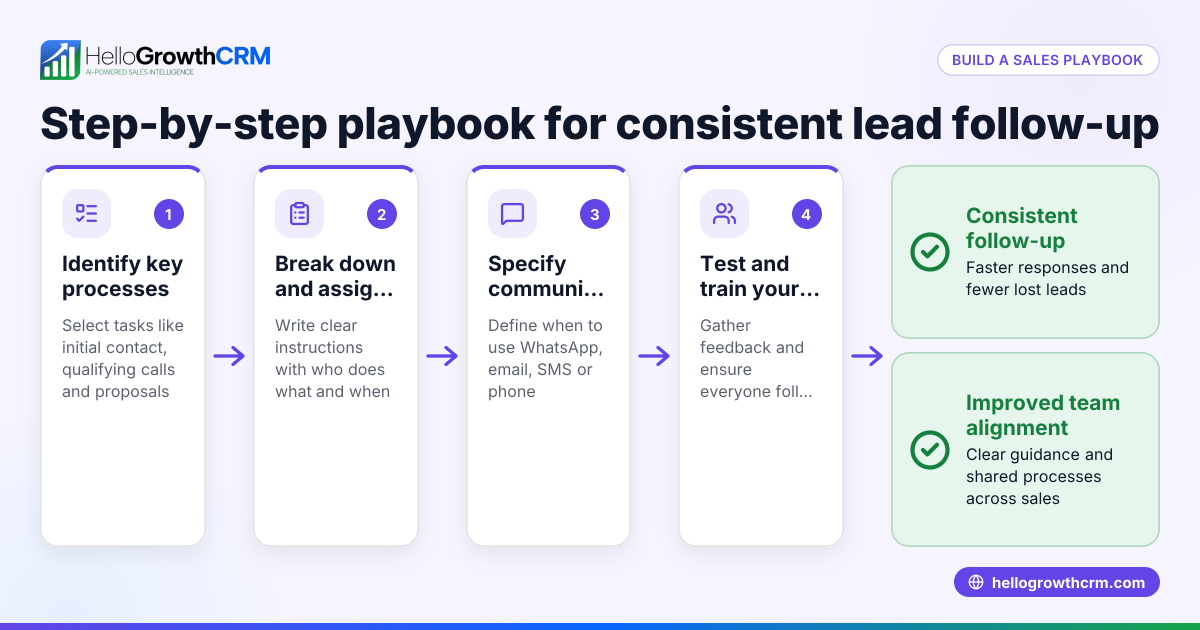
- Train your team on B2C sales nuances: Make sure your sales and customer service staff understand the quick decision-making and personal communication style preferred by consumers.
- Monitor and refine your approach: Regularly check sales data and customer feedback to ensure your B2C strategy remains effective and adjust tools and tactics as needed.
Example (fictional figures)
A solar-panel installer in Glasgow sells directly to homeowners, a typical B2C model. In the year ending 31/03/2026, they generated £480,000 in sales from 120 customers.
- Average sale value = £480,000 ÷ 120 = £4,000
- Marketing spend aimed at consumers = £48,000
- Marketing spend as % of sales = £48,000 ÷ £480,000 = 0.10 or 10%
They use direct WhatsApp messages to follow up leads and schedule installations, improving customer response times and satisfaction.
Common mistakes
- Confusing B2C with B2B: Prevent this by clearly defining your customer base and sales channels. Use customer data and sales records to confirm.
- Using inappropriate marketing channels: Avoid business-focused platforms if your customers are consumers; instead, use social media or retail promotions targeted at individuals.
- Ignoring fast lead follow-up: Consumers expect quick responses. Use tools like a built-in CRM dialer to call leads promptly and keep interest high.
- Overcomplicating sales processes: Keep transactions straightforward and user-friendly for consumers, who prefer easy buying experiences.
- Neglecting personalised communication: Use WhatsApp and SMS CRM to send tailored messages and sequences to individual customers, improving engagement. Learn more about WhatsApp and SMS CRM.
- Failing to train staff for B2C nuances: Ensure your team understands consumer behaviour and communication styles to build rapport and close sales effectively.
Frequently asked questions
What is the difference between B2C and B2B? B2C sells directly to individual consumers, while B2B sells to other businesses. B2C focuses on personal use products and services, with smaller, frequent transactions.
Can a business be both B2C and B2B? Yes, some businesses serve both consumers and other businesses, but they usually separate their sales and marketing strategies for each group.
What are common B2C sales channels? Retail shops, ecommerce websites, social media platforms, and direct messaging apps like WhatsApp are typical channels for B2C sales.
How can small businesses manage B2C leads effectively? Using CRM tools designed for direct consumer engagement, such as WhatsApp and SMS CRM, helps track leads and automate follow-ups.
Why is fast follow-up important in B2C sales? Consumers often decide quickly and expect prompt responses. A built-in CRM dialer can speed up contact and improve conversion rates.
What should I look for in a CRM for B2C sales? Choose a CRM that supports quick communication channels like WhatsApp and SMS, easy lead capture, and task management to keep your sales team organised and responsive.
Key takeaways
- B2C businesses sell directly to individual consumers, not other companies.
- Identifying your customer type guides your sales channels and marketing.
- Use consumer-friendly marketing and fast lead follow-up methods.
- Avoid confusing B2C with B2B to prevent wasted effort.
- CRM tools with WhatsApp, SMS, and dialer features support efficient B2C sales.
- Train your team to understand and engage with consumer behaviour effectively.
Start your B2C journey with confidence and manage your leads better. Start on the Free Forever plan (200 leads, no credit card) to try CRM tools tailored for UK businesses like yours.
Ready to put this into practice?
Set up your pipeline, WhatsApp follow-ups, and AI lead scoring in minutes — free, no credit card.
Try HelloGrowthCRM freeGet CRM tips in your inbox
Join thousands of sales professionals who get weekly insights on CRM strategy, AI automation, and pipeline optimization.

The HelloGrowthCRM team publishes guides on CRM strategy, AI sales tools, and revenue operations for small business sales teams.