HelloGrowthCRM software
Built for real small-business sales teams
HelloGrowthCRM helps reps qualify faster, follow up on time, and close more deals—with practical automation in one place.
- AI lead scoring and pipeline visibility
- Built-in dialer, WhatsApp, and email automation
- Sales forecasting and RevOps-ready reporting
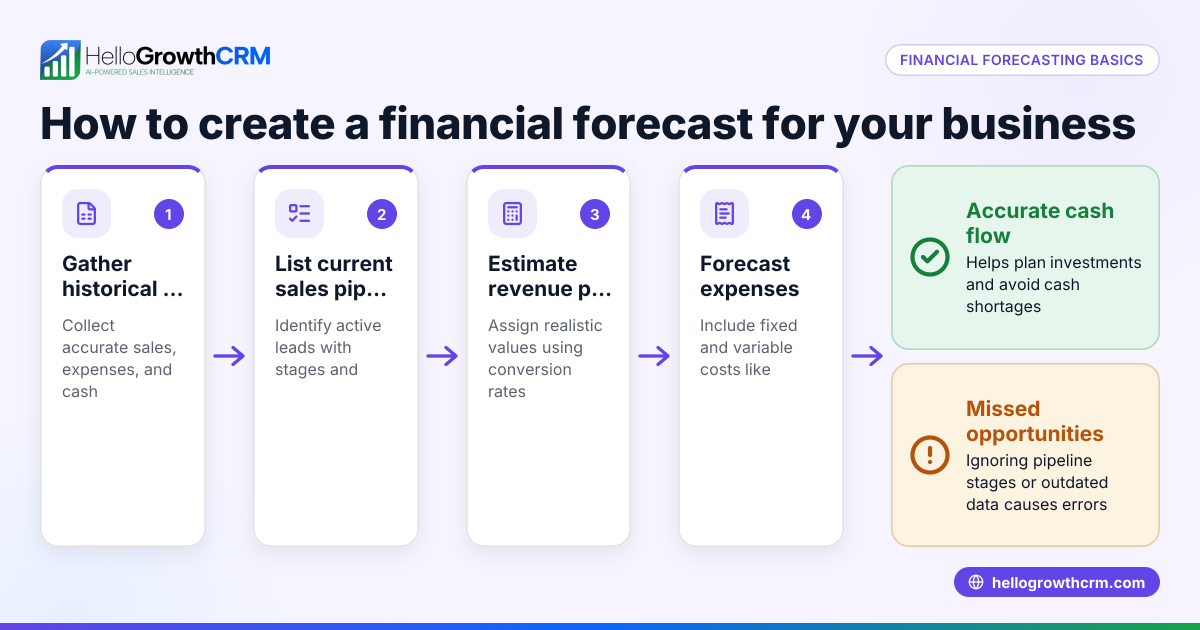
Bottom up forecasting is a sales forecasting method that builds revenue predictions starting from individual deals or sales reps’ estimates. Instead of guessing total sales from a top-level view, you add up detailed inputs from the ground level to create a more accurate and actionable forecast.
Why this comes up / what goes wrong
Small business owners often struggle with sales forecasting because they rely on gut feelings or high-level guesses. They may lose leads due to slow follow-up or run sales operations manually on text, email, and spreadsheets. This can result in inaccurate or overly optimistic forecasts that hurt planning and cash flow.
Bottom up forecasting addresses this by basing projections on the actual status of each deal and the sales team’s activity. It helps owners see where deals stall, prioritize follow-ups, and set realistic revenue goals.
Step-by-step
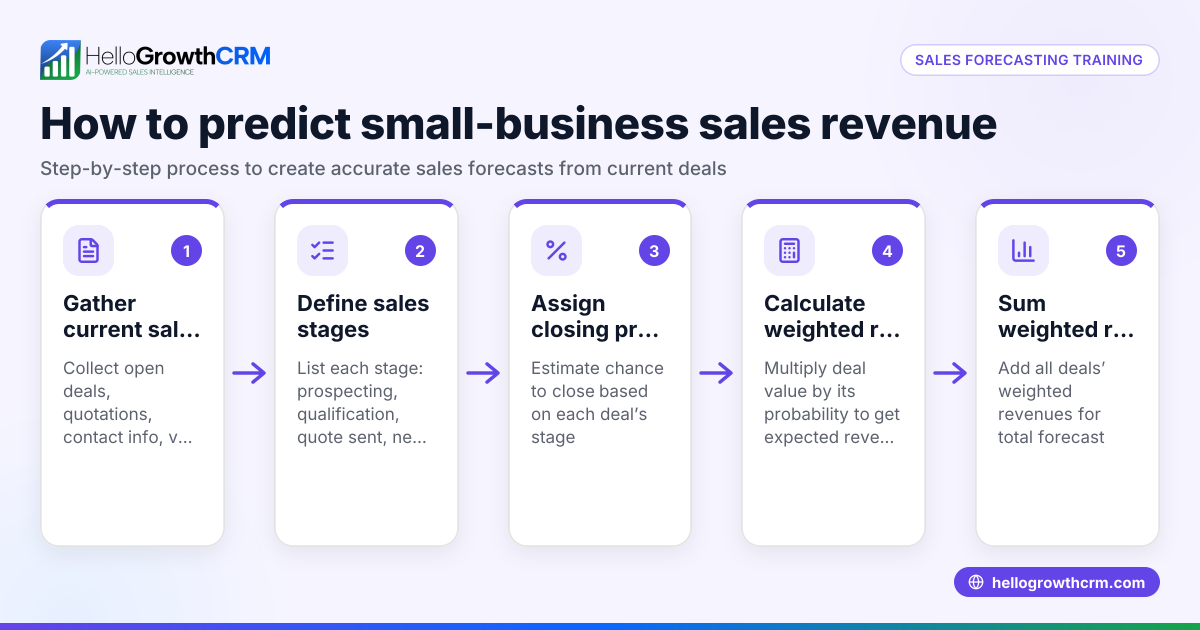
- List all active sales opportunities: Gather every current lead or deal in your pipeline with details like deal size, stage, and expected close date.
- Estimate the revenue for each deal: Assign a realistic dollar value to each opportunity based on the potential sale amount.
- Assign a probability to each deal: Estimate the chance of closing each deal based on its stage and past conversion rates.
- Calculate weighted revenue for each deal: Multiply each deal’s value by its probability to get a weighted forecast amount.
- Sum all weighted deals: Add all weighted revenues to get your total bottom up sales forecast.
- Review pipeline health and bottlenecks: Check which stages have stalled deals and assign follow-up tasks to move them forward.
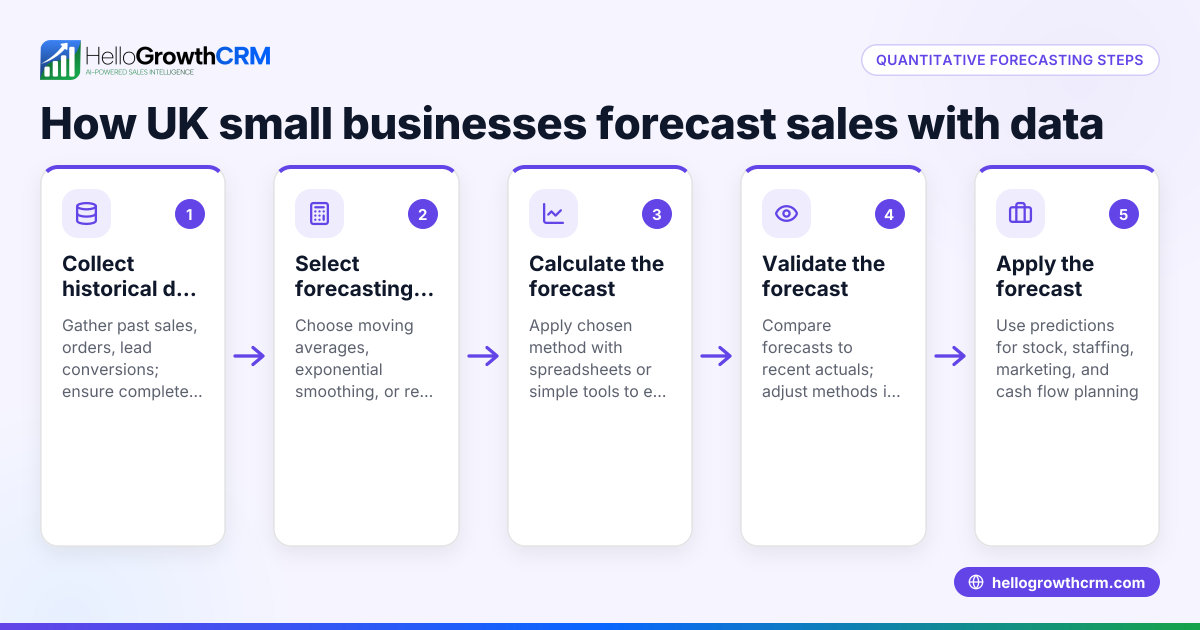
- Update regularly: Refresh your forecast weekly or monthly to reflect new deals, changes in probabilities, or closed sales.
- Use the forecast for planning: Base your budgeting, staffing, and inventory decisions on this forecast rather than guesses.
For help managing tasks and follow-ups, consider tools like activities and task boards to keep your sales team organized and on schedule.
Example (fictional figures)
A B2B software reseller in Denver, Colorado, wants to forecast sales for Q3 2026 as of 06/15/2026.
- Deal 1: $120,000, 60% probability
- Deal 2: $80,000, 40% probability
- Deal 3: $150,000, 30% probability
- Deal 4: $50,000, 80% probability
Calculate weighted revenue:
$120,000 × 60% = $72,000
$80,000 × 40% = $32,000
$150,000 × 30% = $45,000
$50,000 × 80% = $40,000
Sum weighted deals:
$72,000 + $32,000 + $45,000 + $40,000 = $189,000
The bottom up forecast for Q3 2026 is $189,000.
Common mistakes
- Overestimating deal probabilities: Use historical conversion data or AI insights to assign realistic probabilities.
- Ignoring stalled deals: Regularly review your pipeline to identify and act on deals stuck in certain stages.
- Failing to update forecasts: Keep your forecast current by updating deal statuses and values frequently.
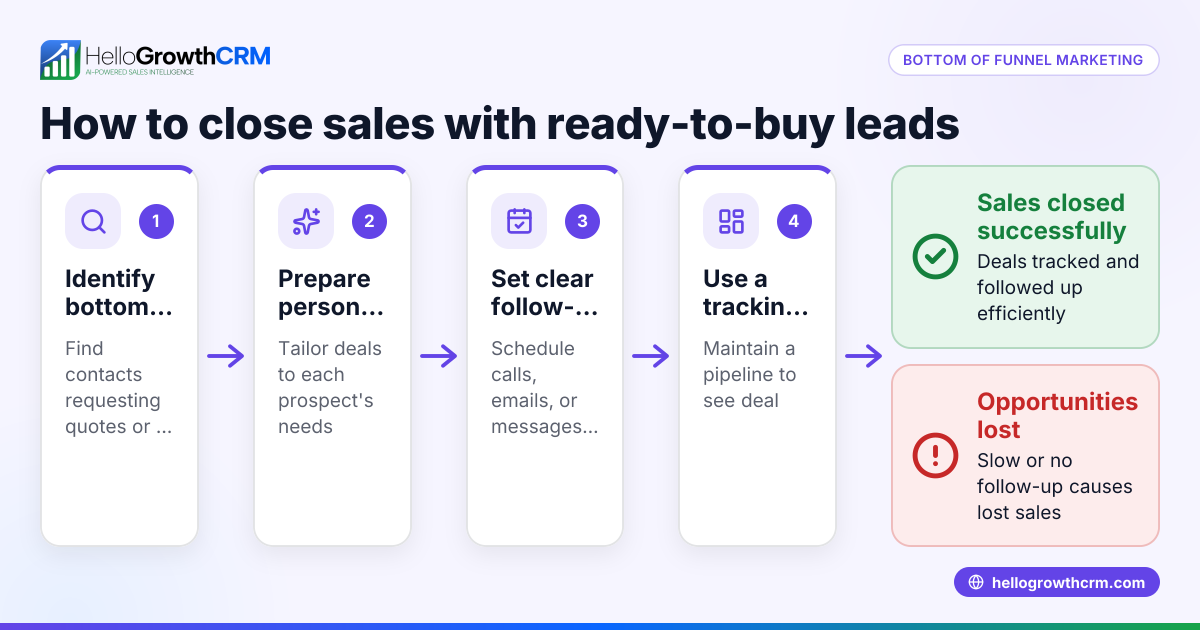
- Relying on memory for follow-ups: Use task boards to schedule and track follow-ups instead of mental notes.
- Not using automation for outreach: Automated sequences help maintain consistent follow-up without manual effort.
Avoid these by using tools like pipeline forecast and AI insights to spot stalled deals and sequences and campaigns for automated follow-ups.
Doing this in HelloGrowthCRM
HelloGrowthCRM helps small businesses with bottom up forecasting by providing:
- Pipeline forecast and AI insights: See which stages deals stall in without building spreadsheets, with AI-assisted revenue projections based on pipeline and historical data.
- Activities and task boards: Turn each follow-up into a task with due dates, so your team’s calls and meetings are organized and nothing is missed.
- Sequences and campaigns: Automate multi-step follow-ups over weeks that stop immediately when a prospect replies, keeping leads engaged without manual tracking.
Learn more about how HelloGrowthCRM supports sales forecasting and pipeline management on the AI CRM and HelloGrowthCRM for the United States pages.
Frequently asked questions
What is the difference between bottom up and top down forecasting? Bottom up forecasting builds projections from individual deals or sales reps’ input, while top down forecasting starts with overall market or company targets and breaks them down. Bottom up is generally more accurate for small businesses because it’s based on actual pipeline data.
How often should I update a bottom up forecast? Ideally, update your forecast weekly or monthly to reflect new deals, changes in probabilities, and closed sales. Frequent updates keep your forecast reliable for decision-making.
Can I do bottom up forecasting without software? Yes, but it requires careful tracking of each deal’s value and probability, often in spreadsheets. Using CRM tools with AI insights and task management simplifies this process and reduces errors.
How does AI help with bottom up forecasting? AI analyzes your historical sales data and current pipeline to suggest realistic probabilities and highlight stalled deals. This helps you assign more accurate weights and identify where to focus follow-ups.
What if my sales team doesn’t update their deals regularly? This is a common challenge. Use task boards and automated sequences to remind sales reps to update deal statuses and follow up with leads promptly.
Key takeaways
- Bottom up forecasting sums weighted revenue estimates from individual deals for realistic sales projections.
- Assign deal values and probabilities based on pipeline stage and historical data.
- Regular updates and follow-ups prevent stalled deals from skewing forecasts.
- Use task boards and automated sequences to keep sales activity organized and timely.
- AI-powered pipeline insights help spot bottlenecks and improve forecast accuracy.
Start improving your sales forecasting today with tools designed for small businesses. Start on the Free Forever plan (200 leads, no credit card) to organize your pipeline, automate follow-ups, and get AI insights.
Ready to put this into practice?
Set up your pipeline, WhatsApp follow-ups, and AI lead scoring in minutes — free, no credit card.
Try HelloGrowthCRM freeGet CRM tips in your inbox
Join thousands of sales professionals who get weekly insights on CRM strategy, AI automation, and pipeline optimization.

The HelloGrowthCRM team publishes guides on CRM strategy, AI sales tools, and revenue operations for small business sales teams.