HelloGrowthCRM software
Built for real small-business sales teams
HelloGrowthCRM helps reps qualify faster, follow up on time, and close more deals—with practical automation in one place.
- AI lead scoring and pipeline visibility
- Built-in dialer, WhatsApp, and email automation
- Sales forecasting and RevOps-ready reporting
Financial forecasting is the method of predicting your business’s future revenue, expenses, and cash flow. It uses past financial data combined with current sales prospects and market trends to estimate what your business’s financial position will look like over coming weeks, months, or years. For small business owners in Australia, accurate forecasting is essential to manage cash flow, plan investments, and avoid surprises.
Why this comes up / what goes wrong
Many small business owners struggle with financial forecasting because they rely on gut feeling or incomplete data. They may lose leads due to slow follow-up or run sales through disconnected tools like text messages, emails, and spreadsheets. Without a clear forecast, they can’t predict when money will come in or go out, leading to cash shortages or missed growth opportunities. This uncertainty makes it hard to budget, hire staff, or negotiate with suppliers.
Step-by-step
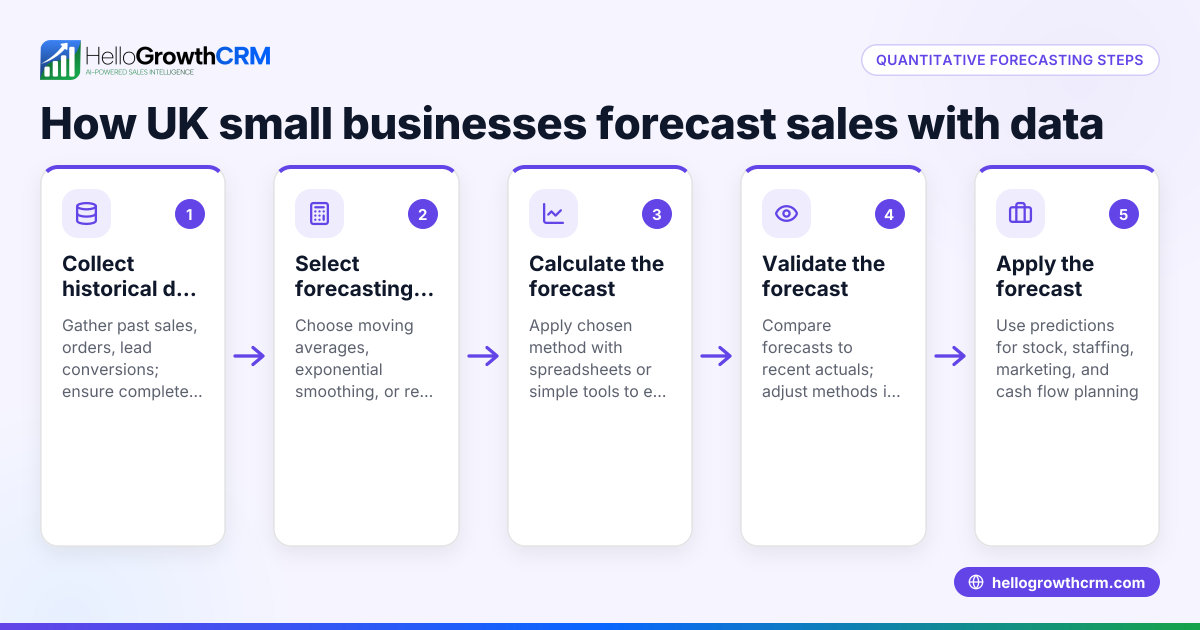
- Gather your historical financial data: Collect your past sales, expenses, and cash flow records for at least the last 6 to 12 months. Check that your data is accurate and complete.
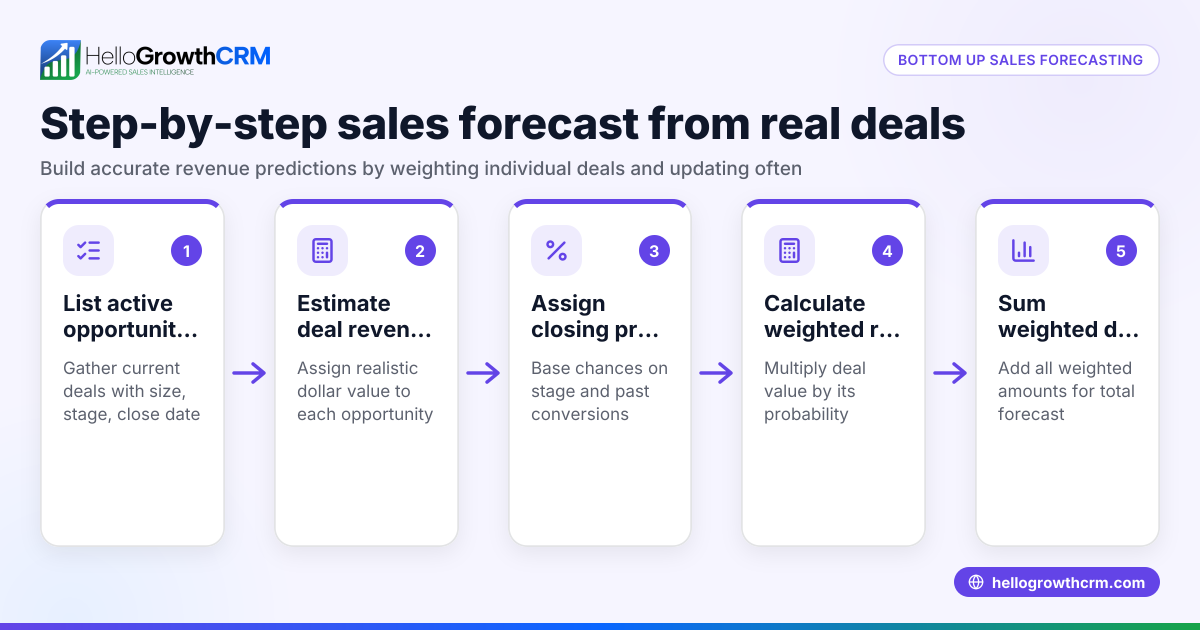
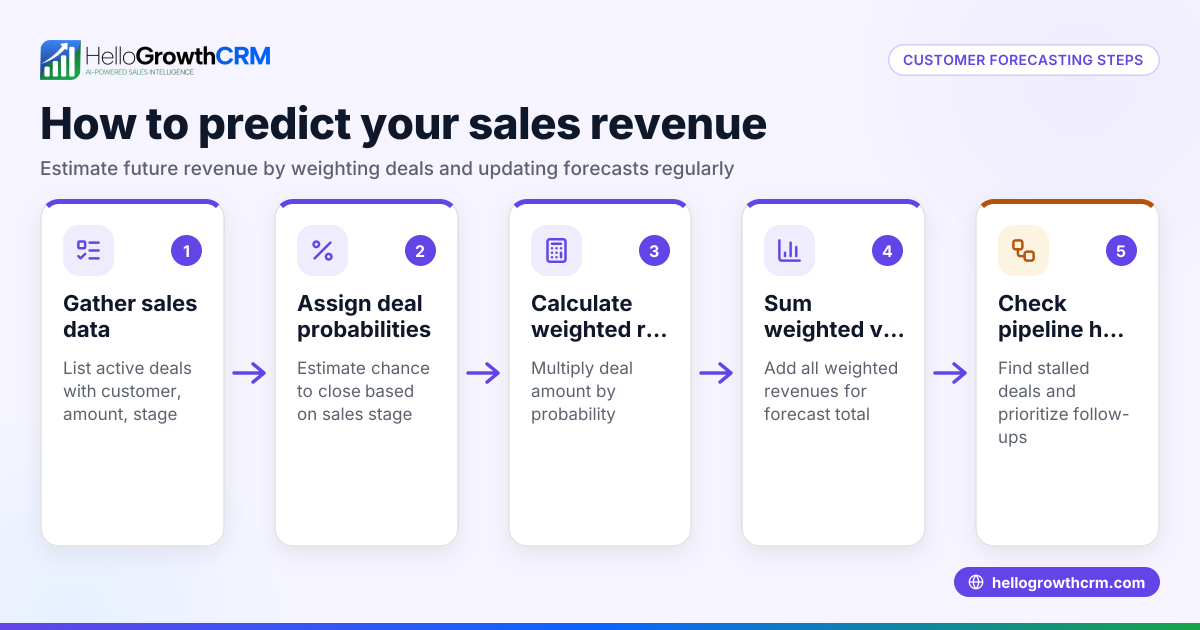
- List your current sales pipeline: Identify all active leads and deals, noting their stage in the sales process and expected closing dates.
- Estimate revenue for each deal: Assign a realistic value to each potential sale based on past conversion rates and deal size.
- Forecast expenses: List all fixed and variable costs expected over the forecast period, including salaries, rent, supplies, and marketing.
- Calculate net cash flow: Subtract your forecasted expenses from your forecasted revenues for each month to see when you might have surpluses or shortfalls.
- Review and adjust regularly: Update your forecast monthly or quarterly with actual results and new pipeline data to keep it accurate.
- Use tools to assist: Consider software that can integrate your sales pipeline and financial data to automate forecasting and highlight where deals stall or revenue risks exist. For example, HelloGrowthCRM offers pipeline forecasting with AI insights to help you see which deals are stalling without building complex spreadsheets.
Example (fictional figures)
Solar Shine, a Brisbane-based solar panel installer, wants to forecast revenue and expenses for the next quarter starting 01/07/2026.
- Historical monthly sales average A$150,000.
- Current pipeline includes 3 deals: Deal A (A$80,000, 50% chance, closing 15/07/2026), Deal B (A$40,000, 70% chance, closing 30/08/2026), Deal C (A$30,000, 30% chance, closing 15/09/2026).
- Fixed monthly expenses: A$60,000.
- Variable monthly expenses: A$20,000.
Forecasted revenue:
Deal A: A$80,000 × 50% = A$40,000 Deal B: A$40,000 × 70% = A$28,000 Deal C: A$30,000 × 30% = A$9,000 Total forecasted revenue for quarter = A$40,000 + A$28,000 + A$9,000 = A$77,000
Solar Shine also has steady repeat sales from existing customers that are not in the pipeline, averaging A$150,000/month. Over the quarter:
A$150,000 × 3 = A$450,000
Combined forecast = repeat sales + weighted new pipeline:
A$450,000 + A$77,000 = A$527,000
Total expenses for 3 months:
(A$60,000 + A$20,000) × 3 = A$240,000
Net cash flow forecast:
A$527,000 - A$240,000 = A$287,000
Solar Shine can expect a positive cash flow of A$287,000 for the quarter, but should monitor pipeline stages closely for any stalls.
Common mistakes
- Ignoring pipeline stages: Not factoring in where deals are in the sales process leads to overestimating revenue. Prevent this by regularly reviewing deal stages and updating forecasts accordingly.
- Using outdated data: Relying on old sales or expense figures makes forecasts inaccurate. Update your data monthly.
- Not forecasting expenses accurately: Underestimating costs can cause cash flow problems. List all fixed and variable expenses.
- Failing to adjust forecasts: Business conditions change, so forecasts should be dynamic. Review and revise regularly.
- Doing it all manually: Using disconnected tools like spreadsheets increases errors and wastes time. Using a CRM with forecasting features like HelloGrowthCRM can help automate and improve accuracy.
Doing this in HelloGrowthCRM
HelloGrowthCRM offers pipeline forecast and AI insights that project expected close amounts based on your current pipeline stage, sales velocity, and historical conversion patterns. This lets you quickly see which deals are stalling without building spreadsheets. The AI-generated analysis helps you understand pipeline health and revenue signals, improving your financial forecasting accuracy. Learn more about pipeline forecasting.
Frequently asked questions
What is the difference between financial forecasting and budgeting? Budgeting sets spending limits based on goals, while forecasting predicts actual future financial results using data. Forecasting informs budgeting by showing expected revenue and expenses.
How often should I update my financial forecast? Monthly updates are ideal to reflect actual sales and expenses and adjust for changes in your sales pipeline or market conditions.
Can financial forecasting help me get a business loan? Yes, lenders often require forecasts to assess your ability to repay. Accurate forecasting shows you understand your cash flow and risks.
What if my forecast is wrong? Forecasts are estimates, not guarantees. Regularly revising your forecast and learning from differences helps improve accuracy over time.
How can I improve my sales pipeline for better forecasting? Use a CRM to track leads and deals systematically, follow up promptly, and analyse pipeline data for bottlenecks. HelloGrowthCRM’s AI CRM features assist with this.
Key takeaways
- Financial forecasting estimates your business’s future revenue and expenses to guide decisions.
- Use historical data and current sales pipeline details to create your forecast.
- Regular updates and realistic assumptions improve forecast accuracy.
- Avoid common errors like ignoring pipeline stages or outdated data.
- Tools like HelloGrowthCRM provide AI-driven pipeline forecasts to save time and reduce errors.
Start your financial forecasting journey today and take control of your business’s future cash flow and growth. To try a CRM that helps with pipeline forecasting and AI insights, start on the Free Forever plan (200 leads, no credit card).
Ready to put this into practice?
Set up your pipeline, WhatsApp follow-ups, and AI lead scoring in minutes — free, no credit card.
Try HelloGrowthCRM freeGet CRM tips in your inbox
Join thousands of sales professionals who get weekly insights on CRM strategy, AI automation, and pipeline optimization.

The HelloGrowthCRM team publishes guides on CRM strategy, AI sales tools, and revenue operations for small business sales teams.