HelloGrowthCRM software
Built for real small-business sales teams
HelloGrowthCRM helps reps qualify faster, follow up on time, and close more deals—with practical automation in one place.
- AI lead scoring and pipeline visibility
- Built-in dialer, WhatsApp, and email automation
- Sales forecasting and RevOps-ready reporting
Business invoices are documents that detail what a business sells, the amount due, payment terms, and contact information. For US small businesses, invoices serve as formal requests for payment and records for accounting. Understanding how to create clear, professional invoices helps ensure timely payments and keeps your finances organized.
Why this comes up / what goes wrong
Many small-business owners struggle with invoicing because they use inconsistent formats or miss key details. This can lead to delayed payments, confusion with customers, or errors in bookkeeping. For example, a local landscaping company might send invoices by email or text without a clear breakdown of charges, causing customers to question amounts or payment deadlines. Clear invoice examples help business owners see exactly what to include so their invoices are easy to understand and legally sound.
Step-by-step
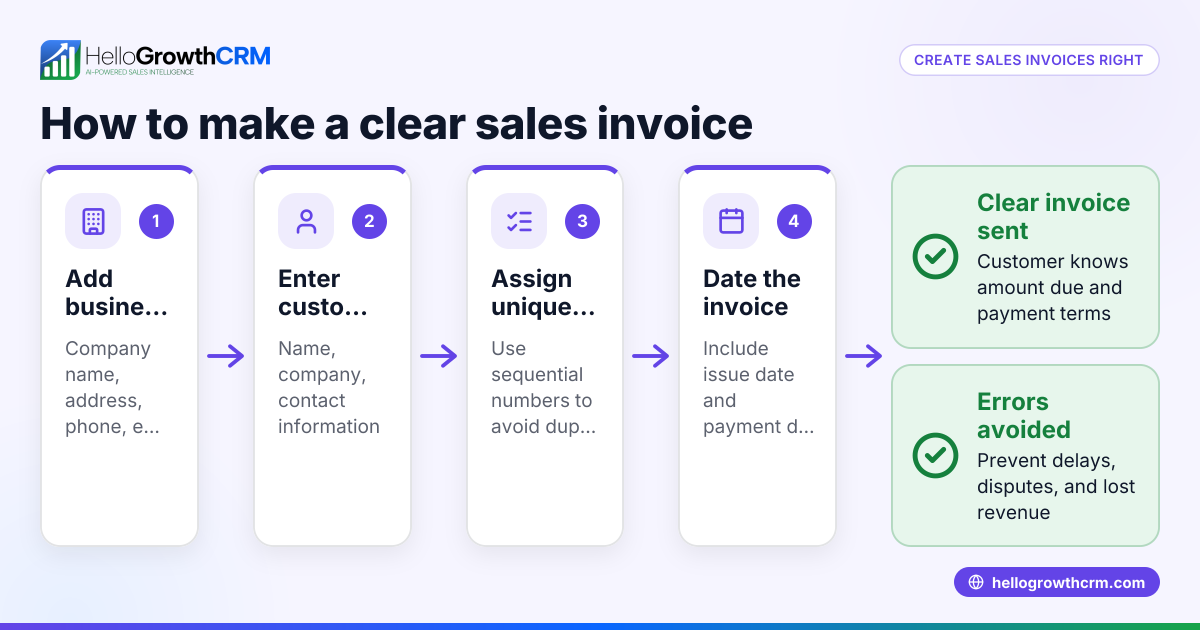
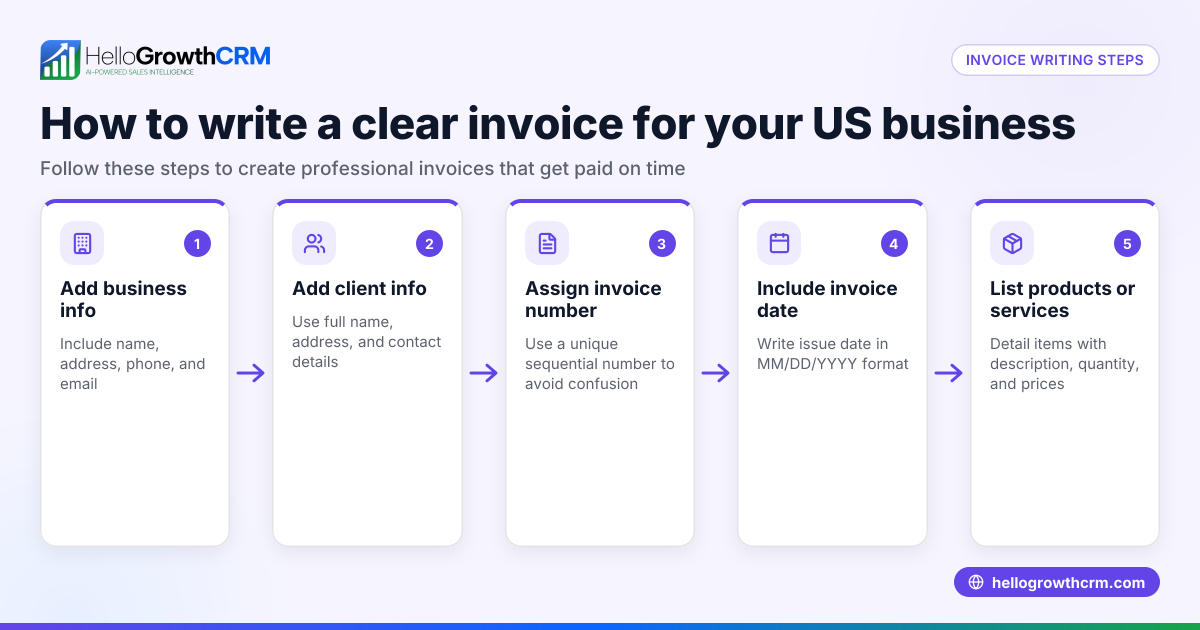
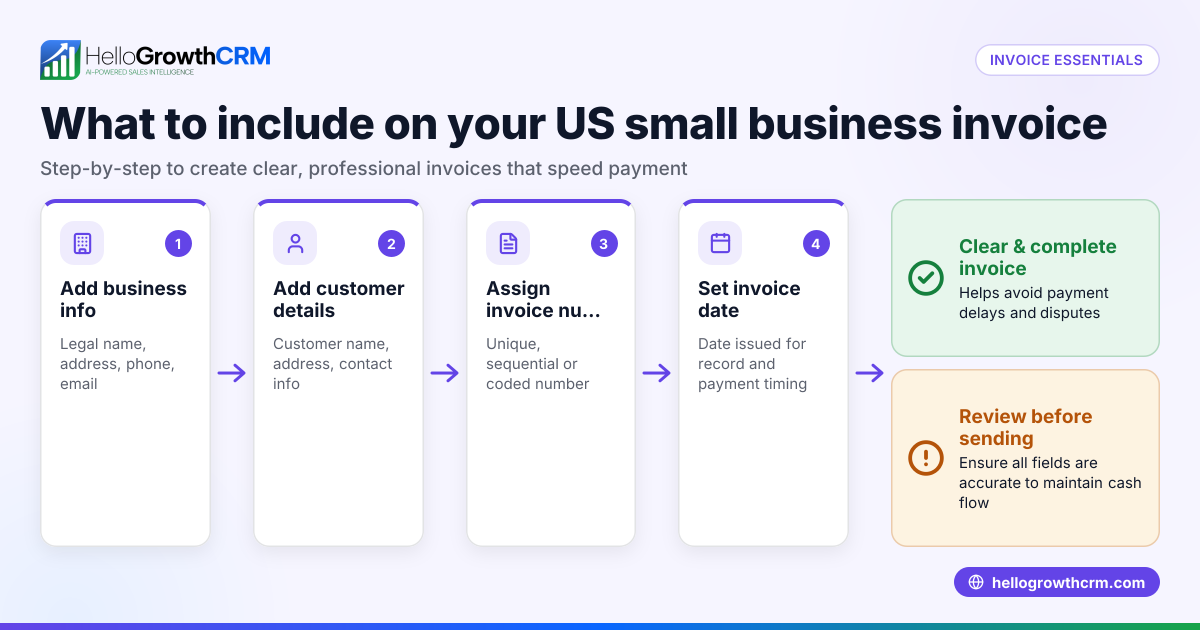
- Include Your Business Information: Add your business name, address, phone number, and email at the top. This identifies who the invoice is from.
- Add Customer Details: Include the customer’s name and contact information to specify who should pay.
- Assign an Invoice Number: Use a unique, sequential number for tracking and reference.
- Date the Invoice: Write the invoice date and specify payment due date.
- List Products or Services Sold: Describe each item or service with quantity, unit price, and total price.
- Calculate Subtotal: Add all line item totals.
- Add Taxes or Fees: If applicable, include sales tax or other charges clearly.
- Calculate Total Amount Due: Sum subtotal plus taxes and fees.
- Specify Payment Terms: State how and when payment should be made (e.g., net 30 days, accepted payment methods).
- Include Payment Instructions: Provide details for sending payment, such as bank info or online payment links.
- Add Notes or Terms: Optional section for additional info like late fees or thank-you notes.
Check that all numbers add up correctly and that contact details are accurate before sending.
Example (fictional figures)
A two-location dental practice in Columbus, Ohio, sends an invoice for a dental cleaning service.
- Invoice number: 2025-0456
- Invoice date: 07/15/2025
- Due date: 08/14/2025
- Customer: Jane Doe, 123 Maple St, Columbus, OH
| Description | Quantity | Unit Price | Total |
|---|---|---|---|
| Dental Cleaning | 1 | $150 | $150 |
| Fluoride Treatment | 1 | $40 | $40 |
Subtotal = $150 + $40 = $190 Sales tax (assumed 7%) = $190 × 7% = $13.30 Total amount due = $190 + $13.30 = $203.30
Payment terms: Net 30 days. Payment accepted by check or credit card.
Common mistakes
- Missing or unclear invoice number: Prevent by assigning sequential invoice numbers.
- Omitting payment due date: Always specify when payment is expected.
- Not listing itemized charges: Avoid confusion by detailing each product or service.
- Incorrect tax calculation: Double-check tax rates and calculations.
- Lacking payment instructions: Make it easy for customers to pay by providing clear methods.
- Sending invoices without follow-up: Use reminders or CRM tools to track unpaid invoices.
Using a CRM with invoicing capabilities can help avoid these mistakes by keeping all invoice data organized. Learn more about invoicing with the built-in CRM dialer and WhatsApp and SMS CRM.
Doing this in HelloGrowthCRM
HelloGrowthCRM includes a built-in quoting and proposal tool that lets you build, send, and track commercial documents including invoices directly from a deal record. You can see the status of your quotations and invoices—sent, viewed, or accepted—on the same screen as your follow-up tasks. This helps your sales team manage customer communication and payments efficiently.
Frequently asked questions
What details must be on a business invoice? A business invoice should include your business and customer contact info, a unique invoice number, invoice and due dates, itemized list of products or services with prices, subtotal, taxes, total amount due, payment terms, and payment instructions.
How do I format an invoice for a small business? Use a clear, professional layout with your logo and contact details at the top, followed by customer info and invoice details. Use tables or lists to organize charges and totals. Make sure all calculations are correct and terms are easy to find.
Can I send invoices by email or text message? Yes, many small businesses send invoices electronically via email or text. Ensure the invoice is in a widely accessible format like PDF and that it includes all required details. Using a CRM like HelloGrowthCRM can help automate sending and tracking.
How do I handle taxes on invoices? Include applicable sales tax rates based on your location and product or service type. Calculate tax on the subtotal and add it to the total amount due. Check local tax regulations to ensure compliance.
What if a customer doesn’t pay by the due date? Follow up with polite reminders and check if there are issues with the invoice or payment method. Consider adding late fees in your payment terms. Using CRM tools can help you schedule follow-ups and track payment status.
Learn more about invoicing and sales follow-up with HelloGrowthCRM’s WhatsApp and SMS CRM.
Key takeaways
- Include all essential details: your info, customer info, invoice number, dates, itemized charges, taxes, totals, and payment terms.
- Use clear, professional formatting to avoid confusion and delays.
- Double-check calculations and tax rates to prevent errors.
- Send invoices promptly and follow up on unpaid invoices.
- HelloGrowthCRM’s quoting and proposal tool helps you build, send, and track invoices alongside sales follow-up.
Start managing your invoices efficiently today. Start on the Free Forever plan (200 leads, no credit card) and see how HelloGrowthCRM can help your small business.
Ready to put this into practice?
Set up your pipeline, WhatsApp follow-ups, and AI lead scoring in minutes — free, no credit card.
Try HelloGrowthCRM freeGet CRM tips in your inbox
Join thousands of sales professionals who get weekly insights on CRM strategy, AI automation, and pipeline optimization.

The HelloGrowthCRM team publishes guides on CRM strategy, AI sales tools, and revenue operations for small business sales teams.