HelloGrowthCRM software
Built for real small-business sales teams
HelloGrowthCRM helps reps qualify faster, follow up on time, and close more deals—with practical automation in one place.
- AI lead scoring and pipeline visibility
- Built-in dialer, WhatsApp, and email automation
- Sales forecasting and RevOps-ready reporting
To write an invoice, you must clearly state who is billing whom, what is being billed, when payment is due, and how to pay. Include your business name and contact details, your client’s name and contact, a unique invoice number, the invoice date, a detailed list of products or services with individual prices, any taxes or discounts, the total amount due, payment terms, and payment methods.
Why this comes up / what goes wrong
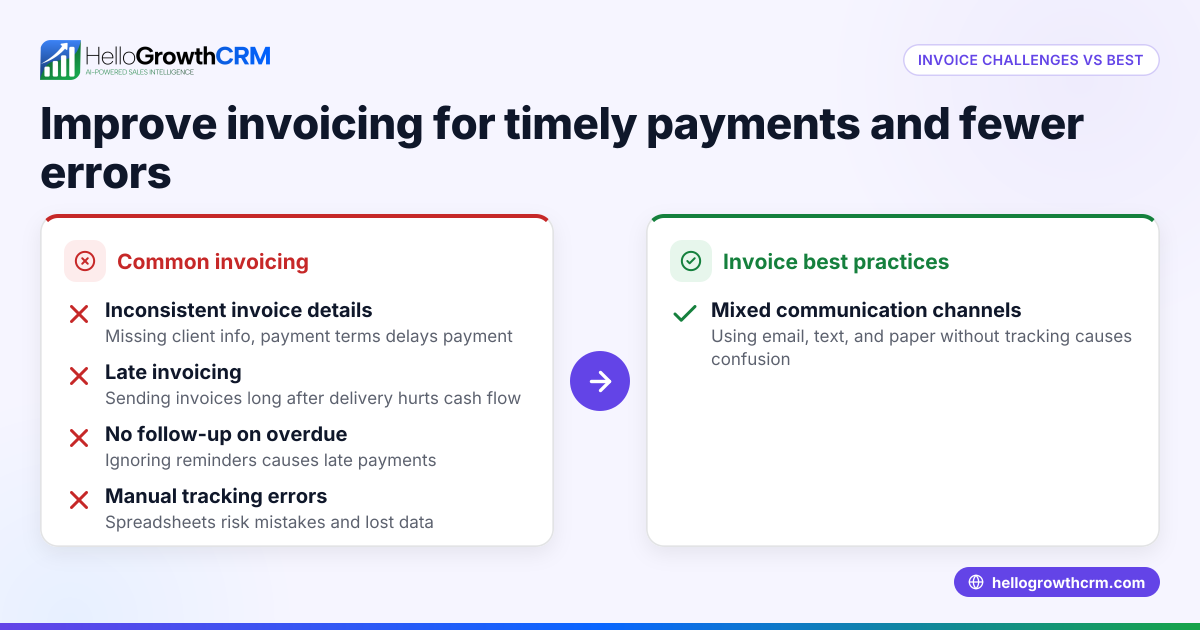
Small business owners often need to create invoices to get paid for their products or services. Without a clear invoice, clients may delay payment or dispute charges. Many business owners struggle with what information to include or how to format an invoice professionally. Writing invoices manually can lead to missing details, calculation errors, or inconsistent formats, which slow down cash flow and complicate bookkeeping. Some also find it difficult to track which invoices have been paid or need follow-up.
Step-by-step
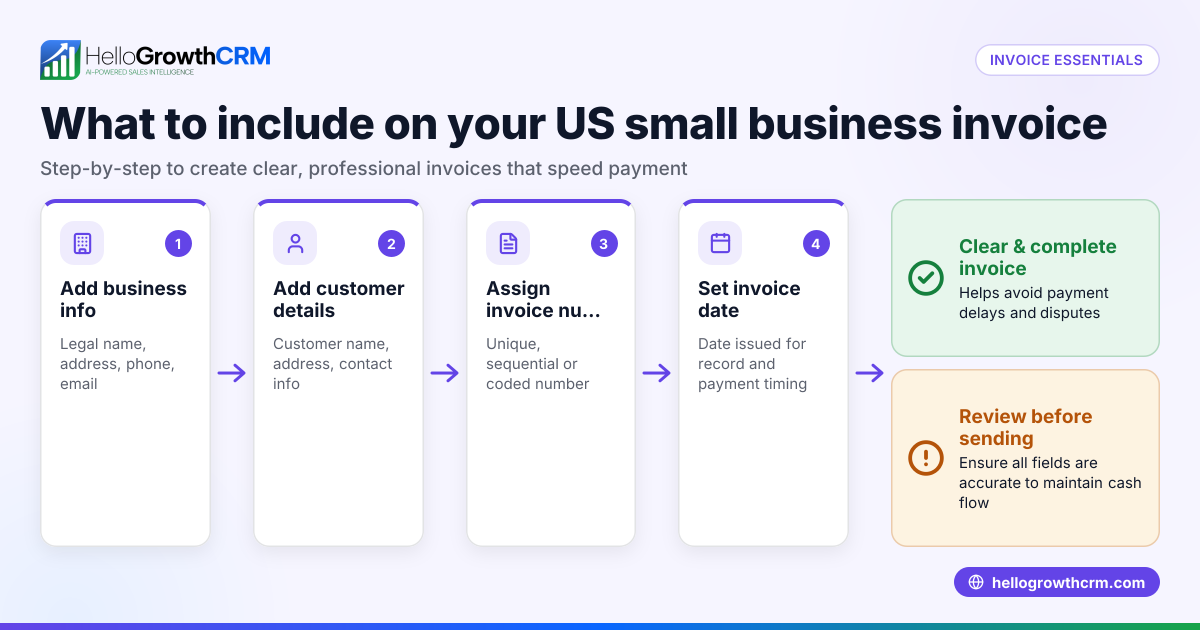
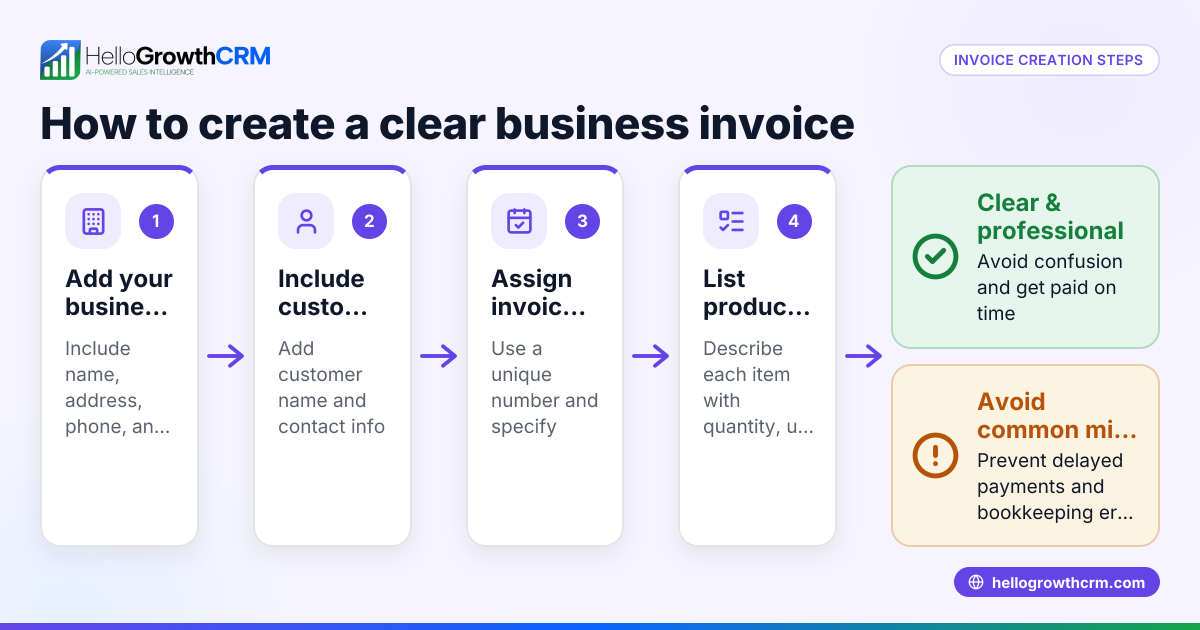
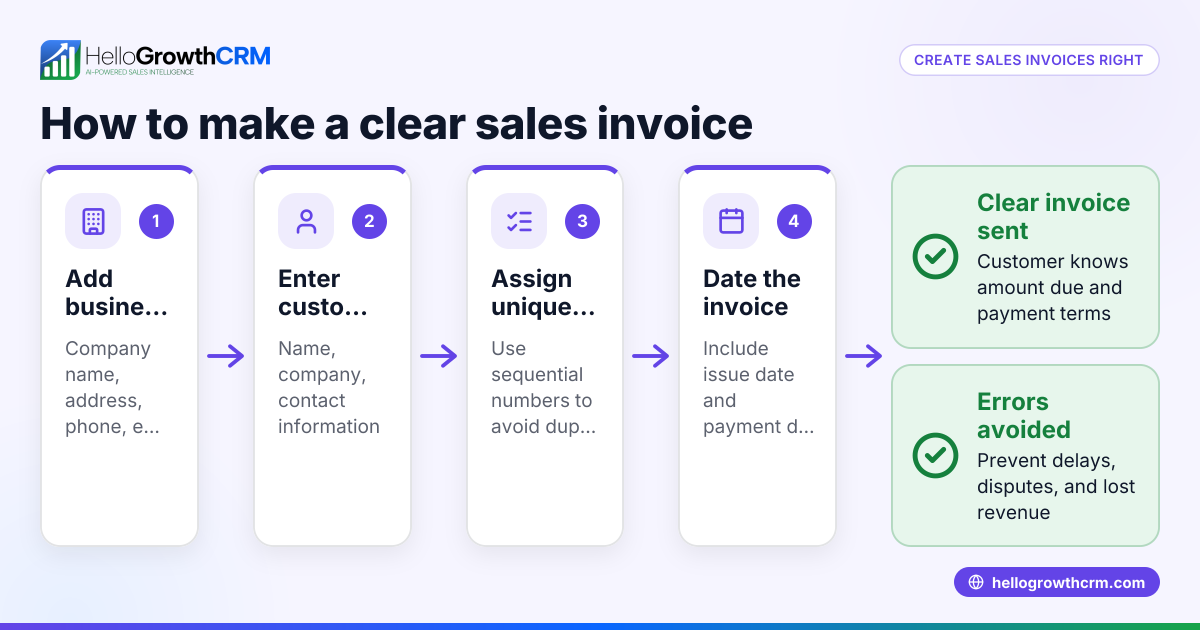
- Add your business information: Include your business name, address, phone number, and email at the top. Check that these details are current and correct.
- Add client information: Write your client’s full name or company name, plus their address and contact details.
- Assign a unique invoice number: Use a sequential number or code to identify this invoice. Confirm it hasn’t been used before to avoid confusion.
- Include the invoice date: Write the date you are issuing the invoice in MM/DD/YYYY format.
- List products or services provided: For each item, include a clear description, quantity, unit price, and total price for that line. Verify accuracy.
- Calculate subtotal: Add the total prices of all items to get the subtotal.
- Add taxes or discounts if applicable: Calculate and list any sales tax or discounts separately. Check local tax rules or consult an expert if unsure.
- Calculate total amount due: Add subtotal plus taxes minus discounts.
- Specify payment terms: State payment due date or terms (e.g., "Net 30 days", "Due on receipt"). Be clear about when payment is expected.
- Provide payment instructions: Include how the client can pay (e.g., check, bank transfer, online payment link). Make this easy to follow.
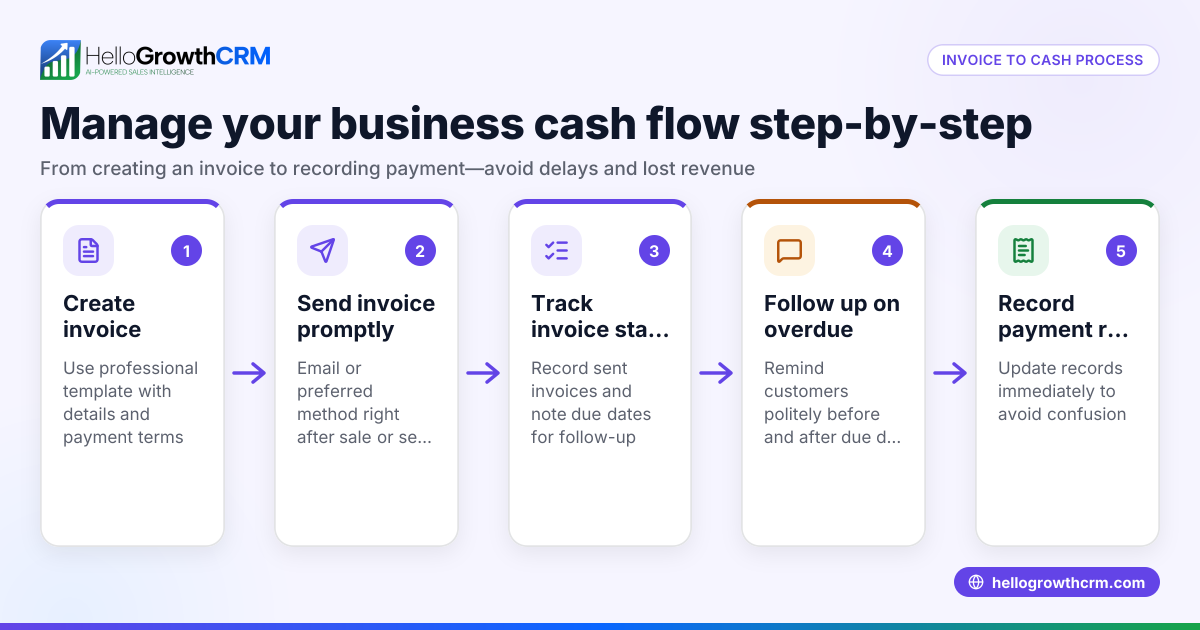
- Review the invoice: Double-check all details, client info, and calculations before sending.
- Send the invoice promptly: Deliver the invoice by email or mail soon after the service or product delivery.
Example (fictional figures)
A plumbing company in Austin, Texas, issues an invoice on 07/15/2026 for a repair job.
- Business info: "Austin Plumbing Co., 123 Water St, Austin, TX, (512) 555-1234, info@austinplumbing.com"
- Client info: "Sarah Johnson, 456 Oak Ave, Austin, TX"
- Invoice number: 2026-007
- Invoice date: 07/15/2026
- Items:
- Leak repair: 3 hours × $75 = $225
- Materials: 1 set × $50 = $50
- Subtotal = $225 + $50 = $275
- Sales tax (assumed 8.25%) = $275 × 8.25% = $22.69
- Total due = $275 + $22.69 = $297.69
- Payment terms: Due within 15 days (08/01/2026)
- Payment instructions: Pay by check to Austin Plumbing Co. or via bank transfer.
Common mistakes
- Missing invoice number: Prevent by keeping a sequential log of invoices and verifying each number before sending.
- Incorrect or missing client details: Always confirm client name and address before sending to avoid delays.
- Calculation errors: Use a calculator or spreadsheet to double-check totals and taxes.
- Unclear payment terms: Clearly state the due date and accepted payment methods to avoid confusion.
- Not including taxes when required: Know your local tax rules or consult an expert.
- Sending invoices late: Send invoices promptly after delivery of product or service to improve cash flow.
- Failing to track invoice status: Without tracking, you may miss unpaid invoices. Using a CRM that supports invoice tracking helps manage this.
Doing this in HelloGrowthCRM
HelloGrowthCRM lets you create and send quotes, proposals, and invoices directly from a deal record. You can track invoice status (sent, viewed, accepted) and see payments received alongside follow-up tasks on the same screen. This helps keep your sales process organized and reduces follow-up delays. Learn more about HelloGrowthCRM’s quoting and invoicing features at built-in CRM dialer.
Frequently asked questions
What information must be on a US invoice? A US invoice should include your business and client contact details, a unique invoice number, invoice date, description of goods or services, prices, taxes if applicable, total amount, payment terms, and instructions.
How do I number invoices? Use a unique, sequential numbering system for your invoices, such as 2026-001, 2026-002, etc. This helps you and your client track payments and maintain organized records.
Can I send invoices by email? Yes, sending invoices by email is common and efficient. Make sure your invoice is a clear PDF or image and that you keep a copy for your records. Systems that support digital invoice sending and tracking, like HelloGrowthCRM, help manage communications easily. See more about WhatsApp and SMS CRM.
What payment terms should I use? Common terms include "Due on receipt," "Net 15," or "Net 30," meaning payment is due immediately, within 15 days, or within 30 days respectively. Choose terms that suit your cash flow needs.
How can I avoid late payments? Clearly state payment terms on the invoice, send invoices promptly, and follow up with reminders. Using a CRM that automates follow-up tasks and tracks payment status can help.
How do I keep track of invoices and payments? Manual tracking can be error-prone. Using a CRM with invoice and payment tracking features lets you see invoice statuses and payments received all in one place, linked to deals and follow-up tasks.
Key takeaways
- Include all essential details: business and client info, invoice number, date, items, totals, and payment terms.
- Use a clear, consistent format to avoid confusion and delays.
- Double-check calculations and client details before sending.
- Send invoices promptly and specify clear payment instructions.
- Track invoice status and payments to manage cash flow effectively.
- Use tools like HelloGrowthCRM to streamline invoicing, communication, and follow-up.
Start writing your invoices today with confidence. To manage invoicing and sales follow-up in one place, start on the Free Forever plan (200 leads, no credit card).
Ready to put this into practice?
Set up your pipeline, WhatsApp follow-ups, and AI lead scoring in minutes — free, no credit card.
Try HelloGrowthCRM freeGet CRM tips in your inbox
Join thousands of sales professionals who get weekly insights on CRM strategy, AI automation, and pipeline optimization.

The HelloGrowthCRM team publishes guides on CRM strategy, AI sales tools, and revenue operations for small business sales teams.