HelloGrowthCRM software
Built for real small-business sales teams
HelloGrowthCRM helps reps qualify faster, follow up on time, and close more deals—with practical automation in one place.
- AI lead scoring and pipeline visibility
- Built-in dialer, WhatsApp, and email automation
- Sales forecasting and RevOps-ready reporting
Business text refers to all written messages a business sends or receives during its operations. This includes emails, SMS, WhatsApp chats, and other text formats used for sales, customer support, marketing, or internal communication. For small and mid-sized UK businesses, managing business text effectively can help speed up customer follow-up, reduce lost leads, and streamline sales and communication processes.
Why this comes up / what goes wrong
Many UK small businesses use multiple informal channels like WhatsApp, email, and spreadsheets to handle customer conversations and sales leads. This approach often causes slow follow-up, missed opportunities, and confusion over which messages require action. Without a clear system, business text becomes scattered and difficult to track, leading to lost sales and frustrated customers. Teams may also waste time switching between apps or searching for information in different places.
Step-by-step
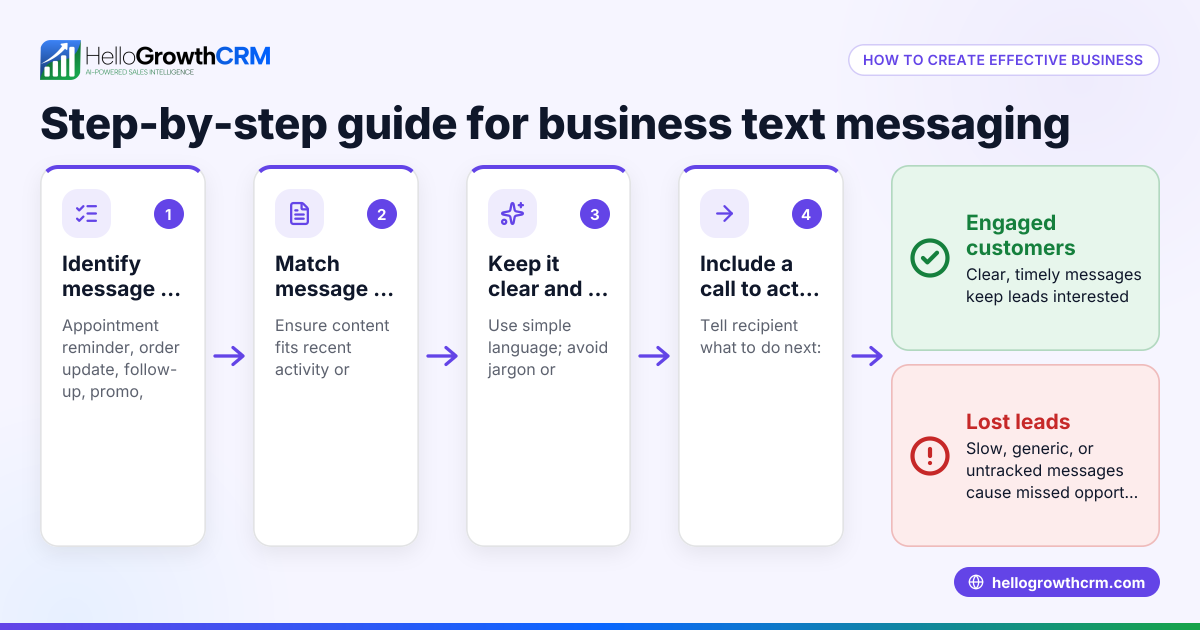
- Identify all channels where business text happens. List every platform your business uses to communicate with customers or suppliers, such as WhatsApp, SMS, email, or other messaging apps. Check if any informal notes or spreadsheets also contain messages.
- Centralise your messages. Collect all business text into one place or system to avoid missing or duplicating messages. This could be a CRM or a dedicated communication platform.
- Categorise messages by purpose. Label texts according to their role: sales leads, customer support, internal notes, or marketing. This helps prioritise responses and assign tasks.
- Set response time goals. Decide how quickly your team should reply to each type of business text to avoid delays and lost leads.
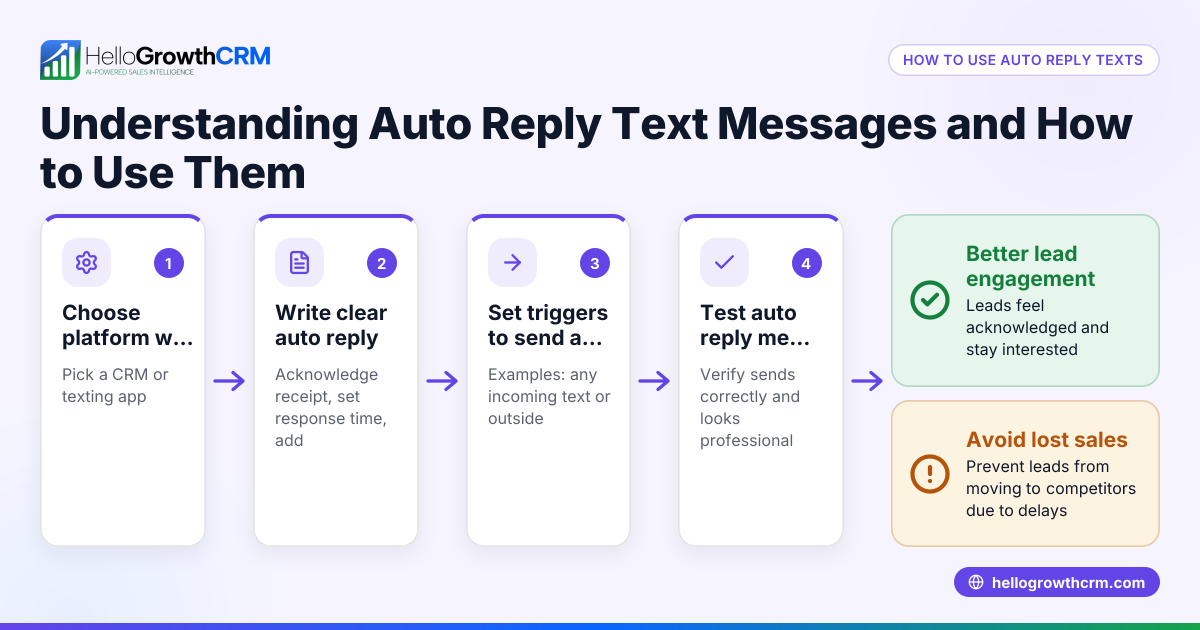
- Use templates for common replies. Prepare standard text responses for frequent questions or requests to save time and maintain consistency.
- Track follow-up tasks. Assign actions from business texts to team members with clear deadlines and reminders.
- Review and improve regularly. Analyse how business text is handled and adjust your process to close leads faster and improve customer satisfaction.
Example (fictional figures)
An accountancy practice in Birmingham receives leads via WhatsApp and email. On 15/03/2026, they had 50 new enquiries:
- 30 came through WhatsApp
- 20 arrived by email
They set a goal to respond within 2 hours for WhatsApp messages and within 4 hours for emails.
Using a spreadsheet, they track responses:
Responded WhatsApp leads within 2 hours: 25 Responded email leads within 4 hours: 15
Calculate the response rate:
Total responded = 25 + 15 = 40 Total enquiries = 50 Response rate = 40 / 50 = 0.8 or 80%
They estimate that each lead is worth £1,200 in potential fees.
Potential revenue from responded leads = 40 × £1,200 = £48,000
They aim to improve this to 90% response rate by automating reminders and centralising messages.
Target responded leads = 50 × 90% = 45
Potential revenue at 90% response = 45 × £1,200 = £54,000
Improvement in potential revenue = £54,000 - £48,000 = £6,000
By improving response times and managing business text better, they could increase revenue by £6,000.
Common mistakes
- Scattered communication: Using multiple apps without central tracking causes missed messages. Prevent this by consolidating texts into one system.
- Slow follow-up: Delayed replies lose leads. Prevent by setting clear response time targets and monitoring performance.
- No categorisation: Treating all messages the same wastes time. Prevent by labelling messages by purpose to prioritise.
- Ignoring templates: Writing every reply from scratch slows responses. Prevent by creating standard replies for common questions.
- No task tracking: Follow-ups get forgotten. Prevent by assigning and monitoring tasks with deadlines.
- Lack of review: Not analysing communication leads to repeated errors. Prevent by regularly reviewing and refining your process.
Frequently asked questions
What is business text in simple terms? Business text is any written message a business sends or receives, such as emails, SMS, or WhatsApp chats, used to communicate with customers, suppliers, or colleagues.
Why is managing business text important for small businesses? Managing business text well helps avoid missed leads, speeds up responses, and keeps sales organised, which supports business growth.
Can WhatsApp be used for business text? Yes, WhatsApp is widely used by UK small businesses for customer communication. However, messages should be tracked and managed carefully to prevent loss or confusion. Consider solutions like WhatsApp and SMS CRM that centralise messages.
How do I keep track of business text across channels? Centralising messages using CRM tools designed for WhatsApp and SMS CRM or creating a system to collect and categorise all texts helps keep track of all communication. A built-in CRM dialer can also help manage calls alongside texts.
What is the best way to respond quickly to business texts? Set clear response time goals, use message templates, and assign follow-up tasks to team members to ensure timely replies. Regular reviews help maintain and improve these standards.
Key takeaways
- Business text includes emails, SMS, WhatsApp, and other written messages used in business communication.
- Small businesses often struggle with scattered messages and slow follow-up, leading to lost leads.
- Centralising messages, categorising them, and setting response targets improves efficiency and customer satisfaction.
- Using templates and task tracking prevents delays and missed follow-ups.
- Regularly reviewing your business text process helps identify issues and improve over time.
For UK businesses looking to streamline WhatsApp and SMS communication, consider exploring WhatsApp and SMS CRM and the built-in CRM dialer to keep all messages and calls organised. Learn more about how HelloGrowthCRM supports UK teams at HelloGrowthCRM for the United Kingdom.
Ready to improve your business text management? Start on the Free Forever plan (200 leads, no credit card) today and take control of your communication.
Ready to put this into practice?
Set up your pipeline, WhatsApp follow-ups, and AI lead scoring in minutes — free, no credit card.
Try HelloGrowthCRM freeGet CRM tips in your inbox
Join thousands of sales professionals who get weekly insights on CRM strategy, AI automation, and pipeline optimization.

The HelloGrowthCRM team publishes guides on CRM strategy, AI sales tools, and revenue operations for small business sales teams.