HelloGrowthCRM software
Built for real small-business sales teams
HelloGrowthCRM helps reps qualify faster, follow up on time, and close more deals—with practical automation in one place.
- AI lead scoring and pipeline visibility
- Built-in dialer, WhatsApp, and email automation
- Sales forecasting and RevOps-ready reporting
A call tree is a structured method for contacting a group of people by phone, where one person calls a few others, who then call more, creating a branching chain of calls. This system ensures fast, organized communication, especially during emergencies or urgent updates. Small businesses use call trees to notify employees, customers, or partners quickly without overloading a single caller.
Why this comes up / what goes wrong
Small business owners often need to communicate urgent messages—like schedule changes, emergency alerts, or critical updates—to multiple team members or clients. Without a call tree, they might rely on slow, unorganized methods like mass texting or emailing, which can be missed or delayed. A call tree solves this by dividing the calling workload among several people, speeding up the process and reducing missed contacts.
However, setting up a call tree without clear steps can lead to confusion, duplicate calls, or missed people. For example, if no one updates the contact list, some people might not be reached. Or if instructions are unclear, callers may not know what to say or how to proceed if someone doesn’t answer.
Step-by-step
- Identify the group to contact: List everyone who needs to be reached, such as employees, contractors, or key clients. Check that phone numbers are current.
- Assign call leaders: Choose a few responsible people to start the calls. They will each call a subset of the group.
- Create the call tree structure: Organize the contact list into branches. For example, the first caller contacts three people; each of those contacts three more, and so on.
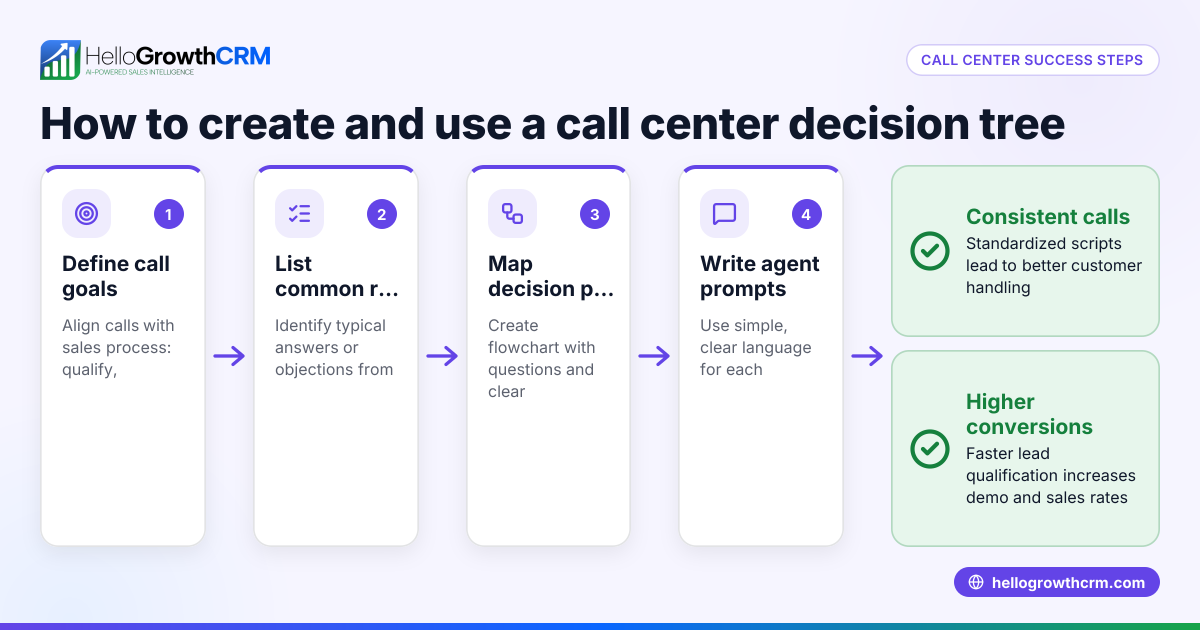
- Write clear instructions: Provide each caller with their list of contacts, what message to deliver, and what to do if a contact doesn’t answer (e.g., leave a voicemail, try again later).
- Test the call tree: Run a practice call to confirm everyone understands their role and that the chain works smoothly.
- Update regularly: Phone numbers and roles change; keep the call tree list current and retest periodically.
Example (fictional figures)
Imagine a plumbing company in Austin, Texas, called "Austin Flow Plumbing" with 15 employees. The owner wants to notify everyone quickly about an unexpected office closure on 09/15/2026.
- Total employees: 15
- Call tree branches: 3
- First caller (owner) calls 3 supervisors
- Each supervisor calls 4 or 5 employees
Step 1: Owner calls 3 supervisors Step 2: Each supervisor calls their assigned employees
If each call takes 2 minutes: Owner calls 3 supervisors: 3 calls × 2 minutes = 6 minutes Each supervisor calls 4 employees: 4 calls × 2 minutes = 8 minutes All supervisors call simultaneously, so total second-level calls take 8 minutes
Total time to reach all employees = 6 minutes + 8 minutes = 14 minutes
This is faster than one person calling all 15 employees individually, which would take 15 × 2 = 30 minutes.
If the owner values their time at $50 per hour and each supervisor at $30 per hour, the cost of calls can be estimated: Owner’s call time cost = (6 minutes ÷ 60) × $50 = $5 Supervisors’ call time cost = (8 minutes ÷ 60) × $30 × 3 supervisors = $12 Total call time cost = $5 + $12 = $17
This shows that using a call tree saves both time and money by dividing the workload.
Common mistakes
- Not updating contact info: Prevent by regularly verifying phone numbers and roles to ensure calls reach the right people.
- Unclear instructions: Prevent by providing detailed call scripts and next steps for unanswered calls to avoid confusion.
- Overloading one caller: Prevent by evenly distributing contacts among multiple callers to speed up the process.
- No testing: Prevent by running practice calls to find and fix issues before an actual need arises.
- Ignoring call outcomes: Prevent by logging call results to track who was reached and who needs follow-up.
- Failing to assign backups: Prevent by designating secondary callers in case the primary caller can’t complete their calls.
Doing this in HelloGrowthCRM
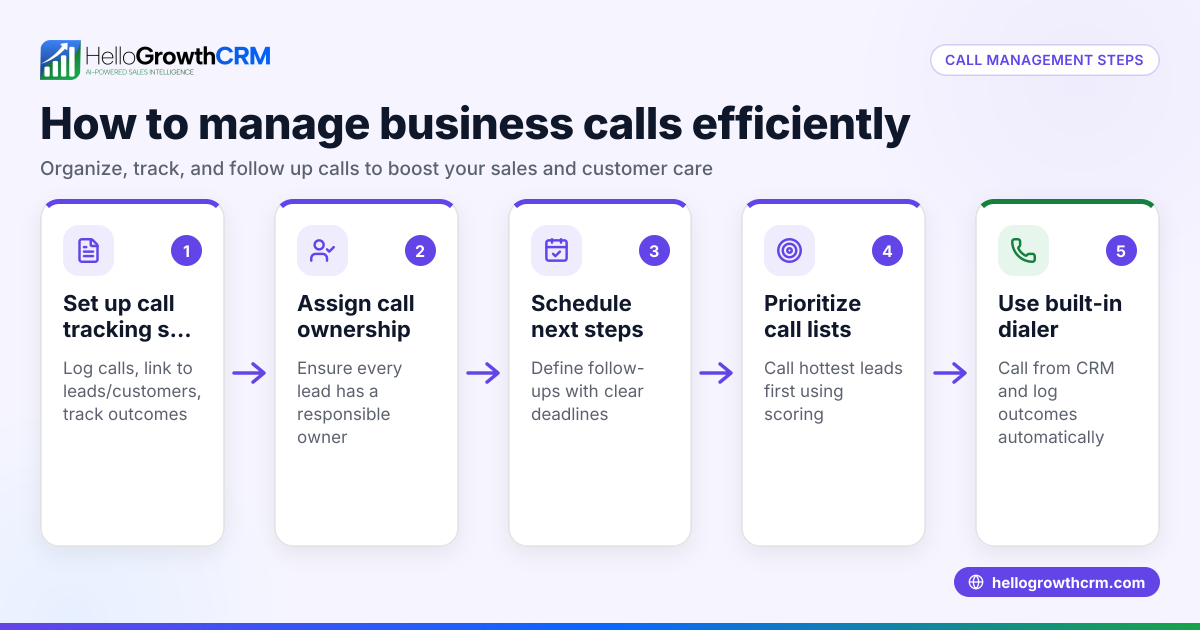
HelloGrowthCRM offers a built-in dialer that lets reps work a call list directly inside the CRM. Each call’s outcome is logged on the lead record, helping you track who has been contacted and the result of each call. This streamlines managing your call tree by keeping your calling process organized and documented. Learn more about the built-in CRM dialer and how HelloGrowthCRM supports WhatsApp and SMS CRM for multi-channel communication.
Frequently asked questions
What is the main advantage of a call tree? A call tree speeds up communication by dividing the calling task among multiple people, ensuring messages reach everyone quickly without overwhelming a single caller.
How often should I update my call tree? Update your call tree whenever there are changes in your team or contact information. Regular reviews every few months help keep it accurate and effective.
Can a call tree be used for sales or marketing calls? While call trees are mainly for urgent or internal communications, they can be adapted for sales follow-ups by organizing calls efficiently, especially with tools like HelloGrowthCRM’s dialer.
What if someone in the call tree doesn’t answer? Establish clear instructions, such as leaving a voicemail or notifying a backup caller, to ensure the message still gets delivered.
Is a call tree better than mass texting or emailing? A call tree provides personal contact and confirmation of receipt, which mass texts or emails may lack, making it more reliable for urgent or critical messages.
Key takeaways
- A call tree is a phone-based chain to quickly reach many people.
- Organize your contact list into branches and assign callers.
- Provide clear instructions and test your call tree.
- Update contacts regularly and log call outcomes.
- Use HelloGrowthCRM’s built-in dialer to manage and track calls efficiently.
Start organizing your call tree and improve your team’s communication today. To try managing your calls with a built-in dialer, start on the Free Forever plan (200 leads, no credit card).
Ready to put this into practice?
Set up your pipeline, WhatsApp follow-ups, and AI lead scoring in minutes — free, no credit card.
Try HelloGrowthCRM freeGet CRM tips in your inbox
Join thousands of sales professionals who get weekly insights on CRM strategy, AI automation, and pipeline optimization.

The HelloGrowthCRM team publishes guides on CRM strategy, AI sales tools, and revenue operations for small business sales teams.