HelloGrowthCRM software
Built for real small-business sales teams
HelloGrowthCRM helps reps qualify faster, follow up on time, and close more deals—with practical automation in one place.
- AI lead scoring and pipeline visibility
- Built-in dialer, WhatsApp, and email automation
- Sales forecasting and RevOps-ready reporting
A cash flow forecast estimates the timing and amounts of cash inflows and outflows for your business over a set period, such as weekly or monthly. It helps you ensure you have enough cash available to pay bills, employees, suppliers, and other expenses on time. By forecasting cash flow, you can spot potential shortfalls early and plan how to manage them.
Why this comes up / what goes wrong
Small business owners in the UK often find themselves surprised by cash shortages because they focus on profit or bank balances alone, without looking ahead. For example, a business might have many sales lined up but face delays in customer payments, causing cash flow gaps. Without a forecast, you may not see when you need to arrange finance or delay expenses, risking overdrafts or missed payments. This situation is common for tradespeople, retailers, or service providers managing multiple clients and payment terms.
Step-by-step
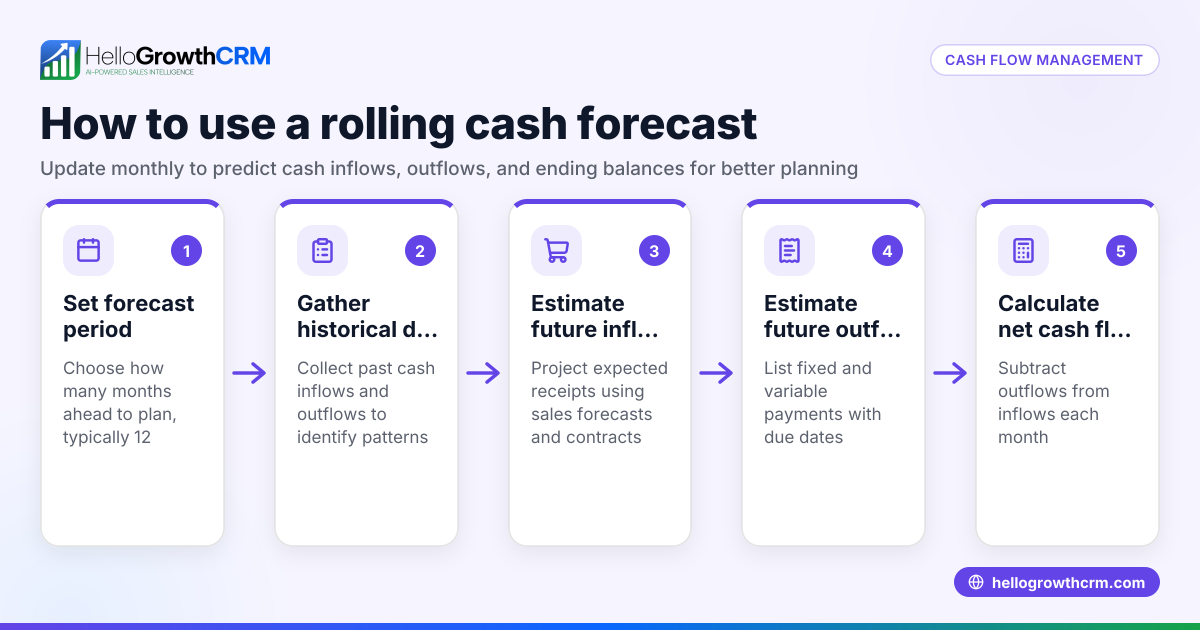
- Choose your forecast period: Decide if you want to forecast weekly (for tight control) or monthly (for longer-term planning). Weekly forecasts give more detail; monthly are simpler.
- Record your opening cash balance: Note the actual cash in your bank account at the start of the forecast period.
- Forecast cash inflows: List expected customer payments, new sales deposits, loans, or other income. Base this on contracts, sales pipeline stages, or past payment patterns. Check payment terms (e.g., 30 days) and seasonality to avoid overestimating.
- Forecast cash outflows: Include all expected payments such as supplier invoices, wages, rent, taxes, loan repayments, and overheads. Verify due dates and amounts carefully.
- Calculate net cash flow: For each period, subtract total outflows from total inflows.
- Update closing cash balance: Add net cash flow to the opening balance to get the closing balance for the period. This closing balance becomes the next period’s opening balance.
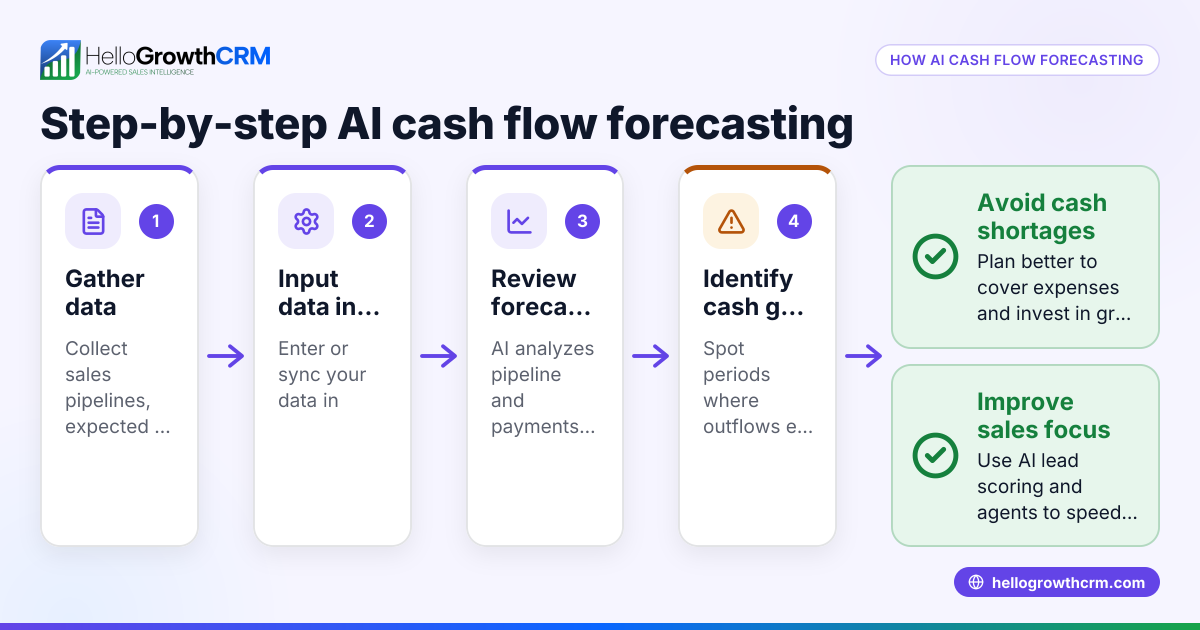
- Review for shortfalls: Identify any periods where the closing balance is negative. Plan how to cover these by speeding up payments, delaying expenses, or arranging finance.
- Update regularly: Refresh your forecast weekly or monthly with actual figures and new information to keep it accurate and useful.
Example (fictional figures)
A Glasgow-based solar panel installer forecasts cash flow for March 2026 starting 01/03/2026.
- Opening cash balance: £15,000
- Expected inflows:
- Customer payments: £40,000
- New sales deposits: £10,000
- Expected outflows:
- Supplier bills: £20,000
- Wages: £15,000
- Rent and utilities: £3,000
- Loan repayment: £5,000
Calculations:
Net cash flow = £40,000 + £10,000 - £20,000 - £15,000 - £3,000 - £5,000 Net cash flow = £50,000 - £43,000 Net cash flow = £7,000
Closing cash balance = Opening cash balance + Net cash flow Closing cash balance = £15,000 + £7,000 Closing cash balance = £22,000
This positive closing balance indicates the business expects to have enough cash after all payments in March.
Common mistakes
- Ignoring timing differences: Assuming all sales convert to cash immediately. Prevent this by factoring in payment terms and typical delays.
- Forgetting irregular expenses: Such as annual insurance or tax bills. Prevent by reviewing your calendar and including these expenses.
- Over-optimistic inflows: Counting sales not yet confirmed or too early in the pipeline. Prevent by basing inflows on firm orders or pipeline stages.
- Not updating regularly: Forecasts become inaccurate if not refreshed. Prevent by scheduling weekly or monthly reviews.
- Mixing profit and cash flow: Confusing profit forecasts with cash flow forecasts. Prevent by tracking only actual cash movements.
Doing this in HelloGrowthCRM
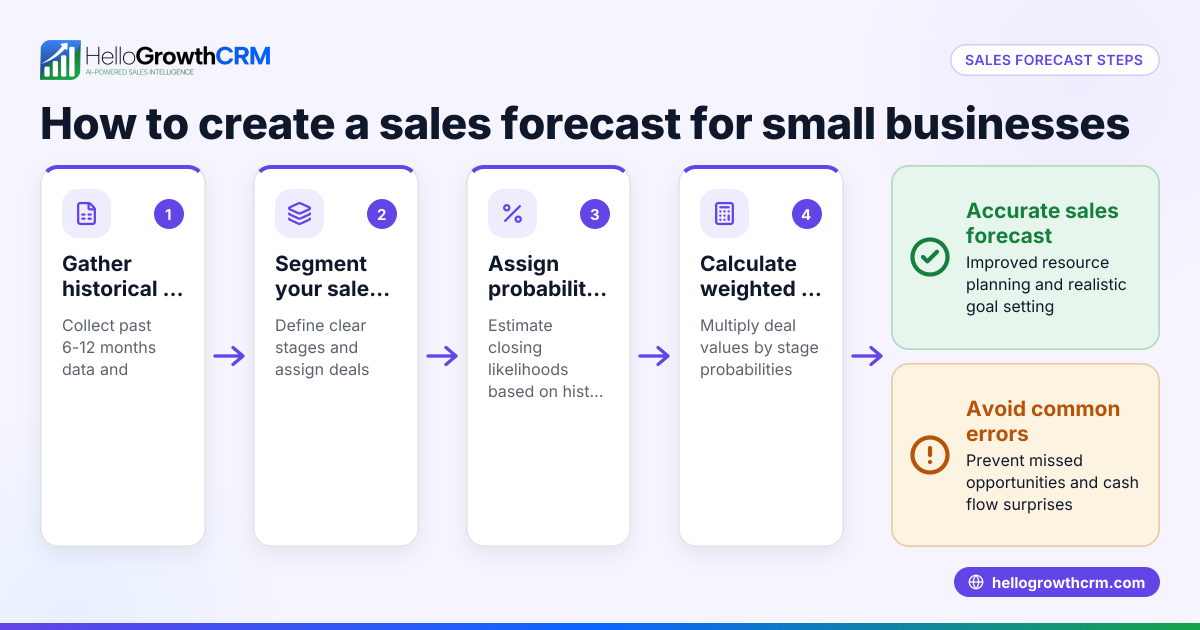
HelloGrowthCRM offers pipeline forecast and AI insights that help you see which stage deals are stalling in without building a spreadsheet. This AI-assisted revenue forecasting projects expected close amounts based on your current pipeline stage, velocity, and historical conversion patterns. It also provides analysis of pipeline health and sales performance, making it easier to predict cash inflows from sales. Learn more about the AI CRM and sales forecasting features. HelloGrowthCRM for the United Kingdom helps small businesses plan revenue and cash flow more confidently.
Frequently asked questions
What is the difference between cash flow forecast and profit forecast? A cash flow forecast shows when cash enters and leaves your business, focusing on liquidity and timing. A profit forecast estimates income minus expenses, showing profitability but not the timing of cash movements.
How often should I update my cash flow forecast? You should update it weekly or monthly to reflect actual payments and new information. Regular updates keep your forecast accurate and help you react to changes promptly.
Can I use sales pipeline data for cash flow forecasting? Yes, sales pipeline data helps estimate future cash inflows. Using tools like HelloGrowthCRM’s pipeline forecast and AI insights improves accuracy by showing deal stages and expected close dates.
What if my forecast shows a negative cash balance? If you forecast a cash shortfall, consider speeding up customer payments, delaying non-essential expenses, or arranging short-term finance to cover the gap.
Is a cash flow forecast necessary for all small businesses? Yes, any business with variable income or expenses benefits from forecasting cash flow to avoid surprises and plan growth effectively.
Key takeaways
- A cash flow forecast predicts your business’s cash inflows and outflows to manage liquidity.
- Prepare forecasts by listing your opening balance, expected receipts, payments, and calculating net cash flow.
- Update forecasts regularly to reflect actual figures and new deals.
- Avoid common mistakes like ignoring timing, missing irregular expenses, or being over-optimistic about inflows.
- Use HelloGrowthCRM’s pipeline forecast and AI insights to improve sales and cash flow predictions.
Start managing your cash flow better today. Start on the Free Forever plan (200 leads, no credit card).
Ready to put this into practice?
Set up your pipeline, WhatsApp follow-ups, and AI lead scoring in minutes — free, no credit card.
Try HelloGrowthCRM freeGet CRM tips in your inbox
Join thousands of sales professionals who get weekly insights on CRM strategy, AI automation, and pipeline optimization.

The HelloGrowthCRM team publishes guides on CRM strategy, AI sales tools, and revenue operations for small business sales teams.