HelloGrowthCRM software
Built for real small-business sales teams
HelloGrowthCRM helps reps qualify faster, follow up on time, and close more deals—with practical automation in one place.
- AI lead scoring and pipeline visibility
- Built-in dialer, WhatsApp, and email automation
- Sales forecasting and RevOps-ready reporting
A chemical manufacturing CRM helps businesses in Singapore organise leads, track sales pipelines, and communicate with customers efficiently, addressing the specific complexities of the chemical industry. This article explains why chemical manufacturers look for specialised CRM solutions, outlines the key steps to choose one, gives a detailed example using local figures, highlights common mistakes to avoid, and describes how HelloGrowthCRM can support your team.
Why this comes up / what goes wrong
Chemical manufacturers in Singapore often deal with complex product lines, regulatory requirements, and long sales cycles. Many still rely on WhatsApp, email, and spreadsheets to manage leads and customer interactions. This leads to slow follow-up, lost leads, and disorganised sales pipelines. Accountants and business owners find it challenging to get clear sales forecasts or track customer communication history. They need a CRM that fits their industry workflow, integrates with communication channels like WhatsApp, and helps their sales team stay on top of follow-ups.
Step-by-step
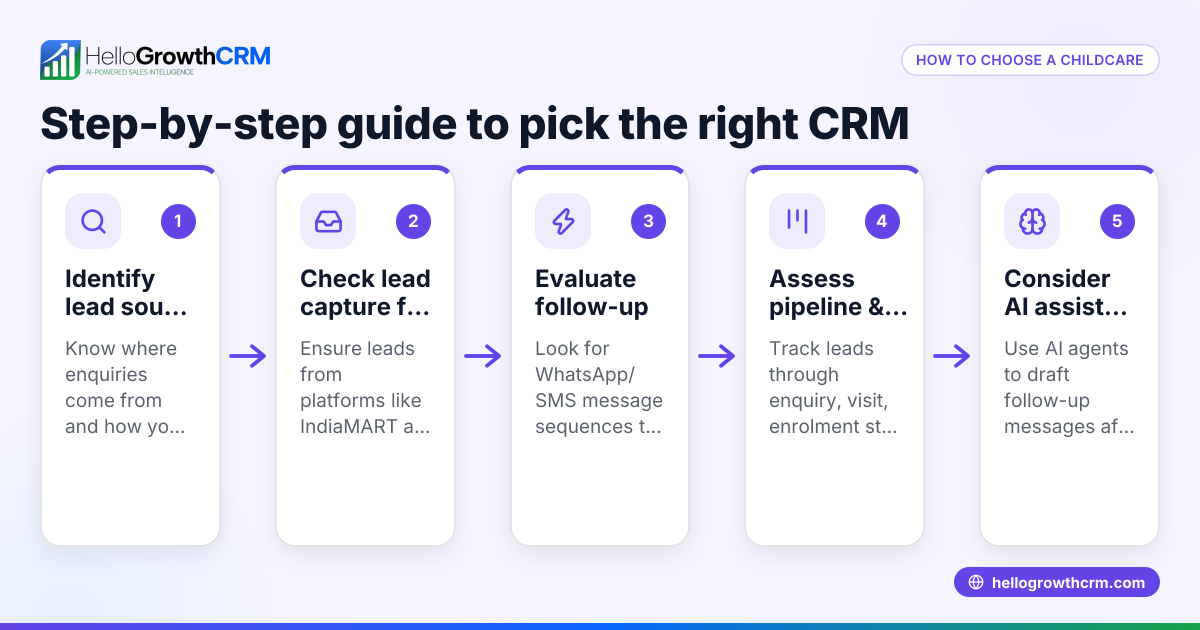
- Identify Your Industry Needs: Check if the CRM supports chemical manufacturing workflows, such as managing multiple product variants, batch tracking, or compliance notes.
- Evaluate Communication Integration: Confirm the CRM can log WhatsApp and SMS conversations on lead records for easy reference and follow-up.
- Assess Lead and Pipeline Management: Look for Kanban-style pipelines and task boards that help your team visualise and progress leads.
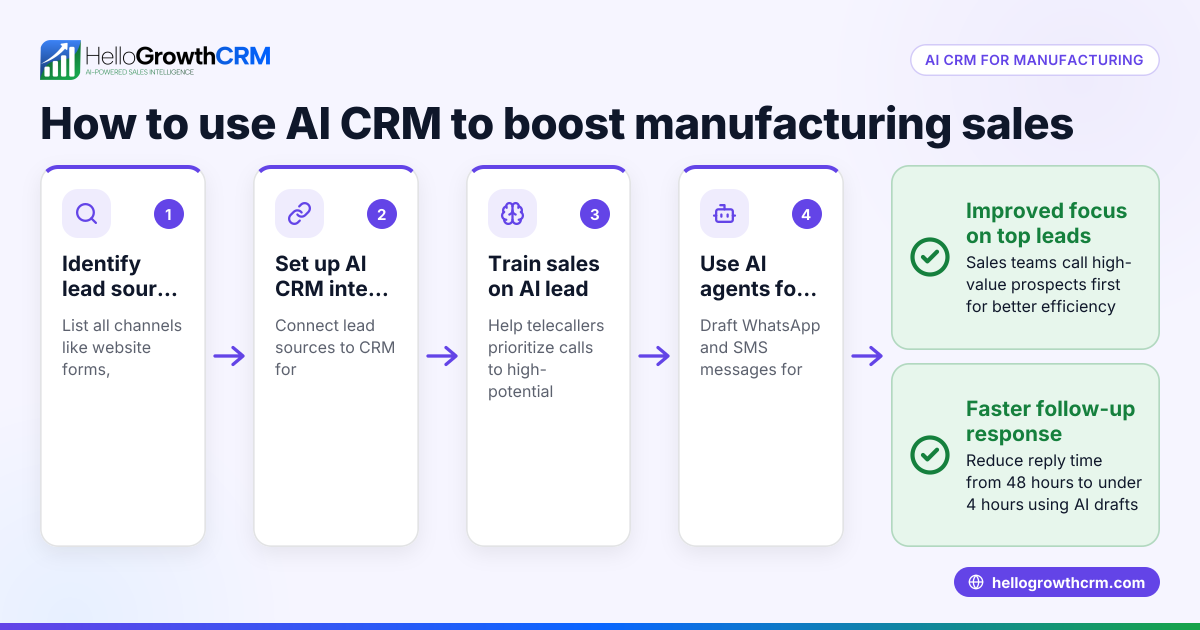
- Check for Automation Features: See if the CRM offers AI agents or automation to draft follow-up messages and update records, reducing manual work.
- Consider Team Size and Growth Plans: Choose a CRM that can start free or low cost for small teams but scale with added calling or messaging automation.
- Request a Demo or Trial: Test the CRM with your actual sales process and chemical product data to ensure fit.
- Review Reporting and Forecasting: Ensure the CRM provides sales forecasting and reporting to help your accounting and management teams.
- Confirm Local Support and Compliance: Verify the CRM provider understands Singapore’s business environment and data regulations.
For more industry-specific insights, see our Manufacturing page.
Example (fictional figures)
A chemical manufacturing business based in Jurong has 3 sales staff managing leads from trade shows and online enquiries. They want to track leads, follow-ups, and forecast sales for Q3 2024.
- Total leads received in July: 120
- Conversion rate expected: 25%
- Average sale value: S$15,000
Calculations:
Leads converted = 120 × 25% = 30
Expected revenue = 30 × S$15,000 = S$450,000
If the CRM helps improve follow-up speed by 20%, the conversion might rise to 30%:
Leads converted improved = 120 × 30% = 36
Expected revenue improved = 36 × S$15,000 = S$540,000
This shows how tracking and follow-up automation can impact revenue.
Common mistakes
- Ignoring Industry Specifics: Using generic CRMs without chemical manufacturing features can cause workflow mismatches. Prevent by checking industry fit.
- Overlooking Communication Logging: Not logging WhatsApp and SMS interactions leads to lost context. Use CRMs that record these messages on lead records.
- Skipping Automation: Manually drafting follow-ups wastes time and risks delays. Choose CRMs with AI agents or automation drafts.
- Not Testing with Real Data: Selecting a CRM without trialing it on actual leads causes surprises. Always test before committing.
- Neglecting Reporting Needs: Without sales forecasting, planning is guesswork. Ensure the CRM offers clear reporting.
- Underestimating Team Growth: Picking a CRM that doesn’t scale with your team can cause painful migrations. Start with scalable options.
For more on communication features, see WhatsApp and SMS CRM.
Doing this in HelloGrowthCRM
HelloGrowthCRM supports chemical manufacturers with WhatsApp and SMS integration, logging all conversations on the lead record so your team never loses context. After calls, AI agents draft follow-up messages for your sales reps to review and send, saving time and ensuring timely communication. For small teams, the Free Forever plan lets two users manage their sales pipeline at no cost until advanced calling or WhatsApp automation is needed. Learn more on how HelloGrowthCRM fits Singapore businesses on our HelloGrowthCRM for Singapore page.
Frequently asked questions
What features should a chemical manufacturing CRM have? A chemical manufacturing CRM should handle complex product lines, batch tracking, regulatory notes, and integrate communication channels like WhatsApp and SMS. It should also support pipeline visualisation and sales forecasting.
Can I use WhatsApp for sales communication within a CRM? Yes, some CRMs log WhatsApp conversations directly on lead records, enabling seamless follow-ups. Look for a WhatsApp-native CRM to keep all messages organised.
How does AI help in a CRM for chemical manufacturing? AI agents can draft follow-up messages and update lead records automatically, reducing manual workload and speeding up customer engagement.
Is there a free CRM option suitable for small chemical manufacturers? Yes, some CRMs offer Free Forever plans for small teams to manage leads and pipelines without cost, ideal before needing calling or automation features.
How do I ensure the CRM complies with Singapore regulations? Choose a CRM provider familiar with Singapore’s business environment and data privacy laws. Verify their policies before adoption.
For more on industry solutions, visit our Manufacturing page.
Key takeaways
- Choose a CRM tailored to chemical manufacturing workflows and communication channels.
- Ensure WhatsApp and SMS conversations are logged on lead records for clear follow-up.
- Use AI agents to draft follow-ups and reduce manual sales tasks.
- Start with a scalable CRM that offers a free plan for small teams.
- Test the CRM with your real sales data before committing.
- Check for sales forecasting and reporting features to support accounting and planning.
Start managing your chemical manufacturing sales pipeline more efficiently with HelloGrowthCRM. You can Start on the Free Forever plan (200 leads, no credit card) today.
Ready to put this into practice?
Set up your pipeline, WhatsApp follow-ups, and AI lead scoring in minutes — free, no credit card.
Try HelloGrowthCRM freeGet CRM tips in your inbox
Join thousands of sales professionals who get weekly insights on CRM strategy, AI automation, and pipeline optimization.

The HelloGrowthCRM team publishes guides on CRM strategy, AI sales tools, and revenue operations for small business sales teams.