HelloGrowthCRM software
Built for real small-business sales teams
HelloGrowthCRM helps reps qualify faster, follow up on time, and close more deals—with practical automation in one place.
- AI lead scoring and pipeline visibility
- Built-in dialer, WhatsApp, and email automation
- Sales forecasting and RevOps-ready reporting
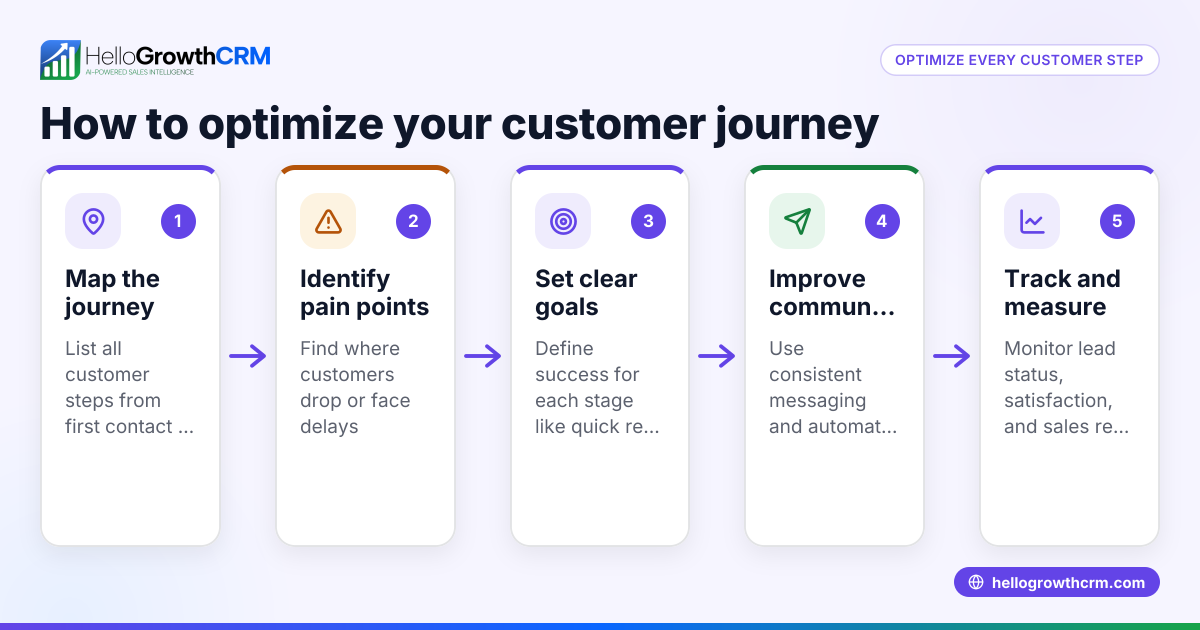
A connected customer journey means that every interaction a customer has with your business—from lead capture through sales and post-sale service—is linked and consistent across channels and teams. This article explains why this matters for small businesses, outlines practical steps to create a connected journey, and shows how HelloGrowthCRM features help maintain this connection after the sale.
Why this comes up / what goes wrong
Small-business owners often struggle with disconnected customer journeys because their sales, marketing, and service activities happen in separate systems or spreadsheets. For example, leads may come in through web forms, text messages, or emails but get lost or delayed in follow-up. After a sale, service requests might be handled in a different tool or not linked back to the original customer record. This fragmentation causes slow responses, missed opportunities, and unhappy customers.
When customer information, communication history, and service tickets are scattered, your team can’t see the full picture. This leads to repeated questions, inconsistent messaging, and lost referrals. A connected customer journey solves these problems by linking all customer touchpoints, making it easier for your team to act quickly and build trust.
Step-by-step
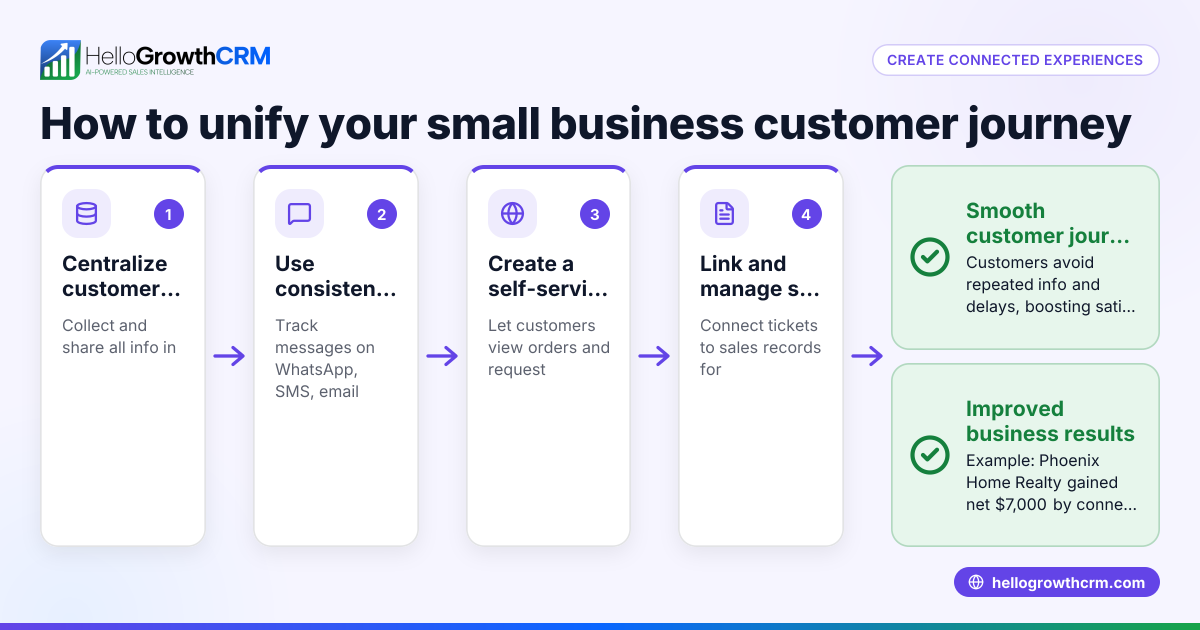
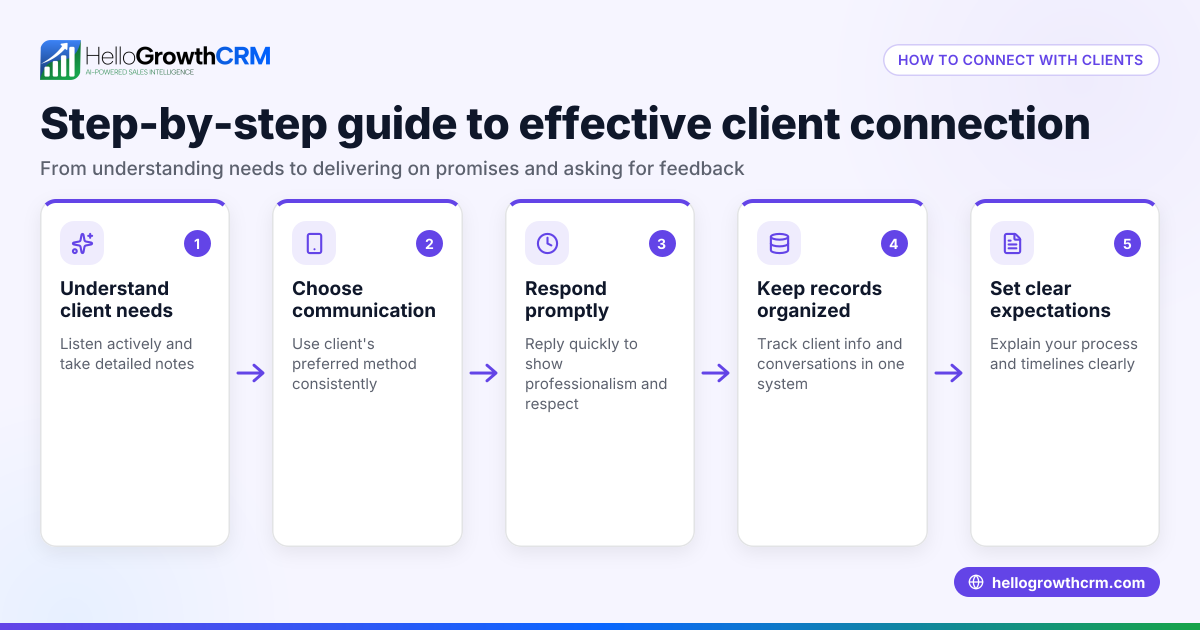
- Map your customer touchpoints: List all the ways customers interact with your business—website forms, WhatsApp or SMS messages, phone calls, emails, and in-person visits. Check that each touchpoint captures customer data accurately.
- Centralize customer data: Use a system where all customer information and interactions are stored in one place. Verify that sales, marketing, and support teams can access and update this data.
- Link sales and service records: Ensure that after a sale, any service requests or tickets stay connected to the original deal and customer record. Check that your CRM supports this linkage.
- Automate follow-ups and sequences: Set up automated messages via email, WhatsApp, or SMS to keep customers engaged and informed at each stage. Confirm that the automation tracks responses and adjusts accordingly.
- Track referrals and customer feedback: Implement a referral program and collect feedback through your CRM to measure customer satisfaction and encourage word-of-mouth growth.
- Monitor customer health and pipeline: Use customer health scores and sales pipeline boards to spot at-risk customers and prioritize follow-up. Review these metrics regularly.
Example (fictional figures)
Phoenix Residential Realty, a small real-estate team in Phoenix, Arizona, wants to connect their customer journey.
- They capture leads from their website form and WhatsApp inquiries.
- Each lead is entered into their CRM with contact details and inquiry notes.
- After closing a deal worth $350,000 on 03/15/2026, the service team creates a ticket for post-sale support linked to the same customer record.
- They automate WhatsApp messages for key milestones like contract signing and closing reminders.
- The referral program tracks when a past client refers a new lead.
Calculations:
Referral bonus per successful referral = $500 Number of referrals in Q1 = 4 Total referral cost = $500 × 4 = $2,000
Total sales closed in Q1 = $1,050,000 Referral cost as % of sales = ($2,000 ÷ $1,050,000) × 100 = 0.19%
This example shows how linking sales, service, and referrals on one platform helps Phoenix Residential Realty track costs and improve customer experience.
Common mistakes
- Using separate tools for sales and service: Prevent this by choosing a CRM that keeps service requests on the same customer record as the deal.
- Failing to capture all customer touchpoints: Regularly audit where customers contact you and ensure these channels feed into your CRM.
- Ignoring automation opportunities: Set up sequences in WhatsApp and SMS to avoid slow follow-up.
- Not tracking referrals or customer health: Use referral tracking and customer health scores to measure and improve loyalty. See customer health score.
- Relying on spreadsheets and email chains: Move to a CRM that integrates WhatsApp and SMS for better communication and record-keeping. Learn about WhatsApp and SMS CRM.
Doing this in HelloGrowthCRM
HelloGrowthCRM supports a connected customer journey with a branded self-service customer portal, referral program tracking, support tickets, and a knowledge base. After the sale, service requests stay on the same customer record as the deal, making it easier for your team to manage ongoing customer needs without switching systems. This keeps your customer data unified and accessible. Learn more about HelloGrowthCRM for the United States at HelloGrowthCRM for the United States.
Frequently asked questions
What is a connected customer journey? A connected customer journey links every interaction a customer has with your business across marketing, sales, and service. This means data and communication flow seamlessly from lead capture to post-sale support, improving response times and customer satisfaction.
Why is a connected customer journey important for small businesses? Small businesses often lose leads or provide inconsistent service because their customer data is fragmented. A connected journey helps keep all teams informed and customers engaged, leading to higher sales and retention.
How can I start connecting my customer journey? Begin by mapping your customer touchpoints and centralizing data in one CRM. Then automate follow-ups and link service tickets to sales records. Regularly monitor customer health and referrals to improve your process.
Can WhatsApp and SMS be part of a connected customer journey? Yes, integrating WhatsApp and SMS communication into your CRM ensures timely, personalized contact with leads and customers. This reduces delays and keeps conversations organized.
How does referral tracking fit into the customer journey? Referral tracking rewards customers who bring in new leads and helps you measure the effectiveness of word-of-mouth marketing. Including it in your CRM keeps all customer interactions connected.
Key takeaways
- A connected customer journey links all customer interactions from lead to post-sale service.
- Centralizing data and communication improves follow-up speed and customer satisfaction.
- Automate WhatsApp, SMS, and email sequences to keep customers engaged.
- Keep service requests on the same customer record as sales deals to avoid data fragmentation.
- Use referral tracking and customer health scores to grow and retain your customer base.
Start your connected customer journey today with HelloGrowthCRM. Start on the Free Forever plan (200 leads, no credit card).
Ready to put this into practice?
Set up your pipeline, WhatsApp follow-ups, and AI lead scoring in minutes — free, no credit card.
Try HelloGrowthCRM freeGet CRM tips in your inbox
Join thousands of sales professionals who get weekly insights on CRM strategy, AI automation, and pipeline optimization.

The HelloGrowthCRM team publishes guides on CRM strategy, AI sales tools, and revenue operations for small business sales teams.