HelloGrowthCRM software
Built for real small-business sales teams
HelloGrowthCRM helps reps qualify faster, follow up on time, and close more deals—with practical automation in one place.
- AI lead scoring and pipeline visibility
- Built-in dialer, WhatsApp, and email automation
- Sales forecasting and RevOps-ready reporting
Contact center trends describe the ongoing changes in how businesses manage customer communications. These include adopting new technologies and strategies to improve response speed, use multiple communication channels, and increase customer satisfaction. For small businesses in the US, keeping up with these trends is essential to avoid losing leads and missing sales. This article explains why contact center trends matter, offers step-by-step guidance for small businesses, shares a realistic example, points out common mistakes, and answers frequently asked questions.
Why this comes up / what goes wrong
Many small business owners handle sales and customer service themselves or with small teams. They often rely on separate tools like text messages, email, and spreadsheets to track leads and customer contacts. This scattered approach causes slow response times, lost leads, and missed sales opportunities. Customers expect quick and personalized replies through their preferred channels, including WhatsApp and SMS. Without modern contact center methods, small businesses risk falling behind competitors and losing revenue. Understanding contact center trends helps owners streamline communication, improve follow-up speed, and boost sales without costly investments.
Step-by-step
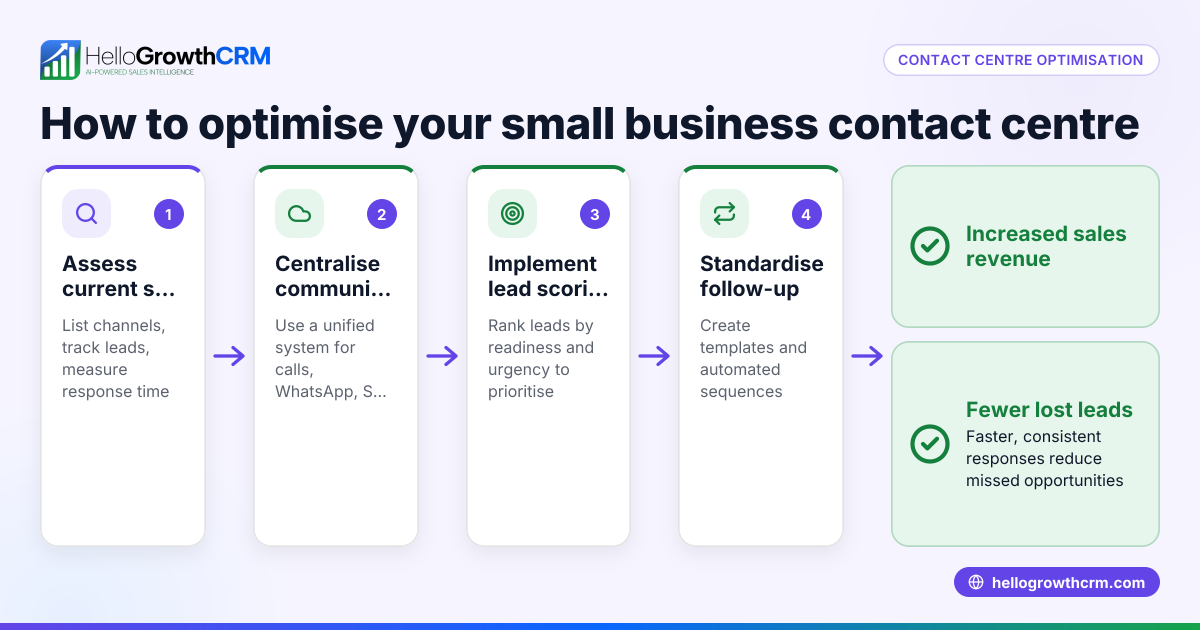
- Assess Your Current Communication Channels: Identify all channels customers use to reach you—phone, email, text, WhatsApp. Measure how fast you respond on each and ask customers for feedback. Note any delays or gaps.
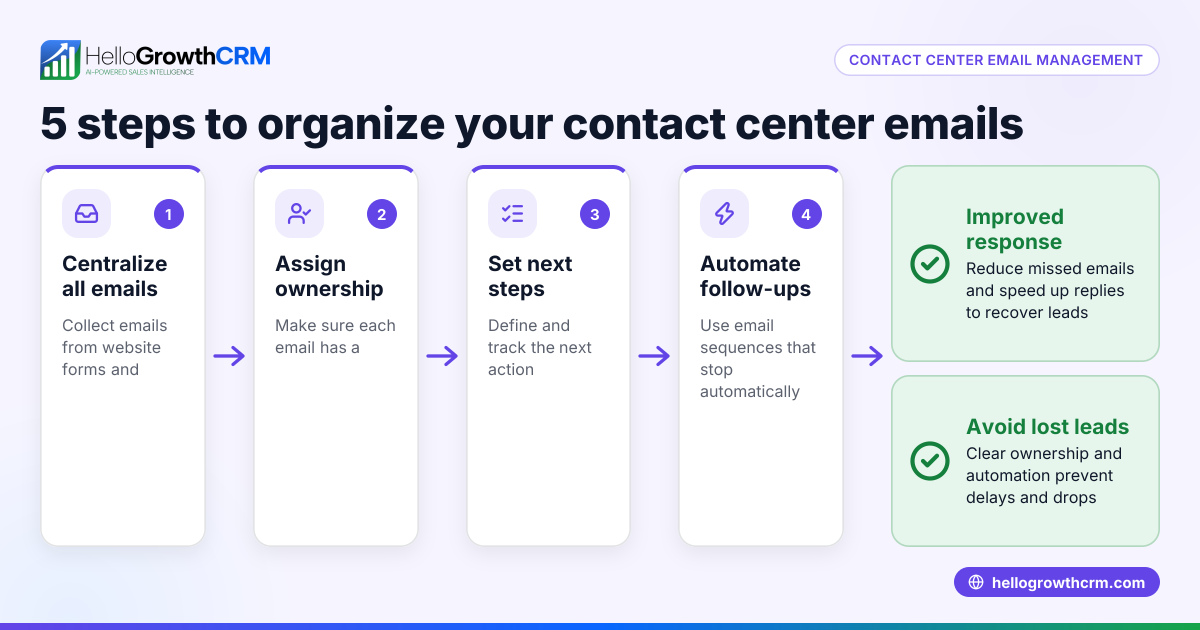
- Implement Multi-Channel Communication: Use tools that combine email, SMS, and WhatsApp messaging in one place. This lets you meet customers on their preferred platform. Check if your current system supports integration or if you need new software.
- Capture Leads Automatically: Set up web forms or social media lead capture to collect customer info directly into your system. This prevents leads from getting lost in emails or texts.
- Organize Leads with Pipeline and Task Boards: Use visual boards to track leads by status such as new, contacted, interested, won, or lost. This helps prioritize follow-up and keeps your team aligned.
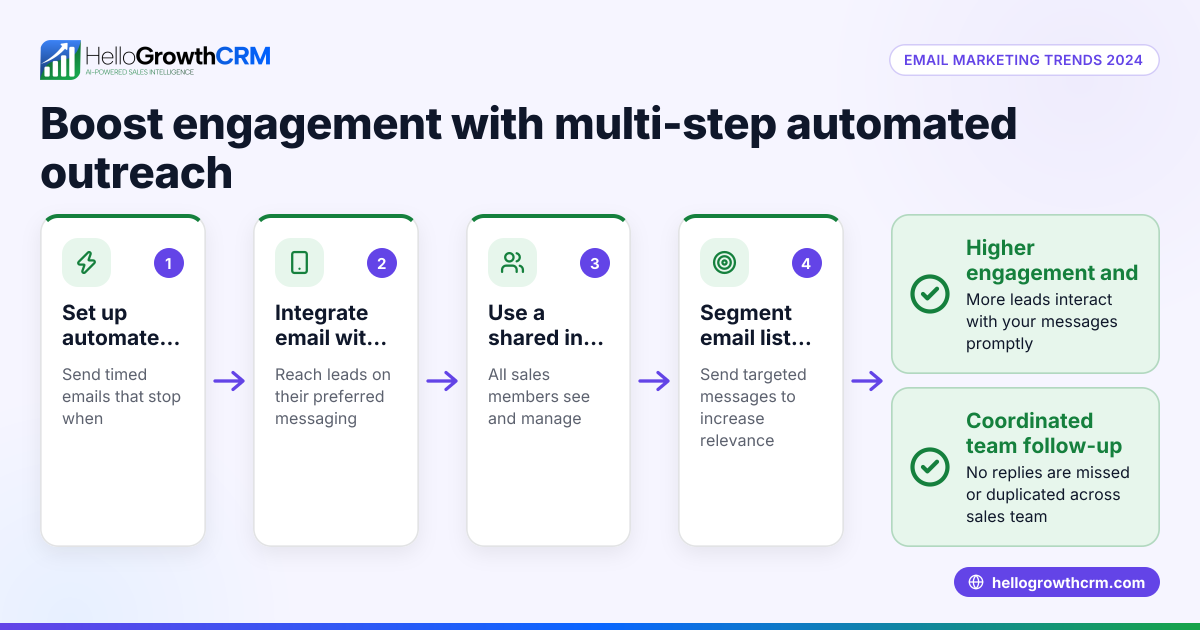
- Create Automated Follow-Up Sequences: Design email, SMS, or WhatsApp sequences that send messages automatically at set intervals after initial contact. Monitor timing and message content to avoid spamming.
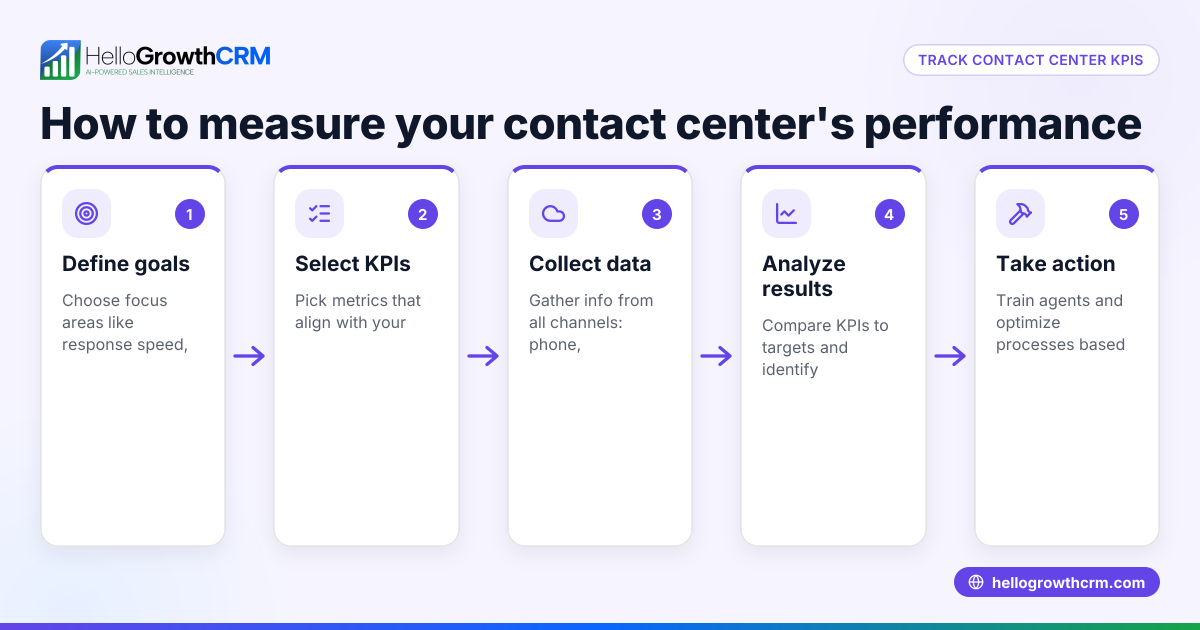
- Analyze Performance and Forecast Sales: Regularly review reports on lead sources, contact rates, and conversion results. Use this data to adjust your communication strategies and plan resources.
Following these steps helps small businesses modernize customer interactions, reduce lost leads, and improve sales efficiency. For tools that support WhatsApp and SMS CRM, see WhatsApp and SMS CRM. To improve calling efficiency, consider options with a built-in CRM dialer. For US-specific features, check out HelloGrowthCRM for the United States.
Example (fictional figures)
A two-location dental practice in Columbus, Ohio, wants to improve how it follows up on new patient inquiries. Currently, they receive 100 inquiries monthly via phone and email but lose 30% due to slow or missed responses.
Step 1: They adopt a multi-channel CRM that captures leads from their website forms and WhatsApp messages.
Step 2: They set automated follow-up sequences: an initial message within 15 minutes, a reminder after 24 hours, and a final check after 72 hours.
Step 3: They organize leads visually on a pipeline board to track status and prioritize follow-up.
Results after one month:
Leads captured = 100 Leads lost previously = 30% × 100 = 30 Leads lost now = 10% × 100 = 10 Leads saved = 30 - 10 = 20
Average revenue per patient = $500 Additional revenue = 20 × $500 = $10,000
This example shows how adopting current contact center trends can increase revenue by improving lead follow-up and reducing lost opportunities.
Common mistakes
- Ignoring Customer Preferred Channels: Relying only on email or phone misses customers who prefer WhatsApp or SMS. Prevent this by offering multiple contact options.
- Not Automating Follow-Up: Manual follow-up causes delays and lost leads. Use automated sequences to ensure timely communication.
- Overcomplicating the System: Complex tools that your team avoids cause data gaps and inefficiency. Choose user-friendly platforms that your team will use.
- Failing to Track Leads Properly: Without organized pipelines or task boards, leads slip through cracks. Use visual boards to manage progress and accountability.
- Neglecting Performance Analysis: Not reviewing reports means missed chances to improve. Schedule regular check-ins to analyze data and adjust strategies.
- Underestimating the Importance of Mobile Communication: Many customers prefer messaging apps on mobile devices. Ensure your contact center supports mobile-friendly channels like WhatsApp and SMS.
Frequently asked questions
What are the main communication channels in modern contact centers? Modern contact centers use phone, email, SMS, and increasingly WhatsApp. Offering multiple channels meets customer preferences and improves engagement by allowing customers to choose their preferred way to communicate.
How can small businesses afford contact center technology? Many CRM platforms offer affordable plans tailored to small businesses. These often include multi-channel messaging and lead tracking without requiring expensive hardware or large upfront costs.
Why is automation important in contact centers? Automation ensures timely follow-up, reduces human error, and frees up staff to focus on closing sales rather than manual tasks. Automated sequences maintain consistent communication with leads.
Can contact center trends help with sales forecasting? Yes. By tracking leads and sales data in one system, you can generate reports and forecasts to plan resources and manage growth effectively.
How do I choose the right CRM for my small business? Look for ease of use, integration with your communication channels like WhatsApp and SMS, and features like lead capture, pipeline boards, and reporting. See WhatsApp and SMS CRM and built-in CRM dialer for options.
What role does mobile communication play in contact centers? Mobile communication through apps like WhatsApp and SMS is increasingly important. It allows customers to reach businesses conveniently and receive quick responses, improving overall satisfaction.
Key takeaways
- Contact center trends focus on multi-channel communication, automation, and organized lead management.
- Small businesses lose leads without timely follow-up and modern tools.
- Steps include evaluating channels, adopting CRM tools, automating follow-up, and analyzing results.
- Avoid ignoring customer preferences, overcomplicating systems, and failing to track leads properly.
- Using tools with WhatsApp and SMS support helps meet customer expectations and mobile communication needs.
- Regular performance analysis and sales forecasting improve resource planning.
To start improving your contact center today, consider Start on the Free Forever plan (200 leads, no credit card).
Ready to put this into practice?
Set up your pipeline, WhatsApp follow-ups, and AI lead scoring in minutes — free, no credit card.
Try HelloGrowthCRM freeGet CRM tips in your inbox
Join thousands of sales professionals who get weekly insights on CRM strategy, AI automation, and pipeline optimization.

The HelloGrowthCRM team publishes guides on CRM strategy, AI sales tools, and revenue operations for small business sales teams.