HelloGrowthCRM software
Built for real small-business sales teams
HelloGrowthCRM helps reps qualify faster, follow up on time, and close more deals—with practical automation in one place.
- AI lead scoring and pipeline visibility
- Built-in dialer, WhatsApp, and email automation
- Sales forecasting and RevOps-ready reporting
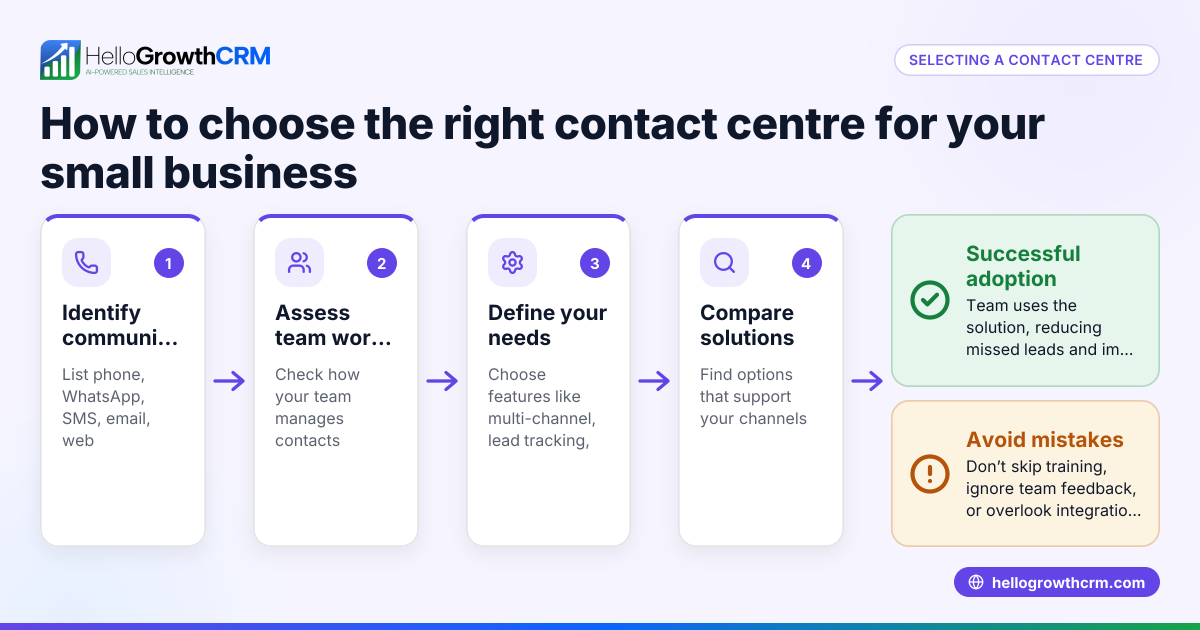
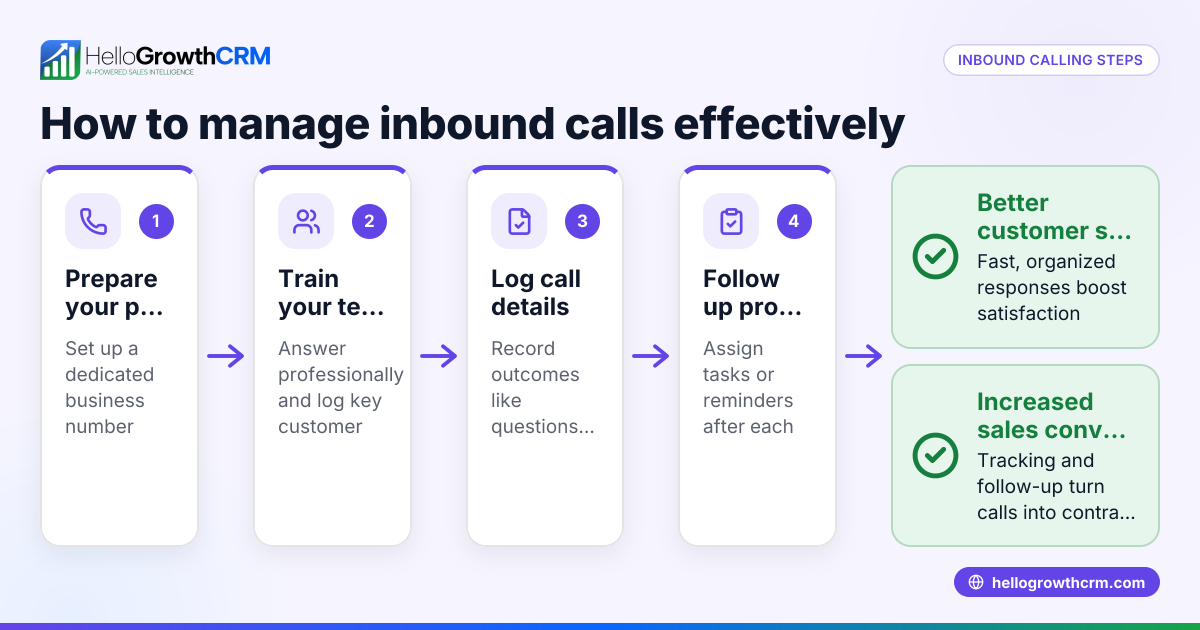
An inbound contact centre is a central hub or team responsible for managing all incoming communications from customers. These include phone calls, emails, SMS, WhatsApp messages, and website enquiries. For Australian small businesses, an inbound contact centre ensures that customer requests are handled quickly and consistently, reducing missed opportunities and improving customer satisfaction.
Why this comes up / what goes wrong
Small businesses often start by handling customer contacts through personal phones, email inboxes, or spreadsheets. This informal approach can cause problems such as slow responses, lost messages, duplicated effort, and confusion about who is responsible for following up. Without a dedicated inbound contact centre, enquiries can fall through the cracks, leading to lost sales and unhappy customers. As businesses grow, these issues become more frequent and costly.
An inbound contact centre helps by centralising all customer contacts in one place, assigning responsibility clearly, and improving response times. This organisation is essential for converting leads and delivering good customer service.
Step-by-step
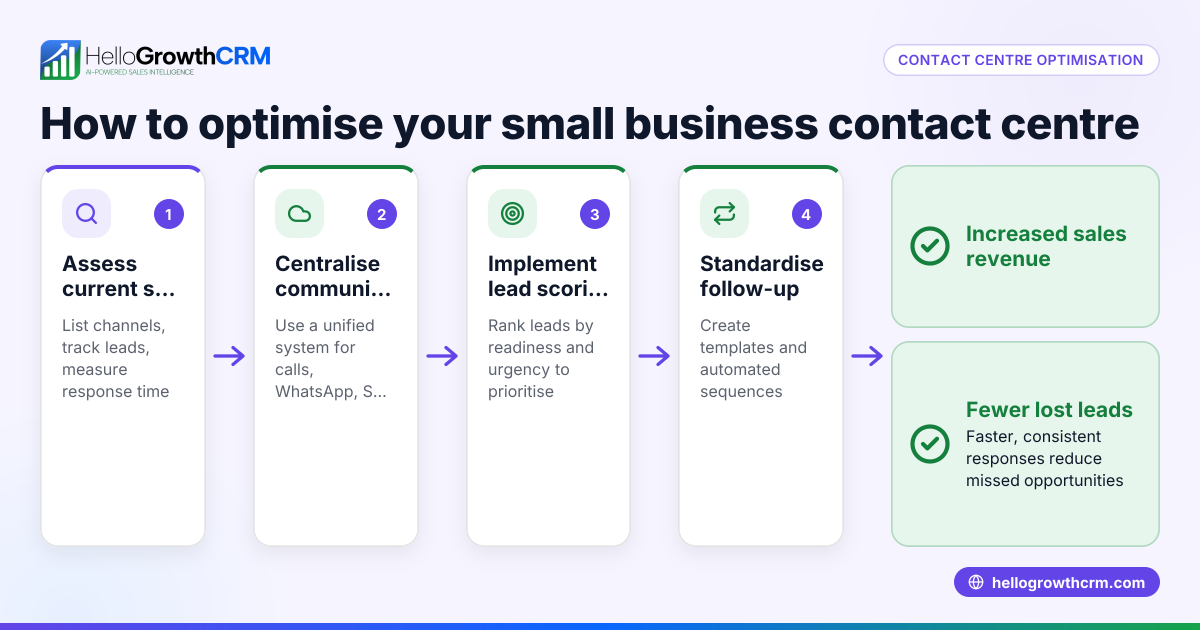
- Identify all contact channels: List every way customers reach you—phone numbers, email addresses, WhatsApp, SMS, website forms, and social media messages. Make sure each channel is active and monitored regularly.
- Centralise contacts in one system: Use a CRM or contact centre software that collects all inbound communications in a single place. This prevents lost messages and makes tracking easier.
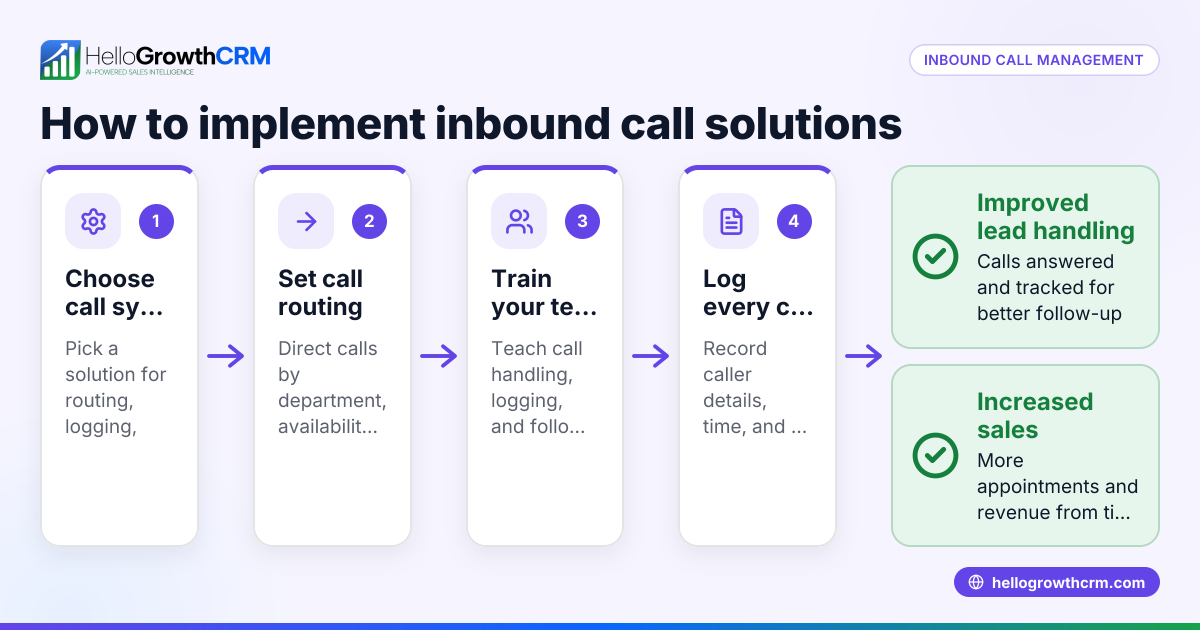
- Assign team roles and schedules: Decide who handles inbound contacts during business hours and peak times. Ensure there are backups or after-hours arrangements if needed.
- Set response standards: Define clear targets for reply times, such as answering calls within three rings or responding to emails within 24 hours. Communicate these standards to your team.
- Train your team: Provide training on how to use the system, follow scripts if needed, and escalate issues properly.
- Monitor performance regularly: Track metrics like response times, missed contacts, and customer satisfaction to identify areas for improvement.
- Connect inbound contacts to sales and marketing: Link your inbound contact centre with your sales pipeline and marketing efforts to turn enquiries into customers. Tools like a built-in CRM dialer and a WhatsApp and SMS CRM can help streamline communication.
- Review and improve: Regularly review your inbound contact processes and update them as your business grows or customer needs change.
Example (fictional figures)
BrightSolar, a solar panel installation company in Brisbane, Queensland, manages inbound enquiries via phone and its website.
- They receive 120 calls and 60 form submissions each month.
- Their goal is to answer calls within 3 rings and respond to form submissions within 24 hours.
- Two staff members handle inbound contacts during business hours.
- They use a CRM to track all contacts and schedule follow-ups.
If each converted lead brings A$12,000 in sales:
Number of leads converted = 18 (assumed 10% conversion rate of all contacts)
Total sales = 18 × A$12,000 = A$216,000
By improving response times, BrightSolar increases conversions by 5%, adding:
Additional leads = 5% of 180 contacts = 9 leads
Extra revenue = 9 × A$12,000 = A$108,000
This example shows how an effective inbound contact centre can significantly increase revenue.
Common mistakes
- Not centralising contacts: Prevent this by using a CRM or contact centre software to gather all messages and calls in one place.
- Slow response times: Set clear response time goals and monitor them to ensure customers aren’t left waiting.
- Unclear team responsibilities: Assign specific staff to manage inbound contacts and provide training.
- Ignoring after-hours enquiries: Use voicemail, auto-responses, or after-hours coverage to handle contacts outside business hours.
- No follow-up system: Create a sales pipeline to track leads and schedule follow-ups.
- Relying on manual spreadsheets: Adopt digital tools like HelloGrowthCRM for Australia to automate and organise contacts efficiently (/au).
Frequently asked questions
What is the difference between an inbound and outbound contact centre? An inbound contact centre focuses on receiving and managing incoming customer calls and messages. An outbound contact centre makes outgoing calls to customers or prospects. Small businesses usually start with inbound to manage enquiries effectively.
Can a small business afford an inbound contact centre? Yes, small businesses can set up an inbound contact centre using affordable CRM and communication tools. Many cloud-based solutions scale with business size, making them accessible for small teams.
How does technology help with inbound contact centres? Technology centralises contacts from phone, email, WhatsApp, and SMS into one platform, tracks responses, automates follow-ups, and provides sales forecasting. For example, a built-in CRM dialer helps manage calls directly, and a WhatsApp and SMS CRM enables messaging sequences.
Do I need a dedicated team for inbound contacts? Depending on your business size, one or two staff members may handle inbound contacts initially. As your business grows, you might need a dedicated team or outsource to a contact centre provider.
How do I measure inbound contact centre success? Key metrics include response times, contact resolution rates, customer satisfaction, and lead conversion rates. Regularly reviewing these helps improve your inbound contact centre’s effectiveness.
Key takeaways
- An inbound contact centre manages all incoming customer communications centrally.
- Small businesses risk losing leads without a clear inbound contact system.
- Follow clear steps: identify channels, centralise contacts, assign roles, and monitor performance.
- Avoid common mistakes like slow responses and unclear team roles.
- Use technology such as CRM with built-in dialers and messaging to improve efficiency.
Start organising your inbound contacts today to improve customer experience and grow sales. You can Start on the Free Forever plan (200 leads, no credit card) to try a CRM that helps centralise and manage your inbound contacts.
Ready to put this into practice?
Set up your pipeline, WhatsApp follow-ups, and AI lead scoring in minutes — free, no credit card.
Try HelloGrowthCRM freeGet CRM tips in your inbox
Join thousands of sales professionals who get weekly insights on CRM strategy, AI automation, and pipeline optimization.

The HelloGrowthCRM team publishes guides on CRM strategy, AI sales tools, and revenue operations for small business sales teams.