HelloGrowthCRM software
Built for real small-business sales teams
HelloGrowthCRM helps reps qualify faster, follow up on time, and close more deals—with practical automation in one place.
- AI lead scoring and pipeline visibility
- Built-in dialer, WhatsApp, and email automation
- Sales forecasting and RevOps-ready reporting
Customer centric product development means designing and improving products based on direct input and needs of your customers. It focuses on understanding customers’ problems and preferences throughout the product lifecycle. This article covers why customer centricity matters, step-by-step guidance to implement it, a practical example, common mistakes to avoid, and how HelloGrowthCRM features support managing customer service after the sale.
Why this comes up / what goes wrong
Small-business owners often develop products based on assumptions or competitor features without enough customer input. This can lead to products that don’t solve real problems or miss key features customers want. Slow or unclear feedback loops cause lost sales and wasted resources. Without customer-centric methods, sales teams struggle to align messaging and follow-up with actual customer needs, especially when using separate tools like text messages, email, and spreadsheets.
Step-by-step
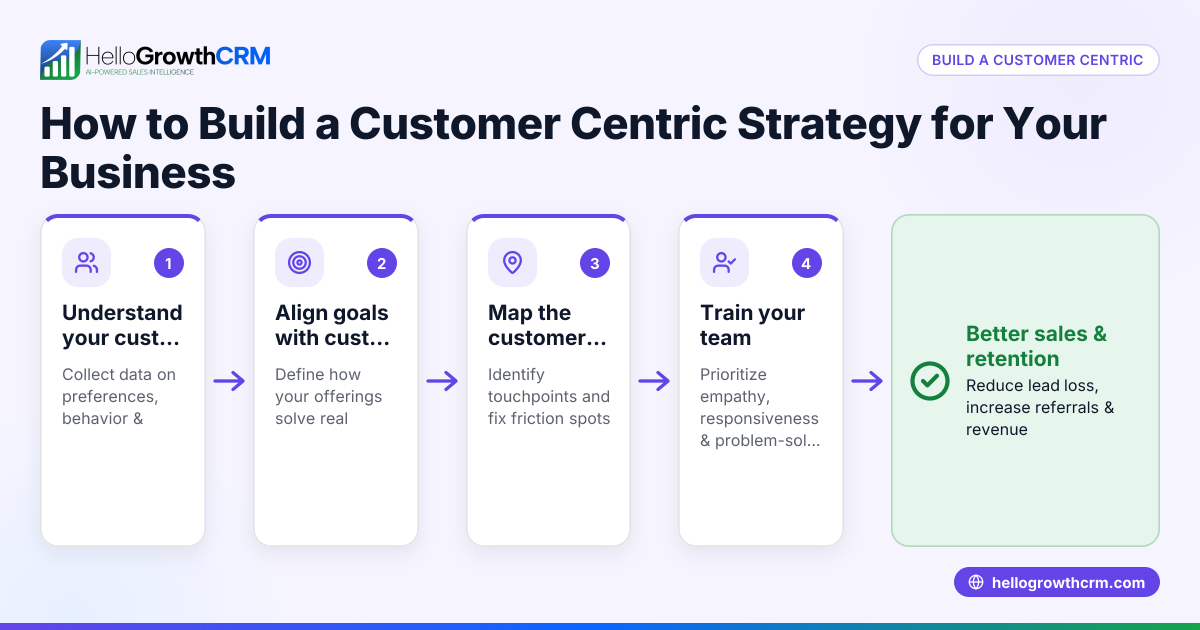
- Gather Customer Insights: Interview customers, survey prospects, and analyze support tickets to identify pain points and desired features. Check that feedback represents your target market segments.
- Define Customer Personas and Needs: Create clear profiles of typical customers with their goals and challenges. Validate these personas with real data.
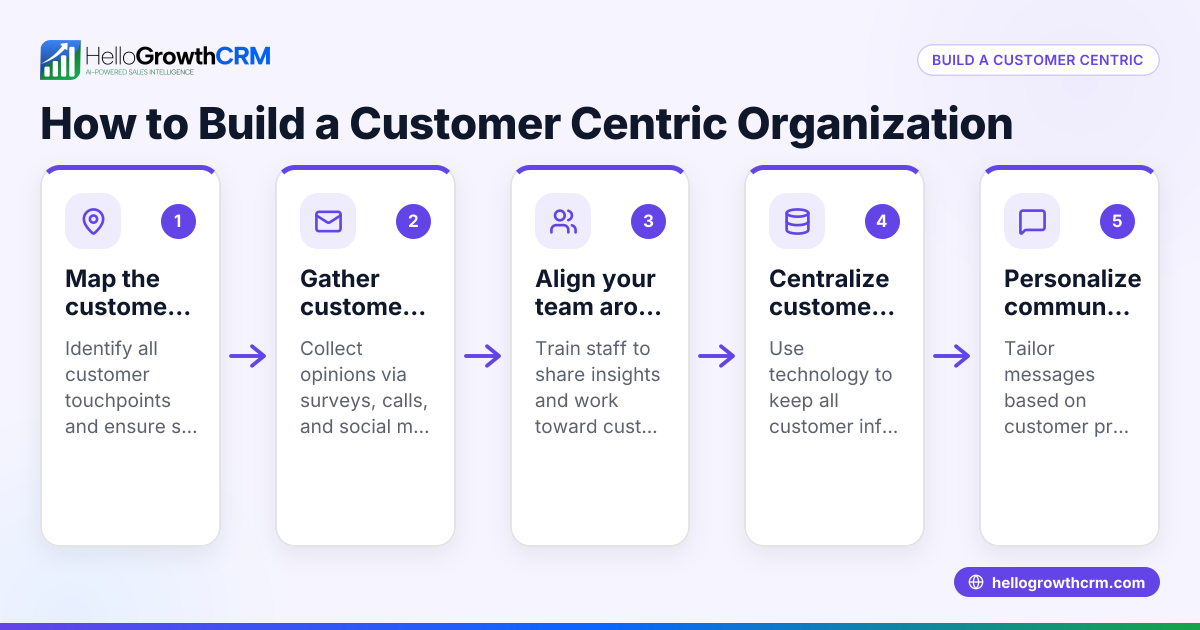
- Map the Customer Journey: Outline all interactions customers have with your product from discovery to use and support. Identify moments where improvements can increase satisfaction.
- Prioritize Features Based on Customer Value: Use customer feedback and business goals to rank product features or fixes. Check that priorities align with what will solve the biggest customer problems.
- Develop and Test Prototypes: Build minimum viable versions of new features or products. Test these with customers to get early feedback and iterate.
- Launch with Customer Support in Mind: Prepare for questions and issues by creating knowledge bases and support tickets systems. Check that customer service stays connected to product development insights.
- Collect Post-Launch Feedback Continuously: Use surveys, referral tracking, and support ticket analysis to monitor satisfaction and identify new needs.
- Use CRM Tools to Track Customer Data and Feedback: Centralize customer interactions and service requests to maintain a clear view of customer health and engagement. See customer health score for more.
Example (fictional figures)
A B2B software reseller in Denver, Colorado, decided to adopt customer centric product development starting 01/15/2026. They spent $12,000 on customer interviews and surveys to gather insights.
They identified 3 main customer personas and mapped their journeys, which took 40 hours of team work valued at $2,000.
Based on feedback, they prioritized developing a new integration feature estimated to cost $30,000.
After building a prototype, they tested it with 25 customers, gaining feedback that reduced feature cost by $5,000 due to simplifications.
Launch marketing cost was $8,000, and support setup with knowledge base and ticket system cost $5,000.
Total investment: $12,000 + $2,000 + $30,000 - $5,000 + $8,000 + $5,000 = $52,000
This investment led to a 20% increase in sales over six months, increasing revenue by $150,000.
Common mistakes
- Ignoring direct customer feedback: Prevent by actively collecting and analyzing customer input regularly.
- Assuming all customers have the same needs: Prevent by creating detailed customer personas and segmenting feedback.
- Skipping testing phases: Prevent by building prototypes and validating with real users before full launch.
- Separating sales and support data from product development: Prevent by using CRM tools that keep customer service requests linked to the same customer record.
- Not updating the product based on post-launch feedback: Prevent by establishing continuous feedback loops and tracking customer health scores (customer health score).
- Using scattered communication tools: Prevent by centralizing communication on platforms that support WhatsApp, SMS, and email sequences (WhatsApp and SMS CRM).
Doing this in HelloGrowthCRM
HelloGrowthCRM supports customer centric product development by keeping all customer interactions and service requests linked to the same customer record. Its branded self-service customer portal, referral tracking, support tickets, and knowledge base help you manage post-sale service efficiently. This keeps your team informed and responsive, improving customer satisfaction and product insights. Learn more about HelloGrowthCRM for the United States here.
Frequently asked questions
What is the main benefit of customer centric product development? It ensures your products solve real customer problems, increasing satisfaction and sales. It reduces waste on unwanted features and aligns your team around customer needs.
How do I start customer centric product development in a small business? Begin by gathering customer feedback through interviews or surveys. Then create customer personas and map their journeys. Use these insights to prioritize features and test prototypes.
How can CRM tools help with customer centric product development? CRMs centralize customer data, track feedback, and link support tickets to product records. HelloGrowthCRM’s customer portal and ticket system keep all service requests on the same customer record, making it easier to act on customer needs.
How often should I update my product based on customer feedback? Continuously. Use post-launch surveys and support tickets to identify new issues or feature requests regularly. This ongoing process keeps your product relevant.
Can customer centric product development improve sales team performance? Yes. When sales teams understand customer personas and needs clearly, they can tailor messaging and follow-ups better. Using a CRM that supports WhatsApp and SMS sequences helps maintain timely communication (WhatsApp and SMS CRM).
Key takeaways
- Customer centric product development focuses on solving real customer problems through direct feedback.
- Create customer personas and map journeys to understand needs and prioritize features.
- Test prototypes with customers before full launch to reduce risk.
- Use CRM tools to link sales, support, and product data for continuous improvement.
- Avoid common mistakes like ignoring feedback or using scattered communication tools.
- HelloGrowthCRM helps manage customer service requests and referrals on one platform, supporting this process.
Start customer centric product development today by organizing your leads and customer interactions. You can start on the Free Forever plan (200 leads, no credit card) to try HelloGrowthCRM and improve your process.
Ready to put this into practice?
Set up your pipeline, WhatsApp follow-ups, and AI lead scoring in minutes — free, no credit card.
Try HelloGrowthCRM freeGet CRM tips in your inbox
Join thousands of sales professionals who get weekly insights on CRM strategy, AI automation, and pipeline optimization.

The HelloGrowthCRM team publishes guides on CRM strategy, AI sales tools, and revenue operations for small business sales teams.